Table of Contents
- Who This Comparison Is For
- How iSpring Filters Work
- How Woder Filters Work
- Head-to-Head: Key Differences
- What Each Filter Removes
- Which One Is Right for You
- FAQs
- Conclusion
You’re shopping for an under-sink water filter and iSpring keeps showing up. It’s a well-known brand with a wide product range, so that’s not surprising. But before you commit, it’s worth understanding what you’re actually getting with an iSpring system — and how a fundamentally different approach stacks up.
This article breaks down the real differences between iSpring and Woder: what each system removes, what it keeps, and what the whole setup costs you in time, money, and cabinet space.
Who This Comparison Is For
You want cleaner drinking water at home. Maybe you’ve seen local news about lead or PFAS. Maybe you just moved, you’re expecting a baby, or you’ve simply had enough of buying bottled water every week.
You’re not looking to call a plumber or gut your kitchen. You want something that installs cleanly under your sink, removes the contaminants you’re concerned about, and doesn’t require a second mortgage.
Both iSpring and Woder live in the under-sink category. But they use very different technologies — and those differences have real consequences for your water, your space, and your wallet.
How iSpring Filters Work
iSpring’s most popular products are reverse osmosis (RO) systems. Their flagship line — including the widely reviewed RCC7 and RCC7AK — pushes water through a semipermeable membrane under pressure across multiple filtration stages.
That membrane is effective. It blocks a broad range of contaminants, including lead, chlorine, and dissolved solids.
The catch is that RO doesn’t discriminate. It filters out nearly everything dissolved in your water, including calcium and magnesium — minerals that occur naturally in tap water and that your body actually uses. Some iSpring models, like the AK versions, include a remineralization cartridge that adds a small amount of minerals back after filtration. But that’s a separate add-on stage, not how the core filtration works.
RO systems also produce wastewater by design. For every gallon of filtered water an iSpring system delivers, it typically drains two to four gallons. That ratio shifts depending on your water pressure and the specific model, but there’s no version of RO that eliminates it.
And then there’s the tank. iSpring systems store pre-filtered water in a pressurized tank that lives under your sink. It works, but it takes up real space.
How Woder Filters Work
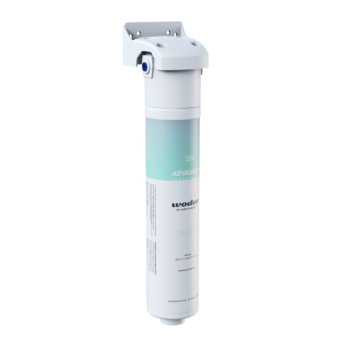
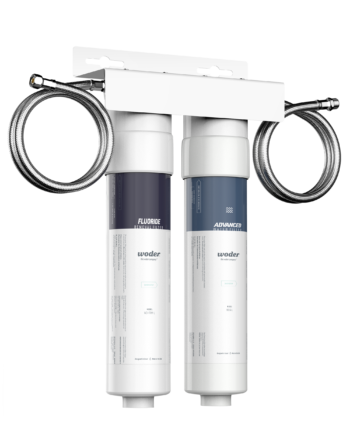
Woder takes a different approach entirely. Instead of a membrane that blocks everything, Woder’s Advanced Selective Filtration uses nanoparticles with a specific affinity for contaminants — attracting and removing lead, chlorine, PFAS, chromium 6, mercury, carcinogens, and volatile organic compounds.
The word that matters here is selective. Those nanoparticles go after contaminants, not minerals. Calcium and magnesium pass through untouched because the filtration is designed to leave them alone.
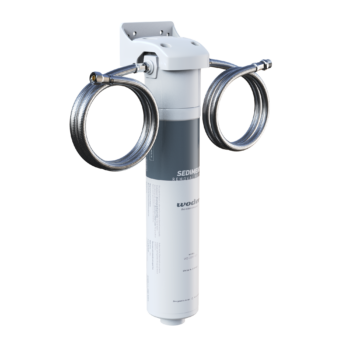
No tank. No wastewater. Woder installs inline, directly into your existing cold water line, and filtered water flows on demand. The under-sink footprint is minimal, and every Woder filter is manufactured in the United States.
Head-to-Head: Key Differences
Filtration Technology
iSpring uses reverse osmosis — a pressure-driven membrane process that removes contaminants by blocking virtually all dissolved particles. It’s thorough, but it doesn’t distinguish between what you want gone and what you want to keep.
Woder uses Advanced Selective Filtration, a nanoparticle-based process engineered to target specific contaminants while leaving beneficial minerals intact.
Mineral Preservation
This is the most meaningful practical difference between the two systems.
iSpring RO strips calcium and magnesium from your water. The remineralization cartridge on certain models adds some back, but that’s an afterthought built on top of a process that removed them in the first place.
Woder preserves the minerals that naturally occur in your tap water. You get clean water that still contains the calcium and magnesium your body benefits from — no add-on stage required.
Installation and Setup
iSpring RO systems are a real installation project. You’re connecting multiple filter stages, mounting a storage tank, running a drain line, and adding a dedicated faucet. Most homeowners can handle it, but it takes time and the under-sink space requirements are significant.
Woder connects inline to your existing cold water line. No dedicated faucet, no tank, no drain connection. Most homeowners can complete the install with nothing more than a wrench.
Wastewater
iSpring RO systems drain two to four gallons for every gallon they produce. Over weeks and months, that adds up — especially if reducing waste is part of why you’re moving away from bottled water in the first place.
Woder produces zero wastewater. Every drop that enters the filter comes out clean.
Where They’re Made
iSpring is a US-based company, but they don’t prominently disclose where their filter components are manufactured.
All Woder filters are made in the United States.
What Each Filter Removes
| Contaminant | iSpring RO (e.g., RCC7) | Woder |
|---|---|---|
| Lead | Yes | Yes (99.9%) |
| Chlorine | Yes | Yes (99.9%) |
| PFAS | Partial (varies by model) | Yes |
| Chromium 6 | Yes | Yes |
| Mercury | Yes | Yes |
| VOCs | Partial | Yes |
| Carcinogens | Partial | Yes |
| Calcium & Magnesium | Removed | Preserved |
| Wastewater produced | Yes (2–4x ratio) | None |
iSpring’s RO membrane handles a wide range of contaminants. The tradeoff is mineral loss and ongoing water waste. Woder removes 99.9% of the contaminants listed above while keeping your water’s natural mineral content right where it belongs.
Which One Is Right for You
Choose iSpring if:
- Your water has extremely high total dissolved solids and you want near-total dissolved particle removal
- You’re comfortable with a larger installation and a tank under your sink
- The wastewater output isn’t a concern for you
- Mineral content in your filtered water isn’t a priority
Choose Woder if:
- You want to remove lead, PFAS, chlorine, and other contaminants without stripping beneficial minerals
- You want a clean, simple install with no tank and no drain line
- Reducing water waste matters to you
- You want a US-made filter at a mid-market price
- You want water that’s clean and actually good for you
For most homeowners and renters focused on specific contaminants — lead, PFAS, chlorine — Woder is the more direct fit. It removes what you don’t want and keeps what you do.
Not sure which model is right for your home? The product finder at woder.com matches you to the right filter based on your water line and household usage.
FAQs
Does iSpring remove PFAS?
Some iSpring RO models reduce PFAS, but performance varies by model and the specific compounds involved. Woder’s Advanced Selective Filtration removes PFAS as part of its standard contaminant removal.
Does Woder use reverse osmosis?
No. Woder uses Advanced Selective Filtration — a nanoparticle-based process, not an RO membrane. That means no wastewater, no storage tank, and no mineral stripping.
Why does mineral preservation matter?
Calcium and magnesium in drinking water contribute to your daily mineral intake. RO systems remove these along with contaminants. Woder’s selective approach takes out the contaminants and leaves those minerals alone.
Is iSpring hard to install?
iSpring RO systems involve multiple filter stages, a pressurized tank, a dedicated faucet, and a drain connection. Most homeowners can get it done, but it takes more time and space than an inline filter like Woder.
How much water does an iSpring RO system waste?
Typically two to four gallons of drain water for every gallon of filtered water produced. The exact ratio depends on your water pressure and model.
Are Woder filters made in the US?
Yes. All Woder filters are manufactured in the United States.
How do I know which Woder filter to buy?
Use the product finder on the Woder homepage at woder.com. It matches you to the right model based on your water line setup and household needs.
Conclusion
iSpring makes capable RO systems, and for households dealing with very high TDS or specific water chemistry challenges, that technology has its place. But for most people who want to remove lead, PFAS, chlorine, and other contaminants without losing beneficial minerals or wasting water, RO is more than you need — and less than ideal.
Woder removes 99.9% of the contaminants you’re actually worried about, keeps calcium and magnesium in your water, installs without a plumber, and produces zero wastewater. Cleaner water, simpler setup, nothing stripped that shouldn’t be.
Find the right filter for your home at woder.com.