Refrigerator Water Filters
Universal inline filtration for any fridge's dispenser and ice maker, no brand-locked cartridges.
Find your systemRecommended filters for Refrigerator
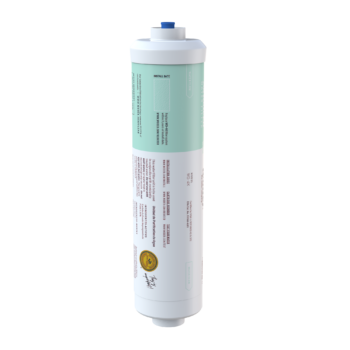
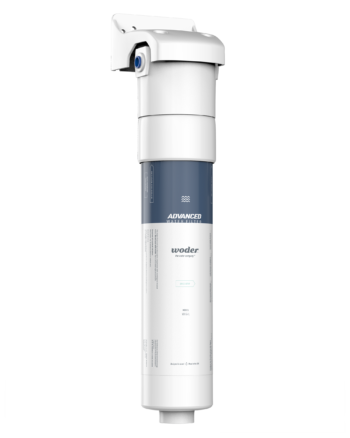
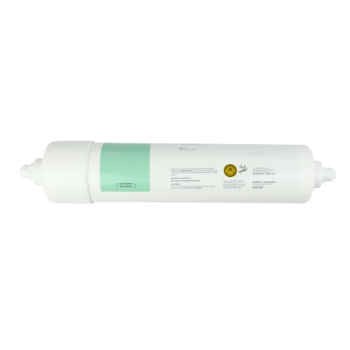
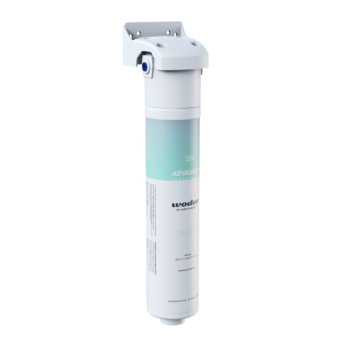
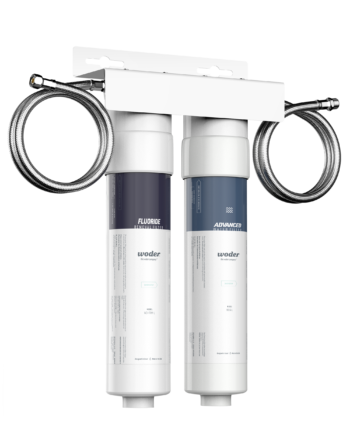
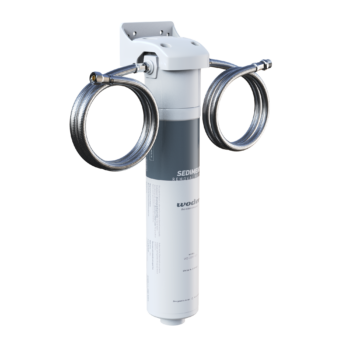
Manufacturer cartridges for refrigerator water dispensers and ice makers are convenient in one sense: they’re made specifically for your appliance model. In every other sense, they’re expensive, brand-locked, and marketed on a replacement schedule that often lines up more with revenue targets than with how fast your household actually uses water. A refrigerator water filter from Woder takes a different approach. It sits on the supply line that feeds the fridge, not inside the appliance itself, which means it works regardless of what brand the refrigerator is and doesn’t require ordering a proprietary cartridge from the manufacturer every six months.
Woder’s Gen4 Advanced media is WQA Gold Seal certified for chlorine, lead, PFAS, heavy metals, and VOC reduction. It retains naturally occurring dissolved minerals, so the ice and water coming out of the dispenser taste the way they should rather than flat or chemical. A refrigerator water filter system built around inline filtration at the supply line is also simpler to maintain than a built-in filter: no reaching inside the fridge cabinet, no proprietary housing to wrestle with, and no need to cross-check a part number against an appliance model every time the cartridge needs swapping. All Gen4 Advanced cartridges use the same form factor regardless of which Woder model they’re in.
How an Inline Refrigerator Filter Works
An inline water filter for refrigerator supply lines connects between the cold-water source and the fridge’s own tubing. The supply side – whether that’s a shutoff valve under the kitchen sink or a dedicated shutoff behind the appliance – feeds into the filter’s inlet. The filter’s outlet connects to the 1/4-inch tubing that runs to the fridge. From there, every drop of water reaching the ice maker and the dispenser has passed through the Gen4 Advanced filtration stage first.
A refrigerator inline water filter system works differently from a built-in fridge filter in one important way: it isn’t integrated into the appliance at all. Built-in filters sit inside the fridge cabinet and require manufacturer-specific cartridges. An inline system on the supply line is appliance-agnostic. If you change refrigerators, the filter stays put on the supply line and keeps working. If the fridge model changes, nothing about the filtration setup needs to change with it. The 1/4-inch JG quick-connect fittings push on and lock without any tools – the same connection standard used across Woder’s full inline lineup.
This setup also covers fridges that don’t have a built-in filter at all. Not every refrigerator model includes a filtration stage, and some older units or basic models skip it entirely. An inline unit on the supply line adds certified filtration capability to any fridge with a standard 1/4-inch water line connection, without any modification to the appliance itself.
Installation
Setting up a water filter system for refrigerator supply involves two connections: the cold-water source and the fridge’s own tubing. Both use 1/4-inch push-connect fittings that press in and lock without tools. Here’s how the install goes:
First, locate the cold-water shutoff that feeds the refrigerator. In most kitchens this is either the shutoff valve under the sink, with a 1/4-inch line running across the floor or through the wall to the fridge, or a dedicated shutoff mounted at the wall behind the appliance. Turn it off before doing anything else.
Disconnect the existing 1/4-inch tubing at the shutoff – press the release collar on the JG fitting and pull the tube out. Push that tube into the filter’s outlet fitting until it clicks. Cut a short section of 1/4-inch tubing to run from the shutoff to the filter’s inlet fitting, push it in on both ends, and turn the shutoff back on. That’s the full install. No drilling, no modification to the fridge, no new plumbing lines. From start to finish it runs 10 to 15 minutes depending on how accessible the shutoff and tubing connections are.
If the supply line behind your fridge uses a compression fitting rather than a JG push-connect, a compatible adapter is available – check the connection type at the shutoff before ordering to confirm which fitting configuration the existing line uses.
Cartridge Life and Replacement
Gen4 Advanced cartridges are rated for approximately 10,000 gallons of filtration output. What that translates to in calendar time depends entirely on how much water the household actually draws through the dispenser and ice maker – a large household using the fridge water heavily may reach that volume in eight to ten months, while a smaller household drawing less daily volume could see a cartridge last closer to 18 months.
The practical replacement signal is output speed at the dispenser, not a date on the calendar. When fill time starts to stretch noticeably – the glass takes longer to fill, the ice maker runs slower – the cartridge media has loaded up and it’s time to swap. The replacement process takes about two minutes: press the release collar on the outlet fitting, pull the cartridge out, push the new one in on both ends. No tools, no shutting anything down, and the fridge keeps cooling the whole time.
Replacement cartridges order through woder.com and ship on standard domestic timelines. Keeping a spare on hand means the swap happens the moment the signal appears rather than waiting on delivery while running unfiltered water through the dispenser.
WQA Gold Seal Certification
Every Gen4 Advanced cartridge carries WQA Gold Seal certification – an independent, accredited laboratory result against NSF/ANSI standards for contaminant reduction. The certification scope covers chlorine, lead, PFAS, heavy metals, and VOCs. Those are tested results with documented reduction rates, not manufacturer claims about improved taste.
Dissolved minerals – calcium, magnesium – pass through Gen4 media unchanged. This is by design. The minerals that sometimes get blamed for scale buildup also contribute to the neutral, balanced flavor profile of good drinking water and ice. Reverse osmosis strips them out and requires remineralization to compensate. Gen4 Selective Filtration removes the chemical contaminants and leaves the mineral content alone.
Systems are manufactured in the United States. The same Gen4 Advanced media that goes into Woder’s under-sink residential systems, office break room units, and restaurant prep sink installs is what sits inside the inline refrigerator cartridge – the application changes, the filtration technology doesn’t.
Frequently Asked Questions
Does a Woder inline filter work with any refrigerator brand?
Yes, in virtually all cases. The filter connects to the 1/4-inch supply line that feeds the fridge, not to the appliance itself, so it's compatible with any refrigerator that uses standard 1/4-inch tubing for its water connection. That covers the vast majority of refrigerators with a water dispenser or ice maker sold in the US market. The one thing worth checking before ordering is the fitting type at your cold-water shutoff - JG push-connect is the standard, but some older shutoff valves use compression fittings that require an adapter. Confirm the connection type before the order rather than after.
How is an inline refrigerator water filter installed?
The filter connects on the 1/4-inch supply line between the cold-water shutoff and the tubing running to the fridge. Both connections use JG quick-connect push fittings - press in and lock, no tools required. Turn off the cold-water shutoff, disconnect the existing tubing at the shutoff side, reconnect through the filter, and turn the shutoff back on. The whole process runs 10 to 15 minutes depending on how accessible the connections are behind or under the appliance. Nothing gets drilled, nothing gets modified on the refrigerator, and the connection is fully reversible.
How often does a refrigerator water filter need replacing?
Woder's Gen4 Advanced cartridge is rated for approximately 10,000 gallons of filtered output. The real-world timeline varies by household: heavier daily use reaches that volume faster, lighter use extends the cartridge further. The reliable replacement signal is a slowdown in dispenser output speed - if filling a glass or running a cycle on the ice maker is taking noticeably longer than it used to, the media has loaded and the cartridge needs swapping. Don't rely on a fixed calendar date, because usage volume is what actually determines when the media is exhausted.
Is a Woder filter cheaper than buying a brand-name refrigerator cartridge?
In most cases, yes. Manufacturer-branded replacement cartridges for major refrigerator brands typically run between $30 and $60 per cartridge, and most recommend replacement every six months regardless of actual usage. A Gen4 Advanced replacement cartridge from Woder runs at a lower price point and lasts based on volume rather than a fixed calendar interval, so a lower-use household can stretch the replacement cycle significantly beyond six months. Over two to three years, the savings compared to twice-yearly manufacturer cartridge replacements add up meaningfully - without any reduction in certified filtration performance.


