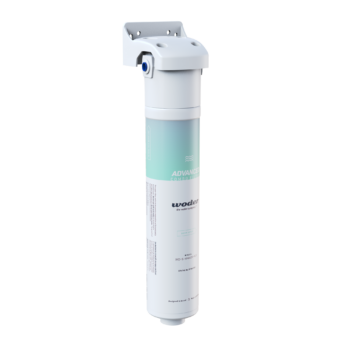
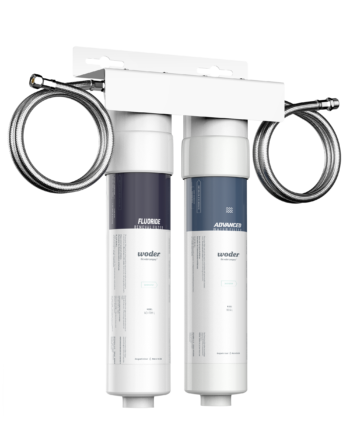
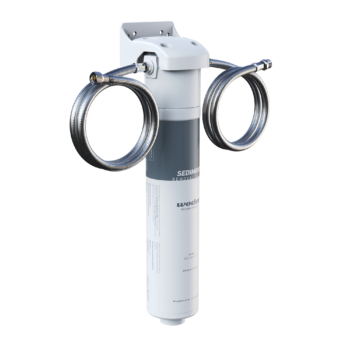
Salt Lake City’s tap water meets federal standards, but its taste and mineral content shift with the seasons. A filter under the kitchen sink keeps every glass consistent and catches what older pipes add, and you won’t need a service visit. Compare our under-sink water filter systems to find the right fit.
Salt Lake City has a reputation for good tap water, and mostly it’s earned. Even so, people here notice spots on the dishes, a whiff of pool smell now and then, or coffee that tastes a little off in late summer. If you want a water filter that Salt Lake City families can install on a Sunday afternoon, we can help.
Woder systems mount under the sink or on an inline line. Our Advanced Selective Filtration cuts chlorine, lead, PFAS and similar contaminants and keeps the calcium and magnesium your body uses. There’s no tank to maintain, nothing goes down the drain, and nobody has to come to your house. We build every system in the USA, and our base Gen4 Advanced media has earned the WQA Gold Seal.
Where Your Tap Supply Comes From
Salt Lake City public utilities serves well over 300,000 people in the city and several nearby communities. Most of what it delivers starts as mountain snowmelt water sources in the Wasatch canyons, like City Creek, Parleys and Big Cottonwood. Deep wells and regional reservoirs fill in the rest.
Because that mix shifts through the year, what comes out of your faucet changes too. Canyon streams and groundwater carry dissolved calcium and magnesium, so depending on your neighborhood you’ll see some hard water and scale on faucets, kettles and the dishwasher. The city adds chlorine to keep things safe all the way to your tap, and lots of people pick up a chlorine taste, especially in August. Older houses in the Avenues or Sugar House may also have brass fixtures or lead solder that add trace metals.
The city publishes an annual report, and its water meets federal standards. The type of home water filtration Salt Lake City residents choose is really about taste and that final stretch of pipe between the main and your glass. A solid water filtration system Salt Lake City kitchens can rely on handles exactly that.
Why the Taste Changes Through the Year
If your coffee is great in May and a bit off in September, you’re not imagining it. In spring, the city leans on fresh canyon runoff, which is cool and low in minerals. Later, as the streams drop, more comes from wells and reservoirs. Those carry more dissolved minerals, and disinfection levels can change as the weather warms up.
A filter at the faucet smooths out those swings. Our media targets chlorine and contaminants rather than minerals, so the glass tastes about the same from one season to the next. Customers here tell us that’s the first thing they notice. Curious about your own tap? Our TDS meter guide shows a quick way to compare readings.
Whole-Home Treatment or Point-of-Use?
Plenty of people start by pricing a whole house water filter Salt Lake City dealers recommend. It connects where the main enters the house and treats every tap, from the shower to the washing machine. It works, but you pay a lot upfront, add plumber fees, and give up garage space to big media tanks.
Point-of-use filtration is smaller and more focused. A Woder unit costs a fraction of a whole-home setup. Slower flow at one faucet gives the media more time with each glass. Cartridges twist off in minutes, and if you move, the system comes along.
If scale on fixtures is the main headache, a softener at the main makes sense. If you want a clean, good-tasting glass, go point-of-use. Some homes do both. Our whole house water filter guide explains the tradeoffs.
Skip the Service Appointment
Lots of local companies sell water filtration services in Salt Lake City that may require advance scheduling. A tech shows up, installs a big system, and usually signs you up for a maintenance plan.
We do it differently. Your system ships to your door and you set it up yourself. Close the cold valve under the sink, connect the Direct Connect hoses or push the John Guest fittings into place, open the valve, check for drips, and run the faucet for a few minutes. Most people are done in under an hour with basic tools. When a cartridge wears out, you reorder online and a new one shows up in a few days.
Renting near the U or downtown? That’s fine too. A Direct Connect unit uses the faucet you already have, so there are no holes in the counter and nothing permanent to explain to your landlord. When the lease is up, close the valve, unscrew two connections, and pack the unit with your kitchen belongings. Put the original hose back on and the cabinet looks exactly the way you found it.
Finding the Right Model
What’s the best drinking water filter Salt Lake City homes can buy? That depends on what bugs you.
For taste and chlorine, our single-stage Gen4 Advanced under-sink unit is the simplest choice. For older plumbing, a dual-stage system with heavy metals and lead removal media adds extra protection. Homes on private wells in the valley usually do better with a 20-micron sediment stage up front. And for the fridge or ice maker, an inline quick-connect model fits a standard 1/4-inch line.
All the water filtration systems our Salt Lake City customers order from us share the same WQA Gold Seal certified base media. Not sure where to start? The Filter Wizard on our site asks a few questions and suggests a match, and our Utah page covers well water in rural parts of the state.
Frequently Asked Questions
Is Salt Lake City tap water hard?
It's moderately hard in many parts of the city, though it varies by season and by which source feeds your neighborhood. You may notice white spots on dishes and scale on faucets. A softener handles the scale, while a filter focuses on taste and contaminants.
What's the best drinking filter for a Salt Lake City home?
For most homes, a single-stage under-sink filter with certified media is a great start. If your house is older, pick a dual-stage model that adds lead and heavy metals removal. The Filter Wizard on our site can recommend a system based on your home and goals.
Do I need a professional filtration service in Salt Lake City?
No. Woder systems are designed for DIY setup with no drilling. Most people finish in under an hour with basic tools and our step-by-step guides. A local handyman can install one quickly if you'd rather not, but you don't need a service contract.
How often should I change my cartridge?
Most cartridges last six to twelve months, depending on household size and daily use. Families that cook a lot will swap sooner. Each product page lists the rated capacity, and you can reorder new cartridges anytime from our replacement page.


