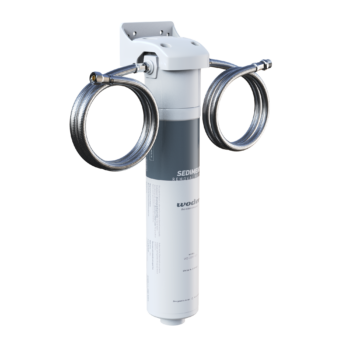
This pocket tester estimates how much dissolved material, mostly minerals and salts, is in a glass. It’s handy for comparing sources and spotting changes, but it can’t detect lead, PFAS or bacteria. For safety, rely on a lab test and a certified filter, like the ones in our water filtration systems catalog.
Key takeaways:
- Most US tap water reads somewhere between 50 and 300 ppm.
- The EPA’s 500 mg/L figure is a taste guideline, not a health limit.
- A low reading doesn’t prove your glass is safe.
- Filters that keep minerals won’t drop the number much, and that’s normal.
It looks like a fat pen. You dip the tip in, press a button, and a few seconds later you’ve got a number. It’s cheap and, honestly, kind of fun.
So what is a TDS meter good for? Spotting changes, mostly. Checking whether a filter still works, comparing your tap with a bottle from the store, or keeping an eye on an aquarium. What it can’t do is tell you whether the glass in your hand is safe. That’s the part most people miss.
What the Number Means
TDS stands for total dissolved solids. That’s everything dissolved in the sample that isn’t H2O itself: minerals, salts, metals and some organic compounds. The reading shows up in parts per million (ppm), which is the same as milligrams per liter.
When people ask what a TDS meter measures, the honest answer is “the total, not the details.” A reading of 250 could be almost all harmless calcium. It could also hide a small amount of something you’d rather avoid. The pen can’t tell the difference.
A water TDS meter picks up calcium, magnesium and potassium well, along with sodium, chloride, bicarbonates and sulfates. It misses lead at the low levels that matter for health, PFAS, bacteria and viruses, most pesticides, and chlorine, which barely moves the reading.
So a low number doesn’t prove your tap is clean, and a high one doesn’t prove it’s unsafe.
Inside the Pen
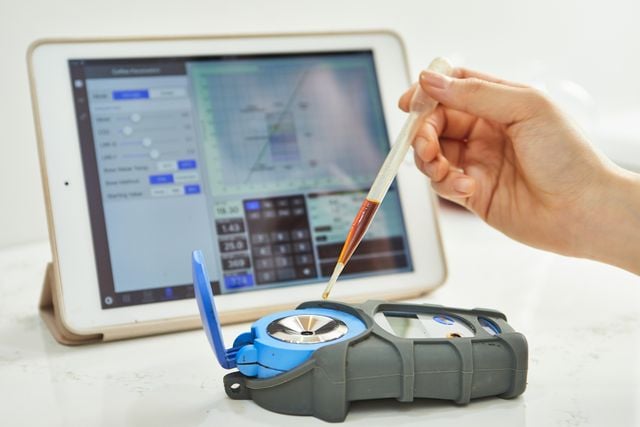
The device doesn’t count particles. It measures electrical conductivity. Pure H2O is a lousy conductor. Dissolved minerals and salts carry a charge, so the more there are, the better the sample conducts.
Two small electrodes at the tip send a tiny current through the sample. The pen checks how easily that current flows, then converts the result into ppm using a built-in factor. If you’ve wondered how does a TDS meter work so fast, that’s why: it’s one quick electrical test. Most models also have automatic temperature compensation, because warm liquid conducts better and would otherwise read high. For what happens inside a filter itself, see how water filters work.
A digital TDS meter with a backlit screen and a hold button is what you’ll find almost everywhere today. Analog versions still exist, but they’re rare for home use.
Taking a Reading
Learning how to read a TDS meter takes about a minute. Pull the cap and rinse the tip in the sample you’re testing. Pour the sample into a clean glass, and let it warm to room temperature if it came out of the fridge. Switch the pen on and dip it to the marked line, no deeper. Stir gently to knock off air bubbles. Wait for the number to settle, press hold, then rinse and dry the tip before capping it.
Using a TDS meter for water filters? Test the tap first, then the filtered glass, and jot down both with the date. Over a few months, those notes tell you more than any single reading. Calibrate every few months with a calibration solution, especially if the numbers start drifting.
A few slips cause most weird results. Cold samples can read a little off even with compensation. Dipping past the line can damage the electronics. Skipping the rinse carries residue into the next test. Testing right after a cartridge change can pick up fine carbon dust, so flush first. And two different brands may use slightly different conversion factors, so stick with one pen for your notes.
A Quick Chart
This TDS meter chart gives you a feel for the numbers. Treat the ranges as a general guide, not a safety rating:
| Reading (ppm) | What it usually means |
| 0 to 50 | Very low. Typical of reverse osmosis, distilled, or some snowmelt sources. Can taste flat. |
| 50 to 150 | Low. Common for soft municipal supply and many bottled brands. |
| 150 to 300 | Moderate. Typical for a lot of US tap supply. Many people like this range best. |
| 300 to 500 | Higher. Common where supply is hard. You may taste the minerals. |
| Over 500 | Above the EPA secondary standard 500 mg/L. Usually a taste and scale issue, not a direct health risk. |
That 500 mg/L figure is a secondary, non-enforceable guideline. It’s based on taste, smell and staining, not on health effects.
When you compare TDS meter readings over time, the trend matters more than any one value. A sudden jump could mean a change in your source, a plumbing problem, or a cartridge that’s done.
Why Lower Isn’t Automatically Better
Lots of people expect the reading to fall close to zero after they install a filter. That happens with reverse osmosis, which strips out nearly everything. But is that what you want?
Most of the dissolved solids in tap supply are calcium and magnesium minerals. Your body uses them, and they give a glass its familiar taste. Supply with almost no minerals often tastes flat, and some RO owners end up adding mineral drops back in.
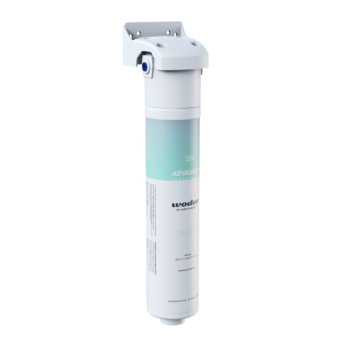
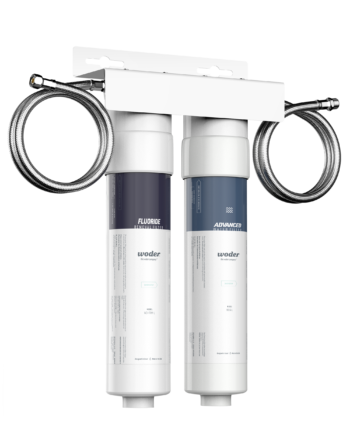
That’s the core difference in reverse osmosis vs Selective Filtration. RO removes almost everything, healthy minerals included, and sends some flow down the drain along the way. Woder’s Selective Filtration goes after contaminants like lead, chlorine and PFAS and lets the minerals through.
So after a Woder install, your reading will stay close to the tap reading. That’s expected. The contaminants that matter for health make up a tiny slice of the total and barely move the number. To confirm what’s being removed, check the certified performance data for your filter instead.
Other Ways People Use One
Drinking supply is only one use. Coffee nerds often aim for a mineral range of roughly 75 to 250 ppm because it pulls better flavor from the beans. Fish keepers track dissolved solids to catch changes before they stress the tank. Hydroponic growers check nutrient strength. Pool and hot tub owners watch for a steady climb that says it’s time to drain and refill. Some people just like seeing how much mineral content they’re paying for in different bottled brands.
In every case, the pen shows a trend or a total. It’s a useful everyday gauge as long as you remember its limits.
Try This Simple Kitchen Experiment
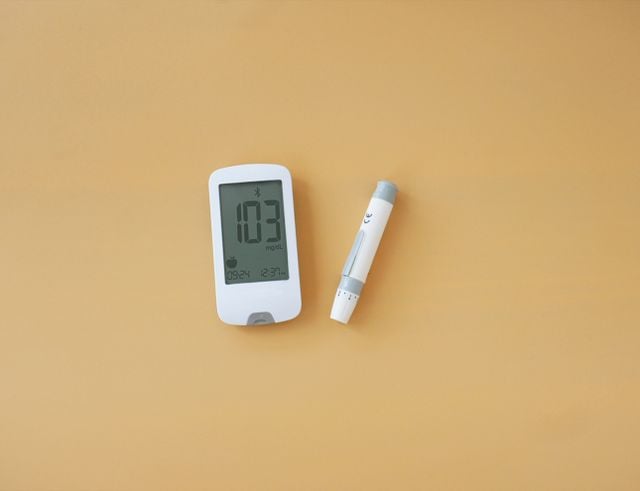
If you just bought a pen, here’s a fun way to break it in. Line up four glasses: one from the kitchen tap, one from the bathroom tap, one from a bottle in the fridge, and one from your filter if you have it. Let them sit until they’re all at room temperature, then test each one and write the numbers on sticky notes.
You’ll probably see the two taps read almost the same, the bottled one land higher or lower depending on the brand, and the filtered glass stay close to the tap. That last result surprises people. It simply means the filter kept the minerals. Then taste all four. Most folks find the number and the flavor don’t line up as neatly as they expected.
Picking a Good One
You don’t need lab gear for home use. When you’re hunting for the best TDS meter, look for accuracy of plus or minus 2 percent or better, automatic temperature compensation, a range up to at least 1,000 ppm (higher if you test well supply), easy calibration, a hold button, and a battery you can replace.
For the best TDS meter for drinking water checks at home, a basic pen with temperature compensation is plenty. Many also show conductivity and temperature, which is a nice bonus.
What about TDS meter price? Most reliable home pens cost about $10 to $30. Benchtop lab units run into the hundreds, and you won’t need one unless you’re running a business or a science project.
Do You Actually Need One?
It’s a useful, low-cost tool if you want to compare sources, watch how your tap changes over time, or catch big shifts. It’s also great for aquariums, coffee and hydroponics.
It isn’t a safety test, though. If lead, PFAS, bacteria or specific chemicals worry you, order a certified lab test or read your utility’s annual report. Our article on whether tap water is safe to drink explains what to look for. Then choose a filter certified for whatever you found. Our buyer’s guide to choosing a water filter walks through that process.
Frequently Asked Questions
What’s a good TDS level for drinking?
Most people find a reading between about 50 and 300 ppm tastes best. The EPA’s secondary guideline is 500 mg/L, based on taste and staining rather than health. A low number doesn’t guarantee safety, and a moderate one doesn’t mean anything is wrong.
Can a TDS pen detect lead or other contaminants?
No. It measures the total amount of dissolved material, not individual substances. Lead, PFAS and bacteria at levels that matter for health barely change the reading. To check for specific contaminants, you need a certified lab test or your utility’s quality report.
Why didn’t my reading drop after I installed a filter?
Many filters, including Woder’s Selective Filtration, are designed to keep healthy minerals like calcium and magnesium. Those minerals make up most of the reading, so it stays about the same. Reverse osmosis drops the number because it removes nearly everything, minerals included.
How accurate are cheap digital TDS pens?
Most budget pens are accurate within a few percent when they’re calibrated and used at room temperature. They’re fine for comparing tap and filtered samples at home. For official testing or business use, a lab test or a professional-grade instrument is the better choice.