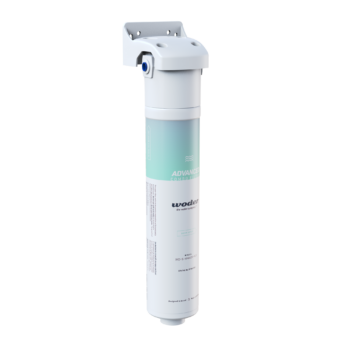
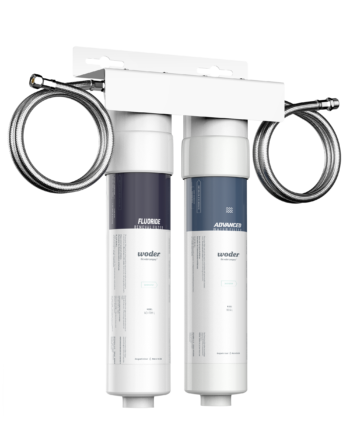
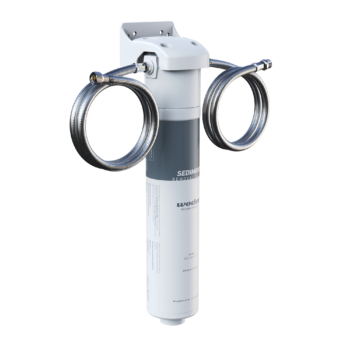
Filters fall into two groups. By technology, you’ve got sediment, carbon, KDF, resin softening, RO, UV, ceramic and specialty media. By system, there are pitchers, faucet mounts, countertop units, under-sink and inline filters, fridge cartridges and whole-home setups. You can compare real examples in our water filtration systems catalog.
Key takeaways:
- Technology decides what a filter reduces, and the system decides how you use it.
- No single media handles every contaminant.
- Multi-stage systems stack media for broader coverage.
- Under-sink systems suit most families who drink a lot from the tap.
Shopping for a filter gets confusing fast. One box says “carbon block,” another says “RO,” a third promises “multi-stage purification.” Under all the marketing, though, there are only a handful of real categories, and once you know them, every product starts making sense.
There are two useful ways to sort the different types of water filters out there. One is by technology, meaning what the media inside actually does. The other is by system, meaning where the unit sits in your home and how it connects. A pitcher and an under-sink unit can use the same carbon and still feel completely different day to day.
We cover both below. Use the technology part to understand what gets removed, and the system part to figure out what fits your kitchen.
The Short Version
What are the types of water filters you’ll run into most? By technology: sediment, carbon, KDF, resin-based softening, RO, UV, ceramic, and specialty media like Woder’s Selective Filtration. By system: pitchers, faucet mounts, countertop units, under-sink, inline, fridge cartridges, whole-home setups and commercial units.
Most real products combine more than one. A typical under-sink unit might pair a sediment stage with a carbon block. Knowing the basic water filter types helps you read a spec sheet and notice what’s missing.
By Technology: What the Media Does
The media inside decides what a filter can and can’t reduce. These are the main technologies, and they show up across the types of water filter cartridges you’ll find in stores.
Sediment
Sediment filtration is the simplest method. A screen or spun polypropylene cartridge traps sand, silt, rust and other particles. Ratings are in microns, and lower numbers catch finer particles. Sediment cartridges don’t touch dissolved chemicals, but they protect every stage that comes after them.
Carbon
Activated carbon is the most common filter media in the world. It’s made from coconut shells, coal or wood and treated to open up millions of tiny pores. Chlorine, many organic chemicals and bad tastes stick to that huge surface. It comes as loose granules, used in pitchers and big tanks, or as compressed blocks, which give more contact time and usually better results.
KDF
KDF is a copper-zinc blend. It reduces chlorine, some heavy metals, and bacterial growth inside the housing. You’ll often see it paired with carbon in shower filters and whole-home systems.
Resin-based softening
Ion exchange swaps one dissolved particle for another. Softeners use it to trade calcium and magnesium for sodium or potassium. Specialty resins can also target nitrates, lead or other specific contaminants.
RO membranes
Reverse osmosis pushes supply through a very fine membrane that blocks most dissolved substances, including salts, fluoride, nitrates and minerals. It’s extremely thorough, but it strips healthy minerals too, and most units send some flow down the drain as wastewater.
UV
Ultraviolet (UV) disinfection doesn’t filter anything out. A lamp exposes flowing supply to UV light, which damages the DNA of bacteria, viruses and parasites. It’s common on private wells and always sits after sediment removal, so particles can’t shield microbes.
Ceramic
Ceramic elements have tiny pores that physically block bacteria and sediment. They’re popular in gravity systems and camping gear, and many include a carbon core for taste.
Selective Filtration
Woder’s Selective Filtration technology is designed to reduce contaminants like lead, chlorine and PFAS while keeping calcium and magnesium in place. Unlike RO, it doesn’t waste supply or strip out minerals. The base Gen4 Advanced media carries WQA Gold Seal certification.
Which Technology Fixes Which Problem?
If you already know what’s in your tap, this quick map helps. Chlorine taste and smell call for carbon block or granular carbon. Chloramine needs catalytic carbon, since the standard kind struggles with it. Lead calls for carbon block or specialty media certified to NSF/ANSI 53 for lead. PFAS needs carbon block, specialty media or RO certified for PFAS. Fluoride needs bone char, activated alumina or RO. Hardness and scale are a job for a resin softener. Nitrates need RO or a nitrate-selective resin. Bacteria and viruses call for UV, usually with a sediment stage in front. Sand and rust need a sediment cartridge or a spin-down screen.
Notice that no single media covers everything. That’s why multi-stage systems are so common, and why testing first saves money.
How to Tell What You Need
You don’t need to become an expert to choose well. A few questions narrow it down fast.
Where does your supply come from? City homes usually focus on chlorine, lead and PFAS, while well owners often deal with sediment, iron, hardness and bacteria. What did your test show? Your utility’s annual report or a lab test tells you what’s really there. Do you own or rent? Renters usually need something removable, like a pitcher, countertop unit, or a Direct Connect system that uses the existing faucet. How much do you drink and cook with? Big households outgrow pitchers quickly. And how much upkeep will you honestly do? A system nobody maintains stops helping.
Answer those and the right category usually becomes obvious. From there, compare certified products within it. Our buyer’s guide on how to choose a filter walks through each step, and the Filter Wizard on our site can suggest a Woder system in about two minutes.

By System: Where It Lives in Your Home
Now let’s look at where filters actually sit. These are the main types of water filters for home use, from simplest to most involved.
Pitchers
A pitcher with a drop-in cartridge is the cheapest way to start. No installation, fine for renters and small households. The downsides are slow refills, small capacity, and cartridge changes every month or two.
Faucet mounts
These screw onto the end of the kitchen faucet and switch between filtered and unfiltered flow. They’re easy to put on, but they don’t fit every faucet and can make the spout bulky.
Countertop units
Countertop models either connect to the faucet with a diverter hose or work by gravity, with an upper chamber dripping through a cartridge into a lower one. They hold more than a pitcher and need no plumbing work.
Under-sink units
These connect to the cold line inside the cabinet. They deliver filtered flow on demand, use big cartridges, and keep the counter clear. They’re the most popular pick for families who drink and cook from the tap all day.
Inline units
Inline filters splice into an existing 1/4-inch line. You’ll see them on fridges, ice makers, RVs and dedicated drinking faucets. They’re compact and quick to swap.
Fridge cartridges
Most modern fridges have a built-in cartridge. Convenient, but small, and replacements can get pricey. An inline unit behind the fridge is a common alternative.
All of these are types of water filter systems built for different needs. A pitcher and an under-sink unit can both give good results. The difference is convenience, capacity and long-term cost.
Under-Sink Options in Detail
The types of under-sink water filters break down into a few groups. Single-stage units use one cartridge, usually carbon, and they’re great for city supply with a chlorine taste. Multi-stage units use two or three cartridges, like sediment plus carbon, or carbon plus a specialty media for lead or fluoride. RO setups combine several prefilters, a membrane, a storage tank and a separate faucet, which makes them thorough but bulky. Direct Connect units sit between the shutoff valve and your existing faucet hose, with no extra faucet or drilling. Quick-connect units use push-in John Guest fittings for easy cartridge swaps.
Woder’s under-sink systems come in Direct Connect and quick-connect versions, with single-stage and dual-stage options for lead, fluoride and sediment.
Whole-Home Options
Whole-home systems sit where the main line enters the house. The types of whole house water filters include sediment systems for sand, rust and grit, carbon or catalytic carbon tanks for chlorine and chloramine, softeners for hardness, iron and sulfur systems for wells, UV for bacteria, and combo units that bundle several stages.
The big difference here is point-of-use vs point-of-entry. Point-of-entry systems treat everything, showers and appliances included. Point-of-use systems treat one tap, with slower flow and more contact time. Many homes use both. Our guide to the best whole house water filter options covers this in more detail.
Commercial Options
Businesses have their own needs. The types of commercial water filters you’ll see include office systems for break rooms and kitchenettes, food service systems that protect ice machines, coffee brewers and steam ovens from scale, high-flow carbon systems for restaurants and hotels, and RO units for specialty uses like espresso or labs. Woder makes point-of-use options for offices, coffee shops, restaurants and schools, and each has its own page with sizing tips.
Why Systems Stack Several Media
Each media has strengths and blind spots, so manufacturers stack them. The logic is simple: catch the biggest particles first, then the dissolved stuff, then the microbes. A sediment stage goes first so later cartridges don’t clog. A carbon or specialty stage follows for chlorine, chemicals and metals. An optional polishing stage improves taste or targets one contaminant. UV, if you need it, goes last.
That’s why a dual-stage under-sink system often outlasts a single cartridge doing all the work. The first stage takes the beating, and the second stays clean enough to do its real job.
Side-by-Side
| Type | Reduces | Upfront cost | Install | Upkeep |
| Pitcher | Chlorine, taste | Low | None | Cartridge every 1 to 2 months |
| Faucet mount | Chlorine, some lead | Low | Screws on | Cartridge every 2 to 3 months |
| Countertop | Varies by media | Low to medium | None or diverter | Cartridge every few months |
| Under-sink | Chlorine, lead, PFAS, more | Medium | DIY or plumber | Cartridge every 6 to 12 months |
| Inline | Chlorine, taste, some metals | Low to medium | DIY | Cartridge every 6 to 12 months |
| RO | Most dissolved solids | Medium to high | Plumber, extra faucet | Prefilters and membrane |
| Whole-home | Sediment, chlorine, hardness | High | Plumber | Media or cartridges |
Frequently Asked Questions
What’s the most effective type of filter?
It depends on what you need to remove. RO removes the widest range of dissolved substances, but it also strips minerals and wastes some supply. For most city homes, a certified under-sink carbon or specialty media system works well, runs efficiently, and is easier to live with.
Which filter type keeps healthy minerals?
Most carbon, sediment and specialty media filters keep calcium and magnesium. Woder’s Selective Filtration is designed to reduce contaminants while leaving those minerals in place. RO and distillation remove nearly all minerals, which is why some people add mineral drops afterward.
What’s the difference between carbon and RO filters?
Carbon traps chlorine, organic chemicals and taste issues on its surface and keeps minerals. RO forces supply through a fine membrane that blocks almost everything dissolved, minerals and fluoride included. RO is more thorough, but it’s slower, bulkier, and usually produces wastewater.
Which filter type is best for a rental apartment?
Pitchers and countertop units need no installation at all. If your landlord allows small changes, a Direct Connect under-sink system is a great option, because it uses your existing faucet, needs no drilling, and comes off easily when you move out.