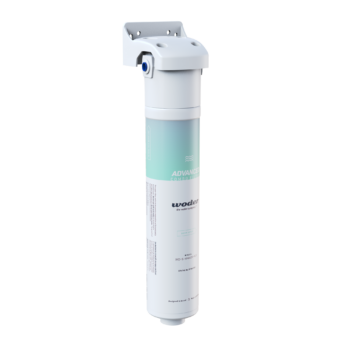
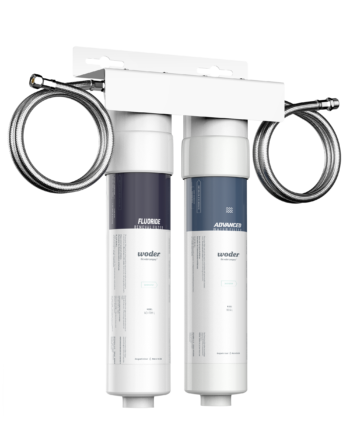
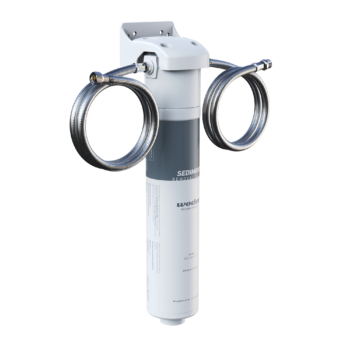
A filter cleans in one or more of four ways. It blocks particles, traps chemicals on a porous surface like carbon, swaps unwanted ions for harmless ones, or forces flow through a membrane. Most home units combine two or more of these. See them in action in our water filtration systems catalog.
Key takeaways:
- Carbon traps chlorine and many chemicals but keeps minerals.
- RO removes almost everything, minerals included, and sends some down the drain.
- Gravity units are slow but need no plumbing.
- Every cartridge wears out, so follow its rated capacity.
You pour from the tap or run it through a cartridge, and something cleaner comes out the other side. But what actually happens in between? It’s simpler than the marketing makes it sound.
Every filter does at least one of four things: it blocks particles, grabs chemicals onto a surface, swaps one dissolved substance for another, or pushes the flow through a barrier so fine that most dissolved material can’t follow. Once you understand how do water filters work at that basic level, picking the right one gets a lot easier, and so does knowing when a cartridge is done.
First we’ll go over the four methods. After that come the popular formats: gravity jugs, pitchers, under-sink units and whole-home systems.
The Four Basic Methods
Broken into four core methods, this is how water filters work. Most real products use two or more.
1. Blocking particles
Mechanical filtration is the simplest idea. A physical barrier has holes smaller than the particles you want to stop, like a very fine screen. Sand, rust, silt and some cysts get caught, and clean flow passes through.
Every mechanical cartridge has a micron rating. One micron is about 1/70th the width of a human hair. A 20-micron cartridge stops visible grit. One micron or smaller catches much finer particles, including some parasites.
2. Grabbing chemicals onto a surface
The second method is adsorption, where contaminants stick to the surface of a material instead of soaking into it. Activated carbon is the classic example. Its surface is so full of tiny pores that a single gram can have more area than a tennis court. Chlorine and many organic chemicals cling to those walls as they pass by.
3. Swapping ions
Some contaminants dissolve as charged particles called ions. An ion exchange resin is made of little beads loaded with harmless ions, like sodium or hydrogen. When hardness minerals or certain metals flow past, the beads grab them and release the harmless ions in exchange. Softeners work this way, and many pitcher cartridges include some resin too.
4. Squeezing through a membrane
The last method uses a membrane with pores so small that only H2O molecules and a few other tiny substances get through. Pressure pushes the flow across, and everything else gets flushed away. That’s RO.
Activated Charcoal, Explained
People use “charcoal” and “carbon” interchangeably. Activated charcoal is carbon that’s been heated and treated with steam or chemicals to open up millions of pores.
So how do activated charcoal water filters work in practice? The flow passes through the carbon and contaminants stick to the pore walls. The longer the flow stays in touch with the carbon, the more it catches, which is why contact time matters so much. A dense carbon block with slow flow usually beats loose granules with fast flow.
Carbon is great for chlorine, bad tastes and odors, many pesticides and volatile organic compounds. Some carbon blocks are certified for lead and PFAS as well. It doesn’t remove most dissolved minerals, salts or fluoride, and it doesn’t kill bacteria. Over time the pores fill up, and once that happens the cartridge stops working well. That’s why replacement schedules matter.
Reverse Osmosis, Step by Step
RO uses pressure to force supply through a semi-permeable membrane. The membrane lets H2O molecules through but blocks most dissolved salts, metals, fluoride, nitrates and minerals.
Wondering how does a reverse osmosis water filter work inside a typical home unit? A sediment prefilter removes particles first. A carbon prefilter takes out chlorine, which can damage the membrane. The membrane then separates clean flow from concentrated waste. The clean side goes to a storage tank, and a final carbon stage polishes the taste before it reaches a separate faucet.
So how do reverse osmosis water filters work differently from carbon? They’re far more thorough, but they remove healthy minerals too, and most send part of the flow down the drain. That’s why RO is usually saved for very high dissolved solids, fluoride or nitrates. For fluoride without RO, see our fluoride removal filters.
Gravity Units
Gravity systems need no plumbing and no pressure. You fill a top chamber, and gravity pulls the flow slowly through the cartridge into a lower chamber or pitcher. Slow flow gives the media plenty of time to work.
That’s really the whole answer to how do gravity water filters work. The tradeoff is speed, since filling a big container takes a while.
Berkey
Berkey is a well-known brand of stainless steel gravity towers. You fill the upper chamber, and the flow drips through the brand’s “Black Berkey” elements into the lower one. According to the company, those elements use a blend of media. If you’re curious how does a Berkey water filter work in detail, the manufacturer’s site lists its test data. Check for independent certification for the contaminants you care about.
Brita
Brita’s standard pitcher cartridges use a mix of activated carbon granules and resin beads, according to the company. Carbon handles chlorine and taste, and the resin reduces some metals. So how does a Brita water filter work compared with a gravity tower? Same basic idea on a smaller scale: you fill the top and it trickles through the cartridge into the pitcher. The cartridges are small, so they need frequent replacement. For a head-to-head look, read our PUR vs Brita comparison.
Whole-Home Units
A whole-home system sits where the main line enters your house. Everything heading to the faucets, shower and appliances passes through it first.
How does a whole house water filter work? Usually in stages. A sediment cartridge or spin-down screen catches particles, then a large carbon tank reduces chlorine and chemicals. Some homes add a softener or a UV lamp. Because these units handle high flow for the entire house, everything rushes through quickly, which leaves less time with the media.
Under-Sink Units
Under-sink systems connect to the cold line inside the kitchen cabinet. Open the faucet, and the flow travels from the shutoff valve through the cartridge and out of the tap.
So how do home water filters work at the sink compared with a whole-home unit? The flow is lower and the cartridge is dedicated to what you drink and cook with, so the media gets more time with each glass. Many under-sink systems use more than one stage, such as a sediment cartridge followed by carbon or specialty media.
Why Cartridges Wear Out
No media lasts forever, and each one gives out differently. Mechanical cartridges clog; as particles pile up, flow slows until the faucet barely trickles. Carbon fills up, and once its pores are full, chlorine and chemicals slip straight through, often with no change in flow to warn you. Resin beads run out of ions to swap. Softeners recharge theirs with salt, while little pitcher cartridges just get tossed. Membranes slowly foul with scale and organic matter, which cuts output and performance.
That’s why rated capacity matters. A cartridge rated for 1,000 gallons was tested to that point. Past it, there’s no guarantee it’s still doing its job, even if everything looks and tastes fine.
What Filters Can’t Do
It’s worth being clear about the limits. A carbon cartridge won’t soften hard supply, and a softener won’t remove chlorine. Most pitchers aren’t certified for bacteria, and UV doesn’t touch chemicals.
No single cartridge solves every problem. Test first, find out what’s actually in your tap, and then pick the method that targets it. A certified product lists exactly which contaminants it reduces and by how much. Our guide to the types of water filters maps each technology to the problems it solves.
How Woder’s Media Works
We built our systems around one goal: remove what you don’t want and keep what your body uses. Our Selective Filtration technology reduces lead, chlorine, PFAS and other contaminants while leaving calcium and magnesium in place.
Unlike RO, nothing gets wasted down the drain and the minerals stay. The base Gen4 Advanced media carries WQA Gold Seal certification, we make our systems in the USA, and most people install a Woder unit under the sink or on an inline line in under an hour.
Frequently Asked Questions
Do filters remove minerals?
It depends on the type. Carbon, sediment and most specialty media filters keep calcium and magnesium. RO and distillation remove nearly all minerals. Woder’s Selective Filtration is designed to reduce contaminants while keeping healthy minerals in your drinking water.
How long does a cartridge last?
Pitcher cartridges usually last one to two months. Under-sink and inline cartridges often last six to twelve months. Whole-home carbon tanks can run several years. Actual life depends on how much your household uses and what’s in your supply, so follow the rated capacity.
Does RO waste a lot of supply?
Yes, most RO systems send some flow down the drain while flushing away what the membrane blocks. Newer models are more efficient than older ones, but they still produce some wastewater. Carbon and specialty media filters, including Woder’s, don’t produce any.
How do I know when my filter stops working?
Common signs are slower flow, the chlorine taste or smell coming back, and hitting the rated capacity or time limit. Some systems have indicator lights. The safest bet is to follow the replacement schedule, since a cartridge can stop reducing contaminants before you notice any change.