- Why the Countertop Filter Market Has Grown So Quickly
- The Main Types of Countertop Water Filters
- What to Look for in a Countertop Water Filter in 2026
- How the Main Options Compare
- The Mineral Question: Why It Matters More Than Most Guides Admit
- Who Should Buy a Countertop RO System
- Who Should Consider an Inline or Under-Sink Filter Instead
- A Note on Testing and Verification
- Conclusion
- Frequently Asked Questions
If you're searching for the best countertop water filter in 2026, you're in good company. Growing awareness of PFAS, lead, and chlorine in municipal tap water has pushed a lot of households to move past pitcher filters and bottled water. The countertop category has expanded fast, with options now ranging from simple gravity-fed carbon units to powered reverse osmosis machines with remineralization stages. Picking the wrong one means overspending, sacrificing counter space for underwhelming results, or stripping out minerals you actually want to keep.
This guide breaks down how the main countertop filter types compare, what to look for in 2026, and which situations call for which approach.
Why the Countertop Filter Market Has Grown So Quickly
The demand is real. According to ONEMI's 2026 projections, the global countertop reverse osmosis market is expected to grow from $4.8 billion in 2025 to $9.2 billion by 2032, at a compound annual growth rate of 9.7%. That growth reflects a broader shift: more households want point-of-use filtration that doesn't require a plumber, a lease amendment, or a $5,000 whole-home installation.
For renters, apartment dwellers, and anyone who'd rather not drill under a sink, countertop units are the most practical option. They sit on the counter, connect to the faucet with an adapter, and start filtering immediately.
The challenge is that "countertop filter" covers a wide range of technologies with very different performance profiles. Understanding those differences before you buy can save you from replacing a unit six months later.
The Main Types of Countertop Water Filters
Gravity-Fed and Carbon Filters
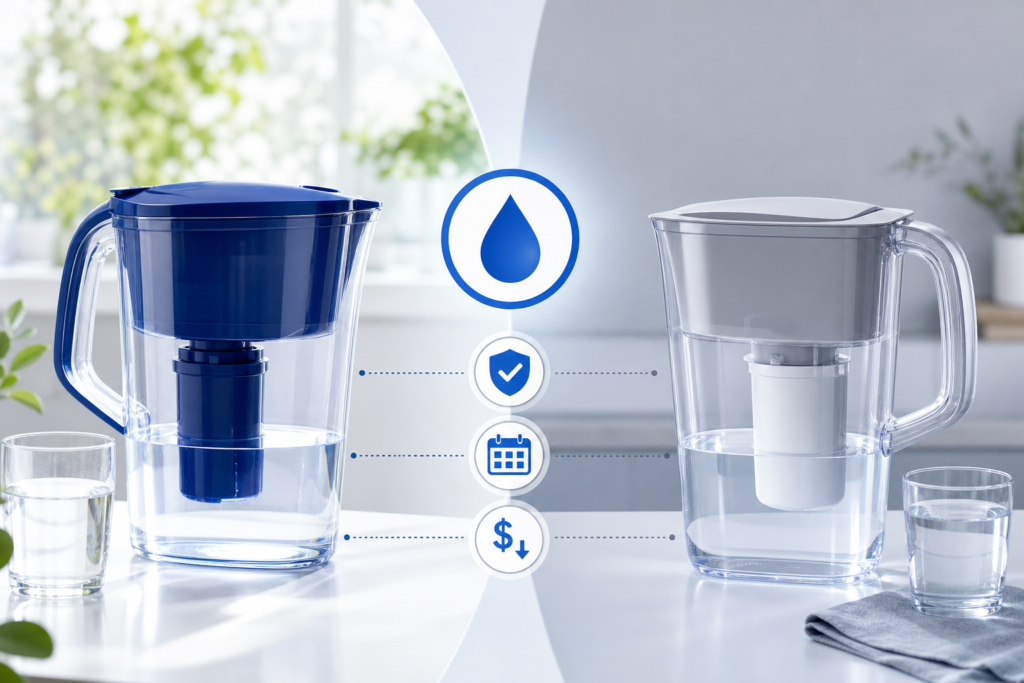
These are the simplest countertop options. You pour water into a top reservoir, gravity pulls it through a carbon or ceramic filter, and it collects in a lower chamber. No electricity, no faucet connection, no installation at all.
The tradeoff is performance. Basic carbon filtration handles chlorine taste and odor reasonably well, but it has limited effectiveness against lead, PFAS, heavy metals, and other serious contaminants. If taste is your only concern, a gravity filter may be enough. If you're filtering for health reasons, it probably isn't.
Flow rate is also slow. Filling a full tank can take an hour or more, which gets frustrating for households with moderate daily water use.
Countertop Reverse Osmosis (RO) Systems
Powered countertop RO units have become the dominant product in this category heading into 2026. They connect to a faucet, use a pump to push water through a semi-permeable membrane, and deliver filtered water on demand or into a small tank.
Contaminant removal is strong. RO membranes are effective against PFAS, lead, fluoride, nitrates, heavy metals, and a wide range of other dissolved solids. Some units pair that membrane with remineralization stages — the Waterdrop M6SL, for example, runs 8 stages and delivers a flow rate of 400 GPD, according to cleanwateradviser.com, which is fast for a countertop unit.
That said, the tradeoffs with countertop RO are real and worth understanding before you commit:
- Wastewater: RO systems produce reject water. The ratio varies by model, but some units waste 2 to 3 gallons for every gallon of filtered water.
- Mineral stripping: A standard RO membrane removes everything indiscriminately — including calcium and magnesium. If you want to preserve those minerals, you need a unit with a remineralization stage, and you need to verify that stage actually works at meaningful levels.
- Electricity: Most countertop RO units require power, which adds ongoing cost and means you need an outlet nearby.
- Footprint and noise: Powered units are larger than gravity filters and produce pump noise during filtration cycles. In a small kitchen, both matter.
- Price: AquaTru, one of the more established countertop RO brands, sits in the $400 to $600 range — a meaningful investment compared to other filter categories.
Inline and Under-Sink Filters Without RO
This is a category that many countertop comparison guides overlook, and it's worth understanding because it solves a specific problem that countertop RO doesn't.
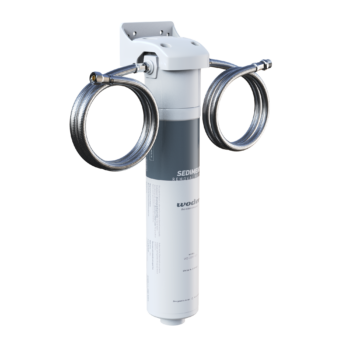
If your goal is to remove serious contaminants — lead, chlorine, chromium 6, PFAS, volatile organic compounds — without stripping beneficial minerals, an inline or under-sink filter using selective filtration technology may be a better fit than a countertop RO unit.
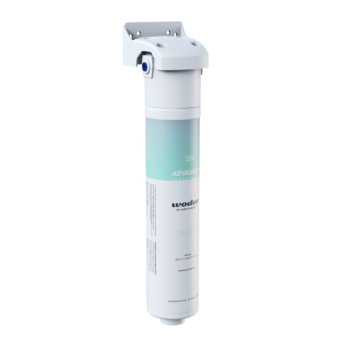
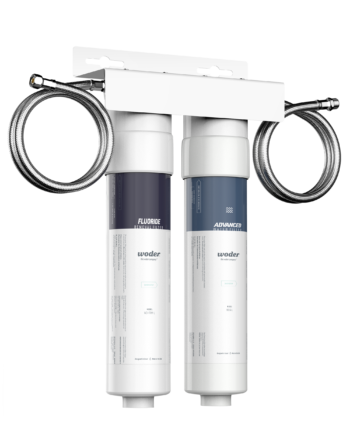
Woder Filters builds its product line around Advanced Selective Filtration, which uses nanoparticles to attract and trap specific contaminants while leaving naturally occurring calcium, magnesium, and other minerals intact. The technology removes 99.9% of contaminants including lead, chlorine, chromium 6, mercury, PFAS, carcinogens, and volatile organic compounds — verified by WQA Gold Seal certification. No RO system can make that mineral-preservation claim, because the membrane doesn't distinguish between harmful dissolved solids and beneficial ones.
Woder's models install directly into the water line under the sink or inline, without a plumber and without a whole-home system. For renters or households that want clean, mineral-rich water without counter clutter, this approach is worth comparing directly against countertop RO.
What to Look for in a Countertop Water Filter in 2026
Contaminant Coverage
Start here. Not all filters address the same contaminants, and the ones that matter most for most households in 2026 are PFAS, lead, chlorine, chromium 6, and microplastics. Check whether the filter you're considering has verified removal data for each of these — not just a broad "removes 99% of contaminants" marketing claim.
Look for third-party certification. NSF/ANSI standards are the most commonly cited, but WQA Gold Seal is another credible independent benchmark. If a brand makes strong removal claims without any third-party verification, that's a red flag.
Mineral Retention
This is the question that separates RO-based systems from selective filtration approaches. RO removes total dissolved solids without distinction — the harmful stuff, yes, but also calcium and magnesium. If filtered water is your primary drinking source, that mineral content matters.
Some countertop RO units add a remineralization stage to address this. Whether those stages restore minerals at meaningful levels depends on the specific unit. If mineral retention is important to you, look for actual data on what minerals are added back and at what concentrations — not just a "remineralization" label on the box.
Certification and Verification
The countertop filter market in 2026 has enough brands making sweeping claims that third-party certification is the most reliable shortcut. NSF/ANSI 42 covers aesthetic effects like taste and odor. NSF/ANSI 53 covers health-related contaminant reduction. NSF/ANSI 58 covers RO systems. WQA Gold Seal is an independent certification from the Water Quality Association that confirms performance claims against recognized standards.
Woder holds WQA Gold Seal certification. Several newer DTC brands, including Waterdrop and Frizzlife, do not hold this credential — worth noting when comparing removal claims side by side.
Long-Term Ownership Cost
The purchase price is only part of the picture. Replacement filters, wastewater (for RO units), and electricity add up over a year of use.
Gravity and carbon filters tend to have lower ongoing costs but also lower performance. Countertop RO units carry higher filter replacement costs and generate wastewater. Inline filters like those in the Woder line are rated by gallon capacity, with models ranging from 5,000 to 10,000 gallons per cartridge — which translates to real cost efficiency over time.
Before buying, calculate the annual cost of replacement filters at your household's actual water consumption. A unit that looks affordable upfront can get expensive fast if cartridges run $60 every three months.
Installation and Space Requirements
Countertop RO units need a faucet adapter, counter space, and an outlet. Most are designed for standard faucet threads, but pull-out sprayer faucets or non-standard threads may require additional adapters or may not be compatible at all.
Gravity filters need no connection — just counter space and access to fill the top reservoir.
Inline and under-sink filters like Woder's connect directly to the water line and don't occupy counter space at all. For households where counter real estate is limited, that's a genuine advantage.
How the Main Options Compare
| Filter Type | Contaminant Removal | Mineral Retention | Electricity Needed | Counter Space | Wastewater |
|---|---|---|---|---|---|
| Gravity / Carbon | Basic (taste, odor) | Yes | No | Moderate | None |
| Countertop RO | High (PFAS, lead, fluoride) | Partial (with remineralization) | Yes | High | Yes |
| Countertop RO with remineralization | High | Partial | Yes | High | Yes |
| Inline / Under-Sink (selective filtration) | High (PFAS, lead, chromium 6, mercury) | Yes (by design) | No | None | None |
The Mineral Question: Why It Matters More Than Most Guides Admit
Most countertop filter comparisons focus almost entirely on what gets removed. Fewer address what you might be losing.
Calcium and magnesium are the two minerals most commonly stripped by RO systems. Both are present in most municipal water supplies and contribute to the natural taste of water. Calcium supports bone health; magnesium plays a role in hundreds of enzymatic processes. If filtered water is your primary drinking source, a system that removes these minerals entirely is worth thinking about carefully.
This is the clearest differentiator between RO-based systems and selective filtration. Woder's Advanced Selective Filtration is designed specifically to target harmful contaminants while leaving beneficial minerals in place. That's not a feature you can bolt onto an RO system after the fact — it's a fundamentally different filtration mechanism.
Who Should Buy a Countertop RO System
Countertop RO makes the most sense if:
- Your tap water has high levels of fluoride, nitrates, or total dissolved solids that selective filtration doesn't address
- You want the highest possible contaminant removal and you're willing to trade mineral content and wastewater for it
- You have counter space and an outlet available near the sink
- You're comfortable with the ongoing cost of filter replacement and electricity
AquaTru is the most established countertop RO brand in this category and is worth considering if these conditions apply. Its contaminant removal scores are strong, though it sits in the $400 to $600 price range and does not retain minerals.
Who Should Consider an Inline or Under-Sink Filter Instead
An inline or under-sink filter is likely a better fit if:
- You want to remove lead, PFAS, chlorine, chromium 6, and heavy metals without stripping calcium and magnesium
- Counter space is limited and you'd rather keep it clear
- You're renting and can't do a full under-sink installation but can connect an inline unit
- You want US-made, WQA-certified filtration at a mid-market price point
- You prefer a system that runs without electricity and produces no wastewater
Woder's product line covers a range of household needs, from the compact WD-G4-210-JG for smaller spaces to the WD-10K-ADV-PORT for high-flow households. The interactive Wizard tool on the site helps you match the right model to your water use and installation setup.
A Note on Testing and Verification
BobVila.com spent two weeks testing seven countertop water filter models in its 2026 roundup — the kind of hands-on evaluation that's genuinely useful for this category. Real-world testing captures things like flow rate under repeated use, noise levels, and how quickly a unit delivers a full day's usable volume, details that spec sheets don't always reflect.
When reading any countertop filter comparison, check whether the reviewer tested contaminant removal with third-party lab data or relied on manufacturer claims. That distinction matters significantly when you're evaluating PFAS or lead removal.
Conclusion
The best countertop water filter in 2026 depends on what you're trying to remove, whether you want to keep beneficial minerals, and how much space and budget you're working with. Countertop RO systems offer strong contaminant removal but come with real tradeoffs around minerals, wastewater, electricity, and cost. Gravity filters are simple but limited. Inline and under-sink selective filtration systems offer a middle path — removing serious contaminants without stripping the minerals your water naturally contains.
If you're still weighing your options, start with what's actually in your water. Woder offers a water testing kit alongside its filter line, and the Wizard tool at woder.com helps you identify the right model for your household's needs. Clean water doesn't have to mean mineral-free water, and the right filter makes that distinction clearly.
Frequently Asked Questions
What is the best countertop water filter for removing PFAS in 2026?
Both countertop RO systems and inline selective filtration filters address PFAS. The key difference is that RO systems also remove beneficial minerals like calcium and magnesium, while selective filtration technology — like that used in Woder filters — targets PFAS and other harmful contaminants while leaving minerals intact. Look for third-party certification such as WQA Gold Seal to verify PFAS removal claims.
Do countertop water filters need electricity?
It depends on the type. Gravity-fed and carbon countertop filters require no electricity. Countertop reverse osmosis systems use a pump and need an outlet. Inline and under-sink filters connect directly to the water line and operate without power.
Are countertop RO systems worth the cost?
If your water has high levels of fluoride, nitrates, or total dissolved solids, a countertop RO system may be worth the investment. For households focused on removing lead, chlorine, PFAS, and heavy metals while keeping beneficial minerals, a selective filtration system often delivers comparable or better results at a lower long-term cost — without the wastewater or electricity requirements.
Do countertop water filters remove lead?
Not all of them. Basic carbon and gravity filters have limited effectiveness against lead. Countertop RO systems and certified selective filtration systems — such as those holding WQA Gold Seal certification — are verified to remove lead. Always check the certification and contaminant-specific removal data before buying.
What is the difference between NSF certification and WQA Gold Seal?
NSF/ANSI standards are widely cited benchmarks for water filter performance, covering aesthetic effects (NSF 42), health-related contaminant reduction (NSF 53), and RO systems (NSF 58). WQA Gold Seal is an independent certification from the Water Quality Association that verifies filtration performance claims against recognized standards. Both are credible third-party credentials; the important thing is that a filter carries at least one of them rather than relying solely on manufacturer claims.
Can renters use a countertop water filter without drilling or modifying the plumbing?
Yes. Countertop RO systems connect to a faucet via an adapter and require no drilling. Gravity filters need no connection at all. Inline filters like those in the Woder line can also be installed without a plumber, though they connect to the water line rather than sitting on the counter. Check your faucet type before buying any countertop unit, as pull-out sprayer faucets may require additional adapters.
How often do countertop water filter cartridges need to be replaced?
Replacement frequency depends on the technology and your household's water consumption. RO membranes typically last 12 to 24 months. Carbon and gravity filters vary widely. Woder's inline filter cartridges are rated by gallon capacity, with models ranging from 5,000 to 10,000 gallons per cartridge. Calculating annual replacement cost at your actual usage level gives you a more accurate picture of long-term ownership cost than the purchase price alone.