At first glance, waterdrop vs brita looks like a straightforward filter comparison. In practice, the two brands cover substantially different parts of the home-filtration market. Brita is best known for gravity-fed pitchers and dispensers using carbon-based filtration. Waterdrop has a broader catalog that includes pitchers, under-sink products, and reverse osmosis systems. That means a brita vs waterdrop decision cannot be reduced to asking which brand is simply “better.” You first need to decide what type of filtration you actually want.
Two differences deserve particular attention: what happens to minerals during treatment and whether the process sends part of the incoming supply down the drain.
How Each Brand Filters
Brita’s familiar pitcher format uses a replaceable cartridge and gravity. You fill the upper reservoir, and the contents slowly pass through the filtration media into the pitcher below.
The format is simple. There is no plumbing installation, electricity, storage tank, or drain connection. This makes pitchers particularly accessible for renters, students, and households with relatively low daily consumption.
Waterdrop sells several types of products, so it is important not to describe the entire brand as though every model uses reverse osmosis. Its RO systems, however, work very differently from a standard carbon pitcher.
Reverse osmosis forces the incoming supply through a semi-permeable membrane capable of rejecting a broad range of dissolved substances. Depending on the system, additional pre-filtration and post-filtration stages may also be used.
RO is powerful, but that broader removal comes with trade-offs. The process can remove naturally occurring dissolved minerals, requires a drain connection, and produces a reject stream.
Brita’s carbon-based pitcher filtration generally does not operate that way. It does not require a drain and does not intentionally create an RO-style wastewater stream.
So before comparing logos or cartridge prices, decide which filtration method fits your priorities.
Wasted Water: Understanding the RO Trade-Off
One of the most important distinctions between reverse osmosis and a gravity-fed pitcher is what happens during treatment.
RO membranes separate the incoming stream into purified output and concentrate. The concentrate carries rejected dissolved substances away through a drain.
How much is rejected depends on system design, pressure, membrane efficiency, and operating conditions. Modern systems can be considerably more efficient than older RO units, so it would be misleading to assign one wastewater ratio to every product.
Brita pitchers do not create this type of reject stream. What you pour into the reservoir passes through the cartridge and remains available for use, aside from small amounts retained by the media itself.
That does not automatically make a pitcher environmentally superior in every respect. Cartridges still need replacement, pitchers have limited capacity, and households may consume several refills per day.
But if avoiding an RO reject stream is important to you, the distinction matters.
Another consideration is installation. RO generally needs more plumbing than a pitcher and may require electricity depending on the model. A gravity-fed unit needs none of that.
The convenience equation changes, however, when daily consumption increases. Refilling a small reservoir repeatedly can become its own form of inconvenience.
What Happens to Naturally Occurring Minerals?
Reverse osmosis is intentionally broad in what it rejects. That is one reason it is used when consumers want substantial reduction of dissolved solids.
The same mechanism can also reduce naturally occurring minerals such as calcium and magnesium.
For some households, this is not a concern. Others specifically prefer filtration that leaves naturally occurring minerals in the finished supply.
Carbon-based pitcher filtration generally does not remove dissolved minerals to the same degree as RO. Its treatment mechanism is different and its contaminant-reduction capabilities depend on the particular cartridge.
Neither approach should be described simply as “healthy” or “unhealthy” based on minerals alone. Drinking supply is only one source of dietary minerals, and the appropriate treatment method depends on source quality and the contaminants you are trying to address.
The important point is that the technologies behave differently.
If broad dissolved-solids removal is your priority, RO may make sense. If retaining naturally occurring minerals matters to you, another filtration method may be more suitable. Taste complaints aren’t always about minerals, either, chlorine taste in particular can persist even after carbon filtration; we cover why in this breakdown of chlorine taste and filtration.
Capacity and Everyday Convenience
A pitcher wins on simplicity. Buy it, prepare the cartridge, fill the reservoir, and put it in the refrigerator.
The inconvenience appears with volume.
One or two people may find a pitcher completely adequate for drinking. Add a family, frequent cooking, coffee, tea, and reusable bottles, and the reservoir can empty surprisingly quickly.
Under-sink systems solve the capacity problem differently. They treat the supply at the plumbing point, so there is no container to refill.
RO systems add complexity in exchange for their broader treatment capabilities. Depending on the design, they can require multiple stages, a drain connection, electricity, and additional under-counter space.
The right choice depends on which inconvenience bothers you more: repeatedly filling a pitcher or installing and maintaining a more complex system.
A Third Option: Selective Filtration
There is another category between a basic pitcher and reverse osmosis.
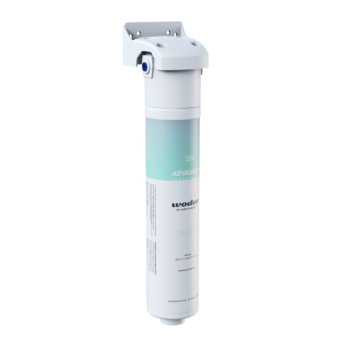
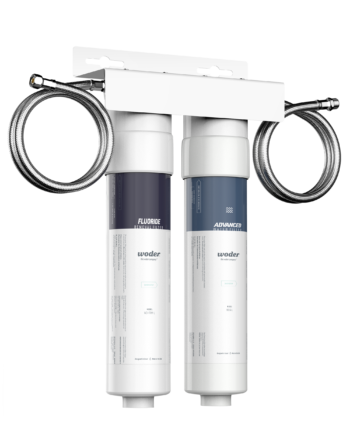
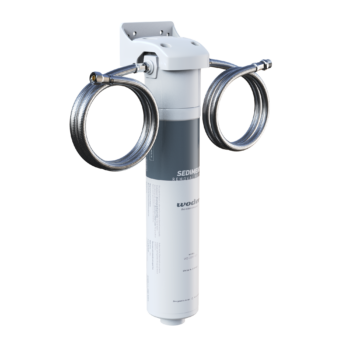
Woder’s under-sink systems use Advanced Selective Filtration, which is designed to reduce targeted contaminants without broadly stripping naturally occurring minerals from the incoming supply.
There is also no RO reject stream.
This gives households another option when they want filtration directly from the kitchen faucet but do not necessarily want reverse osmosis.
It is important to keep the categories clear. Woder is not an RO system pretending to be one, nor is it simply a large pitcher hidden under the sink. It uses a different filtration approach with its own contaminant-reduction specifications.
Woder’s base Gen4 Advanced media carries WQA Gold Seal certification for applicable performance claims, providing independent verification of those specified claims.
Which option makes sense depends on the problem you are trying to solve.
Choose a pitcher when simplicity, portability, and minimal setup matter most.
Consider RO when broad dissolved-solids reduction is the priority and you accept the installation requirements, mineral reduction, and reject stream associated with the technology.
Consider Selective Filtration when you want point-of-use convenience, targeted contaminant reduction, mineral retention, and no RO-style wastewater stream.
If a simple pitcher-vs-pitcher comparison is closer to what you need, see PUR vs Brita. And if hard water, not just taste, is the underlying issue, our Culligan vs Kinetico comparison covers whole-home softening instead.
Frequently Asked Questions
Does Waterdrop or Brita waste water during filtration?
Waterdrop sells different filtration technologies, so the answer depends on the model. Its reverse osmosis systems produce a reject stream as part of the RO process. Brita’s gravity-fed pitchers do not use reverse osmosis and do not create the same type of wastewater.
Which keeps more minerals in the water, Waterdrop or Brita?
Brita’s carbon-based pitcher filtration generally retains more naturally occurring dissolved minerals than reverse osmosis. Waterdrop also sells non-RO products, however, so you should evaluate the specific system rather than applying the characteristics of RO to its entire product range.
Is there an option that avoids RO’s wasted water without giving up contaminant removal?
Yes. Point-of-use technologies such as Woder’s Selective Filtration target specified contaminants without using an RO membrane or producing an RO reject stream. Always compare independently verified reduction claims to the contaminants relevant to your own supply.