- Why Your Water Still Tastes Like Chlorine After Filtering
- What Type of Filter Actually Removes Chlorine Taste
- How to Diagnose Why Your Filter Is Not Working
- When to Replace vs. When to Upgrade
- The Mineral Question: Why “Filtered” Does Not Always Mean “Better Tasting”
- Finding the Right Filter for Your Situation
- Frequently Asked Questions
- The Bottom Line
A certified carbon block filter at the kitchen tap is the most reliable fix. Look for independent certification for chlorine taste and odor, and change the cartridge on time. If the taste still comes back, the cartridge is spent or your city uses chloramine, which needs a different media. Our Gen4 Advanced under-sink filters are built for exactly this.
Key takeaways:
- Dense carbon block beats loose carbon granules for chlorine.
- Under-sink units hold more media than pitchers.
- Chloramine is tougher and needs catalytic carbon or RO.
- A spent cartridge is the most common reason the taste returns.
Few things ruin a glass of iced tea faster than a pool smell. Picking the right filter isn’t hard once you know which media does the work and which products just look the part.
You bought a water filter specifically to get rid of that sharp, chemical taste in your tap water. You installed it, ran the water, took a sip – and the chlorine is still there. What went wrong?
Finding the right water filter for chlorine taste is not as simple as picking any filter off the shelf. The filtration technology, the age of the media, the chlorine concentration coming into your home, and even how long water sits in your pipes all affect whether that taste actually disappears. Here is a breakdown of exactly why chlorine taste persists after filtering — and what to do about it.
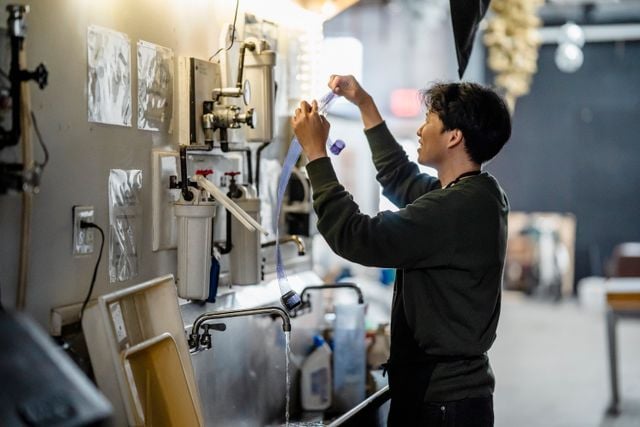
Which Filters Remove Chlorine Taste
Almost every filter that targets chlorine uses carbon, but not all carbon performs the same. An activated carbon block is packed tight, so flow moves slowly and every drop touches the media. Loose granules, the kind in most pitchers, let flow find shortcuts. That’s why two filters can both say “reduces chlorine” and taste completely different.
How long the flow touches the media is the other half of the story. Under-sink units push supply through a large cartridge at a steady pace. A pitcher drips through a small one. A faucet mount sits somewhere in between.
| Filter type | Chlorine taste | Chloramine | Contact time | Yearly cost |
| Pitcher (granular carbon) | Moderate | Poor | Short | $60 to $120 |
| Faucet mount | Good | Poor to moderate | Short | $60 to $100 |
| Under-sink carbon block | Very good | Moderate | Long | $40 to $150 |
| Catalytic carbon | Very good | Very good | Long | $60 to $200 |
| Reverse osmosis | Very good (carbon prefilter) | Good | Long | $100 to $250 |
If you want a water filter for chlorine removal that lasts, an under-sink carbon block is the practical sweet spot for most homes.
How to Pick a Chlorine Filter for Your Tap
Start with proof. The standard to look for is NSF/ANSI 42, which covers chlorine taste and odor. Check the listing on the certifier’s website, not just the box.
Next, look at capacity. A bigger rating means fewer swaps and a lower cost per gallon. Then check how it connects. A system that uses your existing faucet is the easiest chlorine filter for tap water to live with, because nothing changes about how you use the sink.
For most households, the best water filter for chlorine removal is the one that’s certified, sized for your daily use, and easy enough to maintain that you’ll actually change the cartridge.
Still Tasting Chlorine? Quick Checks
If the taste is back, run through these before you buy anything new. First, check your cartridge replacement schedule; most carbon cartridges stop catching chlorine well near the end of their rated life. Second, call your utility or read its annual report to see whether it uses chlorine or chloramine. Third, run the faucet for 30 seconds in the morning, since supply that sat overnight in the housing can taste flat.
We cover every cause in detail in our guide to chlorine taste after filtering. And if you’re wondering whether your city adds chlorine at all, see does tap water have chlorine.
Chloramine and What Woder Does With It
Chloramine is chlorine bonded with ammonia. It lasts longer in city pipes, and standard carbon removes it slowly. Catalytic carbon, a specially treated version, breaks it down much faster.
OPTION A (if the client has chloramine test data): Woder’s Gen4 Advanced media was lab-tested for chloramine reduction, with results of [X%] at [Y gallons]. You can see the full report on [link to performance data sheet].
OPTION B (if there is no test data): Woder’s Gen4 Advanced media is certified for chlorine taste and odor, but it isn’t certified for chloramine. If your utility uses chloramine, pair it with a catalytic carbon stage, or pick a system certified for chloramine reduction.
Our full guide on removing chloramine from tap water compares every option.
Woder Options for Chlorine Taste
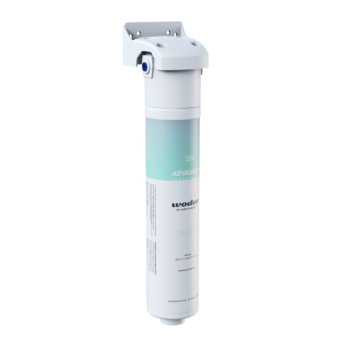
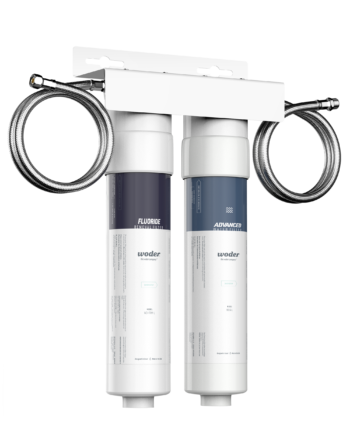
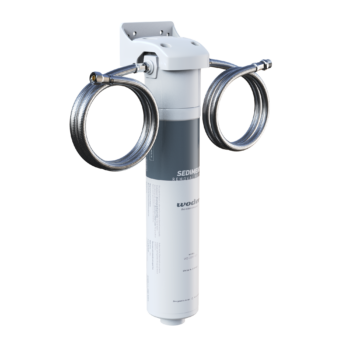
For the kitchen sink, the WD-G4-DC connects to your existing faucet with no drilling. For fridges, ice makers and RVs, the WD-G4-JG fits a standard 1/4-inch line. Both use the same base media, which keeps calcium and magnesium in the glass. Not sure which fits? Try the Filter Wizard.
The Mineral Question: Why “Filtered” Does Not Always Mean “Better Tasting”
Here is something that surprises a lot of people: removing everything from water does not make it taste better. Reverse osmosis does a thorough job eliminating contaminants, but it also removes the calcium and magnesium that give water a clean, slightly rounded flavor. What you get instead is demineralized water that often tastes flat, faintly acidic, or hollow.
If you have tried RO water and found it unsatisfying, that is not a coincidence. The minerals are part of what makes water taste right.
A filter that removes chlorine, lead, PFAS, and other contaminants while leaving those minerals intact solves the taste problem without creating a new one. That is the practical case for selective filtration over RO for households where taste is the primary concern.
Finding the Right Filter for Your Situation
The right filter depends on your water source, your household flow rate, and whether your utility uses chlorine or chloramines. Woder’s product finder at woder.com/wizard walks you through those variables and matches you to the right model. It takes a few minutes and removes the guesswork from a decision that is easy to get wrong.
To explore the full product line and learn more about how Advanced Selective Filtration works, start at Woder Filters.
Frequently Asked Questions
Why does my water still taste like chlorine after filtering?
The most common reasons are an exhausted filter cartridge, a filter technology that is not designed to remove chlorine or chloramines, or incoming chlorine levels that exceed the filter’s capacity. Check the rated service life and confirm whether your utility uses free chlorine or chloramines — the two require different filter media.
What type of water filter removes chlorine taste most effectively?
Filters using activated carbon or selective filtration media are the most effective for chlorine taste. For chloramine removal specifically, catalytic carbon outperforms standard activated carbon. The filter also needs adequate contact time with the water, which is why under-sink inline filters tend to outperform gravity-fed pitcher filters for this purpose.
How do I know if my water utility uses chlorine or chloramines?
Check your utility’s annual water quality report — typically available on their website — or call them directly. The distinction matters because chloramines require different filter media than free chlorine, and a filter rated only for chlorine will not adequately address chloramines.
Does reverse osmosis remove chlorine taste?
Yes, reverse osmosis removes chlorine effectively. However, it also removes beneficial minerals like calcium and magnesium, which can leave water tasting flat or slightly acidic. For households where taste is the primary concern, a selective filtration system that removes chlorine while preserving minerals may produce better-tasting results.
How often should I replace my water filter to prevent chlorine taste from returning?
Follow the manufacturer’s rated capacity in gallons rather than a fixed calendar schedule. High-use households or homes with elevated incoming chlorine levels will exhaust filter media faster than the packaging estimate. If chlorine taste returns shortly after a fresh cartridge, that typically points to a capacity or technology mismatch rather than a replacement timing issue.
Can water sitting in pipes cause chlorine taste even after filtering?
Yes. Water that sits in the pipe between your filter and your tap can absorb trace compounds from the pipe material. Running the cold tap for 20 to 30 seconds before drawing drinking water helps, but it does not replace addressing the filtration issue. If the taste is present even in freshly run water, the filter itself is the primary variable to investigate.
Will a higher-capacity filter remove more chlorine?
A higher-capacity filter provides more filter media and, at normal household flow rates, more contact time between the water and that media. Both factors improve chlorine removal efficiency. If your current filter handles your flow rate adequately but still leaves chlorine taste, upgrading to a model rated for a higher volume may help — particularly in homes with elevated incoming chlorine levels.
Does a Brita pitcher remove chlorine taste?
Yes, a standard pitcher cartridge reduces chlorine taste, but its small, loose carbon bed gives the flow only a few seconds with the media, so results fade as the cartridge ages. It won’t do much for chloramine. For a steadier result at the kitchen tap, a certified carbon block under the sink usually works better.
How do I remove chlorine taste from water without a filter?
If you’re looking at how to remove chlorine taste from water with no equipment, chill an open pitcher overnight, or add a pinch of vitamin C powder. Both help with free chlorine. Neither works well on chloramine, and neither removes lead or PFAS, so a chlorine filter for drinking water is the long-term fix.
The Bottom Line
Chlorine taste persisting after filtering almost always comes down to one of three things: the wrong filter technology for your water chemistry, an exhausted cartridge, or incoming chlorine levels that exceed the filter’s rated capacity. Figuring out which one applies takes about ten minutes and saves you from replacing equipment that does not need replacing — or keeping equipment that does.
The goal is not just filtered water. It is water that tastes clean, stays mineral-rich, and comes from a system you can maintain without calling a plumber. If your current setup is not delivering that, it is worth taking a closer look at what the filter is actually designed to do.