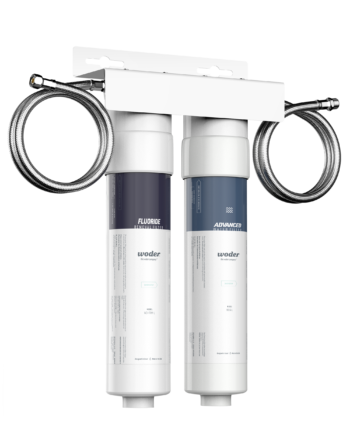
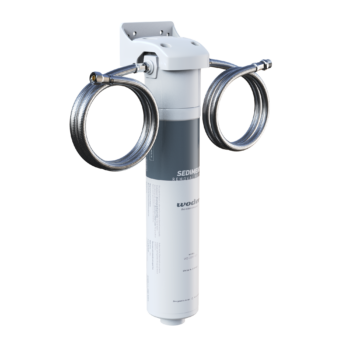
- What Is Advanced Selective Filtration?
- What Gets Removed
- What Stays In — and Why That Matters
- How the Filter Works in Your Home
- The Product Line: Different Homes, Same Technology
- How Woder Compares to Other Filter Types
- Why 2026 Is a Good Time to Pay Attention
- FAQs
- The Bottom Line
Woder’s filtration uses a specialty media that grabs lead, chlorine, PFAS and other contaminants while letting healthy minerals pass through. It installs under the sink or on an inline line, sends nothing down the drain, and the base media is independently certified. You can see every model in our water filtration systems catalog.
Key takeaways:
- It targets contaminants, not everything dissolved in your tap.
- Healthy minerals stay in the glass.
- No wastewater, unlike reverse osmosis.
- Same base media across the under-sink and inline lineup.
Most water filters make a simple promise: remove the bad stuff. What they rarely talk about is what else disappears in the process. Calcium. Magnesium. The minerals your body actually wants from water.
Woder takes a different approach. Advanced Selective Filtration is built around one core idea: your filter should know the difference between a contaminant and a mineral. This article breaks down exactly how that works, what it means for your drinking water, and why it matters more in 2026 than ever before.
What Is Advanced Selective Filtration?
Advanced Selective Filtration is Woder’s proprietary filtration method. It uses nanoparticles engineered to attract and bind specific contaminants as water passes through the filter.
Think of it like a magnet that only picks up certain metals. The nanoparticles target harmful substances — lead, PFAS, chromium 6, mercury, chlorine, volatile organic compounds, and carcinogens — while leaving naturally occurring minerals like calcium and magnesium completely alone.
That selectivity is the key distinction. Most filtration methods, particularly reverse osmosis, work by blocking or stripping everything from the water. They do not distinguish between a contaminant and a beneficial mineral. Woder’s technology does.

What Gets Removed
Woder’s Advanced Selective Filtration removes 99.9% of a wide range of contaminants, including:
- Lead — a serious concern in older homes with aging pipes
- PFAS — the “forever chemicals” now found in water supplies across the country
- Chlorine and chloramines — added during municipal treatment, but not something you want in every glass
- Chromium 6 — a carcinogen that gained widespread attention after high-profile contamination cases
- Mercury — a heavy metal with well-documented health effects
- Volatile organic compounds (VOCs) — chemicals that can enter water from industrial runoff or household sources
- Carcinogens — a broader category that includes several compounds found in treated tap water
This is not a partial list padded to sound impressive. These are the specific contaminants Woder’s filtration targets and removes at that 99.9% rate.
What Stays In — and Why That Matters
This is where Woder separates itself from reverse osmosis systems.
RO filtration pushes water through a membrane so fine that almost nothing gets through — including calcium and magnesium. The result is technically very pure water, but stripped of minerals your body actually uses. Some people remineralize their RO water afterward. That is an extra step to fix a problem that selective filtration avoids in the first place.
With Woder, calcium and magnesium stay in the water. They pass through the filter untouched because the nanoparticles are not designed to attract them. You get clean water that still tastes the way good water should — not flat or hollow, but naturally mineral-rich.
Lead, PFAS, chlorine — gone. Calcium, magnesium — still there. That is the Woder difference. That’s the whole idea behind a water filter that keeps minerals. Most of what a TDS meter reads in tap supply is calcium and magnesium. Strip them out and the glass tastes flat, which is why some RO owners end up buying mineral drops. If you’ve been hunting for a water filter that doesn’t remove minerals but still deals with lead and chlorine, this is the gap Woder was built to fill.
How the Filter Works in Your Home
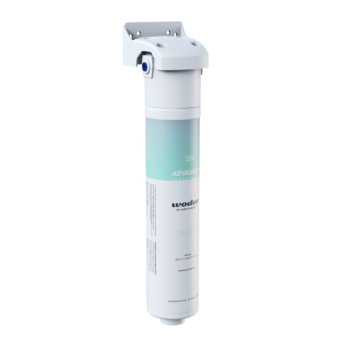
Woder filters install inline, directly into your existing water line under the sink. No tank, no separate faucet in most cases, no wastewater drain, no plumber. You connect it to your cold water supply line, and it filters water on demand as it flows through.
The nanoparticle filtration media sits inside a compact cartridge. Water enters, passes through the media, contaminants bind to the nanoparticles, and clean mineral-rich water flows out — in seconds, at normal tap pressure.
When the cartridge reaches the end of its rated capacity, you replace just the cartridge, not the whole unit. Replacement cartridges are available directly from Woder Filters, keeping ongoing filtration simple and cost-effective.
The Product Line: Different Homes, Same Technology
Every Woder model is built around the same Advanced Selective Filtration core, with different flow rates to match different household needs:
| Model | Type | Flow Rate |
|---|---|---|
| WD-D-8K-FRM-ADV-DC | Under-sink | 8 kGPM |
| WD-10K-ADV-PORT | High-flow inline | 10 kGPM |
| WD-S-5K-REP | Replacement cartridge | 5 kGPM |
| WD-G4-210-JG | Compact residential | Standard residential |
| Water-Filter Bottle | Portable | On-the-go |
Whether you are filtering water for a single household tap or a higher-demand setup, there is a Woder model built for that flow rate. The portable Water-Filter Bottle brings the same filtration approach to travel or outdoor use.
How Woder Compares to Other Filter Types
Putting Advanced Selective Filtration next to the alternatives makes the differences easier to see.
Pitcher Filters
Pitcher filters use basic activated carbon. They improve taste and reduce some chlorine, but they fall short on serious contaminants like lead, PFAS, or chromium 6. They also require manual refilling and filter slowly.
Reverse Osmosis Systems
RO systems are effective, but the trade-offs are real. They strip beneficial minerals from your water, produce two to four gallons of wastewater for every gallon filtered, require a storage tank and often a dedicated faucet, and typically need a plumber to install. The upfront cost is significantly higher than an inline filter.
Where Woder Fits
Pitchers are cheap but slow, with small cartridges. RO removes nearly everything, minerals included, and sends reverse osmosis wastewater down the drain with every gallon. Woder sits in between: plumbed in like RO, but selective like a mineral-keeping filter.
| Pitcher | Reverse osmosis | Woder | |
| Lead and PFAS | Varies by model | Very good | [per data sheet] |
| Keeps minerals | Yes | No | Yes |
| Wastewater | None | Yes | None |
| Install | None | Plumber, extra faucet | DIY, existing faucet |
| Cartridge changes | Every 1 to 2 months | Several stages | Every 6 to 12 months |
If you’re comparing the best water filter that keeps minerals, look at certified reduction data first, then capacity and cost per gallon. For a head-to-head with another brand, see our Woder vs iSpring comparison.
Why 2026 Is a Good Time to Pay Attention
In April 2024, the EPA set the first national drinking supply limits for several PFAS, including PFOA and PFOS. Rules and deadlines can still change, so check the EPA PFAS page for the current status. For homeowners, the practical takeaway is simple: if your utility report lists PFAS, choose a filter with a lab report for the specific compounds.
Frequently Asked Questions
What is Advanced Selective Filtration and how is it different from regular filtration?
Advanced Selective Filtration is Woder’s proprietary technology that uses nanoparticles to target and remove specific contaminants while leaving beneficial minerals like calcium and magnesium intact. Standard carbon filters and reverse osmosis systems do not make that distinction — they either miss serious contaminants or remove everything indiscriminately.
Does Woder remove PFAS from drinking water?
Yes. Woder’s Advanced Selective Filtration removes PFAS as part of its 99.9% contaminant removal performance. PFAS — sometimes called “forever chemicals” — are increasingly found in municipal water supplies and are a primary reason many homeowners need something more capable than a basic pitcher filter.
Will a Woder filter remove the minerals from my water?
No. That is the core design principle behind Advanced Selective Filtration. The nanoparticles are engineered to attract contaminants, not minerals. Calcium and magnesium pass through untouched, so your water keeps its natural mineral content.
Do I need a plumber to install a Woder filter?
No. Woder filters connect directly to your existing cold water supply line under the sink. No whole-home plumbing changes, no storage tank, no professional installation needed. Most homeowners finish the job in under an hour.
How often do I need to replace the filter cartridge?
It depends on the model and your household’s water usage. Each model is rated to a specific gallon capacity, and when the cartridge hits that limit, you replace the cartridge only — not the full unit. Replacement cartridges are available at woder.com.
How does Woder compare to a reverse osmosis system?
Both remove serious contaminants, but RO systems strip out beneficial minerals, produce wastewater, require a storage tank, and typically need professional installation. Woder preserves minerals, produces no wastewater, installs inline without a tank, and does not require a plumber. For most households, that is comparable protection with far less complexity and cost.
Which Woder filter is right for my home?
It depends on your household’s flow rate needs and water quality concerns. Woder’s interactive Wizard tool at woder.com/wizard walks you through the options based on your specific situation and points you to the right model.
How long does a Woder cartridge last?
Most Woder cartridges are rated for [X,000] gallons, which works out to roughly six to twelve months for a typical household. Heavy use, like a big family that cooks a lot, means swapping sooner. Each product page lists the exact rating, and replacements are available on our cartridges page.
Is Woder certified?
The base Gen4 Advanced media in every Woder water filter carries the WQA Gold Seal for [standard and contaminants]. Add-on media in dual-stage models, such as heavy metals or fluoride, is tested by an independent lab. Links to the certificate and reports are on each product page.
The Bottom Line
Remove the bad. Keep the good. That is what Advanced Selective Filtration is built to do.
If you have been weighing a reverse osmosis system against a basic pitcher filter and neither feels quite right, Woder is worth a close look. The technology is specific, the installation is genuinely DIY, and the result is clean water that still has what water is supposed to have.
Find the right filter for your home at woder.com.