Table of Contents
- What You're Actually Comparing
- Filtration Technology: Selective vs Reverse Osmosis
- What Each Filter Removes (and Keeps)
- Installation: How Hard Is It Really?
- Price and Long-Term Cost
- Where Each Brand Is Made
- Who Each Filter Is Best For
- Head-to-Head Comparison Table
- FAQs
- The Bottom Line
You've narrowed it down to two names. Waterdrop keeps coming up in your research. So does Woder. Both go under your sink. Both promise clean water. But they work in fundamentally different ways — and that difference matters more than most comparison articles bother to explain.
Here's what each system actually does, what it costs over time, and which one makes more sense depending on what you care about.
What You’re Actually Comparing
Waterdrop makes tankless reverse osmosis systems. Their most popular models push water through a multi-stage RO membrane, often paired with app connectivity and a sleek under-sink or countertop design. The brand is built for buyers who want premium aesthetics and tech features alongside filtration performance.
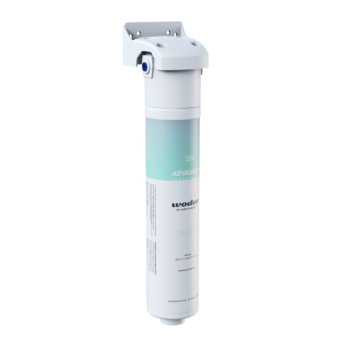
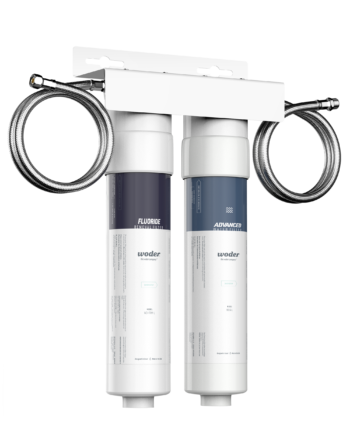
Woder makes inline and under-sink filters built on Advanced Selective Filtration — a proprietary technology that uses nanoparticles to attract and remove contaminants without stripping the water of beneficial minerals. No RO membrane. No tank. No wastewater.
These aren't two versions of the same thing. They represent two different ideas about what clean water should actually be.
Filtration Technology: Selective vs Reverse Osmosis
Reverse osmosis works by forcing water through a semi-permeable membrane. It catches a wide range of contaminants — but it catches minerals too. Calcium, magnesium, and other naturally occurring minerals your body actually uses get removed right alongside the lead and PFAS.
Waterdrop's RO systems produce demineralized water. Some models include a remineralization stage to add minerals back in, but that's a workaround for a problem the system itself created.
Woder's Advanced Selective Filtration works differently. The nanoparticles in the filter are designed with a specific affinity for contaminants — they attract and hold lead, chlorine, chromium 6, mercury, PFAS, carcinogens, and volatile organic compounds. They don't bind to calcium or magnesium. So those minerals stay in your water naturally, not because they were added back after the fact.
The result is filtered water that still tastes like water, not like something that's been processed within an inch of its life.
What Each Filter Removes (and Keeps)
Woder
Woder removes 99.9% of contaminants, including:
- Lead
- Chlorine
- Chromium 6
- Mercury
- PFAS
- Carcinogens
- Volatile organic compounds (VOCs)
- Heavy metals
It also reduces turbidity, odors, and off-tastes — while keeping calcium, magnesium, and other naturally occurring minerals intact.
Waterdrop
Waterdrop's RO systems remove a wide spectrum of contaminants, including many of the same ones Woder targets. The key difference is that RO filtration isn't selective. The membrane removes dissolved solids broadly, which means beneficial minerals leave with the contaminants. Some Waterdrop models include a remineralization filter as an add-on stage, but the baseline output is mineral-free water.
If mineral content matters to you — for taste, health, or both — that's a real distinction worth weighing.
Installation: How Hard Is It Really?
Waterdrop's tankless RO systems are more DIY-friendly than traditional RO setups, and they genuinely are easier. But you're still working with a multi-stage system that connects to both your water line and drain line. Some models require drilling. Most take a couple of hours and a reasonable comfort level with basic plumbing.
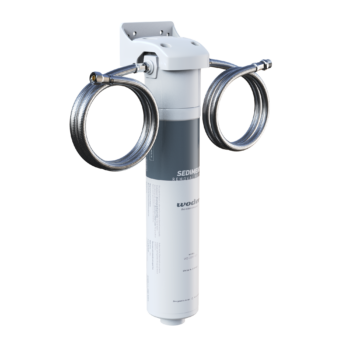
Woder installs inline, directly into your existing cold water supply line. No tank, no drain connection, no whole-home overhaul. If you're reasonably handy, you can have it running in under an hour — no plumber needed.
For renters or anyone who doesn't want a significant under-sink project, Woder's install footprint is considerably smaller.
Price and Long-Term Cost
Waterdrop prices 30 to 50 percent higher than comparable Woder models. Their premium RO units sit well above the $200 mark, and replacement filter sets for multi-stage systems add up faster than single-filter replacements do.
Woder sits in the $100 to $200 range, with straightforward replacement costs. Fewer stages and no membrane to swap out means ongoing costs stay predictable.
Stretch that out over two years and the total cost difference between a Waterdrop RO system and a Woder filter is significant. If performance on the contaminants you actually care about is comparable, paying extra for app connectivity and a touchscreen display is a personal preference — not a water quality upgrade.
Where Each Brand Is Made
Woder filters are manufactured in the United States. That matters for quality control, supply chain reliability, and accountability to domestic standards.
Waterdrop doesn't lead with US manufacturing. Their products are built around aesthetics and smart home integration, but domestic production isn't part of their story.
If origin factors into how you buy — especially given recent scrutiny around imported consumer goods — it's worth knowing where your filter actually comes from.
Who Each Filter Is Best For
Woder is the better fit if you:
- Want to remove lead, PFAS, chlorine, and other contaminants without losing minerals
- Prefer a simpler install with fewer components
- Want a US-made filter at a mid-market price
- Care about cutting plastic bottle waste without overbuilding your under-sink setup
- Don't want to pay for features that don't improve your water
Waterdrop may suit you better if you:
- Want RO-level filtration and don't mind demineralized water
- Value app connectivity and a modern design
- Are comfortable with higher upfront and ongoing costs
- Specifically want a tankless RO format
Head-to-Head Comparison Table
| Feature | Woder | Waterdrop |
|---|---|---|
| Filtration type | Advanced Selective Filtration | Reverse osmosis (tankless) |
| Removes lead, PFAS, chlorine | Yes | Yes |
| Preserves beneficial minerals | Yes | No (some models add back via remineralization) |
| Wastewater produced | None | Yes |
| Tank required | No | No (tankless design) |
| Installation complexity | Low | Moderate |
| Price range | $100–$200 | $200+ |
| Manufactured in the US | Yes | No |
| App connectivity | No | Yes (select models) |
| Replacement cost | Lower | Higher (multi-stage) |
FAQs
Does Waterdrop remove PFAS?
Waterdrop's RO systems do reduce PFAS — reverse osmosis membranes are effective against many PFAS compounds. Woder's Advanced Selective Filtration removes PFAS as well, as part of its 99.9% contaminant removal.
Does Woder work as well as a reverse osmosis filter?
For the contaminants most people are concerned about — lead, chlorine, PFAS, chromium 6, mercury — yes. The meaningful difference is that Woder keeps beneficial minerals in your water while RO removes them. If your goal is serious contaminant removal without demineralizing your water, Woder performs comparably on what matters most.
Is Waterdrop worth the higher price?
Depends on what you're paying for. If you want app integration, a premium design, or specifically need RO-level dissolved solids removal, Waterdrop delivers those things. If your priority is effective contaminant removal at a lower cost, with a simpler install and mineral-preserved water, the price premium is harder to justify.
Do Woder filters produce wastewater?
No. Because Woder doesn't use a membrane, there's no wastewater byproduct. Reverse osmosis systems — including Waterdrop's tankless models — produce wastewater as part of how they work.
Can I install a Woder filter myself?
Yes. Woder connects directly into your existing water line with no professional help required. No tank, no drain connection — just a clean, simple install.
How do I know which Woder model is right for my home?
Woder's product finder at woder.com matches you to the right filter based on your household's needs and flow rate. It takes a few minutes and takes the guesswork out of it.
Is Woder made in the United States?
Yes. All Woder filters are manufactured in the US — a real differentiator in a category where many competitors manufacture overseas.
The Bottom Line
Both Woder and Waterdrop remove serious contaminants. But they make different trade-offs, and those trade-offs show up in what actually comes out of your tap.
Waterdrop is built around RO technology with a tech-forward design. That's a legitimate choice for a specific kind of buyer. But RO strips minerals, produces wastewater, costs more upfront, and carries higher ongoing costs.
Woder removes 99.9% of contaminants, keeps the minerals your body needs, installs without a plumber, produces no wastewater, and costs less. It's made in the US. And it doesn't ask you to pay for features that have nothing to do with your water quality.
If clean, mineral-rich water at a fair price is what you're after, the answer is pretty clear.
Find the right filter for your home at woder.com.