- How Each Filter Actually Works
- Filtration Performance: What Gets Removed
- Installation: Minutes vs. a Weekend
- Minerals: Why This Matters More Than You Think
- Wastewater and Environmental Impact
- Space and Ongoing Maintenance
- Who Should Choose Woder
- Who Might Prefer APEC
- The Bottom Line
- Frequently Asked Questions
If you're shopping for an under-sink water filter in 2026, two names keep coming up: Woder and APEC. Both promise clean, safe drinking water. Both live under the sink. But they work in fundamentally different ways — and for most homeowners, one is a much better fit.
This comparison breaks down how Woder and APEC stack up on filtration approach, installation, mineral retention, and everyday practicality. Just what you need to make a confident call.
How Each Filter Actually Works
Woder: Advanced Selective Filtration
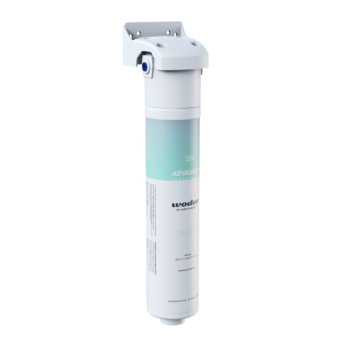
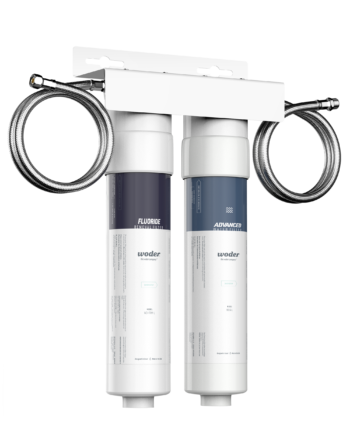
Woder's proprietary Advanced Selective Filtration uses nanoparticles that attract and remove contaminants — lead, chlorine, PFAS, chromium 6, mercury, carcinogens, and volatile organic compounds — while leaving calcium, magnesium, and other naturally occurring minerals right where they belong.
That distinction matters more than it might sound. Your water stays mineralized, which means it tastes like water should and still carries the trace elements your body actually uses.
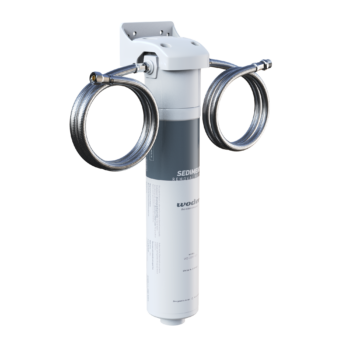
Installation is inline, directly into your existing cold water line. No tank. No drain connection. No dedicated faucet required. The filter connects to your water line and sits quietly under the sink.
APEC: Reverse Osmosis
APEC builds reverse osmosis systems. RO pushes water through a semi-permeable membrane under pressure, filtering at an extremely fine level. It works — but it strips out everything, including the beneficial minerals. Most APEC systems then run the filtered water through a remineralization stage to add some minerals back, which partially addresses the problem but adds complexity.
RO also produces wastewater. For every gallon of filtered water, a traditional RO system sends two to four gallons down the drain. APEC systems require a storage tank, a dedicated faucet, and a drain connection — more components, a more involved installation, and ongoing water waste that adds up fast.
Filtration Performance: What Gets Removed
Both systems tackle serious contaminants. Here's how they compare on the things homeowners care most about:
| Contaminant | Woder | APEC (RO) |
|---|---|---|
| Lead | Yes (99.9%) | Yes |
| PFAS | Yes (99.9%) | Yes |
| Chlorine | Yes (99.9%) | Yes |
| Chromium 6 | Yes (99.9%) | Yes |
| Mercury | Yes (99.9%) | Yes |
| VOCs | Yes (99.9%) | Yes |
| Calcium & Magnesium | Preserved | Removed (partially restored in some models) |
| Wastewater produced | None | Yes (2–4 gallons per gallon filtered) |
Woder removes the bad and keeps the good. APEC removes nearly everything, then tries to put some of it back. If mineral-preserved water matters to you — and for most health-conscious households it does — Woder handles that without the extra step.
Installation: Minutes vs. a Weekend
Woder installs inline to your cold water supply line using standard push-fit fittings. No drilling, no drain line, no separate faucet required. Most homeowners handle it without a plumber.
APEC is a different story. A standard RO system requires:
- A storage tank (typically 3–4 gallons) that takes up real cabinet space
- A dedicated filtered water faucet drilled into your sink or countertop
- A drain connection for the wastewater line
- Multiple filter stages with separate housings
That's not impossible to DIY, but it takes longer, requires more tools, and leaves you with a noticeably fuller cabinet. If you're a renter or just don't want a half-day project, Woder is the practical choice.
Minerals: Why This Matters More Than You Think
RO systems have long drawn criticism for producing demineralized water. The World Health Organization has noted that low-mineral water may not be ideal for long-term daily consumption — which is why many RO manufacturers now include remineralization cartridges specifically to compensate.
Woder sidesteps the problem entirely. Advanced Selective Filtration targets contaminants specifically. The nanoparticles recognize the difference between a harmful compound and a beneficial mineral, so calcium and magnesium stay in your water because they were never removed in the first place.
Clean water. Natural taste. No remineralization stage needed.
Wastewater and Environmental Impact
This is one of the clearest differences between the two systems.
Woder produces zero wastewater. What goes in comes out filtered. That's it.
APEC RO systems produce wastewater as a byproduct of the membrane process. A household using two gallons of filtered water per day could send four to eight gallons down the drain daily — thousands of gallons over the course of a year. For environmentally aware households, that's a real cost, both financially and ecologically.
If reducing water waste is part of how you think about sustainability, Woder aligns with that goal in a way RO simply doesn't.
Space and Ongoing Maintenance
Under-sink space is often tighter than it looks. APEC systems with tanks can take up a significant chunk of the cabinet. Woder's inline design is compact — no tank, no sprawling multi-stage housing.
Both systems require periodic filter replacement. Woder sells replacement cartridges separately, so you swap only what needs replacing without touching the full unit. APEC systems typically have multiple filter stages, each on its own replacement schedule and with its own cost.
Who Should Choose Woder
Woder is the right fit if you:
- Want verified removal of lead, PFAS, chlorine, and other serious contaminants
- Care about keeping beneficial minerals in your water
- Want a quick, DIY-friendly installation without a tank or drain line
- Rent, or have limited under-sink space
- Want to stop buying single-use plastic bottles without a major system overhaul
- Prefer a US-made product with transparent performance data
Who Might Prefer APEC
APEC makes sense if you:
- Want the finest filtration membrane available and are comfortable with demineralized water
- Have dedicated installation space and don't mind the tank footprint
- Aren't concerned about wastewater production
- Are comfortable with a more complex installation or plan to hire a plumber
For most homeowners comparing these two in 2026, Woder hits the practical sweet spot — professional-grade contaminant removal, mineral-preserved water, and a genuinely simple installation, without the space requirements, wastewater, or complexity of RO.
The Bottom Line
APEC builds capable RO systems. But RO comes with real trade-offs: wastewater, stripped minerals, a storage tank, and a more involved setup. Woder removes 99.9% of contaminants — including lead, PFAS, chromium 6, and VOCs — while keeping your water's natural minerals intact. It installs inline in minutes, produces no wastewater, and fits neatly under your sink.
Remove the bad. Keep the good. That's the Woder difference.
Ready to find the right model for your home? The Woder product Wizard at woder.com walks you through your household's flow rate and needs to match you with the right filter. It takes two minutes and takes the guesswork out of it.
Frequently Asked Questions
Does Woder remove PFAS from drinking water?
Yes. Woder's Advanced Selective Filtration removes 99.9% of contaminants including PFAS (per- and polyfluoroalkyl substances), lead, chlorine, chromium 6, mercury, and volatile organic compounds.
Does Woder remove beneficial minerals like calcium and magnesium?
No — and that's one of Woder's core advantages over reverse osmosis. The nanoparticles in Advanced Selective Filtration target contaminants specifically, leaving naturally occurring minerals like calcium and magnesium in your water.
How difficult is it to install a Woder under-sink filter?
Woder installs inline into your existing cold water line using push-fit fittings. Most homeowners complete the installation without a plumber. There's no tank, no drain line, and no dedicated faucet required, though one can be added if you prefer.
Does a Woder filter produce wastewater like an RO system?
No. Woder produces zero wastewater. Reverse osmosis systems like APEC typically send two to four gallons down the drain for every gallon of filtered water produced.
How often do Woder filters need to be replaced?
Woder sells replacement cartridges separately, so you replace only the cartridge — not the full unit. Replacement frequency depends on your household's water usage and the specific model. Woder's site provides replacement guidance for each filter.
Is Woder made in the United States?
Yes. All Woder filters are manufactured in the United States.
What's the difference between Woder and a pitcher filter like Brita?
Pitcher filters use basic carbon filtration, which reduces chlorine taste and odor but generally isn't effective against serious contaminants like lead, PFAS, or chromium 6. Woder's Advanced Selective Filtration removes 99.9% of those contaminants while preserving beneficial minerals — a meaningfully higher level of protection.