- What Is a Berkey Water Filter?
- The Testing Controversy You Need to Know About
- What Berkey Claims to Remove
- What Berkey Does Well
- Where Berkey Falls Short
- How Berkey Compares to Under-Sink Selective Filtration
- Who Should Still Consider a Berkey?
- What to Look for in Any Water Filter in 2026
- FAQs
- The Bottom Line
If you've been researching home water filtration, you've almost certainly landed on the Berkey conversation. The brand has a devoted following, and the marketing is genuinely persuasive. But in 2026, the picture around Berkey has gotten more complicated — and if you're weighing whether to spend several hundred dollars on one, you deserve a straight look at what independent testing actually shows, where the gaps are, and whether something else might serve you better.
What Is a Berkey Water Filter?
Berkey makes gravity-fed countertop filtration systems. You pour water into an upper chamber, it works its way through Black Berkey purification elements, and filtered water collects in a lower stainless steel chamber below. No electricity, no water line, no installation.
The appeal is easy to understand: portable, off-grid capable, and built around claims of extreme contaminant removal. Models range from the Travel Berkey at 1.5 gallons to the Crown Berkey at 6 gallons, with the Big Berkey being the most common household choice.
The Testing Controversy You Need to Know About
This is where the Berkey review conversation gets complicated — and where a lot of buyers get caught off guard.
Berkey's contaminant removal claims are extensive, but independent verification has been inconsistent. Several state-level regulatory bodies have questioned whether the Black Berkey elements meet the threshold to be classified as water filters versus water purifiers under applicable standards, and some states have had compliance issues with Berkey products at various points.
The core problem: Berkey's internal test results appear widely in its marketing materials, but independent third-party certification from organizations like NSF International or the Water Quality Association has been difficult to confirm for the full range of claims the brand makes. When buyers ask specifically about NSF/ANSI certification for the Black Berkey elements, the answer has generally been that those elements are not NSF/ANSI certified for the contaminants listed on the product page.
That matters. NSF/ANSI certification and WQA Gold Seal certification are the two most widely recognized independent standards in residential water filtration. A product carrying either mark has had its performance claims tested by a body with no financial stake in the outcome.
What Berkey Claims to Remove
Berkey's marketing lists a broad range of contaminants:
- Bacteria and viruses (to very high reduction levels)
- Heavy metals including lead and arsenic
- Chlorine and chloramines
- Pharmaceuticals and hormones
- Volatile organic compounds (VOCs)
- PFAS and other emerging contaminants
The gravity-fed mechanism combines micro-filtration and adsorption through the Black Berkey elements. The physical process is legitimate in principle. The problem is that without consistent, independently certified test data covering the full contaminant list, buyers are largely relying on Berkey's own documentation.
For contaminants like PFAS — where public concern is high and regulatory standards are still evolving — the absence of third-party certification is a meaningful gap.
What Berkey Does Well
There are genuine strengths here worth acknowledging.
No electricity or plumbing required. For off-grid households, RVs, camping, or emergency preparedness, the gravity-fed design is a real practical advantage. It works anywhere you have water and gravity.
Mineral retention. Berkey doesn't use reverse osmosis, so it doesn't strip calcium, magnesium, or other naturally occurring minerals from your water. That's a genuine benefit. RO systems, while effective at contaminant removal, produce demineralized water and generate significant wastewater in the process.
Long filter life. Berkey claims the Black Berkey elements last up to 3,000 gallons per pair — several years of use for a typical household. That longevity matters for cost-conscious buyers.
No water line or drain required. For renters or anyone who can't touch their plumbing, this is a practical advantage over under-sink systems.
Where Berkey Falls Short
Certification gaps. Without NSF/ANSI or WQA Gold Seal certification for the Black Berkey elements, you're relying on self-reported test data for the most important claims. That's a real risk when the contaminants in question include lead, PFAS, and chromium 6.
Slow flow rate. Gravity filtration is inherently slow. Depending on your household's usage, waiting for filtered water to accumulate in the lower chamber can become a daily frustration.
Countertop footprint. The Big Berkey stands roughly 19 inches tall. In a smaller kitchen or apartment, that's a significant chunk of counter space committed to a single appliance.
Price. Berkey systems aren't cheap. The Big Berkey typically runs several hundred dollars before replacement elements are factored in. For buyers on a moderate budget, that upfront cost is hard to justify when the certification picture is unclear.
Regulatory friction. Berkey has faced compliance questions in multiple states over the years. While the company has addressed some of these issues, the history adds a layer of uncertainty that buyers in heavily regulated states should research before purchasing.
How Berkey Compares to Under-Sink Selective Filtration
If your goal is removing contaminants like lead, chlorine, PFAS, and VOCs without stripping minerals, a gravity-fed countertop system isn't the only path. Under-sink filters using selective filtration technology can accomplish the same mineral-preservation goal while connecting directly to your water line for on-demand filtered water.
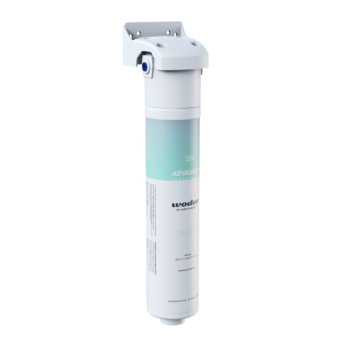
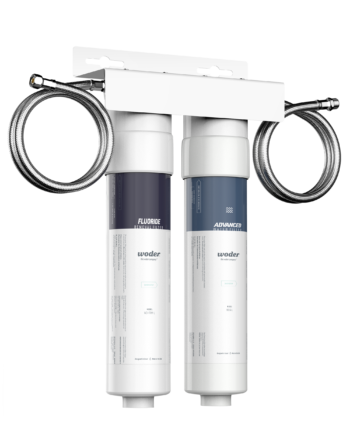
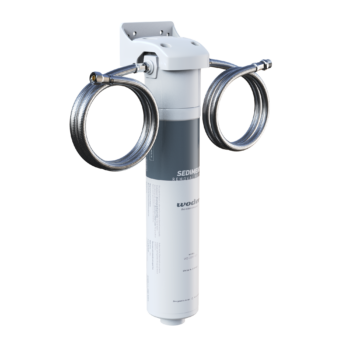
Woder Filters takes this approach with its Advanced Selective Filtration technology, which uses nanoparticles to target and trap contaminants without affecting calcium, magnesium, or other mineral ions. The result is clean water that retains the naturally occurring minerals your body uses. Woder's filters carry WQA Gold Seal certification — the independent third-party validation that Berkey's Black Berkey elements have not consistently demonstrated for their full contaminant list.
Woder filters also install directly into an existing water line with no plumber required, and the product line is manufactured in the United States. For households with running water that want filtered water on demand rather than gravity-fed batch filtration, the under-sink approach eliminates both the countertop footprint and the wait.
The key difference in the certification comparison: WQA Gold Seal certification means an independent body has tested the product's claims. That's the standard serious buyers should be looking for, regardless of which brand they're considering.
Who Should Still Consider a Berkey?
Berkey makes the most sense in specific situations:
- Off-grid or emergency preparedness use where no water line is available
- RV or van life setups where plumbing modifications aren't practical
- Households in areas with biological contamination risk where purification-level claims — bacteria, viruses — are the primary concern
For everyday household use with municipal tap water, the combination of high upfront cost, slow flow rate, large footprint, and certification ambiguity makes Berkey harder to recommend over alternatives that offer independently certified contaminant removal with mineral preservation.
What to Look for in Any Water Filter in 2026
Whether you're evaluating Berkey or any other system, these are the questions worth asking before you buy:
Does it have independent third-party certification? NSF/ANSI or WQA Gold Seal certification means the claims have been verified by someone other than the manufacturer. This is the single most important criterion.
Does it remove the contaminants you're actually worried about? Lead, PFAS, chromium 6, chlorine, and VOCs are the most common concerns for US municipal water. Make sure the filter's certified claims cover your specific contaminants.
Does it preserve beneficial minerals? If mineral retention matters to you, confirm the technology uses selective filtration rather than reverse osmosis, which removes minerals along with contaminants.
What's the total cost of ownership? Factor in replacement elements, not just the upfront price. A lower initial cost with expensive, frequent replacements adds up quickly.
Does it fit your living situation? Under-sink filters work best for homeowners and renters with accessible plumbing. Countertop gravity systems work for anyone. Inline filters suit refrigerators and specific line connections.
If you're not sure which filter type fits your household, the product finder at woder.com/wizard walks you through the decision based on your setup and the contaminants you want to address.
FAQs
Is the Berkey water filter NSF certified?
The Black Berkey purification elements are not NSF/ANSI certified for the full range of contaminants listed in Berkey's marketing materials. The company has published internal test results, but independent third-party certification from NSF International or the Water Quality Association has not been consistently confirmed for the Black Berkey elements. Buyers who prioritize certified performance should verify the current certification status directly with Berkey before purchasing.
Does a Berkey filter remove PFAS?
Berkey claims its Black Berkey elements reduce PFAS compounds, but because the elements lack consistent independent certification for this specific contaminant class, the claim rests primarily on Berkey's own test documentation. For certified PFAS removal, look for filters with NSF/ANSI 58 or WQA Gold Seal certification that specifically lists PFAS in the verified contaminant reduction claims.
Does a Berkey filter remove beneficial minerals?
No. Because Berkey uses gravity-fed adsorption rather than reverse osmosis, it doesn't strip calcium, magnesium, or other naturally occurring minerals from your water. Mineral retention is one of the genuine strengths of the Berkey system and is shared by other non-RO filtration approaches.
How long do Berkey filters last?
Berkey states that a pair of Black Berkey elements lasts up to 3,000 gallons. For a household using roughly one gallon of filtered water per day, that works out to approximately four years per set of elements. Actual lifespan depends on source water quality and usage volume.
Is a Berkey worth the price for a typical household?
For households with reliable municipal tap water, the combination of high upfront cost, slow gravity-fed flow, countertop footprint, and certification gaps makes Berkey harder to justify compared to under-sink alternatives that offer independently certified contaminant removal. Berkey's strongest value case is for off-grid, emergency, or travel use where no water line is available.
What is a good Berkey alternative for under-sink use?
Under-sink filters using selective filtration technology offer certified contaminant removal with mineral preservation and on-demand filtered water. Woder Filters carries WQA Gold Seal certification, removes contaminants including lead, chlorine, PFAS, chromium 6, and VOCs at a stated 99.9% rate, and retains beneficial minerals. Installation connects directly to an existing water line with no professional help required.
Can renters use a Berkey?
Yes. Because Berkey systems require no plumbing connection, they work for renters and apartment dwellers who can't modify their water lines. That said, renters with accessible under-sink plumbing may find a direct-line filter more convenient for daily use — filtered water on demand, no gravity-fed wait time involved.
The Bottom Line
The Berkey review conversation in 2026 keeps returning to the same tension: compelling marketing claims paired with an inconsistent certification record. The system has real strengths, particularly for off-grid or emergency use, and its mineral-preserving approach is genuinely better than reverse osmosis for buyers who want to keep calcium and magnesium in their water.
But for everyday household use, the certification gaps are a serious concern. Independent third-party verification exists for a reason, and the filters that carry WQA Gold Seal or NSF/ANSI certification have had their claims tested by someone with no stake in the sale.
If you're comparing options and want a filter with verified contaminant removal, mineral preservation, and a straightforward installation, take a look at what's available at Woder Filters before committing to a gravity-fed system that may not deliver what its marketing promises.