- What Are Heavy Metals and Why Do They End Up in Tap Water?
- The Heavy Metals Most Likely to Be in Your Tap Water
- How to Find Out If Heavy Metals Are in Your Water
- What Actually Removes Heavy Metals from Drinking Water
- Comparing Your Options for Heavy Metal Removal in 2026
- Who Should Prioritize Heavy Metal Testing and Filtration
- FAQs: Heavy Metals in Drinking Water
- Your Next Step
Most people assume their tap water is safe because it looks clear. But clarity tells you almost nothing about what's actually dissolved in it. Heavy metals — lead, mercury, chromium 6, arsenic, cadmium — are colorless, odorless, and tasteless. You can't detect them without testing, and you can't remove them by letting the water sit or boiling it.
Here's what you need to know: where heavy metals come from, how to find out if they're in your water, and what actually works to get rid of them.
What Are Heavy Metals and Why Do They End Up in Tap Water?
Heavy metals are dense metallic elements that occur naturally in the earth's crust. Some, like iron and zinc, are essential to human health in small amounts. Others — lead, mercury, arsenic, cadmium, chromium 6 — have no safe biological role and can cause serious harm even at very low concentrations.
They reach your tap through several routes:
- Aging pipes and plumbing fixtures. Lead was a standard material in water pipes, solder, and brass fittings until the late 1980s. Millions of US homes still have lead service lines or lead-containing fixtures. Water corrodes those surfaces, and lead leaches directly into what you drink.
- Industrial and agricultural runoff. Mining operations, manufacturing facilities, and certain pesticides release heavy metals into groundwater and surface water supplies.
- Natural geological deposits. Arsenic and chromium 6 occur naturally in rock formations. Groundwater moving through those formations picks them up along the way.
- Distribution infrastructure. Even water that leaves a treatment plant clean can pick up contaminants before it reaches your faucet, depending on the age and condition of the pipes in your neighborhood.
The EPA sets maximum contaminant levels for many heavy metals, but those limits are not zero. Lead has a legal action level of 15 parts per billion — yet the EPA itself acknowledges there is no safe level of lead exposure for children.
The Heavy Metals Most Likely to Be in Your Tap Water
Lead
Lead is the most widespread heavy metal concern in US drinking water. The source usually isn't the water itself — it's the plumbing the water passes through. Homes built before 1986 carry the highest risk, though even newer homes can have lead-containing brass fittings. Children and pregnant people face the greatest danger, since lead affects neurological development and has no safe threshold.
Mercury
Mercury enters water supplies through industrial discharge and atmospheric deposition. Inorganic mercury can affect kidney function; organic mercury (methylmercury) is a neurological toxin. Municipal treatment reduces mercury levels significantly, but trace amounts can remain — particularly near industrial sites.
Chromium 6
Chromium 6 (hexavalent chromium) is a known carcinogen. It occurs naturally in some geological formations and also enters water through industrial processes. It gained widespread attention after contamination cases in California and other states. The EPA's current standard covers total chromium but doesn't specifically regulate chromium 6 on its own — a gap many health advocates consider inadequate.
Arsenic
Arsenic is a naturally occurring element found in groundwater across many US states, particularly in the West, Midwest, and New England. Long-term exposure is linked to bladder, lung, and skin cancers, as well as cardiovascular disease. Private well owners face higher risk since their water isn't subject to municipal treatment standards.
Cadmium
Cadmium typically enters water through industrial discharge and the corrosion of galvanized pipes. It accumulates in the kidneys over time and is classified as a human carcinogen. Less common than lead, but worth testing for if you live near industrial areas or have older galvanized plumbing.
How to Find Out If Heavy Metals Are in Your Water
Check Your Annual Water Quality Report
If you get water from a municipal supplier, they're required to publish a Consumer Confidence Report (CCR) each year. It lists detected contaminants and their measured levels. You can usually find it on your utility's website or request a copy directly.
One important limitation: CCRs report water quality at the treatment plant, not at your tap. Contamination from your home's own pipes won't show up there.
Test Your Water at Home or Through a Lab
Home test kits give you a quick read on common contaminants. For heavy metals specifically, a certified laboratory test is more reliable — you collect a sample, send it in, and get a detailed breakdown of what's present and at what concentration.
At Woder, you'll find water testing resources alongside the filter products, which is a practical starting point if you want to understand your specific situation before choosing a filtration approach.
Know Your Home’s Age and Plumbing History
If your home was built before 1986, assume there's some lead risk until you test. Ask your landlord or local water authority whether your street has lead service lines. This isn't alarmism — it's basic due diligence, especially if you have young children.
What Actually Removes Heavy Metals from Drinking Water
Not all filters handle heavy metals equally. Here's a practical breakdown of the main approaches.
Pitcher Filters
Standard carbon pitcher filters are designed primarily for chlorine and taste improvement. Most don't remove lead or other heavy metals at meaningful levels. If heavy metal removal is your goal, a pitcher filter alone won't cut it.
Reverse Osmosis (RO) Systems
RO systems push water through a semi-permeable membrane that blocks nearly everything — including heavy metals. They work, but they come with real trade-offs. RO strips out beneficial minerals like calcium and magnesium right alongside the contaminants. They produce significant wastewater, often 3 to 4 gallons wasted per gallon filtered. They require a storage tank, professional installation in most cases, and ongoing maintenance. For many households, that's more complexity and cost than the problem actually warrants.
Selective Filtration
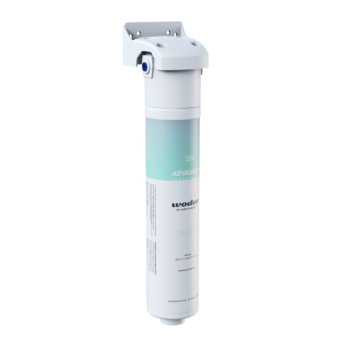
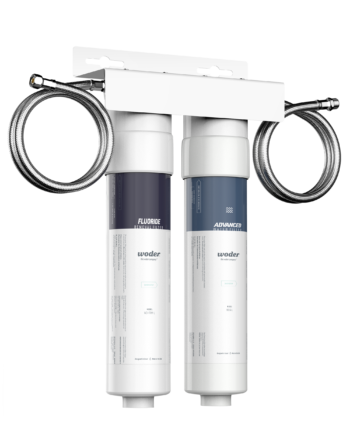
This is where Woder's approach is different. Advanced Selective Filtration uses nanoparticles with a specific affinity for contaminants — lead, mercury, chromium 6, and others — without binding to the essential minerals your body needs. The result: heavy metals removed at 99.9%, while calcium, magnesium, and other naturally occurring minerals stay right where they belong.
You get real protection without stripping your water down to nothing. No wastewater. No tank. No plumber.
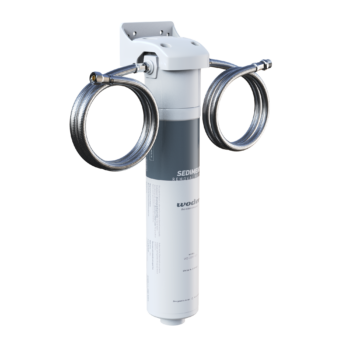
Woder filters install directly inline into your existing water line under the sink. Installation takes minutes and requires no special plumbing skills. Models like the WD-D-8K-FRM-ADV-DC handle standard household flow rates, while the WD-10K-ADV-PORT suits higher-demand homes. Every filter is manufactured in the United States.
Comparing Your Options for Heavy Metal Removal in 2026
| Filter Type | Removes Heavy Metals | Keeps Minerals | Wastewater | DIY Install | Approx. Cost |
|---|---|---|---|---|---|
| Pitcher filter (basic) | Partial / limited | Yes | None | Yes | Low |
| Reverse osmosis | Yes | No | Yes (significant) | Often no | High |
| Selective filtration (Woder) | Yes (99.9%) | Yes | None | Yes | Mid-range |
| Professional whole-home system | Yes | Varies | Varies | No | $500–$5,000+ |
The gap in the middle is real. RO is overkill for most households, and pitcher filters are underpowered for serious contaminants. Selective filtration sits in the practical middle — professional-grade removal with a genuine DIY setup.
Who Should Prioritize Heavy Metal Testing and Filtration
Move this up your list if any of these apply:
- Your home was built before 1986
- You have an infant, young child, or are pregnant
- You recently moved and don't know the plumbing history
- You're on a private well
- You live near industrial facilities, mining operations, or agricultural areas
- Your local utility has issued any notices about lead service lines or water quality
Even if none of those apply, testing once is worth doing. You might find nothing concerning — and that's genuinely useful to know.
FAQs: Heavy Metals in Drinking Water
Q: Can boiling water remove heavy metals?
A: No. Boiling kills bacteria and some pathogens, but it does nothing for heavy metals. It can actually concentrate them slightly as water volume reduces through evaporation. Filtration is the right approach.
Q: How do I know if my water has lead in it?
A: You can't tell by looking, smelling, or tasting. The only way to know is to test. Start with your utility's annual water quality report, but keep in mind it reflects water at the treatment plant — not at your tap. A certified lab test of your actual tap water gives you the most accurate picture.
Q: Does a standard Brita filter remove lead?
A: Standard carbon pitcher filters have limited effectiveness against lead. Some Brita models with specialized filter media do reduce lead, but not all of them do, and none match the removal rates of purpose-built inline or under-sink filters designed specifically for heavy metals.
Q: Is chromium 6 the same as chromium?
A: No. Chromium exists in several forms. Chromium 3 is a trace mineral your body uses. Chromium 6 (hexavalent chromium) is a separate compound and a known carcinogen. The EPA's current regulations cover total chromium, which means chromium 6 can be present at levels some health researchers consider unsafe while still meeting the legal standard.
Q: Will a water filter remove arsenic?
A: It depends on the filter. Reverse osmosis removes arsenic effectively. Advanced selective filtration systems built for heavy metal removal also address arsenic. Basic carbon filters typically don't. Always check the specific contaminant removal specs for any filter you're considering.
Q: Do heavy metal filters also remove PFAS and chlorine?
A: Good inline and under-sink filters often handle multiple contaminant classes at once. Woder's Advanced Selective Filtration removes 99.9% of contaminants including lead, chromium 6, mercury, PFAS, chlorine, carcinogens, and volatile organic compounds — so you're not choosing between heavy metal protection and everything else.
Q: How often do I need to replace my heavy metal filter?
A: Filter life varies by model and household water usage. Woder offers replacement cartridges so you can maintain performance without replacing the full unit. Staying on a regular replacement schedule matters — a saturated filter stops working effectively and can allow contaminants to pass through.
Your Next Step
Heavy metals in drinking water are a real, documented problem — and a solvable one. You don't need a whole-home overhaul or a complicated RO system to protect your household. You need a filter that targets the right contaminants, keeps the minerals your body actually needs, and installs without calling a plumber.
Test your water first if you haven't already. Then find the right filter for your home's flow rate and setup. The product Wizard at woder.com walks you through it in just a few questions.
It's your water — know what's in it.