A culligan vs kinetico comparison is fundamentally different from choosing between two filters on a retail shelf. Both companies are strongly associated with dealer-supplied treatment equipment, professional installation, and ongoing local service. Researching kinetico vs culligan therefore means comparing not only hardware but also dealer experience, installation, maintenance, technology, and long-term ownership. There is another distinction that matters before you choose either one: softening and filtration are not the same job.
Woder provides point-of-use filtration rather than whole-home softening, so it should not be presented as a direct replacement for either company’s softener. Depending on your source conditions, the two technologies can actually complement each other.
How Culligan and Kinetico Compare
Both companies have been in residential treatment for decades, but their product approaches and dealer networks differ.
Kinetico is particularly known for non-electric softening systems that use the movement and pressure of the incoming supply rather than an electrical control system. Some configurations use twin tanks, allowing one tank to regenerate while the other remains available.
Culligan offers a broad range of treatment equipment through its dealer network, including softeners and filtration products. Available systems, pricing, and service arrangements can vary by location.
When researching a culligan vs kinetico water softener, do not evaluate only the equipment specification sheet. Your local dealer can have a major influence on installation quality, maintenance experience, responsiveness, and overall ownership cost.
The same applies when considering a kinetico vs culligan water softener. Ask each dealer for a written explanation of the recommended system, why it matches your source conditions, what maintenance it requires, what is included in the quoted price, and how warranty service is handled.
Testing the incoming supply before buying is also important. A softener should be selected based on actual hardness and household demand rather than simply choosing the largest system available.
Softening and Filtration Solve Different Problems
This distinction prevents a lot of confusion.
Traditional softening primarily addresses hardness caused by calcium and magnesium ions. Ion-exchange systems replace those hardness ions, typically with sodium or potassium ions.
Filtration targets different concerns. Depending on the technology and product, those may include chlorine, lead, PFAS, VOCs, heavy metals, taste, and odor.
A household can therefore need both.
For example, a property with very hard incoming supply may benefit from a whole-home softener to reduce scale throughout plumbing and appliances. The kitchen can then use a point-of-use filter for specific drinking and cooking concerns.
This is also why aquasana vs culligan is not necessarily an apples-to-apples comparison. Aquasana is strongly associated with filtration products, while Culligan offers dealer-installed treatment that includes softening. Before comparing brands, determine whether the actual problem is hardness, contaminants, taste, or some combination of these.
No single treatment technology should be expected to solve every source-quality issue. Chlorine taste specifically deserves its own explanation, since it doesn’t always disappear the way people expect; see why chlorine taste can persist after filtering.
The Dealer Model and Flexibility
Buying through a local dealer has advantages.
A professional can test the source, size the equipment, install it, and provide ongoing service. For homeowners who do not want to deal with plumbing or maintenance themselves, that can be valuable.
The trade-off is flexibility.
Pricing may depend on the local dealer and recommended configuration rather than a simple national online price. Service schedules, contracts, installation charges, and replacement parts can also affect the long-term cost.
Before signing, ask for an itemized quote.
Find out:
- what equipment is included;
- whether installation is included;
- whether there are ongoing service charges;
- how often salt or other consumables are expected to be replenished;
- what maintenance the homeowner is responsible for;
- what the warranty covers;
- and whether service must be performed by the dealer.
Neither dealer-based nor direct-to-consumer purchasing is inherently better. The right model depends on how much professional support you want and how comfortable you are handling routine maintenance yourself.
Where Woder Fits In
Woder solves a different problem.
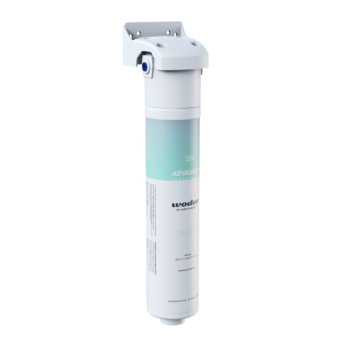
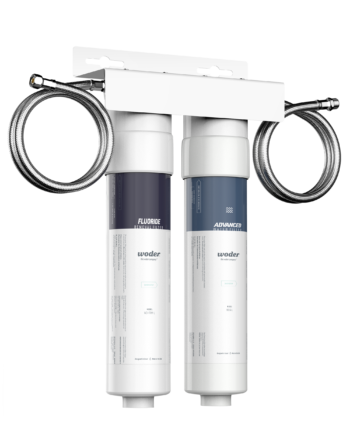
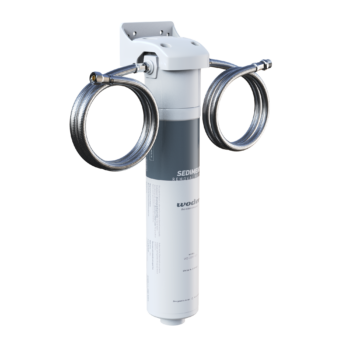
Our point-of-use systems are designed for filtration at a specific tap, particularly the kitchen supply used for drinking and cooking. They are not whole-home softeners and do not replace a softening system when hardness reduction is the goal.
Woder’s Advanced Selective Filtration targets specified contaminants while retaining naturally occurring minerals. Base Gen4 Advanced media carries WQA Gold Seal certification for applicable performance claims.
This means a Woder system can be used independently where softening is unnecessary, or downstream from a whole-home softener when a household wants additional point-of-use filtration in the kitchen.
The direct-to-consumer format also changes the ownership experience. Rather than arranging dealer service for routine cartridge replacement, compatible Woder systems are designed around straightforward point-of-use installation and maintenance.
So should you skip Culligan or Kinetico?
If you genuinely need whole-home hardness treatment, probably not simply because another filtration option exists. A point-of-use filter does not perform the same job.
But if your actual concern is drinking quality rather than hard scale throughout the house, buying a large softening system may be solving the wrong problem.
Start by identifying what is in the incoming supply. Then choose the technology that addresses it.
For the technical details of that approach, see our deep dive into Woder’s Advanced Selective Filtration. And for a broader look at how Woder approaches water treatment, read The Woder Way.
If you’re weighing a pitcher or under-sink RO system against a simpler alternative, our Waterdrop vs Brita comparison covers the water-waste and mineral trade-offs in detail.
Frequently Asked Questions
Is Culligan or Kinetico better for whole-home water softening?
Both offer established softening solutions, and the better choice can depend heavily on the specific system and local dealer. Compare source testing, system sizing, installation quality, maintenance requirements, warranty terms, and total ownership cost rather than choosing on brand recognition alone.
Do I need a softener and a filter, or just one?
That depends on what you are trying to treat. A softener primarily addresses mineral hardness, while a filter targets specified contaminants, tastes, or odors. Some households need one technology, while others can benefit from using both for different purposes.
Can I install a Woder filter myself instead of using a dealer?
Many Woder point-of-use products are designed for straightforward installation, but they are filtration systems rather than replacements for whole-home softening equipment. Always confirm fitting compatibility and follow the installation instructions for the specific model.