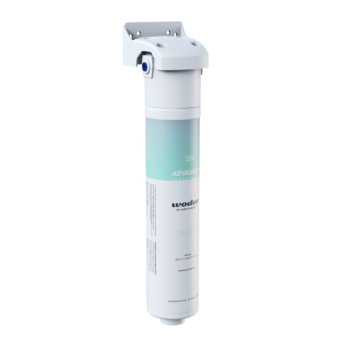
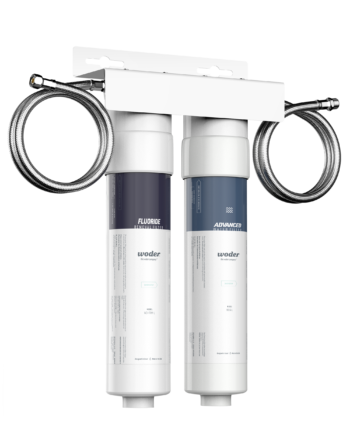
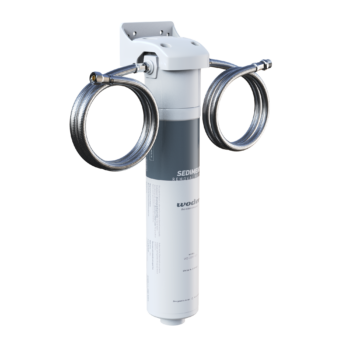
The Aquasana vs Waterdrop comparison is more complicated than it first appears, because both companies sell multiple filtration products and technologies. Aquasana is well known for its Claryum-based filtration systems, while Waterdrop has built a substantial lineup that includes reverse osmosis and other under-counter options. Rather than asking which logo wins, compare filtration technology, installation requirements, under-counter space, contaminant-reduction claims, mineral retention, and long-term maintenance.
There is also a third category worth considering. Woder provides point-of-use Selective Filtration for households that want targeted contaminant reduction without using reverse osmosis.
How the Two Systems Filter
Aquasana’s Claryum filtration technology uses multiple filtration mechanisms rather than relying on a single basic carbon stage. Depending on the product, these can include activated carbon and ion exchange designed to address specified contaminants while allowing beneficial minerals to remain.
Waterdrop’s RO systems take a different approach.
Reverse osmosis uses pressure to move the incoming supply across a semi-permeable membrane. The reverse osmosis membrane rejects many dissolved substances, producing a treated stream and a concentrate stream that is sent to the drain.
Both technologies can be effective, but they solve the filtration problem differently.
That difference affects more than contaminant removal. It influences installation, maintenance, mineral content, available space, and whether a reject stream is produced.
Waterdrop also sells non-RO products, so always check the exact model. Comparing one Aquasana under sink water filter with “Waterdrop” as an entire brand can otherwise become misleading.

Installation and Space Under the Sink
Under-counter space is easy to overlook until installation day.
Traditional reverse osmosis systems can include several cartridges, tubing, a membrane housing, and sometimes a storage tank. Tankless RO systems reduce that footprint, although they may require electricity and still need a connection to the drain.
Aquasana configurations vary by model, but non-RO under-sink filtration generally avoids the storage requirements associated with a traditional RO tank.
Before choosing either system, open the cabinet and measure.
Look at the garbage disposal, plumbing, shutoff valves, cleaning supplies, and anything else already occupying the space. Also consider where replacement cartridges will be accessed. A system that technically fits but leaves no room to change a cartridge can become frustrating later.
Installation requirements matter too. A more complex under-sink installation may be perfectly worthwhile if its filtration capabilities match your needs, but buyers should understand the setup before ordering rather than discovering additional plumbing requirements afterward.
Contaminant Removal and Mineral Retention
This is where technology matters most.
Reverse osmosis can reject a broad range of dissolved substances because of the membrane’s extremely small effective pore structure. That broad reduction is one of RO’s biggest strengths.
It also means naturally occurring minerals can be reduced along with unwanted dissolved substances, which is why mineral retention becomes a deciding factor for some households.
Aquasana’s non-RO filtration operates differently. Its contaminant-reduction capabilities should be evaluated using the certified performance data for the specific product rather than assuming it behaves like an RO membrane.
The same rule applies to PFAS, lead, chlorine, and other contaminants. Do not choose based only on a general statement that one technology is “stronger.” Check whether the exact model has an independently verified claim for the substance that concerns you.
If retaining naturally occurring minerals is a priority, that consideration may move you away from RO. If reducing dissolved solids as broadly as possible is the primary objective, the opposite may be true.
Your source conditions should determine the technology, not the other way around.
Cost Over Time
Purchase price is only the beginning.
Every filtration system has consumables. Carbon media becomes exhausted. RO membranes eventually need replacement. Pre-filters and post-filters have their own service intervals.
Rather than quoting a price that may change, calculate ownership cost using the current replacement schedule for the exact model you are considering.
Include:
- initial equipment cost
- replacement cartridges or membranes
- expected replacement frequency
- professional installation if required
- electricity where applicable
- potential service costs
- the time involved in routine maintenance
A cheaper system can cost more over several years if consumables are expensive or replacement is frequent. Conversely, a higher initial price may be reasonable if capacity and service life fit your household better.
The best comparison uses cost per year rather than checkout price alone.
Where Woder Fits In
Woder offers another under-sink approach.
Our Advanced Selective Filtration is designed to target specified contaminants while retaining naturally occurring minerals. Unlike reverse osmosis, the process does not require an RO membrane or create an RO reject stream.
This puts Woder in a useful middle position for households that want direct-from-the-faucet filtration but do not necessarily need broad dissolved-solids removal.
The base Gen4 Advanced media carries WQA Gold Seal certification for applicable performance claims. Woder systems are also manufactured in the United States.
That does not mean Woder automatically replaces Aquasana or Waterdrop for every household.
If testing shows a source problem that specifically calls for RO treatment, choose equipment designed for that problem. If you want non-RO filtration with a different certification profile, compare Woder and Aquasana based on the exact contaminants each model is verified to reduce.
The better question is therefore not “Which brand wins?” It is “Which filtration technology best matches what is actually coming from my tap?”
Once that is clear, choosing between the systems becomes much easier. To see exactly how that Selective Filtration process works under the hood, read our deep dive into Woder’s Advanced Selective Filtration.
For more on how Woder approaches filtration across its whole lineup, see The Woder Way. And if you’re comparing simpler pitcher-based options instead of RO systems, our PUR vs Brita comparison covers that ground.
Frequently Asked Questions
Is Aquasana or Waterdrop better for removing PFAS?
The answer depends on the specific models being compared. Look for independently certified PFAS reduction claims for each product rather than assuming that every system sold by either brand provides identical performance.
Does Waterdrop’s RO system waste water compared to Aquasana?
Reverse osmosis produces a concentrate or reject stream as part of membrane filtration. Many non-RO Aquasana systems do not operate this way. The exact efficiency of a Waterdrop RO system depends on the model and operating conditions.
How does Woder’s under-sink system compare to Aquasana and Waterdrop?
Woder uses Selective Filtration rather than reverse osmosis. It is designed for targeted contaminant reduction while retaining naturally occurring minerals and avoiding an RO reject stream. Compare certified performance data for the exact systems before deciding which approach best fits your source conditions.