The Elite pitcher filter lasts three times longer than PUR PLUS cartridges and carries PFAS certification that PUR pitcher filters lack, making it the stronger choice for most households. PUR PLUS costs less upfront and claims to reduce more than 70 contaminants. The right pick depends on your water quality, refill habits, and whether PFAS removal is a priority.
Both brands dominate a market used by tens of millions of U.S. households. According to Industry Research Biz's 2026 report, more than 42 million U.S. households own a water filter pitcher, and Brita alone holds 26% of that market. The choice comes down to filter life, certified contaminant removal, and annual cost. The choice comes down to filter life, certified contaminant removal, and annual cost.
Brita vs PUR Water Filter: Quick Comparison
The table below covers the key decision factors for the most common cartridge options, including filter life, certifications, and PFAS removal status.
| Filter | Filter Life | Key Certifications | PFAS Removal | Price Tier |
|---|---|---|---|---|
| Brita Elite | 120 gallons / 6 months | NSF 42, 53, 401 | Yes, certified 98.1% PFOA/PFOS reduction | Premium |
| Brita Standard | Not rated for long life | NSF 42 only | No | Budget |
| PUR PLUS Pitcher | 40 gallons / 2 months | NSF 42, 53 | No pitcher PFAS certification documented | Budget |
| ZeroWater 10-Cup | 25–40 gallons | NSF 42, 53 | Not the primary focus | Premium |
The Brita Standard sits at a budget-tier price but lacks lead and PFAS removal. The Brita Elite costs more per cartridge but its 120-gallon filter life means far fewer replacements per year.
Brita Water Filter Pitchers: What You Get
Brita makes two distinct cartridge types, and the difference matters more than most buyers realize. The Standard filter uses basic activated carbon and is certified only to NSF/ANSI 42, which covers taste and odor. It does not remove lead, PFAS, or heavy metals, so it only fits households with pre-verified lead-free municipal water, per the product's own sources.
The Brita Elite is a different product entirely. It uses an activated carbon and ion-exchange pleated filter to reduce lead, mercury, asbestos, benzene, and emerging contaminants including PFAS, and it holds NSF certifications 42, 53, and 401. According to WaterVerge's 2026 guide, the Elite is certified to achieve a 98.1% reduction in PFOA and PFOS. No equivalent PFAS pitcher certification is documented for PUR pitcher filters.
Filter life is the other major advantage. The Brita Elite is rated for 120 gallons, triple the 40-gallon lifespan of the PUR PLUS filter. For a household that refills a 10-cup pitcher twice a day, that gap means roughly two cartridge swaps per year for the Elite versus six or more for the PUR PLUS. Neither Brita pitcher significantly reduces total dissolved solids. Both typically leave most dissolved minerals intact, which suits drinkers who prefer mineral taste but limits those chasing zero TDS.
Consumer Reports has tested both brands on lead reduction, and both pass NSF 53 requirements. The certification gap on PFAS is the more meaningful distinction for buyers in areas with known PFAS contamination.
PUR PLUS Water Filter Pitchers: What You Get
PUR PLUS pitchers use MAXION technology, a combination of carbon and ion exchange, to reduce more than 70 contaminants including 99% of lead, mercury, and certain pesticides. Both PUR PLUS and Brita Elite carry NSF 53 certification for lead reduction, so neither brand has an edge there.
Where PUR PLUS falls short is PFAS. No PFAS pitcher certification is documented for PUR pitcher filters in the available research. If PFAS or PFOA removal is a priority, the PUR PLUS pitcher does not fill that role based on current certification data.
PUR PLUS pitchers come in at a budget-tier price, which makes them accessible for households that want certified lead reduction without a higher upfront spend. The cartridges include an electronic filter change indicator so you can track replacement timing without guessing. A 40-gallon filter life means replacing cartridges roughly every two months, and that frequency adds up in annual cost compared to a longer-life cartridge.
On the safety question that comes up frequently in searches and on Reddit: PUR PLUS is NSF 53 certified for lead reduction, and that certification is a meaningful standard. The concern is not safety in a broad sense but the absence of PFAS pitcher certification, which is a narrower and more specific gap. If your municipal water report shows no PFAS concern, PUR PLUS is a reasonable choice.
Which Brita vs PUR Water Filter Costs Less Over Time?
The Brita Elite costs more per cartridge but less per year. Here is how to work out the math for your own household.
-
Verify the exact filter cartridge for NSF/ANSI 53 lead-reduction certification [S1]. Confirm you are comparing the Elite to the PUR PLUS, not the Brita Standard, which does not carry NSF 53.
-
Select the cartridge specifications first based on your contaminant concerns [S2]. If PFAS is a concern, only the Brita Elite pitcher cartridge carries that certification.
-
Track your real-world refill frequency and cartridge age for one month [S3]. A family of four refilling a 10-cup pitcher twice daily uses roughly 5 gallons per day, which exhausts a PUR PLUS cartridge in about 8 days and a Brita Elite cartridge in about 24 days.
-
Estimate your annual cartridge costs based on two months of usage behavior [S4]. Reviewed.com calculated the Brita Standard filter at $4.17 per filter based on multi-pack pricing. No equivalent per-filter figure is available for the Brita Elite or PUR PLUS cartridges, but the Elite's 120-gallon life means you need roughly three cartridges per year at average household use, compared to six or more PUR PLUS cartridges.
The PUR PLUS pitcher carries a lower upfront cost, but higher annual maintenance cost compared to the Brita Elite, per its product sources. For most households, the Elite's longer life makes it the cheaper option over a full year.
Does TDS Removal Matter, and How Does ZeroWater Fit In?
Total dissolved solids (TDS) removal and certified contaminant reduction are not the same thing. TDS is a measure of dissolved minerals, salts, and metals in water. A high TDS reading can affect taste, but low TDS does not automatically mean safe water, and high TDS does not automatically mean unsafe water.
ZeroWater's 10-cup pitcher uses a 5-stage ion-exchange system to remove 99.6% of TDS, reaching 000 ppm. It is the only pitcher in this comparison that effectively removes fluoride, nitrates, and nearly all dissolved minerals. If flat, neutral-tasting water is your goal, ZeroWater delivers it.
The trade-off is filter life and cost. ZeroWater cartridges last only 25 to 40 gallons, and that range drops sharply if your source water has high TDS. Annual operating cost is the highest of the three brands. For buyers who want certified contaminant reduction rather than mineral stripping, Brita Elite or PUR PLUS are more practical. ZeroWater fills a different need.
Faucet Filters vs Pitchers: Is the PUR PLUS Faucet Mount Worth It?
The PUR PLUS Faucet Mount is an inline unit, not a pitcher, and it works differently from either pitcher option. It attaches directly to your tap and delivers filtered water on demand at 0.5 GPM using a compressed activated carbon block, so you skip the wait for gravity to pull water through a pitcher reservoir.
On PFAS, the faucet mount actually outperforms PUR's own pitcher line. It is certified to NSF P473 for PFOA and PFOS reduction, unlike most PUR pitcher models. It also reduces more than 70 contaminants including pharmaceuticals and microplastics, with a 100-gallon filter life per cartridge.
The convenience trade-off is installation and counter space. A faucet mount stays attached to your tap, which some households find intrusive, and it depends on your faucet type. Pitchers need no installation and move easily. If on-demand filtered water at the tap with PFAS certification is your goal, the PUR PLUS Faucet Mount is worth considering over a pitcher.
How to Choose the Right Filter for Your Home
Use this checklist to match a filter to your actual situation:
- PFAS or PFOA in your local water report: Choose Brita Elite or PUR PLUS Faucet Mount. Neither PUR pitcher nor Brita Standard carries PFAS pitcher certification.
- Lead reduction is your main concern: Both Brita Elite and PUR PLUS pitcher carry NSF 53 certification. Either works.
- You refill infrequently or want fewer cartridge changes: The Brita Elite's longer filter life means you swap cartridges roughly half as often as with PUR PLUS.
- Budget is tight upfront: PUR PLUS pitcher and Brita Standard both come in at a budget-tier price, though the Standard does not remove lead.
- You want zero TDS or the flattest-tasting water possible: ZeroWater is the only pitcher option that gets there, at a higher annual operating cost.
- You want TDS-free or near-zero mineral water: ZeroWater, but expect frequent cartridge changes.
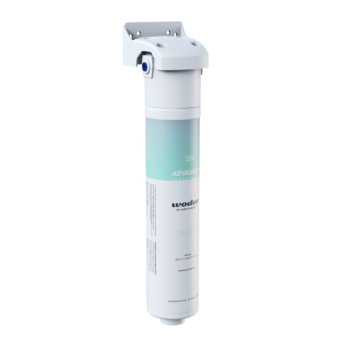
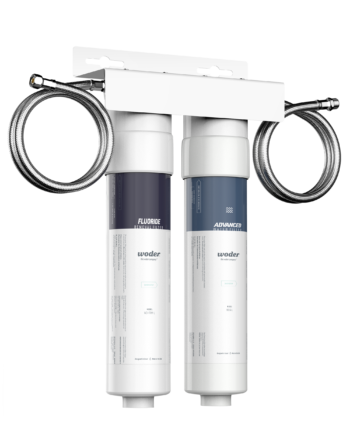
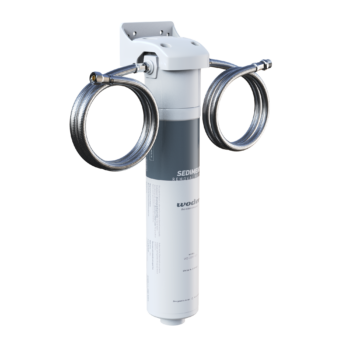
- Pitcher filtration is not enough for your household: When a pitcher cannot keep up with your household's volume, an under-sink or inline filter handles higher daily use and covers every tap.
Household water filter pitcher penetration in the U.S. sits at an estimated 40 to 50%, meaning roughly half of American homes have already made this choice. Checking your local water quality report before buying is the single most useful step you can take.
Prices and plan limits verified as of October 2026.
FAQs
What is the most recommended water filter pitcher in the U.S.?
Brita is the most widely owned brand, holding 26% of the U.S. water filter pitcher market per Industry Research Biz's 2026 data. Within the Brita line, the Elite cartridge is the more capable option, carrying NSF certifications for lead, PFAS, and other contaminants. PUR PLUS is the main competitor and performs well on lead reduction, though it lacks PFAS pitcher certification.
Why do some people stop using Brita filters?
The most common reasons are forgetting to replace the cartridge on schedule and finding that the Standard filter does not improve water quality enough for households with lead or PFAS concerns. The Standard is certified only for taste and odor, not lead or PFAS removal. Switching to the Elite cartridge resolves the performance issue for most users, since it covers a much broader contaminant list.
Is the PUR water filter safe to drink from?
PUR PLUS pitchers are NSF 53 certified for lead reduction, which is a legitimate safety standard. The relevant limitation is the absence of PFAS pitcher certification, not a broad safety concern. If your local water report shows no PFAS contamination, PUR PLUS is a reasonable choice for reducing lead and other common contaminants. Check your municipal water quality report to confirm what is actually present in your supply.
Which water filters outperform Brita for lead removal?
Both Brita Elite and PUR PLUS carry NSF 53 certification for lead reduction, so they are roughly equivalent on that measure. For under-sink filtration, Woder's Advanced Selective Filtration technology targets contaminants directly in the water line and handles higher daily volumes than any pitcher. The right choice depends on how much water your household uses and what else is in your water beyond lead.
How do Brita and PUR compare according to Consumer Reports testing?
Consumer Reports has tested both brands on lead reduction and found both capable of meeting NSF 53 standards. The more meaningful gap that testing surfaces is the PFAS certification difference: Brita Elite carries it for pitchers, and PUR PLUS pitcher filters do not, based on available certification data. For households in areas with known PFAS contamination, that distinction is the most actionable finding from comparative testing.
Conclusion
For most households, the Brita Elite is the stronger pitcher choice. Its 120-gallon filter life, PFAS certification, and NSF 42, 53, and 401 coverage give it a clear edge over the PUR PLUS pitcher on both performance and annual cost. PUR PLUS makes sense if your water report shows no PFAS concern and you want a lower upfront spend with certified lead reduction.
Before buying either, pull your local water quality report and identify the specific contaminants present. That single step tells you whether you need PFAS certification, whether NSF 53 for lead is enough, or whether a pitcher can handle your household's volume at all. If a pitcher cannot keep up, an under-sink filter is worth pricing out.