ZeroWater pitchers deliver verified 99.6% TDS reduction and strong PFAS and chromium-6 removal, making them one of the most thorough pitcher filters tested in this zero water filter review. The tradeoffs are real: filters exhaust quickly in high-TDS households, spent cartridges can produce a fishy smell, and a microplastics lawsuit has raised questions. Whether those tradeoffs are acceptable depends on your water quality and usage habits.
This review covers filtration performance, filter longevity, taste issues, cost, and legal scrutiny, so you can decide whether ZeroWater is the right fit or whether a different type of filter serves you better.
Zero Water Filter Review: How Filtration Actually Works
The ZeroWater Pitcher (ZD-010RP) uses a 5-stage gravity-fed ion exchange system designed to pull virtually all dissolved solids out of tap water. Water passes through a coarse filter, a foam layer, a multi-layer activated carbon and oxidation reduction alloy stage, a comprehensive ion exchange resin, and a final ultra-fine screen before reaching the reservoir.
Ion exchange is the key stage. The resin beads swap positively and negatively charged ions from your tap water for hydrogen and hydroxide ions, which combine to form plain water. That process is why ZeroWater can reach a TDS reading of 000 ppm on its included meter. ZeroWater's own independent lab data confirms a 99.6% reduction in total dissolved solids.
The same ion exchange process also accounts for the filter's certified performance on specific contaminants. ZeroWater is noted as unique among consumer pitcher filters for removing 99.6% of PFAS and chromium-6. Lead removal is also certified, which puts it ahead of basic carbon-only pitchers on those particular targets.
The tradeoff built into this design is that ion exchange resin has a finite capacity. Once the resin is saturated, it stops exchanging ions and can begin releasing them back into the water. That exhaustion point is what drives the filter lifespan and taste complaints covered in the sections below.
ZeroWater Filter Performance: What Independent Tests Show
Independent testing broadly confirms ZeroWater's marketing claims, with a few nuances worth knowing. Testing by Water Filter Guru found that the ZeroWater pitcher achieved 100% reduction of fluoride, uranium, and nitrate. Most pitcher filters do not address those contaminants at all, so the result stands out.
TechGearLab's 2026 testing added more detail: the filter removed 98% of uranium and 80% of lithium. The lithium figure is lower than some other contaminants, but lithium removal is not a standard benchmark for pitcher filters, so the result is more informative than alarming.
On PFAS and chromium-6, the picture is similarly strong. A 2025 report based on manufacturer specifications and independent reviews states that ZeroWater is unique among consumer filters for removing 99.6% of PFAS and chromium-6. For households on municipal water that has tested positive for either contaminant, that certification matters.
What Reddit and Consumer Reports users say
Reddit and Consumer Reports users confirm the TDS readings but report faster exhaustion and flat taste than lab data suggests. Consumer Reports has rated ZeroWater highly for contaminant reduction while flagging replacement frequency as a practical concern.
The performance data is strong. The question is whether that performance holds long enough per cartridge to justify the ongoing cost and hassle, which the next section addresses directly.
What Are the Cons of Using ZeroWater?
ZeroWater's filtration results are among the best in the pitcher category, but several real-world drawbacks show up consistently across zero water filter reviews complaints and independent tests.
Short filter lifespan
Filter life varies widely depending on your source water's TDS level. In low-TDS areas, a cartridge may last toward the higher end of the reported 15-to-40-gallon range. In hard-water or high-TDS households, filters can exhaust well before that. That figure applies to a fresh filter, not one that has been in use for weeks. Once the TDS reading on the included meter climbs above 006 ppm, ZeroWater recommends replacing the filter.
Flat or metallic taste
Ion exchange strips all dissolved minerals, including calcium and magnesium. Those minerals contribute to the mouthfeel and subtle flavor of tap water. Without them, many users describe the result as flat, thin, or slightly acidic. This is not a safety issue, but it is a consistent complaint in real-world use.
Fishy smell from exhausted cartridges
When the ion exchange resin is fully saturated, it can begin releasing compounds back into the water, sometimes producing a fishy or sulfurous odor. This is the clearest sign a cartridge needs replacing immediately. Using a filter past this point means the water coming through may be worse than unfiltered tap water.
Is ZeroWater filter good for you past its lifespan?
Drinking water from an exhausted ZeroWater filter is not recommended. The resin releases stored contaminants back into the water once capacity is exceeded, which is the opposite of what the filter is supposed to do. Replacing cartridges on schedule is not optional with this system.
What Is the Lawsuit Against ZeroWater?
A microplastics-related lawsuit has been filed against ZeroWater. The core allegation, based on publicly available reporting, is that ZeroWater filters may shed microplastic particles into filtered water rather than removing them. Specific details about plaintiffs, court status, and any outcomes or settlements are not yet part of the public record in a verified form.
That uncertainty cuts both ways. The lawsuit has not produced a confirmed finding that ZeroWater filters are unsafe. At the same time, the allegation is specific enough that it deserves attention, particularly for households that switched to a pitcher filter partly to avoid microplastics from bottled water.
A few things are worth keeping in mind while the case proceeds. Ion exchange resins are polymer-based materials, and any mechanical filtration system that uses plastic components can, in principle, shed particles over time. ZeroWater has not publicly acknowledged the claims, and no regulatory body has issued a warning or recall related to this lawsuit.
If microplastics are a priority concern for your household, the lawsuit introduces uncertainty that the lab performance data alone cannot resolve. Watch for updates from verified legal or regulatory sources until more is known. Treat it as one factor among several, not the deciding one.
Is ZeroWater Better Than Brita, and How Does It Compare to Clearly Filtered?
ZeroWater outperforms Brita on TDS reduction and matches or exceeds it on several certified contaminants, but Brita's longer filter life and lower replacement cost make it the more practical choice for households that do not need near-zero TDS. Clearly Filtered sits in a different position: it targets a broader contaminant list than Brita while preserving more mineral balance than ZeroWater.
The table below compares the three options across the criteria that matter most to most buyers.
| Filter | TDS Removal | PFAS / Chromium-6 Certified | Filter Lifespan | Taste Impact |
|---|---|---|---|---|
| ZeroWater Pitcher (ZD-010RP) | 99.6% reduction; reaches 000 ppm | Yes, 99.6% reduction for both | 15 to 40 gallons, varies by source water TDS | Flat or slightly acidic; mineral-free |
| Brita Denali with Elite filter | Reduces chlorine taste and odor; does not target 0 TDS | Certified for lead and PFAS | Longer than ZeroWater per cartridge | Closer to natural tap taste |
| Clearly Filtered | Targets 365+ contaminants; retains some mineral balance | Certified for a wide contaminant range | Longer than ZeroWater; slower flow rate | Preferred by users who dislike flat-tasting water |
On the ZeroWater vs. Brita question
ZeroWater wins on raw contaminant removal numbers. Testing by Water Filter Guru found 100% reduction of fluoride, uranium, and nitrate, and ZeroWater holds certifications for PFAS and chromium-6 that Brita does not match. Brita's Elite filter is certified for lead and PFAS but does not aim for zero TDS, and per its tool card, annual maintenance runs significantly lower than ZeroWater's.
If your tap water tests high for PFAS or chromium-6, ZeroWater's certifications are a genuine advantage. If your main concern is chlorine taste and general sediment, Brita covers that at a meaningfully lower ongoing cost.
On the under-sink and whole-home category
Culligan and similar brands cover whole-home or under-sink systems that run at higher flow rates and longer service intervals than any pitcher. That comparison is less about contaminant specs and more about format: a pitcher sits on your counter and filters one batch at a time, while an under-sink or whole-home system handles every tap continuously. The right format depends on how much water your household uses and how much counter or cabinet space you have.
Decision Checklist: When a ZeroWater Pitcher Makes Sense (and When It Doesn’t)
ZeroWater is a strong fit for some households and a poor fit for others. Filter lifespan is the deciding factor for most people, since cartridge exhaustion in high-TDS water drives both cost and the taste problems described above.
ZeroWater is likely a good fit if you:
- Live in a low-to-moderate TDS area where cartridges last toward the higher end of the 15-to-40-gallon range
- Have confirmed PFAS or chromium-6 in your municipal water report and want a certified pitcher solution
- Rent or move frequently and cannot install a permanent under-sink filter
- Filter water for one or two people, keeping weekly volume low enough that cartridge cost stays manageable
- Already own a ZeroWater pitcher and have low-TDS source water that extends filter life
ZeroWater is likely a poor fit if you:
- Live in a hard-water area with high TDS, where cartridges exhaust in days rather than weeks
- Dislike flat or mineral-free tasting water and prefer the natural mouthfeel of lightly mineralized water
- Use more than 20 to 30 gallons per week for drinking and cooking, making replacement frequency and cost a constant friction point
- Are concerned about microplastics and want to wait until the current lawsuit produces clearer findings
- Need filtered water at multiple taps or at higher flow rates than a gravity-fed pitcher can provide
IndexBox's 2026 report notes that retailer-brand water filter systems now account for roughly 25 to 35% of U.S. unit sales, which reflects how crowded the pitcher category has become. More options means the right answer is increasingly specific to your water and your household, not a single brand recommendation.
When an Under-Sink Inline Filter Is the Better Long-Term Choice
A pitcher filter works well when you filter small volumes and want portability. When your household's needs grow beyond that, the format itself becomes the problem, not the brand.
The core limitation is throughput. A gravity-fed pitcher like ZeroWater filters water one batch at a time, typically one to two liters per fill. For a household that drinks, cooks, and makes coffee from filtered water daily, that pace creates a constant bottleneck. Add the short cartridge life in high-TDS water and the flat taste that ion exchange produces, and the friction compounds quickly.
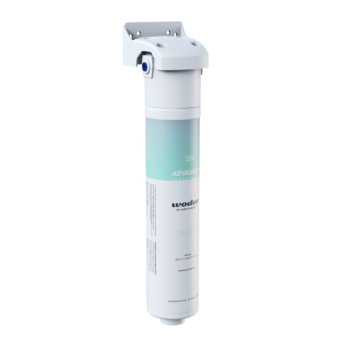
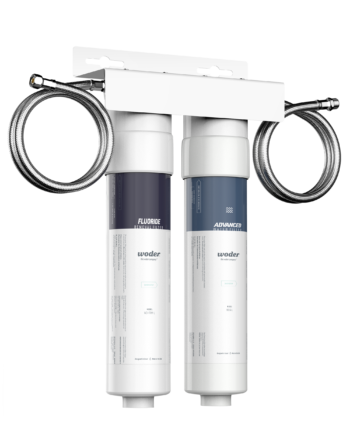
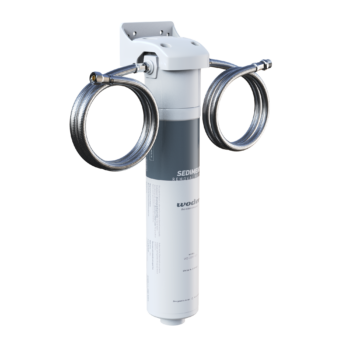
An under-sink inline filter addresses all three of those friction points at once. It connects directly to your existing cold-water line, so filtered water flows at normal tap pressure without waiting for gravity. Cartridges in this format typically serve far more gallons before replacement than a pitcher cartridge does, which cuts both cost and the mental load of monitoring a TDS meter. Woder makes under-sink and inline filters that connect directly to your cold-water line, with no countertop footprint. You install one in-line and filtered water flows at normal tap pressure without waiting for gravity. The approach is different from ZeroWater's ion exchange, not ranked against it, but suited to a different set of priorities: consistent flow, mineral retention, and longer service intervals.
If you are in a high-TDS area, filter water for three or more people, or simply find yourself replacing pitcher cartridges more often than feels reasonable, an under-sink inline filter is worth comparing directly against the ongoing cost of a pitcher.
Prices and plan limits verified as of October 2026.
FAQs
How often do you need to replace a ZeroWater filter?
Replacement frequency depends almost entirely on your source water's TDS level. In low-TDS areas, a cartridge may last toward the upper end of the reported 15-to-40-gallon range. In hard-water or high-TDS households, that same cartridge can exhaust in a matter of days. ZeroWater includes a TDS meter with its pitchers; once the reading climbs above 006 ppm, the company recommends replacing the filter immediately.
Does ZeroWater remove beneficial minerals like calcium and magnesium?
Yes. The ion exchange process that drives ZeroWater's near-zero TDS result strips all dissolved solids, including calcium and magnesium. Those minerals are not harmful and contribute to the natural taste and mouthfeel of water. Their absence is why many users describe ZeroWater's output as flat or slightly acidic. If mineral retention matters to you, a filter that uses selective or carbon-based filtration will produce a different result.
Is ZeroWater NSF certified?
ZeroWater holds NSF certifications for several contaminant categories, including lead, chromium-6, and PFAS. Certifications cover specific contaminants under specific test conditions, so it is worth checking ZeroWater's current certification list against the contaminants you are most concerned about in your own tap water report.
Can ZeroWater filters cause health problems if used past their lifespan?
Once the ion exchange resin is fully saturated, it can begin releasing stored contaminants back into the water rather than removing them. Drinking water from an exhausted ZeroWater cartridge means the filter is no longer protecting you and may be actively worsening water quality. The fishy or sulfurous smell that appears at exhaustion is the clearest warning sign. Replacing the cartridge at that point is not optional.
How do you know when a ZeroWater filter is exhausted?
ZeroWater includes a TDS meter in the box for exactly this reason. Test your filtered water regularly and replace the cartridge when the reading rises above 006 ppm. A fishy or sulfurous smell in the filtered water is a secondary indicator that the resin is past its useful life. In high-TDS households, it is worth testing more frequently, since exhaustion can happen faster than expected.
Conclusion
ZeroWater delivers some of the strongest contaminant removal numbers in the pitcher category, with verified reductions for PFAS, chromium-6, lead, fluoride, and uranium. The tradeoffs are real and predictable: short cartridge life in hard-water areas, flat-tasting mineral-free water, a higher ongoing replacement cost than most pitcher alternatives, and an unresolved microplastics lawsuit that adds uncertainty.
Before buying, test your tap water's TDS level if you can. If it runs high, factor in how quickly cartridges will exhaust and what that costs per month. If mineral taste matters to you, or if you filter water for more than two people, compare a pitcher against an under-sink inline filter on total annual cost and flow rate. Those two numbers often shift the decision more than any single contaminant certification.