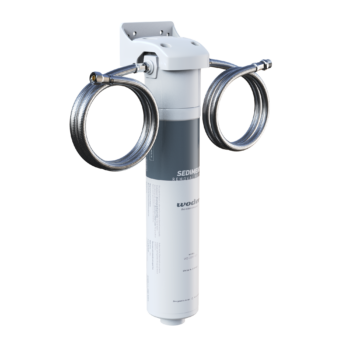
- Why an Inline Filter Makes Sense for Your Refrigerator
- What to Look For in an Inline Refrigerator Water Filter
- Which Types of Models Actually Work
- Installation: What the Process Actually Looks Like
- FAQs
- The Bottom Line
Your refrigerator's built-in filter does a decent job, but it has limits. Most fridge filters rely on basic carbon blocks that target chlorine taste and odor — and not much else. Heavier contaminants like lead, cysts, or certain industrial chemicals often pass right through. An inline water filter for refrigerator lines addresses this by sitting between your water supply and the fridge, handling filtration before water ever reaches your ice maker or dispenser.
This guide covers what actually matters when choosing one, what to avoid, and which types of models hold up in real use.
Why an Inline Filter Makes Sense for Your Refrigerator
Refrigerators with water dispensers or ice makers connect directly to a cold water supply line. That line delivers unfiltered water straight to the fridge, where the built-in cartridge handles whatever it can.
The issue is that built-in fridge filters are designed for convenience, not thorough filtration. They're typically NSF 42 certified, which covers taste and odor. Most aren't certified to NSF 53 or NSF 58 standards — the ones that cover health-related contaminants like lead, volatile organic compounds (VOCs), and cysts.
Adding an inline filter to the supply line gives your water a proper filtration pass before it even reaches the fridge. You're no longer relying entirely on a cartridge engineered to fit a specific appliance rather than address your local water quality.
What to Look For in an Inline Refrigerator Water Filter
Filtration Certifications
Start here. NSF/ANSI certifications tell you what a filter has been independently tested to remove. The key ones:
- NSF 42 covers aesthetic contaminants — chlorine, taste, and odor
- NSF 53 covers health-related contaminants including lead, cysts, and certain VOCs
- NSF 372 covers lead-free materials in the filter housing itself
A filter that only carries NSF 42 isn't doing much beyond improving taste. If you're filtering for health reasons, NSF 53 is the minimum worth accepting.
Contaminant Reduction Claims
Read the spec sheet carefully. Some filters list an impressive range of contaminants on the packaging but only reduce them by a small margin. Look for filters that specify the actual percentage reduction for contaminants you care about — not just a vague list of names.
If your municipal water report shows elevated lead, chloramines, or agricultural runoff byproducts, match your filter's verified reduction claims to those specific contaminants.
Flow Rate Compatibility
Refrigerator water lines typically run between 30 and 120 PSI depending on your home's supply. An inline filter adds resistance to that flow. If the filter is too restrictive for your line pressure, you'll notice slow ice production and weak dispenser output.
Check the filter's rated flow rate and minimum operating pressure before buying. Most quality inline filters are built for standard residential pressure ranges, but it's worth confirming before you commit.
Filter Life and Cost Per Gallon
Inline filters are rated by gallon capacity — typically anywhere from 500 to 2,000 gallons before replacement. A household that regularly uses its ice maker and water dispenser might go through 1 to 2 gallons per day, meaning a 500-gallon filter lasts roughly eight months to a year.
Calculate cost per gallon, not just sticker price. A cheaper filter that needs replacing every four months can easily cost more over a year than a pricier one rated for 1,500 gallons.
Mineral Retention
Standard carbon block filters and reverse osmosis systems take very different approaches to filtration. RO systems remove nearly everything — including beneficial minerals like calcium and magnesium. Many people find RO water flat-tasting as a result, and there's ongoing discussion about whether long-term consumption of demineralized water is ideal.
Some inline filters are designed to remove contaminants selectively without stripping out naturally occurring minerals. Woder Filters uses a proprietary Advanced Selective Filtration technology built around nanoparticles that attract and remove specific contaminants while leaving beneficial minerals intact. That's a meaningful distinction if you want filtered water that still tastes like water rather than something distilled.
Installation Format
Inline filters come in a few connection styles:
- Push-to-connect fittings are the easiest to work with. Cut the existing water line, push each end into the filter housing, and you're done — no special tools beyond a tubing cutter.
- Compression fittings take a bit more care but create a very secure connection.
- Threaded connections are less common on refrigerator lines but appear on some models.
Most modern inline refrigerator filters use push-to-connect fittings on standard 1/4-inch tubing, which is the most common size for refrigerator supply lines. Confirm your tubing size before ordering.
Which Types of Models Actually Work
Basic Carbon Inline Filters
The most common and most affordable option. They handle chlorine taste and odor reliably. If your main concern is water that tastes and smells clean, a basic carbon inline filter does that job well.
They're not the right call if your water contains lead, heavy metals, or other health-related contaminants. Think of them as a taste upgrade, not a health solution.
Multi-Stage Inline Filters
These combine different filter media in a single housing — often pairing a sediment pre-filter with a carbon block or similar media. They cover a broader range of contaminants than single-stage carbon filters and are a better fit for households on well water or in areas with older plumbing.
Look for NSF 53 certification on any multi-stage filter you're considering for health-related filtration.
Selective Filtration Inline Filters
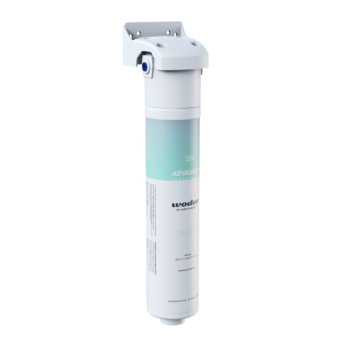
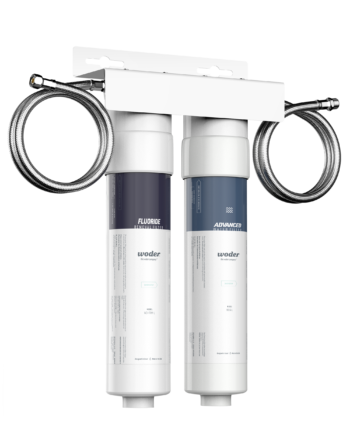
This is a newer category. Rather than filtering everything indiscriminately, selective filtration technology targets specific contaminants while leaving beneficial minerals in place. Woder's inline filter models fall here, using nanoparticle-based media to attract contaminants without stripping the water of calcium, magnesium, and other minerals that contribute to both taste and health.
For households that want clean water without the flat output of an RO system — and without the complexity of installing a full under-sink setup — this type of filter is worth a close look.
What to Skip
Avoid filters with no third-party certifications. Any filter that only cites internal testing or uses vague language like "removes up to 99% of contaminants" without specifying which ones or under what conditions isn't giving you useful information. Certification from NSF International or an equivalent independent body is the baseline for any filter you're trusting with your drinking water.
Installation: What the Process Actually Looks Like
Installing an inline filter on a refrigerator water line is a straightforward DIY job for most people. Here's the general process:
- Turn off the water supply to the refrigerator
- Pull the fridge away from the wall to access the supply line
- Decide where you want to position the filter — usually near the wall or behind the fridge
- Cut the supply line at that point
- Connect each cut end to the filter using the included fittings
- Turn the water back on and check for leaks
- Run a few gallons through the dispenser to flush the new filter before drinking
The whole job typically takes 15 to 30 minutes. No plumber needed.
FAQs
What is an inline water filter for a refrigerator?
An inline water filter connects directly to the supply line feeding your refrigerator. It filters water before it reaches the ice maker and dispenser, adding a layer of filtration beyond what the built-in fridge filter provides.
Do I still need the built-in refrigerator filter if I add an inline filter?
You can run both, and some people do. If your inline filter already handles the contaminants you're concerned about, the built-in filter becomes redundant. That said, some refrigerators require a cartridge to be installed for the dispenser to function — even if it's just a bypass cartridge.
How often do I need to replace an inline refrigerator filter?
Most inline filters are rated for 500 to 2,000 gallons depending on the model. For average household use, that typically works out to 6 to 18 months. Check the manufacturer's rated capacity and track your usage to know when it's time to replace.
Will an inline filter slow down my ice maker or water dispenser?
A well-matched filter shouldn't cause noticeable slowdowns. Problems usually come from a filter whose flow restriction is too high for your home's water pressure. Always check the filter's minimum operating pressure and flow rate specs against your supply line conditions before buying.
What contaminants does an inline refrigerator filter remove?
It depends on the filter. Basic carbon filters reduce chlorine, taste, and odor. Filters certified to NSF 53 also reduce health-related contaminants like lead, cysts, and certain VOCs. Selective filtration models like those from Woder target specific contaminants while retaining beneficial minerals. Always check the filter's certified contaminant reduction list.
Is an inline filter the same as a reverse osmosis system?
No. A reverse osmosis system uses a membrane to remove nearly all dissolved solids, including minerals. Inline filters use media like activated carbon or selective filtration technology to target specific contaminants. RO systems require more space, produce wastewater, and strip out minerals along with contaminants.
Can I install an inline refrigerator filter myself?
Yes, for most standard setups. Filters with push-to-connect fittings on 1/4-inch tubing are designed for DIY installation and don't require special tools beyond a tubing cutter. If your supply line uses an unusual size or material, check compatibility before purchasing.
The Bottom Line
An inline water filter for your refrigerator is one of the simpler, more cost-effective ways to improve your drinking water without overhauling your plumbing. The key is matching the filter to your actual water quality concerns — not just grabbing the cheapest option available.
Look for third-party certifications, verify contaminant reduction claims against what your water actually contains, and pay attention to flow rate compatibility. If keeping beneficial minerals in your water matters to you, selective filtration is worth looking at specifically.
You can explore Woder's inline and under-sink filter models at woder.com to find the right fit for your setup.