- Why Does Your Water Taste Metallic?
- Is Metallic-Tasting Water Actually Bad for You?
- How to Find Out What's Actually in Your Water
- What a Metallic Taste Might Signal About Your Pipes
- What Actually Removes Metallic Taste (and What Doesn't)
- When to Take Metallic Taste More Seriously
- The Fix Most People Overlook
- Frequently Asked Questions
You fill a glass from the tap, take a sip, and something's off. Not dramatically wrong — just a faint taste of pennies or old pipes. That's your water telling you something. It's worth listening.
The good news: metallic-tasting water isn't always dangerous. The less reassuring news: sometimes it is. Here's how to tell the difference, what's likely behind it, and what you can actually do.
Why Does Your Water Taste Metallic?
Water doesn't naturally taste like metal. Something is introducing that flavor — from your plumbing, your local supply, or both. The most common sources are worth knowing.
Old or Corroding Pipes
Homes built before 1986 have a real chance of containing lead pipes or lead solder. As those pipes corrode, lead leaches directly into the water moving through them. There's no safe level of lead exposure, especially for children and pregnant people.
Copper pipes — generally considered safer — can also contribute a metallic taste when they corrode or when water sits in them for too long.
Iron and Manganese
These naturally occurring minerals can enter your water from the source itself or from aging infrastructure. Both are detectable by taste at relatively low concentrations. Iron gives water a sharp, almost rusty edge. Manganese tends toward something more bitter and chemical.
Chlorine and Chloramine Reactions
Municipal treatment uses chlorine and chloramine to disinfect. These chemicals can react with organic matter in your pipes and produce compounds that taste metallic or chemical. If your water tastes different after sitting overnight, this is often why.
Low pH Water
Slightly acidic water is more aggressive toward metal pipes — it pulls iron, copper, and other metals into solution more readily. If you're seeing blue-green staining in your sink alongside a metallic taste, low pH is likely part of the picture.
Is Metallic-Tasting Water Actually Bad for You?
It depends entirely on what's causing the taste.
Iron or manganese at low levels — the health risk is generally low for most adults. Unpleasant, but neither mineral is acutely toxic at the concentrations typically found in household water.
Lead — a different situation entirely. Lead is a neurotoxin. There's no established safe level for children. Adults face cardiovascular and kidney risks with prolonged exposure. The tricky part: lead doesn't always produce a dramatic taste. You can have elevated lead levels without a strong metallic flavor at all.
Copper — short-term exposure at low levels is generally not harmful, but high concentrations over time can cause gastrointestinal problems and, in serious cases, liver and kidney damage.
Chlorine byproducts — the concern here is long-term exposure to disinfection byproducts, some of which are classified as potential carcinogens.
The metallic taste is a signal. It tells you something is in your water that probably shouldn't be there. Whether that something is a health concern depends on what it actually is — which is exactly why testing matters.
How to Find Out What’s Actually in Your Water
Don't guess. Test.
Your local water utility is required to publish an annual Consumer Confidence Report listing detected contaminants and their levels. It's a useful starting point — but it measures water at the treatment plant, not at your tap. By the time water reaches your glass, it's traveled through miles of aging infrastructure and your home's own pipes.
A home water test gives you a more accurate picture of what you're actually drinking. Woder offers water testing kits alongside their filter products, so you can understand your specific situation before choosing a solution.
What a Metallic Taste Might Signal About Your Pipes
The taste is often a symptom of something broader. Here's how to read the signals:
- Consistent metallic taste from cold water only: Likely a pipe or infrastructure issue, not treatment-related. Worth testing for lead and copper.
- Taste is stronger after water sits overnight: Stagnation lets metals leach from pipes. Run cold water for 30 to 60 seconds before drinking, especially in older homes.
- Taste is stronger in hot water: Heat accelerates corrosion and leaching. Never use hot tap water for cooking or drinking.
- Blue-green staining in sinks or tubs: A sign of copper corrosion — your water is acidic enough to eat through copper pipes.
- Reddish or orange staining: Points to iron, either from your pipes or the source water itself.
- Taste varies by season: Some contaminants fluctuate with rainfall and runoff. Spring and fall are common times for shifts in taste and quality.
What Actually Removes Metallic Taste (and What Doesn’t)
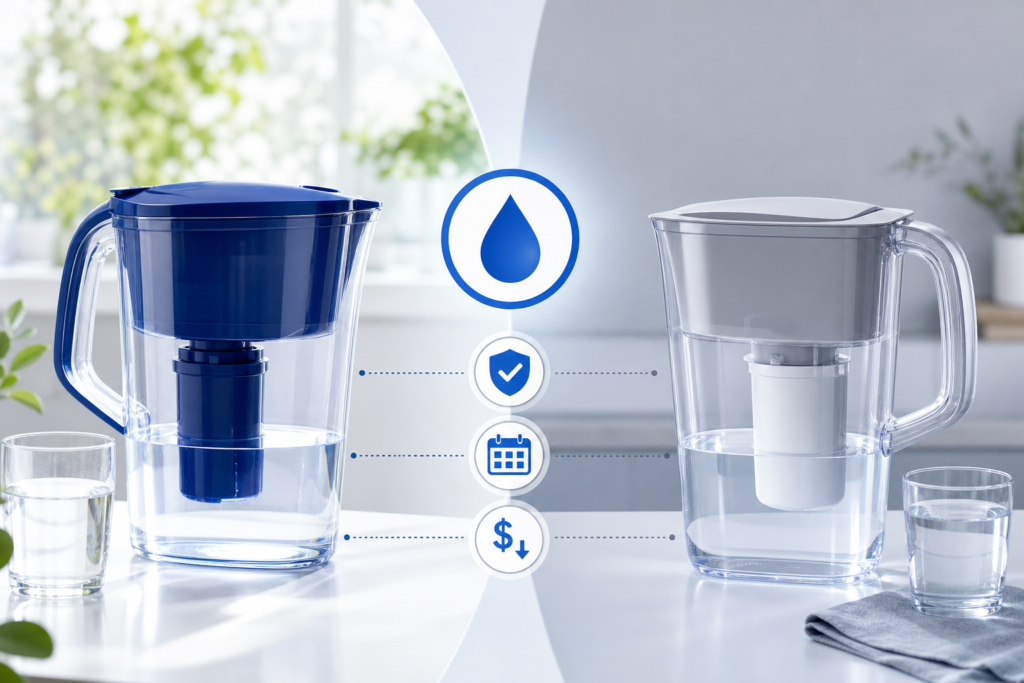
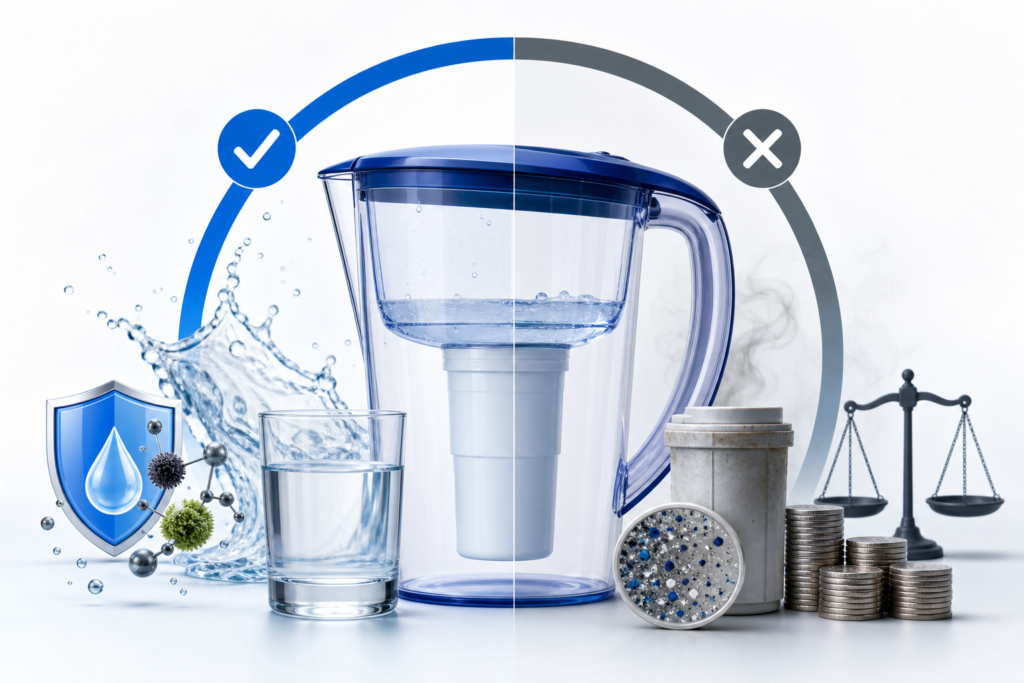
A basic carbon pitcher filter will reduce chlorine taste and improve general flavor. But it won't reliably remove lead, and it won't address iron or manganese at meaningful concentrations. If your metallic taste has a serious source, a pitcher filter isn't enough.
Reverse osmosis systems remove most contaminants, including lead and metals. But they also strip out calcium, magnesium, and other beneficial minerals. They produce wastewater, require a tank, and typically need a plumber to install.
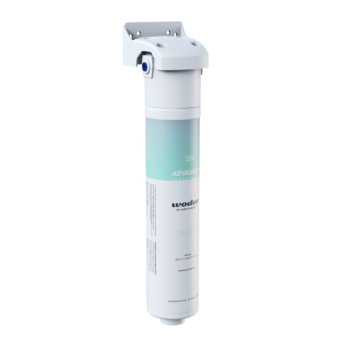
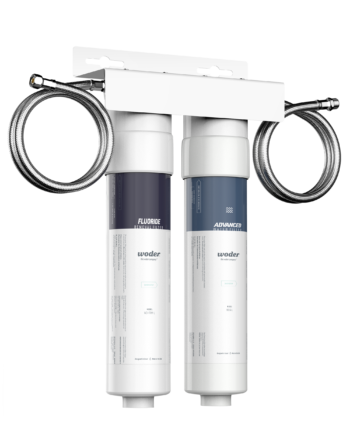
There's a middle path: a filter that removes the harmful stuff while keeping the beneficial minerals intact. That's what Woder's Advanced Selective Filtration technology does. Using nanoparticles, it attracts and removes contaminants like lead, chlorine, mercury, and chromium 6 — while leaving calcium and magnesium right where they belong. No wastewater. No tank. No plumber.
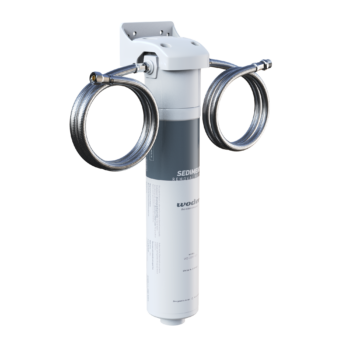
Woder filters install directly into your existing water line under the sink. The WD-D-8K-FRM-ADV-DC handles standard household flow rates. The WD-10K-ADV-PORT suits higher-demand homes. The compact WD-G4-210-JG works well for smaller setups or renters who need a less invasive option.
Remove the bad. Keep the good. That's the Woder difference.
When to Take Metallic Taste More Seriously
Some situations call for faster action:
- Your home was built before 1986 and you've never tested for lead
- You have young children or someone in your household is pregnant
- Your water utility has issued a recent advisory or violation notice
- The metallic taste appeared suddenly after plumbing work or a water main repair
- The taste has been getting stronger over time
In any of these cases, test first, then act on what you find. Don't wait.
The Fix Most People Overlook
Most people either ignore the metallic taste or start buying cases of bottled water. Both responses are understandable. Neither is a real fix.
Ignoring it means continued exposure to whatever is causing the taste. Bottled water creates significant plastic waste and costs far more over time than a quality inline filter.
An under-sink filter from Woder installs in minutes, requires no plumber, and targets the contaminants most likely behind a metallic taste — including lead, chlorine, mercury, and VOCs. Replacement cartridges keep the filtration current without replacing the whole unit.
Built in the US. Installed in minutes. Trusted for years.
Not sure which model fits your home? The Woder Wizard at woder.com/wizard walks you through it based on your household's needs and flow rate.
Frequently Asked Questions
Is metallic-tasting water safe to drink?
It depends on the cause. A mild metallic taste from low iron or copper levels isn't an acute health risk for most adults. But a metallic taste caused by lead is a serious concern — there's no safe exposure level, particularly for children. Testing your water is the only way to know what you're actually dealing with.
What causes tap water to taste like metal?
The most common causes are corroding lead or copper pipes, elevated iron or manganese in the source water, chlorine and chloramine reactions with organic matter in your plumbing, and low pH water that pulls metals into solution. Older homes are more likely to have pipe-related causes.
Does a metallic taste mean there's lead in my water?
Not necessarily — but it can. Lead doesn't always produce a strong taste, which makes it harder to detect by flavor alone. If your home was built before 1986 or you have any reason to suspect lead pipes, get your water tested rather than relying on taste as your indicator.
Can a standard pitcher filter fix metallic-tasting water?
Basic carbon pitcher filters reduce chlorine taste and some general flavor issues, but they don't reliably remove lead, iron, or manganese at meaningful concentrations. If the metallic taste has a serious source, a capable inline or under-sink filter is a better choice.
How do I test my water for the cause of a metallic taste?
Your local utility publishes an annual Consumer Confidence Report, but that measures water at the treatment plant — not your tap. A home water test kit gives you a more accurate picture of what's actually coming out of your faucet. Woder offers testing kits alongside their filter products.
Will a water filter remove the metallic taste completely?
A quality filter that targets the specific contaminant causing the taste will eliminate it. Woder's Advanced Selective Filtration removes 99.9% of contaminants including lead, chlorine, chromium 6, and mercury — the most common sources of metallic taste — while keeping beneficial minerals like calcium and magnesium in the water.
How long does it take to install an under-sink water filter?
Most under-sink inline filters, including Woder models, install directly into your existing water line without special tools or a plumber. The typical installation takes under 30 minutes, and Woder's site includes a full installation guide to walk you through it.
Your water shouldn't taste like old pipes. If it does, that taste is telling you something worth hearing. Test your water, understand the source, and choose a filter that actually addresses it. It's your water — make sure it's working for you.