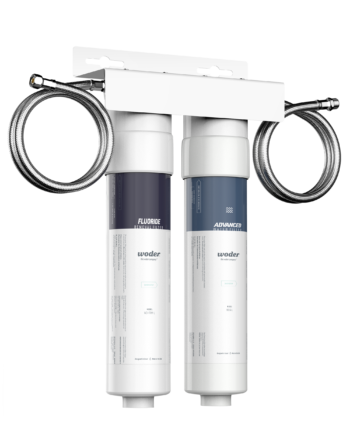
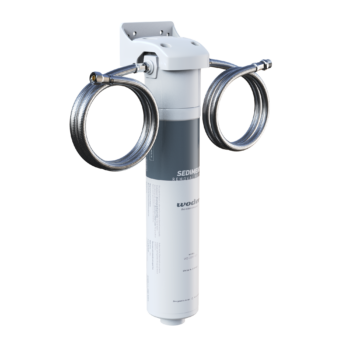
Lead has no known safe level of exposure, yet the federal action level for lead in tap water is 15 parts per billion, or 0.015 mg/L. That difference is the first thing to understand when you’re choosing an under-sink water filter for lead. An action level is a trigger for utility action, not a guarantee that every household tap is free of lead. (EPA lead drinking water guidance)
The most useful shopping insight is also easy to miss: “NSF certified” isn’t specific enough. For a point-of-use filter intended to address both dissolved lead and lead carried on particles, look for the exact model to list NSF/ANSI 53 for lead reduction and NSF/ANSI 42 Class 1 for particulate reduction, then verify that listing through an independent certification directory. That distinction matters more than a large claim printed on a box.
| Criteria | Advanced Selective Filtration | Reverse Osmosis |
|---|---|---|
| Lead reduction | Depends on the exact contaminant certification and model | Uses a membrane to reduce dissolved contaminants |
| Mineral content | Retains essential minerals | Strips dissolved solids, including minerals |
| Water use | Doesn't require a reject-water stream in the same way as RO | Sends concentrate to the drain during filtration |
| Installation | Point-of-use installation with a dedicated drinking-water outlet | Usually requires a membrane, storage components, drain connection, and dedicated faucet |
| Maintenance | Replace the cartridge according to the manufacturer's schedule | Requires maintenance of prefilters, membrane, and post-treatment components |
| Certification check | Confirm the exact contaminant claim and standards | Confirm the exact membrane and contaminant certification |
Table of Contents
- Why Lead in Tap Water Demands a Point-of-Use Filter
- The Two Certifications Your Lead Filter Must Have
- Selective Filtration vs Reverse Osmosis for Lead Removal
- How to Use an Under-Sink Lead Filter Safely
- Real-World Proof That Point-of-Use Filters Work
- Choosing the Right Under-Sink Lead Filter for Your Home
Why Lead in Tap Water Demands a Point-of-Use Filter
The EPA sets the maximum contaminant level goal for lead at zero because there’s no known safe level of lead exposure. The agency also estimates that drinking water can account for 20% or more of a person’s total lead exposure, depending on individual circumstances and other sources. (EPA lead drinking water information)
That doesn’t mean every home has the same risk. Lead often enters water after treatment, as water moves through aging service lines, solder, brass fixtures, or other plumbing components. A utility can deliver water that meets requirements at the treatment plant while conditions inside a particular building still affect what comes out of one tap.
The action level isn’t a safety line
Under the federal framework described by the EPA, the legal lead action level in tap water is 15 ppb. If more than 10% of collected samples exceed that level, the utility must take additional action. (EPA lead and drinking water overview)
That benchmark applies to utility response. It doesn’t turn a reading below 15 ppb into a health-based target, because the EPA’s health goal remains zero. It also doesn’t tell you exactly what’s happening at your kitchen faucet. A building-specific test can reveal conditions that a system-wide report won’t show.
Practical distinction: The action level tells you when a water system must respond. It doesn’t certify that your individual tap is lead-free.
Why point-of-use treatment makes sense
A whole-house solution can have an important role, especially when plumbing conditions affect multiple fixtures. But if your immediate goal is to reduce lead in the water you drink and use for cooking, an under-sink point-of-use system treats the water at the place where you’ll consume it. It also lets you use a dedicated drinking-water outlet instead of treating every gallon used for bathing, laundry, or cleaning.
Before buying, test your water or review your utility’s available information. This guide to testing for lead can help you understand what a household test can and can’t tell you. A test won’t replace certification, but it can help you decide whether a point-of-use filter is an appropriate interim measure while plumbing issues are investigated.
The Two Certifications Your Lead Filter Must Have
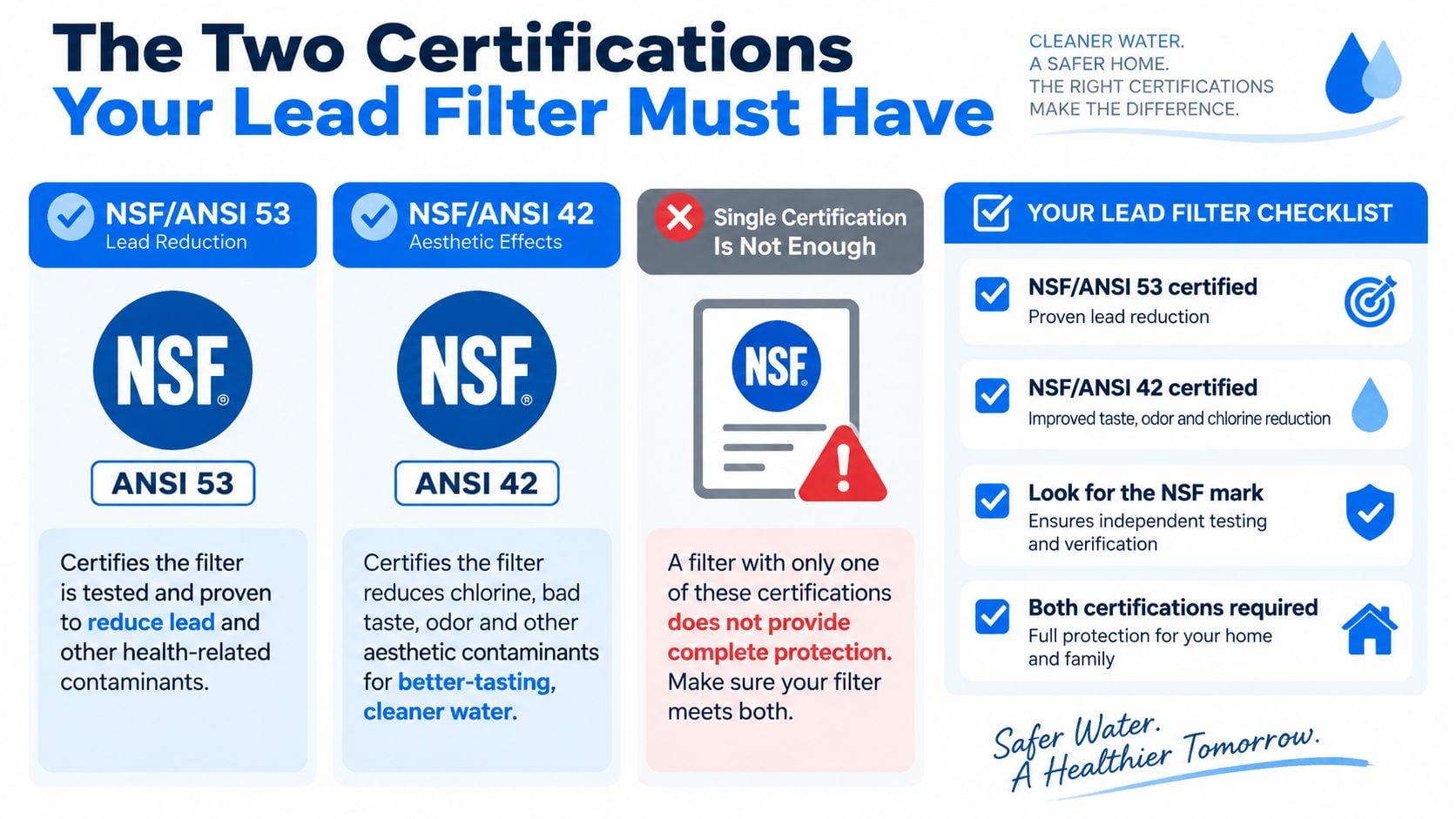
A generic “NSF certified” statement leaves out the detail that matters most, the specific contaminant and performance claim. NSF/ANSI Standard 53 covers health-related contaminant reduction claims, but certification must identify what the product has been evaluated to reduce. NSF maintains separate listings for lead and other contaminants, so a badge without a named claim shouldn’t be treated as proof of lead reduction. (NSF contaminant reduction claims guide)
Lead can appear in water in more than one physical form. Some lead is dissolved, while some can be attached to or carried by particles. That’s why a filter designed for real-world lead concerns may need both a health-related lead-reduction claim and a particulate-reduction claim.
What each standard tells you
NSF/ANSI 53 is the key standard to check for a lead-reduction claim. It addresses health-related contaminant reduction, and the listing should name lead rather than just displaying the words “NSF certified.”
NSF/ANSI 42 Class 1 addresses particulate reduction. That matters because lead may be attached to sediment or other particles, and reducing particles can address a different part of the problem than reducing dissolved lead.
A product with only Standard 42 isn’t automatically a dissolved-lead filter. A product with only a general Standard 53 statement may not provide the particulate scope you’re looking for. EPA consumer guidance for 2025 identifies the more protective setup as one listing NSF/ANSI 53 for lead reduction and NSF/ANSI 42 Class 1 for particulate reduction. (EPA filter guidance PDF)
How to verify a listing
Look up the exact model number in the NSF or WQA certification directory. Check that the entry names lead reduction, identifies the relevant standard, and matches the cartridge or complete system you’re considering. Don’t assume that every cartridge in a product family has the same certification scope.
Since February 2022, NSF lead-reduction requirements for Standards 53 and 58 have required certified units to reduce lead to 5 ppb or less, tightening the earlier 10 ppb benchmark and aligning with Health Canada’s 5 ppb threshold. (ScienceDirect discussion of lead-reduction requirements) Health Canada’s consumer guidance also describes lead-reduction performance around 99.5% to 99.6% under the standard’s test conditions, with a maximum permissible product-water concentration of 5 µg/L. (Health Canada filter guidance)
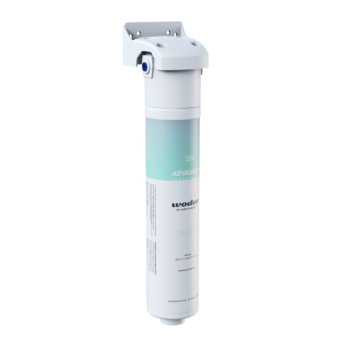
For a broader explanation of how certification language works, see water filter filtration certifications and removal claims. A product such as the Woder WD-G4-DC Lead, Chlorine, HM and PFAS Water Filter should still be evaluated by checking the exact certification claims for the specific filter and contaminant you’re concerned about. Its catalog information identifies WQA certification for NSF/ANSI 42 chlorine taste and odor and NSF/ANSI 372 lead-free compliance, which is not the same wording as an NSF/ANSI 53 lead-reduction certification.
Selective Filtration vs Reverse Osmosis for Lead Removal
Lead reduction isn’t the only decision under your sink. The filtration method also determines what happens to the rest of the water, how the system fits into your cabinet, and what maintenance you’ll manage over time.
Reverse osmosis forces water through a semipermeable membrane that reduces many dissolved substances. It can produce very low TDS, but zero TDS doesn’t prove that water is safer. It means dissolved solids, including both unwanted substances and naturally occurring minerals, have been removed.
Woder’s Advanced Selective Filtration® takes a different approach. The technology is designed to target listed contaminants such as lead, PFAS, heavy metals, fluoride, chromium, and chlorine while retaining essential minerals. That contrasts with RO’s mineral-stripping process. The right choice depends on which tradeoffs fit your water and your preferences.
| Criteria | Advanced Selective Filtration | Reverse Osmosis |
|---|---|---|
| Contaminant focus | Targets specified contaminants according to the product's claims and certifications | Broad dissolved-contaminant reduction through a membrane |
| Lead | Verify the exact lead-reduction certification for the model | Verify the exact RO certification and performance claim |
| Minerals | Retains essential minerals | Removes dissolved minerals along with other dissolved solids |
| TDS | Doesn't aim to drive TDS to zero | Can produce very low TDS |
| Water waste | Point-of-use filtration without the conventional RO reject-water process | Produces reject water as part of membrane operation |
| Maintenance | Cartridge replacement remains the central task | Multiple components may require scheduled replacement and care |
| Space | Typically uses a compact dedicated filtration arrangement | Often needs room for membrane components, connections, and storage |
| Taste | Mineral retention can preserve the character of the source water | Post-treatment and remineralization choices affect taste |
Mineral removal isn’t the same as contaminant removal
RO water may appeal to people who want the lowest possible dissolved-solids reading. But that reading doesn’t distinguish calcium and magnesium from lead or other unwanted substances. A zero-TDS result is therefore a measure of what the system removed, not a complete safety analysis.
Selective filtration appeals to households that want targeted contaminant reduction without stripping the water of its naturally occurring minerals. It also avoids making a low TDS reading the sole definition of quality.
The practical cost of complexity
RO systems generally need more components and plumbing connections than a basic under-sink cartridge system. They also send reject water to the drain and require attention to several replacement intervals. Those tradeoffs may be worthwhile for a household whose testing shows a broad dissolved-contaminant problem, but they’re not automatically necessary for every lead concern.
For a plain-language explanation of RO operation and its tradeoffs, read what reverse osmosis water filters do. Whatever technology you choose, match the decision to verified performance claims instead of assuming that the most aggressive-sounding treatment is automatically the most suitable.
How to Use an Under-Sink Lead Filter Safely
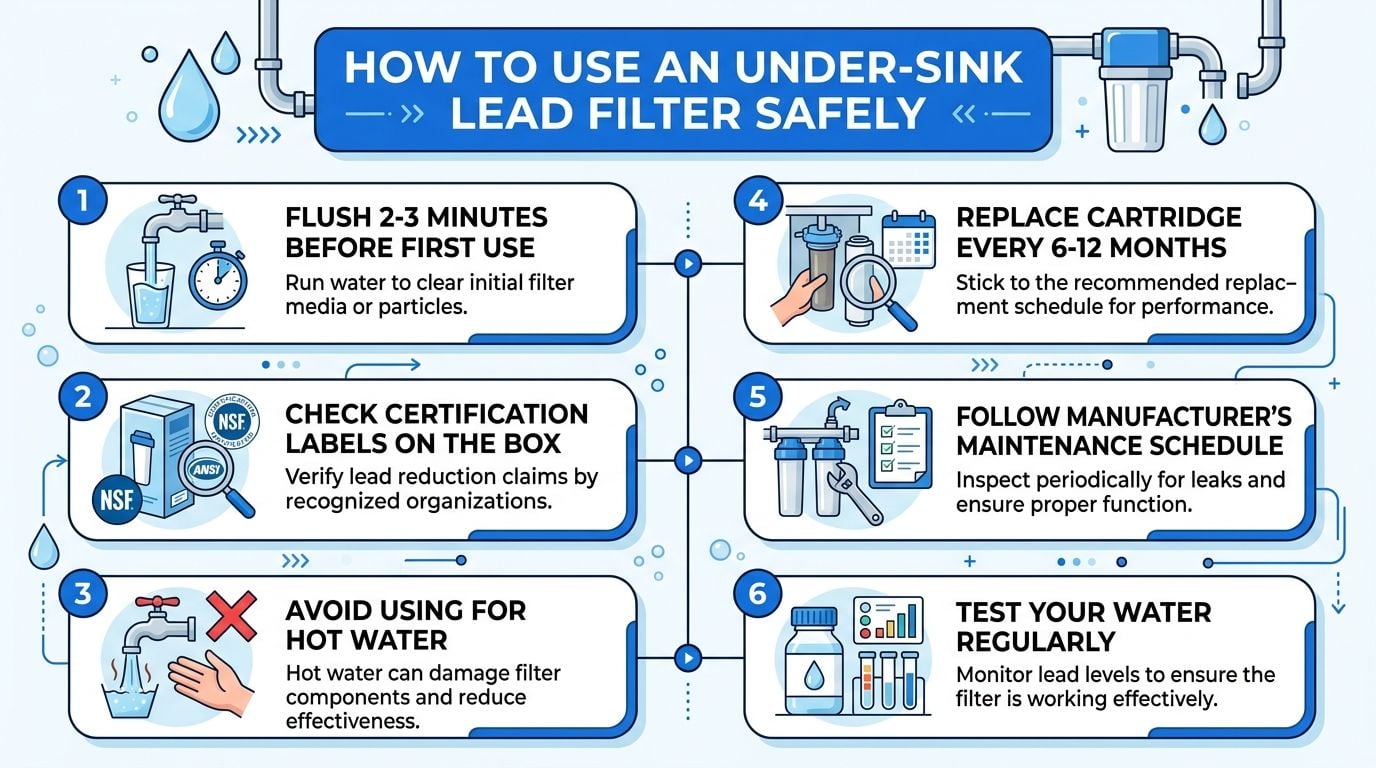
A certified filter can only perform within its tested scope and operating conditions. Installation, water temperature, and cartridge maintenance all affect whether the water reaching your glass receives the treatment you expect.
Start with the manufacturer’s instructions, then keep four rules in view:
-
Use cold water only. The EPA advises users never to run hot water through a lead filter. Use the unfiltered cold tap for hot-water needs, and filter cold water before heating it for drinking or cooking. (EPA filter guidance)
-
Replace the cartridge on schedule. Filter media has a service life. An exhausted cartridge may no longer reduce contaminants at its stated performance level, even if water still flows through it normally.
-
Confirm the exact model. Certification belongs to a specific product and claim, not to a brand name or a broad product category. Check the listing for lead reduction and particulate reduction before installation.
-
Follow installation and flushing directions. A loose connection, incorrect flow path, or inadequate initial flush can compromise the setup. The instructions supplied with the system are part of its safe operation.
Know the tested boundary
NSF/ANSI lead-reduction certification uses a 150 ppb lead challenge, and NSF notes that certified filters are evaluated for effectiveness only up to that level. The EPA likewise cautions that performance isn’t evaluated above 150 ppb, so a household that suspects higher contamination shouldn’t treat a certified filter as a complete answer without further investigation. (NSF and EPA performance boundary research)
That’s where a confirmed water test and plumbing assessment matter. Filtration can reduce exposure at the drinking tap, while plumbing remediation addresses the source. If moisture, leaks, or staining are also present inside the cabinet, a resource on moisture fixes for under sink can help separate a water-quality concern from an under-sink moisture problem.
Safety rule: A filter is a point-of-use control. It isn’t a substitute for correcting severely contaminated plumbing.
Real-World Proof That Point-of-Use Filters Work
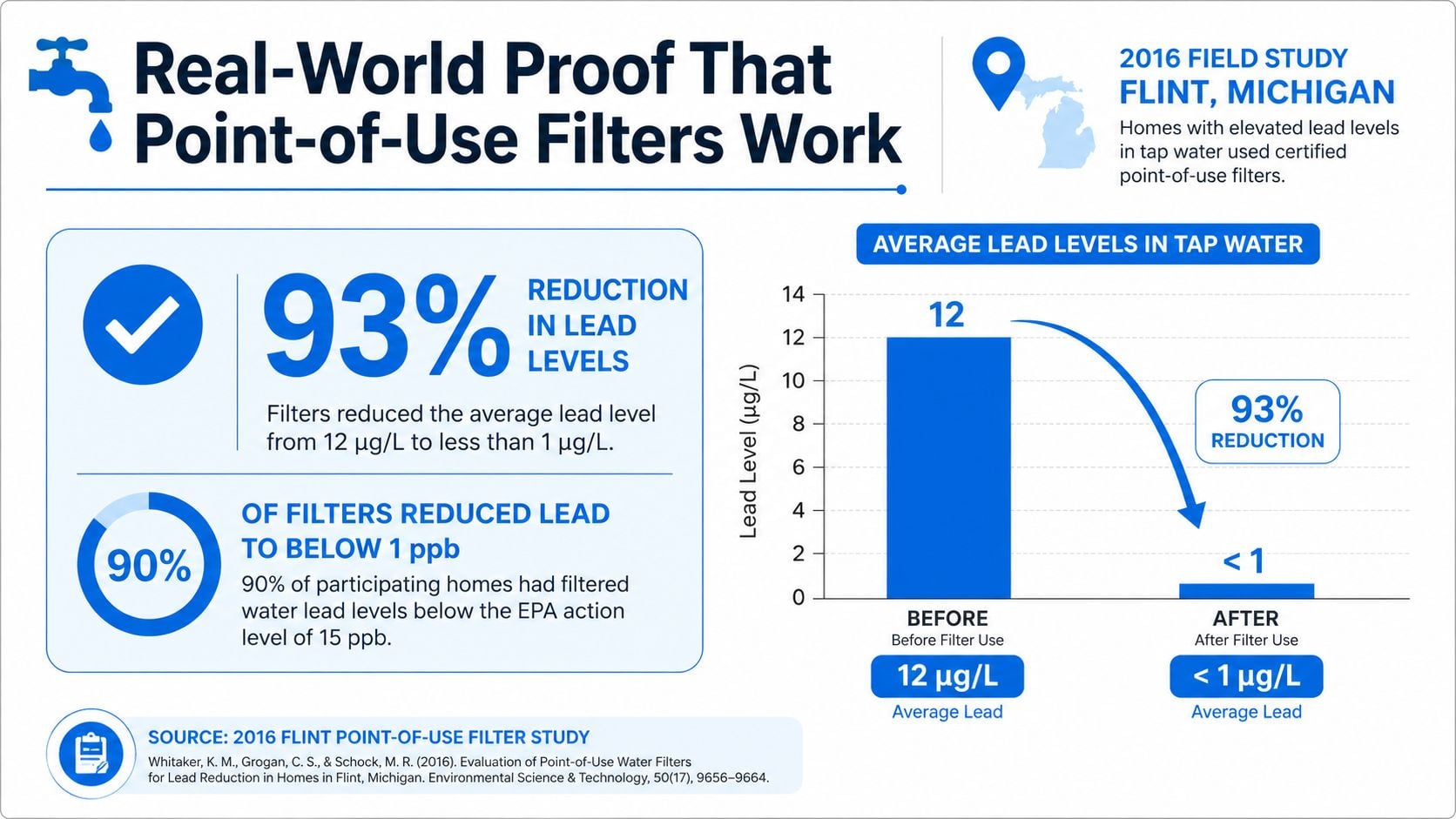
Laboratory certification tells you how a filter was challenged under a defined protocol. Field evidence answers a different question, whether point-of-use filtration can perform in a real plumbing emergency.
A 2016 study in Flint, Michigan examined filtered water from more than 345 locations during severe lead contamination. The researchers found that over 97% of filtered samples contained less than 0.5 µg/L of lead, and the maximum filtered-water concentration was 2.9 µg/L. (Flint point-of-use filtration study)
What the field result does and doesn’t prove
The result supports the value of correctly selected point-of-use filtration under difficult conditions. It doesn’t mean every filter removes lead equally, and it doesn’t turn a generic “lead reducing” claim into verified performance. The system must carry the relevant certification, operate within its tested boundary, and receive timely cartridge changes.
The same research notes that NSF/ANSI 53 lead-certified filters are challenged with 150 µg/L of soluble and particulate lead during certification. That challenge is 30 times higher than a 5 µg/L benchmark, which helps show why the certification protocol is more meaningful than an unsupported marketing statement. (Flint study and certification challenge)
Applying the evidence to a household tap
A severe event and an ordinary home aren’t identical situations. Plumbing materials, water chemistry, flow rate, cartridge age, and installation quality can all affect results. Still, the field evidence gives homeowners a grounded reason to take certified point-of-use filtration seriously, without assuming that any product with a certification badge will provide the same protection.
The useful conclusion is narrow and practical: certified point-of-use filtration can work in real contaminated systems, but the buyer must verify the exact claim and maintain the filter as directed.
Choosing the Right Under-Sink Lead Filter for Your Home
Begin with your own water. Review your utility’s Consumer Confidence Report, check available information about household plumbing, or order a qualified laboratory test if you need a direct reading from your tap.
Then use this decision sequence:
- Verify the claim: Look for NSF/ANSI 53 lead reduction and NSF/ANSI 42 Class 1 particulate reduction on the exact model.
- Check the scope: Confirm that the certification names lead, not merely chlorine, taste, odor, or lead-free materials compliance.
- Choose the treatment style: Selective filtration retains essential minerals, while RO strips dissolved solids and brings additional water use and maintenance considerations.
- Plan for ownership: Confirm the cartridge schedule, replacement availability, installation requirements, and household capacity.
- Match broader concerns: If PFAS, fluoride, chromium, chlorine, or other contaminants matter to you, verify that the product’s own documentation names those contaminants and provides appropriate certification or test support.
Woder Filters manufactures U.S.-made point-of-use systems built for U.S. building-code compliance and uses Advanced Selective Filtration® in its product line. The company also offers the Woder Wizard selection tool, lab water testing services, replacement cartridges, and installation documentation. Those resources can help you compare a system against your actual water conditions rather than choosing by packaging alone.
Lead reduction starts with a specific claim, a verified model, and correct operation. Once you know what’s in your water, the choice between selective filtration and RO becomes a practical decision about contaminants, minerals, water use, space, and maintenance.
Woder Filters offers U.S.-made point-of-use systems that use Advanced Selective Filtration® to target contaminants while retaining essential minerals, with replacement cartridges and testing resources to support the setup. Review the options at Woder Filters and compare the product documentation with your water test before choosing an under-sink filter for lead.