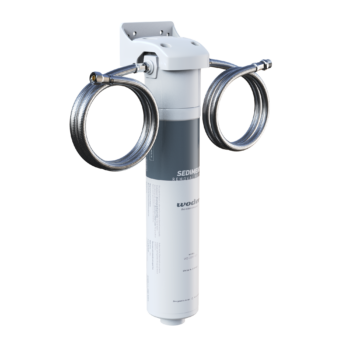
- What Waterdrop Is and How It Works
- Where Waterdrop Performs Well
- Where Waterdrop Falls Short
- The Mineral Question: Why It Matters More Than You Might Think
- How Waterdrop Compares to Selective Filtration
- Who Should Consider Waterdrop
- Who Should Look Elsewhere
- A Note on Certifications
- The Bottom Line
- Frequently Asked Questions
Waterdrop has built a real following on sleek design and smart features. If you've spent any time researching under-sink filters, you've almost certainly come across their systems. But looking good and working well for your specific household aren't always the same thing.
This review covers what Waterdrop actually offers in 2026, where it holds up, where it doesn't, and what's worth thinking through before you spend $200 to $600 on a filtration system.
What Waterdrop Is and How It Works
Waterdrop makes a range of under-sink filtration systems built primarily around reverse osmosis (RO) technology. Their lineup includes tankless RO units with app connectivity, filter life monitoring, and compact designs meant to fit cleanly under a kitchen sink.
The appeal is straightforward: a modern system with digital features that take the guesswork out of maintenance. For households that care about aesthetics and tech integration, Waterdrop delivers on those fronts.
Most of their popular models use multi-stage RO filtration, which is effective at removing a broad range of contaminants including heavy metals, chlorine, and PFAS.
Where Waterdrop Performs Well
Contaminant Removal
RO-based systems are thorough by design. The membrane filtration process removes dissolved solids, lead, chlorine, PFAS, and a wide range of other contaminants. If your primary goal is reducing what's in your water, an RO system will get the job done.
Design and Smart Features
Waterdrop's tankless design eliminates the bulky storage tank that traditional RO systems require — a genuine improvement over older setups. The app-based filter life monitoring is a practical touch, especially for households that tend to lose track of replacement schedules.
Availability and Support
Waterdrop is widely available through major retailers and has a strong online presence. Replacement filters and customer support are generally easy to access.
Where Waterdrop Falls Short
Mineral Stripping
This is the most significant tradeoff with any RO-based system, and it applies directly to Waterdrop's core lineup. RO membranes work by pushing water through a semi-permeable barrier, but that process doesn't distinguish between harmful contaminants and beneficial ones. Calcium, magnesium, and other naturally occurring minerals get stripped out along with everything else.
Some Waterdrop models include a remineralization stage that adds minerals back after filtration. But that's an engineered workaround to a problem the filtration method itself creates — removing minerals, then adding them back through a synthetic step, rather than simply preserving them in the first place.
For households where mineral content matters, whether for taste, health considerations, or just not wanting demineralized water, this is a real limitation worth weighing.
Wastewater Production
RO systems produce wastewater as a byproduct of filtration. Waterdrop's tankless units are more efficient than traditional RO setups, but they still generate drain water. If reducing household water waste is a priority, that's worth factoring in.
Price Point
Waterdrop systems run $200 to $600 depending on the model, putting them firmly in the premium tier of the under-sink market. That's a meaningful investment, and it's fair to ask how much of that price reflects filtration performance versus design and smart features.
The Mineral Question: Why It Matters More Than You Might Think
The debate over whether RO-filtered water is "healthy" is ongoing, but the practical concern for most households is simpler: water stripped of minerals often tastes flat. A lot of people notice this immediately after switching to an RO system.
Beyond taste, calcium and magnesium are minerals your body actually uses. Most people get them through food rather than water, but there's no benefit to removing them from your drinking water either.
If you want to remove PFAS, lead, chlorine, and chromium 6 without also removing the minerals that naturally belong in your water, an RO system requires a workaround. Selective filtration handles this differently from the start.
How Waterdrop Compares to Selective Filtration
The core difference between RO-based filtration and selective filtration comes down to how each technology targets contaminants.
RO uses pressure to push water through a membrane that blocks nearly everything — including beneficial minerals. Selective filtration uses a different mechanism to attract and remove specific contaminants while leaving beneficial minerals intact. No membrane, no wastewater, no remineralization stage required.
Woder uses proprietary Advanced Selective Filtration technology built on nanoparticles that attract targeted contaminants — including lead, chlorine, chromium 6, mercury, PFAS, carcinogens, and volatile organic compounds — with a stated 99.9% removal rate for those specific substances. Calcium, magnesium, and other naturally occurring minerals are preserved through the process rather than stripped out and re-added.
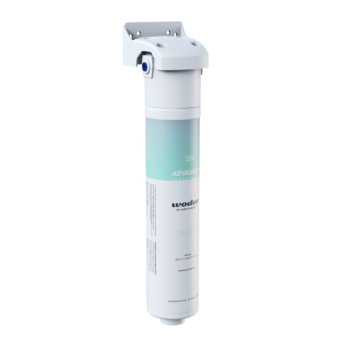
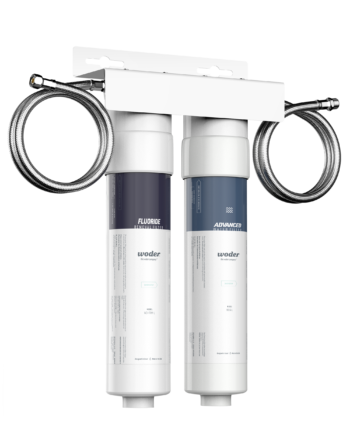
Woder filters are WQA Gold Seal certified and US-manufactured. Installation connects directly to an existing water line with no plumber required, no storage tank, and no wastewater produced.
On price, Waterdrop's systems run $200 to $600. Woder's models sit in the mid-market range. For households that want effective contaminant removal without the mineral tradeoff — and without paying a premium for app connectivity — that difference is worth considering.
Who Should Consider Waterdrop
Waterdrop makes sense if:
- You want app-based filter monitoring and a modern aesthetic
- You're comfortable with the mineral-stripping tradeoff, or prefer remineralized water
- You have a higher budget and want a tankless RO system
- You're in an area with extremely high dissolved solids or heavy contamination where comprehensive RO filtration is the priority
Who Should Look Elsewhere
Waterdrop may not be the right fit if:
- You want to preserve naturally occurring calcium and magnesium in your water
- Avoiding wastewater production matters to you
- Your budget is in the $100 to $200 range
- You want a DIY installation with no permanent plumbing changes
- You're a renter or apartment dweller who needs an inline solution without modifying existing plumbing
For that second group, selective filtration is worth a closer look. Woder's under-sink and inline models are built specifically for households that want targeted contaminant removal without the compromises baked into RO technology.
A Note on Certifications
Waterdrop lists certifications across various models, but it's worth verifying which certifications apply to the specific model you're considering before purchasing. Certification claims in the water filter market vary significantly — sometimes between models from the same brand.
Woder holds WQA Gold Seal certification, which provides independent, third-party verification of performance claims. In a category where contaminant-removal claims are common and outside verification is less so, that distinction matters.
The Bottom Line
Waterdrop builds well-designed systems with genuine smart features. If you want a premium RO unit with app connectivity and a clean form factor, it delivers on those promises.
But if your priority is removing lead, PFAS, chlorine, and chromium 6 while keeping the beneficial minerals in your water, the RO approach requires a workaround that selective filtration simply doesn't. Factor in the wastewater production and the price premium, and the value equation shifts depending on what you actually need from a filter.
Before committing to any system, it's worth matching your water quality concerns to the filtration technology — not the other way around. Woder's site includes a Wizard tool that helps match households to the right model based on their specific needs. You can explore it at woder.com.
Frequently Asked Questions
Does Waterdrop remove PFAS?
Most Waterdrop RO models are designed to reduce PFAS through reverse osmosis membrane filtration. Check the specific model's documentation to confirm which contaminants are covered and at what reduction rates, since performance varies by model.
Does Waterdrop water taste flat?
Some users report that RO-filtered water tastes flat because the process removes dissolved minerals including calcium and magnesium. Waterdrop models with a remineralization stage add minerals back after filtration, which can improve taste — though results vary by individual preference.
Is Waterdrop worth the price?
It depends on what you're optimizing for. If you want smart features, app monitoring, and a tankless RO design, Waterdrop is competitive at its price point. If you want effective contaminant removal without mineral stripping and at a lower cost, selective filtration alternatives may offer better value.
What's the difference between RO filtration and selective filtration?
RO filtration pushes water through a membrane that blocks nearly everything, including beneficial minerals, and produces wastewater in the process. Selective filtration targets specific contaminants through a different mechanism, leaving beneficial minerals like calcium and magnesium intact without generating wastewater.
Do Waterdrop filters require a plumber to install?
Most Waterdrop under-sink systems are designed for DIY installation, though the process is more involved than a standard inline filter. Some models require connecting to a drain line in addition to the water supply line.
How often do Waterdrop filters need to be replaced?
Replacement intervals vary by model and household water usage. Waterdrop's app connectivity is designed to track filter life and alert you when a replacement is due — one of the more practical features in their lineup.
What's a good alternative to Waterdrop for a household that wants to keep minerals in their water?
If mineral preservation is a priority, look at selective filtration rather than RO-based systems. Woder's under-sink and inline filters use Advanced Selective Filtration to remove lead, chlorine, PFAS, chromium 6, mercury, and other contaminants at a 99.9% rate for those specific substances, while retaining naturally occurring calcium and magnesium. No remineralization stage needed.