- What Contaminants Should You Actually Be Filtering?
- Filter Technology Comparison
- Certifications Explained: What They Actually Guarantee
- How Woder Fits In
- Frequently Asked Questions
- Make Your Decision Based on Data, Not Marketing
Buying a water filter should be straightforward. It rarely is. Most people end up buried in brand marketing, vague performance claims, and spec sheets that never answer the questions that actually matter: what contaminants does this filter remove, how do you verify it works, and what will it cost you over time?
This guide answers those questions directly. It compares every major filtration technology side by side, explains what certifications actually guarantee (and where they fall short), and pulls together the contaminant data you need to make a confident, informed decision. Everything here is grounded in published data from the EPA, CDC, USGS, and other primary sources — no filler, no fear-mongering.
What Contaminants Should You Actually Be Filtering?
Before you pick a filter, you need to know what you're filtering for. Most people assume their tap water is safe because it meets federal standards. That's partially true — and partially a reason to look closer.
PFAS (Per- and Polyfluoroalkyl Substances)
PFAS are a class of synthetic chemicals used in industrial and consumer products for decades. They don't break down in the environment, which is why they've accumulated in water supplies across the country.
In April 2024, the EPA finalized the first-ever enforceable federal limits for PFAS in drinking water, setting the maximum contaminant level for PFOA and PFOS at 4 parts per trillion (ppt) each (EPA, epa.gov). That limit is stricter than most states had previously set, and it reflects how seriously regulators now treat this chemical class.
The scale of the problem is significant. A 2022 USGS study found detectable PFAS in approximately 45% of tap water samples tested across the United States (USGS, usgs.gov) — a figure that covers both public water systems and private wells.
Lead
The CDC is direct on this point: there is no safe level of lead exposure (CDC, cdc.gov). Lead enters tap water primarily through aging pipes and plumbing fixtures, not the source water itself — which means a clean municipal supply report doesn't tell you what's happening inside your building.
A 2021 investigation by Consumer Reports and The Guardian US found detectable lead in 118 out of 120 tested locations across the country. That's not a regional issue. It's a systemic one tied to infrastructure age, and it affects homes in cities with otherwise well-managed water systems.
The EPA's Lead and Copper Rule requires utilities to take action when lead levels exceed 15 parts per billion (ppb) at the tap (EPA, epa.gov). But since the CDC recognizes no confirmed safe blood lead level in children, that "action level" is a regulatory threshold — not a health guarantee.
Chlorine, Chloramines, and Disinfection Byproducts
Water utilities use chlorine and chloramines to disinfect water during treatment, and that's a good thing. The problem is that these disinfectants react with organic matter in the water to form byproducts — including trihalomethanes (THMs) and haloacetic acids (HAAs) — which the EPA regulates because of their long-term health associations.
Chlorine also affects taste and odor, which is the most common reason people reach for a filter in the first place.
Other Regulated Contaminants
The EPA's National Primary Drinking Water Regulations cover more than 90 contaminants, including arsenic, mercury, nitrates, and various industrial chemicals (EPA, epa.gov). The Environmental Working Group (EWG, ewg.org) maintains a broader tap water database that tracks contaminants detected above health guidelines, even when they fall below legal limits. Their data consistently shows a gap between what's legal and what independent researchers consider safe.
The practical takeaway: your municipal water report tells you whether your utility is in compliance. It doesn't tell you what's in the water by the time it reaches your glass, or whether every detected contaminant sits below a health-protective threshold.
Filter Technology Comparison
Three main filtration approaches are available for home use. Here's how they compare on the factors that matter most.
Reverse Osmosis (RO)
Reverse osmosis forces water through a semi-permeable membrane that blocks dissolved solids, including most contaminants.
What it does well:
- Removes a very broad range of contaminants, including lead, arsenic, nitrates, fluoride, and many PFAS compounds
- A strong option for households dealing with severely contaminated water
What it doesn't do well:
- Strips out beneficial minerals along with contaminants. The CDC's own guidance on point-of-use filters states that "filters also remove beneficial chemicals" including minerals like calcium and magnesium (CDC, cdc.gov). Some RO users add a remineralization stage to compensate, which adds cost and complexity.
- Wastes significant water — most residential RO systems discharge 3 to 4 gallons of wastewater for every gallon of filtered water produced, though newer systems are improving on this ratio.
- Requires a storage tank under the sink, which takes up space and can harbor bacteria if not properly maintained.
- Produces filtered water slowly, which is why the tank is necessary in the first place.
- Typically involves professional installation and periodic membrane replacement.
Ongoing cost pattern: Higher. You're paying for membrane replacements, pre-filter and post-filter cartridges, and potentially a remineralization stage on top of that.
Activated Carbon and Pitcher Filters
Activated carbon is the most common filtration medium in consumer products, from countertop pitchers to faucet attachments.
What it does well:
- Effectively reduces chlorine, chloramines, and many volatile organic compounds (VOCs)
- Noticeably improves taste and odor
- Low upfront cost, and pitcher-style filters require no installation at all
What it doesn't do well:
- Limited contaminant removal breadth. Standard activated carbon does not reliably remove lead, PFAS, nitrates, arsenic, or dissolved heavy metals unless the filter is specifically certified for those contaminants.
- Pitcher filters require frequent cartridge changes — often every 40 gallons — and their slow flow rates make them impractical as a whole-tap solution.
- Faucet-mounted carbon filters are easy to install but can reduce water pressure and don't address the full contaminant spectrum.
Ongoing cost pattern: Low upfront, but frequent cartridge replacements add up. Pitcher filters in particular tend to cost more per year than they appear to at purchase.
Selective Filtration (Under-Sink Inline)
Selective filtration is a newer approach that targets specific contaminants using engineered media — including nanoparticle-based systems — while allowing beneficial minerals to pass through.
What it does well:
- Removes a broad set of health-relevant contaminants without stripping the water of naturally occurring minerals
- Installs directly into your existing water line with no storage tank, no separate faucet, and no wastewater output
- Maintains normal water pressure and flow rate
- Most installations don't require a plumber
What it doesn't do well:
- Not as widely understood or certified across as many product lines as RO or activated carbon, so verifying certifications for the specific product you're considering matters more here
- May not be the right fit for water with extreme contamination levels that call for the brute-force removal capacity of RO
Ongoing cost pattern: Mid-range. Filter cartridges last longer than pitcher filters, and there's no tank or membrane to replace.
Certifications Explained: What They Actually Guarantee
Certifications are the most reliable way to evaluate a filter's performance claims. Here's what each major standard covers, in plain language.
NSF/ANSI 42 — Aesthetic Effects
This certification covers contaminants that affect taste, odor, and appearance — primarily chlorine and particulates. A filter certified to NSF/ANSI 42 has been independently tested to reduce these aesthetic contaminants to the levels the manufacturer claims (NSF International, nsf.org).
What it doesn't cover: health-effect contaminants like lead, PFAS, or heavy metals. A filter with only NSF/ANSI 42 certification may make your water taste better without making it meaningfully safer.
NSF/ANSI 53 — Health Effects
This is the certification that matters most for health-related contaminants. NSF/ANSI 53 covers filters that reduce contaminants with established health effects, including lead, mercury, cysts, and certain VOCs (NSF International, nsf.org).
When you see NSF/ANSI 53 on a filter, it means third-party testing has confirmed the filter reduces those specific contaminants to below the EPA's maximum contaminant levels. One important nuance: certification is contaminant-specific. A filter certified under NSF/ANSI 53 for lead is not automatically certified for every other health-effect contaminant on the list.
NSF/ANSI 58 — Reverse Osmosis
This standard applies specifically to RO systems and covers reduction of total dissolved solids (TDS) and other contaminants addressed by the RO membrane (NSF International, nsf.org). If you're evaluating an RO system, NSF/ANSI 58 is the relevant benchmark to look for.
WQA Gold Seal
The Water Quality Association's Gold Seal program (WQA, wqa.org) is an independent certification that tests filters against NSF/ANSI standards. A WQA Gold Seal indicates the product has been independently verified to perform as claimed — a meaningful signal, particularly for brands that have pursued third-party validation beyond self-reporting.
What Certification Doesn’t Tell You
Certification is both contaminant-specific and standard-specific. A filter can carry multiple certifications covering different contaminants, or it can carry a single certification that addresses only a narrow slice of what it claims to remove. Always check which specific contaminants a filter is certified to reduce — not just whether a certification logo appears on the packaging.
On point-of-use filters and mineral content:
The CDC's published guidance on point-of-use and point-of-entry treatment systems states: "Filters also remove beneficial chemicals such as fluoride, which is added to water to prevent tooth decay. Children and infants who consume filtered water may not receive the full benefits of fluoride." This guidance applies specifically to filters that remove dissolved minerals and additives along with contaminants. Source: CDC (cdc.gov).
How Woder Fits In
If you've worked through the filtration comparison and want clean water without the trade-offs of RO or the limitations of a pitcher filter, Woder occupies a distinct position in the market.
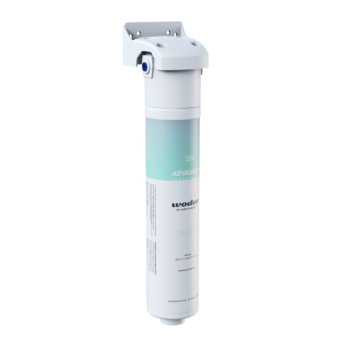
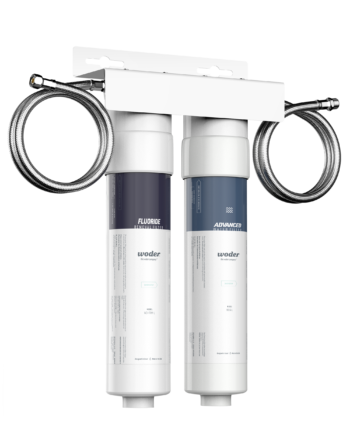
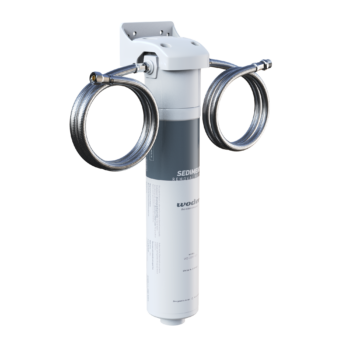
Woder's under-sink and inline filters use proprietary Advanced Selective Filtration technology — a nanoparticle-based system designed to attract and remove contaminants while allowing naturally occurring beneficial minerals to pass through. The company claims 99.9% contaminant removal across its filter line. That's a product claim, and it's worth evaluating alongside any available third-party data for the specific model you're considering.
What separates Woder from RO is what it doesn't do: no mineral stripping, no storage tank, no wastewater output, no dedicated filtered-water faucet. You connect it inline to your existing water supply line, and your normal tap delivers filtered water at normal pressure. The setup is simpler, and the footprint under the sink is significantly smaller.
What separates it from pitcher filters is scope and practicality. You're not refilling a slow-flow countertop unit or swapping cartridges every few weeks. The filter handles your whole tap.
Woder filters are manufactured in the United States, and installation is designed to be straightforward enough that most homeowners can handle it without calling a plumber — which keeps the total cost of ownership lower than systems that require professional setup.
For households that want meaningful contaminant reduction, mineral-rich water, and a cleaner setup than RO, Woder is worth a close look. You can explore the full product line at woder.com.
Frequently Asked Questions
What is the best water filter for removing PFAS?
Filters using reverse osmosis or activated carbon specifically rated for PFAS removal are the most documented options for reducing PFAS in drinking water. The EPA recommends point-of-use filters certified to NSF/ANSI 58 (for RO systems) or NSF/ANSI 53 for specific PFAS compounds. Selective filtration systems that target PFAS at the contaminant level are also available. Always verify which specific PFAS compounds a filter is certified to remove — PFAS is a class of thousands of chemicals, not a single substance.
Does a water filter remove essential minerals?
It depends on the filter type. Reverse osmosis systems remove most dissolved solids, including beneficial minerals like calcium and magnesium — the CDC notes this explicitly in its guidance on point-of-use treatment. Activated carbon filters generally don't remove minerals. Selective filtration systems like Woder's are specifically designed to remove contaminants while preserving naturally occurring minerals.
What is the difference between NSF/ANSI 42 and NSF/ANSI 53?
NSF/ANSI 42 covers aesthetic contaminants — chlorine, taste, odor, and particulates — but does not address health-effect contaminants. NSF/ANSI 53 covers health-effect contaminants including lead, mercury, and certain VOCs. If your concern is safety rather than taste, NSF/ANSI 53 certification for the specific contaminants you're worried about is the standard that matters.
Do I need a plumber to install an under-sink water filter?
Not necessarily. Many under-sink inline filters — including Woder's models — are designed for DIY installation by connecting directly to your existing water supply line. RO systems are more involved, often requiring a separate faucet and a storage tank, which some homeowners prefer to have professionally installed. Pitcher filters and faucet-mounted filters require no installation at all.
How do I know if my tap water has lead in it?
Your municipal utility is required to publish an annual Consumer Confidence Report (CCR) that includes lead testing results. That said, lead contamination often occurs in the pipes within your own building rather than in the municipal supply — so utility-level data doesn't always reflect what comes out of your tap. The most reliable approach is to have your tap water tested by a certified laboratory. The EPA maintains a list of state-certified testing labs at epa.gov.
Make Your Decision Based on Data, Not Marketing
The right filter comes down to three things: what's in your water, how much removal breadth you need, and what trade-offs you're willing to accept on minerals, installation complexity, and ongoing cost.
If you want the broadest possible contaminant removal and can live with the wastewater and mineral loss, RO is a proven option. If chlorine and taste are your only concerns, a certified activated carbon filter handles that job well. If you want meaningful contaminant reduction, mineral-rich water, and a simpler setup than RO, selective filtration deserves serious consideration.
Whatever you choose, prioritize certified performance over marketing claims, and match the filter's tested contaminant list to what's actually in your water.
To see how Woder's Advanced Selective Filtration compares to your current setup, find your filter at woder.com.