- Why Tap Water Safety Is Different During Pregnancy
- What Most Filters Won't Do
- What to Look for in a Lead Water Filter for Pregnancy
- How Woder Addresses These Needs
- Pitcher Filter vs. Inline Filter vs. RO: A Quick Comparison
- Practical Steps to Protect Your Water During Pregnancy
- A Note on Bottled Water
- Finding the Right Filter for Your Home
- Frequently Asked Questions
- The Bottom Line
Finding out you're pregnant changes how you look at almost everything. What you eat, what you breathe, what you drink — it all gets a second look. Tap water is no different.
Here's the honest picture: most municipal water in the US meets federal safety standards. But those standards weren't written with pregnancy in mind, and several contaminants that pass through at "acceptable" levels carry real risks during fetal development. Lead is at the top of that list. So are PFAS, chlorine byproducts, and chromium 6.
This article covers what's actually in your tap water that matters during pregnancy, why a quality lead water filter is one of the most practical steps you can take, and how to choose the right one without overspending or overcomplicating your life.
Why Tap Water Safety Is Different During Pregnancy
Pregnancy changes how your body processes everything. Your blood volume increases, your kidneys work harder, and your developing baby absorbs what you absorb — often at higher concentrations.
Lead is the clearest example. There is no established safe level of lead exposure during pregnancy. Even low-level exposure has been linked to preterm birth, low birth weight, and developmental effects on the fetal nervous system. The tricky part: lead doesn't come from the water source itself. It leaches in from old pipes, solder joints, and plumbing fixtures on the way to your tap. Your water utility can't fully control that. You have to.
PFAS — per- and polyfluoroalkyl substances — are another concern. These synthetic chemicals show up in drinking water across the country, particularly near industrial sites, military bases, and areas with heavy agricultural activity. Prenatal PFAS exposure has been connected to thyroid disruption, immune effects in newborns, and altered birth weight. They don't break down in the environment or in your body, which is how they earned the nickname "forever chemicals."
Chlorine byproducts are worth understanding too. When chlorine used to disinfect municipal water reacts with organic matter, it forms trihalomethanes (THMs). Some research has associated high THM exposure during pregnancy with increased risk of certain birth defects and low birth weight. Chlorine itself is necessary for safe drinking water — the byproducts it creates are the problem.
Chromium 6, mercury, and volatile organic compounds round out the list of contaminants that deserve attention when you're expecting.
What Most Filters Won’t Do
This is where things get frustrating. Pitcher-style carbon filters — the most common household option — aren't designed to handle lead, PFAS, or chromium 6 at meaningful levels. They improve taste and reduce some chlorine, but they're not built for serious contaminant removal.
Reverse osmosis systems do remove lead and PFAS effectively, but they come with trade-offs that matter during pregnancy. RO strips out everything, including calcium and magnesium — minerals your body genuinely needs more of when you're pregnant. They also produce wastewater (typically two to four gallons for every gallon filtered), require a storage tank under the sink, and often need professional installation. That's a lot of friction when you're already managing a pregnancy.
What to Look for in a Lead Water Filter for Pregnancy
When evaluating a filter for use during pregnancy, focus on four things:
Verified lead removal. Look for a filter that specifically lists lead removal in its performance data — not just "heavy metals." Lead is the priority contaminant here.
PFAS removal. Not all filters address PFAS. Confirm the filter covers PFAS or PFOA specifically before you buy.
Mineral preservation. Your body needs calcium and magnesium. A filter that strips everything out isn't ideal when you're pregnant. Selective filtration technology — which removes contaminants while leaving beneficial minerals intact — is worth prioritizing.
Flow rate and installation. You want something that works with your existing kitchen setup without requiring a plumber or a full under-sink overhaul. Inline filters that connect directly to your water line are the most practical option for most households.
How Woder Addresses These Needs
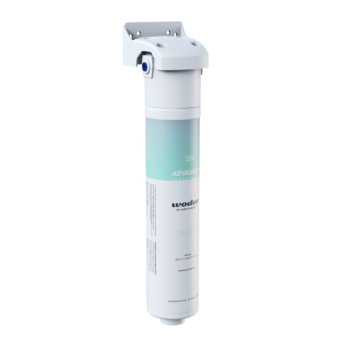
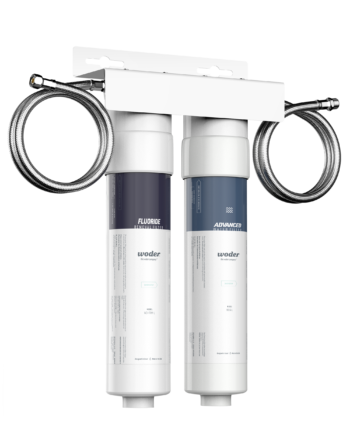
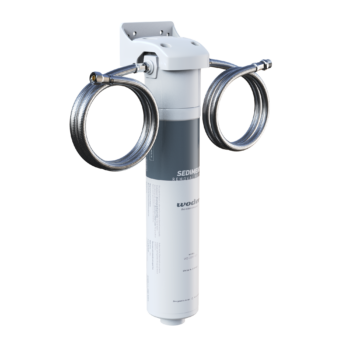
Woder Filters makes under-sink and inline water filters built around Advanced Selective Filtration technology. The name describes exactly what it does: the filter selects what to remove. Nanoparticles attract and capture contaminants — lead, PFAS, chlorine, chromium 6, mercury, VOCs, and carcinogens — while leaving calcium, magnesium, and other naturally occurring minerals right where they belong.
That distinction matters during pregnancy. You're not just trying to remove the bad stuff. You're trying to drink water that's actually good for you.
Woder removes 99.9% of contaminants across that list. And unlike RO systems, it produces no wastewater and requires no storage tank. You connect it inline to your existing water line — no plumber needed. The product line spans compact residential units up to high-flow 10 kGPM models, so there's a fit for most household setups.
All Woder filters are manufactured in the United States. When you're making a health decision for yourself and your baby, knowing where a product comes from and how it's made matters.
Lead, chlorine, PFAS — gone. Calcium, magnesium — still there. That's the Woder difference.
Pitcher Filter vs. Inline Filter vs. RO: A Quick Comparison
| Filter Type | Lead Removal | PFAS Removal | Keeps Minerals | Installation | Wastewater |
|---|---|---|---|---|---|
| Pitcher filter | Limited | Rarely | Yes | None needed | None |
| Reverse osmosis | Yes | Yes | No | Complex/professional | Yes |
| Woder inline filter | Yes (99.9%) | Yes (99.9%) | Yes | DIY, inline | None |
For most expecting parents, the inline filter hits the right balance: serious contaminant removal, mineral preservation, no installation headache, and no ongoing wastewater.
Practical Steps to Protect Your Water During Pregnancy
Test your water first. Woder offers water testing kits that give you a clearer picture of what's actually coming out of your tap. Knowing your specific situation helps you make a more informed decision.
Don't rely on boiling. Boiling kills bacteria but concentrates heavy metals like lead. It's not a substitute for filtration.
Check your pipes. If your home was built before 1986, there's a higher chance of lead solder or lead service lines in your plumbing. Older urban apartments and homes are at elevated risk.
Replace your filter cartridge on schedule. A filter past its service life can stop performing. Woder sells replacement cartridges separately so you can maintain performance without replacing the full unit.
Filter your cooking water too. Lead and PFAS exposure adds up across the day. If you're boiling pasta, making soup, or preparing food with tap water, run that water through your filter as well.
A Note on Bottled Water
A lot of expecting parents default to bottled water as the "safe" option. It's understandable — but it's not necessarily better. Bottled water quality varies widely, the cost adds up fast over nine months, and the plastic waste is significant. Some bottled water is filtered municipal water anyway.
A home filter gives you consistent, verified performance at a fraction of the long-term cost, without adding to plastic waste in the process.
Finding the Right Filter for Your Home
Woder's interactive Wizard at woder.com/wizard helps you find the right model based on your household's flow rate and setup. It takes a few minutes and removes the guesswork. Built in the US. Installed in minutes. Trusted for years.
It's your water — and right now, it's your baby's water too.
Frequently Asked Questions
Does a standard pitcher filter remove lead during pregnancy?
Most pitcher filters use basic carbon filtration, which offers limited lead removal and generally doesn't address PFAS or chromium 6. For pregnancy-level protection, you need a filter specifically rated for lead and PFAS removal — like an under-sink or inline filter with verified performance data.
Is reverse osmosis water safe to drink during pregnancy?
RO water is free of lead and PFAS, but it also removes beneficial minerals like calcium and magnesium that your body needs in higher amounts during pregnancy. If you use an RO system, talk to your doctor about whether your diet compensates for reduced mineral intake from water.
How do I know if my tap water has lead in it?
The only way to know for certain is to test it. Lead is colorless, odorless, and tasteless — you can't detect it without a test. Woder offers water testing kits, and many municipalities also provide free testing for residents who request it.
What contaminants are most dangerous during pregnancy?
Lead, PFAS, chlorine byproducts (trihalomethanes), chromium 6, and mercury are the most documented concerns. Each carries different risks, but all are addressable with a properly rated inline or under-sink filter.
Can I install an under-sink filter myself while pregnant?
Yes. Woder filters connect inline to your existing water line and don't require a plumber or special tools. Installation typically takes under 30 minutes. That said, if you're in your third trimester or find under-sink work physically difficult, it's worth having a partner or helper handle it.
How often do I need to replace the filter cartridge?
It depends on the model and your household's water usage. Woder sells replacement cartridges separately, and the filter will indicate when it's time to swap. Staying on schedule matters — an expired cartridge may not perform to the same standard.
Does Woder remove PFAS specifically?
Yes. Woder's Advanced Selective Filtration removes 99.9% of contaminants including PFAS and PFOA, along with lead, chlorine, chromium 6, mercury, and VOCs — while preserving naturally occurring minerals like calcium and magnesium.
The Bottom Line
Pregnancy is not the time to wonder whether your water is safe. The contaminants that matter most — lead, PFAS, chlorine byproducts — are invisible, and standard pitcher filters aren't built to handle them.
A quality inline lead water filter gives you verified protection without the complexity of a whole-home system or the cost and waste of bottled water. You get clean water that still carries the minerals you and your baby actually need.
Find the right filter for your home at woder.com. It's your water. Make it count.