- What Is a Water Quality Report?
- Where to Find Your Report
- The Key Sections and What They Mean
- What the Report Doesn't Tell You
- What to Do If You See Something Concerning
- Choosing a Filter Based on What You Find
- FAQs
Your water utility mails you a report every year. Most people glance at it, decide it looks like a tax document, and set it aside. That's fair — it's not exactly designed for easy reading. But your water quality report tells you a lot about what's actually coming out of your tap, and once you know what to look for, it takes about five minutes to get through.
This guide walks you through every section in plain English, so you know what the numbers mean and what to do if something looks off.
What Is a Water Quality Report?
Every community water system in the United States is required by the Safe Drinking Water Act to publish an annual Consumer Confidence Report, or CCR. Your utility typically mails it in the summer or posts it online. It covers water quality testing results from the previous calendar year.
The report lists every contaminant the utility tested for, the level detected, and the legal limit set by the EPA. That's the core of it.
Where to Find Your Report
If you haven't received one, check your water utility's website and search for "Consumer Confidence Report" or "CCR." You can also look up your zip code through the EPA's drinking water database. If you're on a private well, no CCR applies to you — you'd need to arrange your own water quality testing independently.
The Key Sections and What They Mean
Source Water Information
This section tells you where your water comes from — a river, reservoir, lake, or groundwater aquifer. Source type matters. Surface water like rivers and lakes typically requires more treatment than groundwater and is more vulnerable to runoff carrying pesticides, industrial chemicals, and PFAS.
Detected Contaminants Table
This is the most important part of the report. It usually appears as a table with these columns:
- Contaminant name — what was tested
- MCLG — Maximum Contaminant Level Goal, the ideal health-based target (often zero for known carcinogens)
- MCL or AL — the legal limit (MCL = Maximum Contaminant Level; AL = Action Level, used for lead and copper)
- Amount detected — what was actually found in your water
- Violation — yes or no
- Likely source — where the contaminant probably came from
A "No" in the violation column doesn't automatically mean your water is perfectly clean. It means the detected level fell below the legal limit. Those limits are set based on a balance of health risk and what's technically feasible to remove — not always on what's ideal for your health.
Understanding MCLG vs. MCL
The MCLG is the health-based goal. For lead, that goal is zero — no amount is considered safe. But the legal Action Level for lead is 15 parts per billion, because eliminating lead entirely from aging infrastructure isn't always possible.
So when you see lead listed with a detected amount below 15 ppb and "No violation," that doesn't mean lead is absent. It means the level is within the legal threshold. That's a meaningful distinction if you have young children or are pregnant.
Contaminants Worth Reading Carefully
Not every line in the table carries the same weight. These are the ones that deserve your attention:
Lead — No safe level exists for children. Lead doesn't come from the treatment plant — it enters water through pipes and fixtures in older homes. If your home was built before 1986, pay close attention to this line.
PFAS (per- and polyfluoroalkyl substances) — These synthetic chemicals have been linked to serious health effects. As of 2026, the EPA has set enforceable limits for several PFAS compounds. Check whether your report includes PFAS testing — some utilities are still catching up.
Chlorine and chloramines — Added intentionally as disinfectants. Legal and generally safe at regulated levels, but they affect taste and odor noticeably.
Chromium 6 — Both a naturally occurring and industrial contaminant. The MCLG is zero, but current MCLs allow detectable levels. Worth noting if your source is groundwater near industrial areas.
Nitrates — Particularly relevant if you have infants. High nitrate levels are dangerous for babies under six months.
Trihalomethanes (THMs) and haloacetic acids (HAAs) — These form when chlorine reacts with organic matter in water. They're regulated, but worth watching if your source is surface water.
The “Likely Source” Column
This column tells you where a contaminant probably originated — erosion of natural deposits, agricultural runoff, industrial discharge, or aging pipes. It's useful context. Chromium 6 from "erosion of natural deposits" is a different situation than chromium 6 traced to nearby industrial discharge.
Violations and Notices
If your report shows a violation, your utility is required to explain what happened and what to do. A treatment technique violation is different from an MCL violation, so read the notice carefully. Boil-water advisories are issued separately and urgently — they don't wait for the annual report.
What the Report Doesn’t Tell You
Here's something important: the CCR reflects water quality at the treatment plant or at monitoring points in the distribution system. It does not measure what comes out of your specific tap.
Lead is the clearest example. If your home has lead service lines or lead solder in the plumbing, your tap water could have higher lead levels than anything shown in the report. The same applies to older apartment buildings.
If you want to know what's actually in your water at the faucet, a home water quality testing kit gives you a direct answer. Woder offers testing kits at woder.com alongside its filter lineup, so you can test first and filter based on what you actually find.
What to Do If You See Something Concerning
First, don't panic. Context matters. A detected level below the MCL is different from a violation, and a violation doesn't mean your water is immediately dangerous.
Here's a practical sequence:
- Compare the detected amount against the MCLG — not just whether there's a violation. If the detected amount is above zero for a contaminant with a zero MCLG, like lead or certain PFAS, that's worth acting on.
- Think about your household — Pregnant? Young children at home? Recently moved into an older home? These factors raise the stakes for contaminants like lead and PFAS.
- Test your tap directly — The CCR is a system-wide average. Your tap may tell a different story.
- Filter for the specific contaminants you found — Not all filters remove the same things. A basic pitcher filter handles chlorine taste but won't touch lead or PFAS at meaningful levels.
Choosing a Filter Based on What You Find
Once you know what your report shows, matching a filter to those contaminants is straightforward. The key is making sure the filter you choose actually removes what you're concerned about.
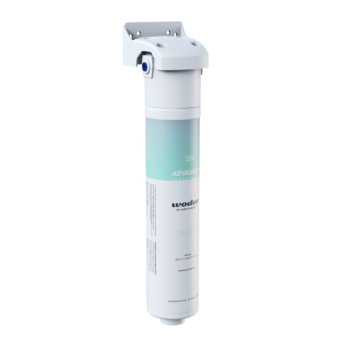
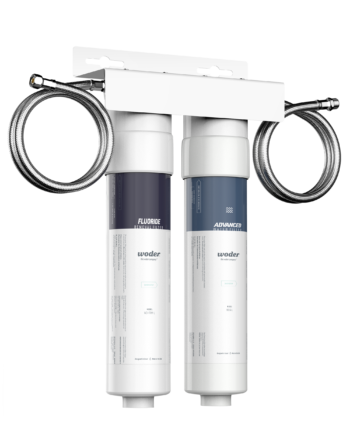
Woder's Advanced Selective Filtration technology removes 99.9% of contaminants — lead, PFAS, chromium 6, mercury, chlorine, and volatile organic compounds. And it does this without stripping out calcium, magnesium, and other naturally occurring minerals that are good for you. Most filters don't make that distinction.
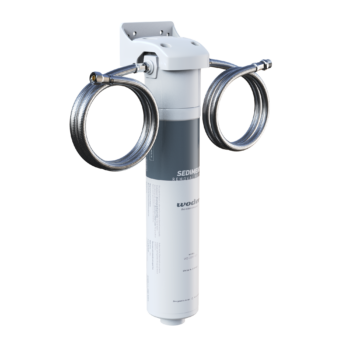
The filter installs directly into your existing water line under the sink. No plumber, no tank, no wastewater. Built in the United States. If your report flagged lead or PFAS and you want a practical DIY fix, that's the kind of filter worth looking at.
Use the Woder product Wizard to find the right model for your household's flow rate and needs.
FAQs
Where do I find my water quality report?
Your water utility is required to mail it annually, typically in the summer. You can also find it on your utility's website or by searching your zip code through the EPA's drinking water database. If you're on a private well, no CCR applies — you'll need to arrange independent water quality testing.
What does "no violation" mean on a water quality report?
It means the detected level of a contaminant fell below the legal limit set by the EPA. It does not mean the contaminant is absent. For contaminants like lead, where the health-based goal is zero, a "no violation" result can still include a detectable amount.
Does my water quality report show what comes out of my tap?
Not exactly. The report reflects water at the treatment plant or distribution system monitoring points. Lead, in particular, often enters water through household plumbing and fixtures — not from the source. Testing your tap directly with a home water testing kit gives you a more accurate picture.
What contaminants should I look for first?
Lead, PFAS, chromium 6, and nitrates deserve close attention because their health-based goals are zero or near zero. Chlorine and chloramines are regulated and generally safe but affect taste. Trihalomethanes and haloacetic acids are worth noting if your source is surface water.
Do water filters remove everything listed in the report?
It depends on the filter. Basic carbon pitcher filters handle chlorine taste but aren't effective against lead or PFAS. Under-sink filters using selective filtration technology — like those from Woder — remove 99.9% of serious contaminants including lead, PFAS, and chromium 6, while keeping beneficial minerals intact.
How often should I read my water quality report?
Once a year when it's published. Also check it after any local news about water contamination, after moving to a new home, or if you notice a change in your water's taste or odor.
What if my report shows a violation?
Your utility is required to notify you and explain what happened. Read the notice carefully to understand the specific contaminant, the level detected, and any recommended actions. If the violation involves lead, PFAS, or a pathogen, follow the utility's guidance promptly and consider independent tap testing.
Your water quality report gives you real information. Most people never read it. Now you know how to. Start with the detected contaminants table, compare the amounts against the MCLGs, and think about what matters most for your household.
If you want to go further, test your tap directly and filter for what you find. It's your water — you should know what's in it.