- What Activated Carbon Filtration Does
- What Advanced Selective Filtration Does Differently
- Side-by-Side Comparison
- Where Reverse Osmosis Fits In
- Chlorine Is Just the Starting Point
- Which Filter Is Right for Your Home?
- The Honest Bottom Line
- Frequently Asked Questions
You can smell chlorine in tap water before you even taste it. That sharp, pool-like edge means your municipal supplier is doing its job — but it also means you're drinking a disinfectant. If you've been searching for the best filter to remove chlorine from tap water, you've likely landed on two main options: activated carbon and something newer called Advanced Selective Filtration. They work differently, and the gap between them matters more than most filter brands will tell you.
Here's a clear look at how each technology works, what it actually removes, and which one makes sense for your home.
What Activated Carbon Filtration Does
Activated carbon has been the standard filtration method for decades. It works through adsorption — contaminants stick to the porous surface of carbon granules or carbon blocks as water passes through.
For chlorine specifically, it performs well. It reduces the taste and odor that chlorine adds to tap water, which is why pitcher filters and basic under-sink units have relied on it for so long.
But activated carbon has real limits.
What Activated Carbon Misses
Standard carbon filters aren't built to target heavy metals like lead or mercury. They have limited effectiveness against PFAS — per- and polyfluoroalkyl substances — which are among the most talked-about contaminants in drinking water right now. Chromium 6, volatile organic compounds, and certain carcinogens often pass through basic carbon media without being fully captured.
Carbon also doesn't distinguish between what you want removed and what you want to keep. Some carbon block filters pull beneficial minerals like calcium and magnesium out alongside the contaminants. You get cleaner water, but not necessarily better water.
If chlorine taste is your only concern, a carbon filter might feel like enough. But if you're also thinking about lead pipes in an older home, PFAS from nearby industrial sources, or the long-term mineral content of what you're drinking every day, carbon alone leaves gaps.
What Advanced Selective Filtration Does Differently
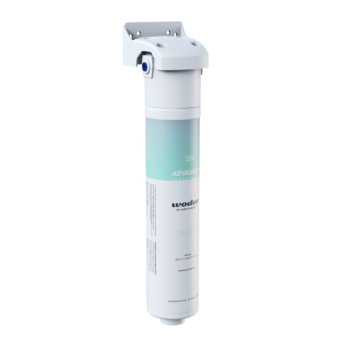
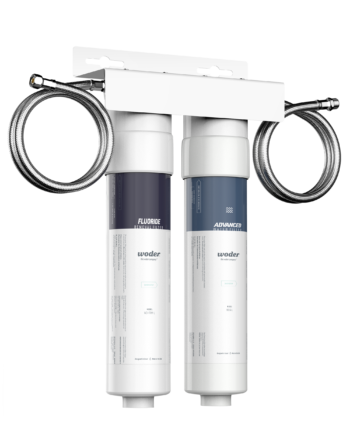
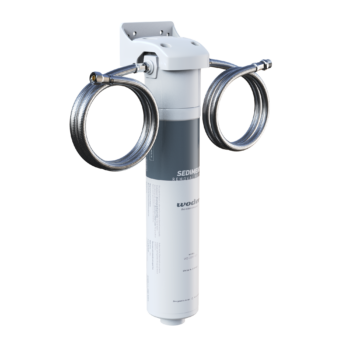
Advanced Selective Filtration is the technology behind every Woder filter. Rather than relying purely on a carbon surface, it uses nanoparticles engineered to attract and capture specific contaminants while leaving beneficial minerals intact.
Think of it as targeted filtration rather than a broad sweep. The nanoparticles go after lead, chlorine, chromium 6, mercury, PFAS, carcinogens, and volatile organic compounds — without pulling calcium and magnesium out along the way.
The result: 99.9% contaminant removal, with your water's natural mineral profile preserved.
Why Mineral Preservation Matters
Most people focus on what a filter takes out. Fewer think about what it leaves behind.
Calcium and magnesium aren't just pleasant additions to drinking water — they contribute to taste and to your daily mineral intake. Reverse osmosis systems strip them out completely, which is why RO water often tastes flat and why some RO users add a remineralization stage back in. Advanced Selective Filtration skips that problem entirely. You get clean water that still tastes like water, not like distilled nothing.
Lead, chlorine, PFAS — gone. Calcium, magnesium — still there. That's the Woder difference.
Side-by-Side Comparison
| Feature | Activated Carbon | Advanced Selective Filtration (Woder) |
|---|---|---|
| Chlorine removal | Yes | Yes |
| Lead removal | Limited | Yes (99.9%) |
| PFAS removal | Limited | Yes |
| Chromium 6 removal | Limited | Yes |
| Mercury removal | Limited | Yes |
| Mineral preservation | Variable | Yes |
| Wastewater produced | No | No |
| Plumber required | No | No |
| Installation type | Inline / pitcher | Inline under-sink |
Where Reverse Osmosis Fits In
RO comes up in this conversation because many people consider it the most thorough option. In terms of raw contaminant removal, it does go wide. But RO systems produce significant wastewater — often three to four gallons discarded for every gallon filtered. They need a storage tank, deliver slower flow rates, and typically require professional installation.
They also strip out everything, including the minerals your body benefits from.
Woder removes what needs to go and keeps what should stay. No tank, no wastewater, no plumber. You install it directly into your existing water line and it works from the first glass.
Chlorine Is Just the Starting Point
If chlorine taste is your only concern, a basic carbon pitcher filter might satisfy you short-term. But most homeowners who start asking about chlorine quickly find themselves asking more: What about lead? What about PFAS? What's actually in my water?
The EPA sets legal limits for dozens of contaminants in public water systems, but those limits don't always reflect the most current health research. Older infrastructure — lead service lines, aging pipes — can introduce problems between the treatment plant and your tap.
A filter that only handles chlorine may need to be replaced with something better down the road. One that covers chlorine, lead, PFAS, and more from the start means you're already covered.
Which Filter Is Right for Your Home?
Woder makes several models depending on your household's flow rate and setup:
- WD-G4-210-JG — compact residential unit, good for standard household use
- WD-D-8K-FRM-ADV-DC — 8 kGPM under-sink model for higher-demand homes
- WD-10K-ADV-PORT — 10 kGPM high-flow option for larger households
- WD-S-5K-REP — replacement cartridge model for existing Woder setups
- Water-Filter Bottle — portable option for filtered water on the go
Not sure which one fits your situation? The product Wizard at woder.com/wizard walks you through it based on your home's needs. Every filter is manufactured in the United States and installs without a plumber.
Replacement cartridges are sold separately, so when it's time to refresh your filtration, you swap the cartridge — not the whole unit.
The Honest Bottom Line
Activated carbon is a proven, widely available technology that handles chlorine well. It's a reasonable starting point. But if you want filtration that also covers lead, PFAS, chromium 6, mercury, and VOCs — while keeping your water's natural minerals intact — Advanced Selective Filtration does more, without the cost or complexity of a whole-home system or reverse osmosis setup.
It's your water. You get to decide what's in it.
Explore the full Woder lineup and find the right fit at woder.com.
Frequently Asked Questions
Does activated carbon remove chlorine completely?
Activated carbon significantly reduces chlorine, along with its taste and odor. High-quality carbon block filters can remove most of it, but performance varies depending on filter quality, flow rate, and how saturated the carbon media is. For chlorine specifically, it's one of the more reliable methods available.
What is the best filter to remove chlorine from tap water?
For chlorine alone, a quality carbon block filter works well. But if you also want to remove lead, PFAS, chromium 6, and other serious contaminants while keeping beneficial minerals in your water, Advanced Selective Filtration — used in Woder's under-sink and inline filters — covers a much wider range without the complexity of a reverse osmosis system.
Does Advanced Selective Filtration remove chlorine?
Yes. Woder's Advanced Selective Filtration removes 99.9% of contaminants including chlorine, lead, PFAS, chromium 6, mercury, carcinogens, and volatile organic compounds.
Will a water filter remove chlorine taste and smell?
Yes. Both activated carbon and Advanced Selective Filtration reduce the taste and odor chlorine adds to tap water. Most people notice the difference immediately after installing an under-sink or inline filter.
Does filtering out chlorine also remove minerals?
Standard activated carbon filters can reduce some minerals alongside contaminants, depending on the media. Advanced Selective Filtration is designed to target contaminants specifically, leaving naturally occurring minerals like calcium and magnesium in your water.
Is a reverse osmosis system better than an inline filter for chlorine removal?
RO systems do remove chlorine, but they also strip out beneficial minerals, produce wastewater, and require a storage tank — plus professional installation in most cases. An inline filter using Advanced Selective Filtration removes chlorine and other serious contaminants without any of those trade-offs.
How often do I need to replace a Woder filter cartridge?
Replacement frequency depends on the model and your household's water usage. Woder sells replacement cartridges separately so you can maintain filtration performance without buying a new unit each time. Replacement schedules for each model are available on the product pages at woder.com.