- How Activated Carbon Works
- What Activated Carbon Removes Effectively
- What Activated Carbon Does Not Remove
- Activated Carbon vs. Other Filtration Technologies
- How to Read a Filter’s Certifications
- When to Replace an Activated Carbon Filter
- Is Activated Carbon Right for Your Home?
- Frequently Asked Questions
- The Bottom Line
If you’ve ever shopped for a water filter, you’ve seen “activated carbon” listed as the core technology in dozens of products. Most product pages stop there, leaving you to wonder what an activated carbon water filter actually removes, what it misses, and whether it’s the right fit for your home.
This article breaks down the science in plain terms, covers the specific contaminants activated carbon handles well, and explains where its limits are so you can make a genuinely informed decision.
How Activated Carbon Works
Activated carbon is carbon that’s been treated with oxygen to open up millions of tiny pores between its atoms, creating an enormous internal surface area. A single gram can have a surface area of 500 to 1,500 square meters depending on the source material and activation process.
Contaminants stick to this surface through a process called adsorption. As water passes through, pollutant molecules are attracted to the carbon and bond to it. This is different from absorption, where a substance soaks into another material. With adsorption, contaminants accumulate on the carbon’s surface until the filter is saturated and needs replacing.
Activated carbon filters come in two main forms: granular activated carbon (GAC) and carbon block. GAC uses loose granules and tends to allow a higher flow rate. Carbon block compresses the carbon into a solid form, which increases contact time with the water and generally improves filtration performance across a wider range of contaminants.
What Activated Carbon Removes Effectively
Chlorine and Chloramines
This is where activated carbon genuinely excels. Municipal water treatment plants use chlorine and chloramines to disinfect water, which matters for public health, but those same chemicals affect taste and smell. Some research also suggests long-term exposure to disinfection byproducts is worth monitoring. Activated carbon removes both efficiently, which is why filtered tap water tastes noticeably cleaner than water straight from the tap.
Volatile Organic Compounds (VOCs)
VOCs are carbon-based chemicals that vaporize easily at room temperature. In drinking water, they typically come from industrial runoff, agricultural chemicals, fuel contamination, or certain manufacturing processes. Common examples include benzene, toluene, xylene, and trichloroethylene. Their molecular structure makes them bond readily to the carbon surface, so activated carbon handles them well.
Pesticides and Herbicides
Agricultural chemicals like atrazine, lindane, and chlordane can leach into groundwater and surface water supplies. Activated carbon, particularly carbon block, performs well against many of these compounds. If you live near farmland or rely on a private well, that’s a meaningful benefit.
Disinfection Byproducts
When chlorine reacts with naturally occurring organic matter in water, it forms compounds called trihalomethanes (THMs) and haloacetic acids (HAAs), both classified as potential carcinogens at high levels. Activated carbon filters are effective at reducing these, which is one reason they’re a popular choice for households on municipal water.
Bad Taste and Odor
Even when water is technically safe, it can taste flat, smell like a swimming pool, or carry a faint earthy or musty character. Activated carbon handles these issues well. The same adsorption process that captures chemical contaminants also pulls out the organic compounds responsible for most taste and odor problems.
Some Heavy Metals
This is where things get more nuanced. Standard activated carbon has limited effectiveness against heavy metals like lead, arsenic, and mercury. However, certain enhanced carbon block filters that incorporate additional media, such as ion exchange resins or catalytic carbon, can remove lead and some other metals more reliably. If heavy metal reduction is a priority, check the specific filter’s NSF certifications rather than assuming all carbon filters perform equally.
What Activated Carbon Does Not Remove
Knowing the limits of activated carbon matters just as much as knowing its strengths.
Dissolved Minerals
Activated carbon does not remove dissolved minerals like calcium, magnesium, sodium, or potassium. For most people, that’s actually a good thing. These minerals are naturally present in water and contribute to its taste. Filters that strip them out, like reverse osmosis systems, often produce water that tastes flat and requires remineralization afterward.
This distinction matters when comparing filter technologies. Woder’s Advanced Selective Filtration approach is designed specifically to remove contaminants while preserving beneficial minerals, which aligns with how activated carbon behaves at its best rather than working against it.
Nitrates and Nitrites
Activated carbon has essentially no effect on nitrates or nitrites, which are a concern in agricultural areas where fertilizer runoff reaches groundwater. If your water source has elevated nitrate levels, you need a different filtration method, typically reverse osmosis or distillation, to address that problem.
Bacteria, Viruses, and Cysts
Standard activated carbon does not reliably remove biological contaminants. Some carbon block filters with very small pore sizes can reduce certain cysts like Giardia and Cryptosporidium, but that’s not a universal property of activated carbon. If you’re on a private well or in an area with known microbial contamination, you need a filter that specifically certifies pathogen reduction.
Fluoride
Fluoride is a small, highly soluble ion that doesn’t adsorb well onto carbon. Standard activated carbon filters won’t remove it. If fluoride reduction is a priority, look for filters that include activated alumina or bone char carbon, or consider a reverse osmosis system.
Dissolved Salts and Total Dissolved Solids (TDS)
Activated carbon doesn’t reduce TDS in any meaningful way. If your water has a high mineral content or you’re dealing with brackish water, activated carbon alone won’t solve that problem.
Activated Carbon vs. Other Filtration Technologies
It helps to see activated carbon alongside other common approaches.
Reverse osmosis (RO): RO forces water through a semipermeable membrane that blocks nearly everything, including minerals, fluoride, nitrates, and most contaminants. The tradeoff is water waste (typically two to four gallons for every gallon filtered), removal of beneficial minerals, and more complex installation. Many RO systems include an activated carbon stage as a pre- or post-filter to handle chlorine and taste.
Ceramic filters: Effective against bacteria, cysts, and sediment, but they don’t remove chemical contaminants the way carbon does. The two technologies are often combined.
Ion exchange: Ion exchange resin swaps unwanted ions, like lead or hardness minerals, for less harmful ones. It’s frequently paired with carbon to cover a broader range of contaminants.
UV treatment: Ultraviolet light deactivates bacteria and viruses but has no effect on chemical contaminants. It’s a biological treatment, not a chemical one.
Activated carbon sits in a practical middle ground. It handles the contaminants most people on municipal water actually face, without the complexity, water waste, or mineral stripping of a full RO system.
How to Read a Filter’s Certifications
Not all activated carbon filters are tested to the same standard. When evaluating any filter, look for NSF International certifications, the most widely recognized independent standard in the water filtration industry.
- NSF/ANSI Standard 42 covers aesthetic effects, primarily chlorine taste and odor reduction.
- NSF/ANSI Standard 53 covers health effects, including reduction of specific contaminants like lead, VOCs, and cysts.
- NSF/ANSI Standard 58 applies to reverse osmosis systems.
- NSF/ANSI Standard 401 covers emerging contaminants like certain pharmaceuticals and pesticides.
A filter certified to NSF 42 only is doing the basics. If you want documented performance against health-relevant contaminants, look for NSF 53 certification, and check the specific contaminant list. Certifications are granted per contaminant, not as a blanket endorsement of the filter overall.
When to Replace an Activated Carbon Filter
Activated carbon has a finite capacity. Once the surface is saturated, contaminants pass through rather than being captured. Most filters are rated by volume (gallons filtered) or time (months of use), and the right interval depends on your water quality and how much your household uses.
Harder water, higher chlorine levels, and more sediment all shorten a filter’s effective lifespan. If your water starts tasting or smelling off before the recommended replacement interval, that’s a reliable sign the filter is exhausted.
Replacement schedules vary by model. For UK households, regional retailers stock compatible Woder-style filters, including Filter Flair, which carries replacement options for under-sink setups.
Is Activated Carbon Right for Your Home?
Activated carbon is a well-suited choice if your main concerns are chlorine, taste, odor, VOCs, and disinfection byproducts. That covers the majority of households on municipal water in the United States and many other countries.
It’s not the right sole solution if you’re dealing with nitrates, fluoride, high TDS, or biological contamination. In those cases, you either need a different technology or a multi-stage system that pairs carbon with another method.
For most households, the question isn’t whether activated carbon works. It does. The question is whether the specific filter you’re considering is certified for the contaminants you actually care about, and whether it preserves the minerals that make water taste the way it should.
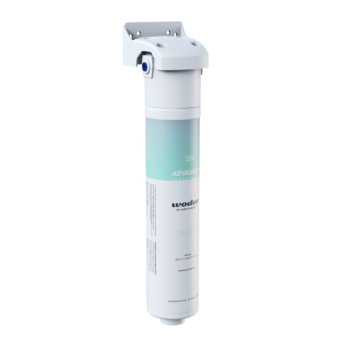
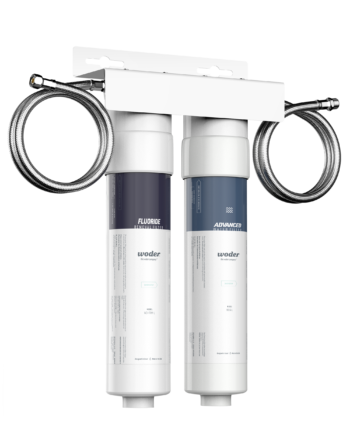
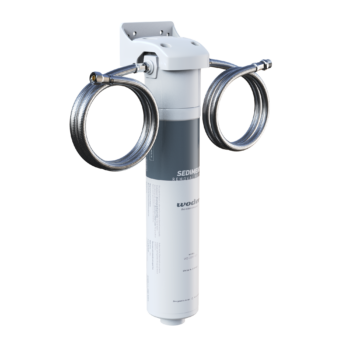
Woder’s under-sink and inline filters are built around Advanced Selective Filtration, which uses nanoparticles to target contaminants specifically rather than stripping everything from the water. If you want to see how that approach compares to a standard carbon-only filter for your household, Woder Filters is a useful starting point.
Frequently Asked Questions
Does an activated carbon filter remove lead?
Standard granular activated carbon has limited effectiveness against lead. Carbon block filters with additional media, such as ion exchange resin, can reduce lead more reliably. Always check the filter’s NSF 53 certification and confirm lead is listed as a certified reduction claim.
Will an activated carbon filter make my water taste better?
Yes, in most cases. Chlorine, chloramines, and organic compounds are the primary causes of unpleasant taste and odor in municipal water, and activated carbon removes all of them effectively.
Does activated carbon remove fluoride?
No. Standard activated carbon does not remove fluoride. You need activated alumina, bone char carbon, or a reverse osmosis system to reduce fluoride levels.
How often should I replace an activated carbon filter?
Most filters are rated for a specific number of gallons or months of use, typically between six months and two years depending on the model and your water quality. Replace it earlier if you notice taste or odor returning before the scheduled interval.
Is activated carbon safe for drinking water?
Yes. Activated carbon is one of the most widely used and well-studied filtration materials in drinking water treatment, used in municipal systems, home filters, and commercial applications worldwide.
What’s the difference between granular activated carbon and carbon block?
Granular activated carbon uses loose carbon particles and offers higher flow rates. Carbon block compresses the carbon into a solid form, which increases contact time and generally improves performance against a wider range of contaminants, including some that GAC handles less consistently.
Can activated carbon remove bacteria from water?
Standard activated carbon does not reliably remove bacteria or viruses. Some carbon block filters with very fine pore sizes can reduce certain cysts like Giardia, but if biological contamination is a concern, you need a filter specifically certified for pathogen reduction or a UV treatment stage.
The Bottom Line
An activated carbon water filter is one of the most practical tools available for improving drinking water quality at home. It handles chlorine, VOCs, pesticides, and disinfection byproducts well, and it does so without stripping out the minerals that make water taste the way it should.
Knowing what it doesn’t do, fluoride, nitrates, bacteria, and most dissolved solids, helps you decide whether carbon alone is enough or whether you need a multi-stage system. Match the filter to your actual water quality concerns, verify the certifications, and replace it on schedule. That’s the whole framework.