- Why Certifications Matter for Under-Sink Water Filters
- NSF International: The Standard-by-Standard Breakdown
- WQA Gold Seal: What It Adds
- What Certifications Don't Tell You
- How to Read a Filter's Certification Claims
- Where Woder Fits in This Picture
- A Quick Reference: NSF Standards at a Glance
- The Bottom Line on Certifications
- Frequently Asked Questions
You're shopping for an under-sink water filter and every product page throws the same alphabet soup at you: NSF/ANSI 42, NSF/ANSI 53, WQA Gold Seal, NSF 58. Some filters list four certifications. Others list none but still make bold contaminant removal claims.
What does any of it actually mean? And what does it actually guarantee for your drinking water?
This guide breaks down the major certifications, explains what each one tests for, and helps you read those claims like someone who knows what they're looking at.
Why Certifications Matter for Under-Sink Water Filters
A certification isn't a marketing badge. It means an independent, accredited organization tested that specific filter under controlled conditions and confirmed it does what the manufacturer claims.
Without third-party certification, you're trusting the manufacturer's own testing. That's not inherently dishonest — but it's a different level of accountability. When you're filtering water for your family, that difference matters.
The two organizations you'll see most often are NSF International and the Water Quality Association (WQA). Both are recognized by the American National Standards Institute (ANSI), and both run rigorous testing programs. But they test for different things, and their standards aren't interchangeable.
NSF International: The Standard-by-Standard Breakdown
NSF International sets the most widely referenced standards in water filtration. Each standard number covers a specific category of performance. Here's what each one actually tests.
NSF/ANSI 42 — Aesthetic Effects
This standard covers contaminants that affect taste, odor, and appearance. Chlorine is the primary target. If a filter carries NSF 42 certification, it's been verified to reduce chlorine taste and odor to a meaningful degree.
NSF 42 is the most common certification you'll see — and the least demanding. A basic carbon pitcher filter can earn it. Passing NSF 42 tells you the water will taste better. It says nothing about lead, PFAS, or any other health-related contaminant.
NSF/ANSI 53 — Health Effects
This is the certification that matters most for health-driven buyers. NSF 53 covers contaminants with documented health effects: lead, chromium 6, mercury, volatile organic compounds (VOCs), and certain pesticides and herbicides.
If a filter claims to remove lead and carries NSF 53 certification, that claim has been independently verified. If it claims lead removal without NSF 53, you're taking the manufacturer's word for it.
For anyone buying an under-sink filter because of concerns about lead pipes, aging infrastructure, or local water quality alerts, NSF 53 is the first certification to look for.
NSF/ANSI 58 — Reverse Osmosis Systems
NSF 58 applies specifically to reverse osmosis systems. It tests contaminant reduction across the full RO system — membrane, pre-filters, post-filters included. If you're evaluating an RO system, this is the relevant standard.
Worth knowing: RO systems certified under NSF 58 are effective at removing a wide range of contaminants, but they also remove beneficial minerals like calcium and magnesium. That's a real trade-off, not a minor footnote.
NSF/ANSI 401 — Emerging Contaminants
NSF 401 is a newer standard covering 15 emerging contaminants, including pharmaceuticals, herbicides, and certain industrial chemicals. It was developed as water quality research expanded and older standards started showing their age.
This certification is less common but increasingly relevant. If a filter carries NSF 401, it's been tested against a specific list of compounds that many older certified filters were never evaluated for at all.
NSF/ANSI 244 — Microbiological Reduction
NSF 244 covers filters that claim to reduce bacteria, cysts like Giardia and Cryptosporidium, and certain viruses. Not all under-sink filters target microbiological contaminants, so this one appears less frequently. If you're on well water or in an area with boil-water advisories, it's worth checking.
NSF/ANSI 473 — PFAS Reduction
PFAS (per- and polyfluoroalkyl substances) have become one of the most talked-about water quality concerns in 2026. NSF 473 specifically tests for PFAS reduction, with PFOA and PFOS as the primary compounds.
This standard is relatively new and not yet as widely held as NSF 42 or 53. But if PFAS is your primary concern, NSF 473 is the most direct certification to look for when evaluating any under-sink filter.
WQA Gold Seal: What It Adds
The Water Quality Association's Gold Seal program tests products against the same NSF/ANSI standards listed above. The difference is the certifying body, not the underlying standard.
A WQA Gold Seal on a product certified to NSF/ANSI 53 means the WQA — not NSF directly — ran the independent testing and verified the result. Both are ANSI-accredited. Both carry real weight.
Some manufacturers pursue WQA certification instead of, or alongside, NSF certification. Neither is inherently superior. What matters is which specific standard the certification applies to, not which organization issued the seal.
What Certifications Don’t Tell You
Here's something most product pages won't say clearly: a certification only covers what it was tested for.
A filter certified to NSF 42 and NSF 53 has been verified to reduce chlorine, lead, and the specific contaminants listed in those standards. It has not been tested for PFAS unless it also carries NSF 473. It has not been tested for emerging pharmaceuticals unless it carries NSF 401.
Certifications are floor-level guarantees, not ceiling-level endorsements. They confirm minimum performance on specific contaminants under specific test conditions. They don't tell you how the filter performs at the end of its rated capacity, at higher flow rates, or against contaminants outside the tested list.
This is why published performance data matters alongside certifications. A filter that shows its full testing results — what it removes and at what percentage — gives you more useful information than one that lists certifications without supporting numbers.
How to Read a Filter’s Certification Claims
When you're evaluating an under-sink water filter, run through this checklist:
- Which specific NSF/ANSI standards does it carry? NSF 42 alone is minimal. NSF 53 is the health baseline. NSF 473 is what you want for PFAS.
- Does the certification cover the full system or just a component? Some filters certify individual parts rather than the assembled unit. The assembled unit certification is more meaningful.
- Is the certification current? Certifications require periodic renewal. Confirm the listing is active, not legacy.
- Does the manufacturer publish independent test results? Certifications confirm a threshold was met. Published data shows you the actual reduction percentages.
- What's the rated capacity? Performance is tested at a specific gallon rating. A filter that performs well at 500 gallons may not hold up at 4,000 if you've gone past the replacement window.
Where Woder Fits in This Picture
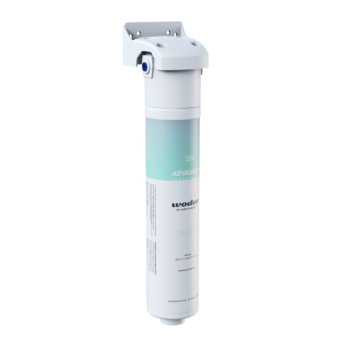
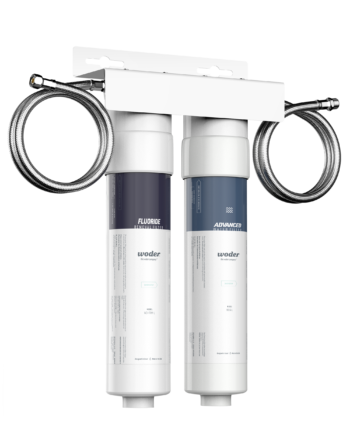
Woder Filters takes a different approach to performance verification. Woder's Advanced Selective Filtration technology uses nanoparticles to attract and remove contaminants at the molecular level — targeting lead, chlorine, chromium 6, mercury, PFAS, VOCs, and carcinogens at up to 99.9% removal rates, while preserving naturally occurring minerals like calcium and magnesium.
That mineral-preservation angle is genuinely distinct. Most certifications test for what a filter removes. They don't evaluate what a filter keeps. NSF 58, for example, certifies that an RO system removes contaminants — but it doesn't flag the fact that the same system strips out the beneficial minerals your body actually needs.
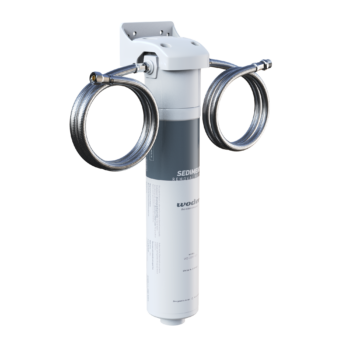
Woder filters install directly into your existing water line. No tank, no plumber, no wastewater. The product line covers multiple flow rates, from compact residential units up to the WD-10K-ADV-PORT at 10 kGPM, and replacement cartridges keep the system performing over time. Everything is manufactured in the United States.
If you want to match the right filter to your household's actual needs, the product Wizard at woder.com/wizard walks you through it.
A Quick Reference: NSF Standards at a Glance
| Standard | What It Tests | Key Contaminants Covered |
|---|---|---|
| NSF/ANSI 42 | Aesthetic effects | Chlorine, taste, odor |
| NSF/ANSI 53 | Health effects | Lead, chromium 6, mercury, VOCs |
| NSF/ANSI 58 | Reverse osmosis systems | Full RO system contaminant reduction |
| NSF/ANSI 401 | Emerging contaminants | Pharmaceuticals, herbicides, industrial chemicals |
| NSF/ANSI 244 | Microbiological reduction | Bacteria, cysts, viruses |
| NSF/ANSI 473 | PFAS reduction | PFOA, PFOS |
| WQA Gold Seal | Varies by standard | Same as corresponding NSF/ANSI standard |
The Bottom Line on Certifications
Certifications are a starting point, not the whole story. NSF 53 tells you a filter passed a lead reduction test. NSF 473 tells you it passed a PFAS test. Neither tells you whether the filter preserves minerals, how it holds up at the end of its rated life, or whether it produces wastewater.
Use certifications to screen out filters making unverified claims. Then go deeper: look at the specific contaminants tested, the reduction percentages, the rated capacity, and the full system design.
Your water is worth that extra step.
Frequently Asked Questions
What is the most important NSF certification for an under-sink water filter?
For health-related concerns, NSF/ANSI 53 is the most important baseline. It covers contaminants with documented health effects, including lead, chromium 6, mercury, and VOCs. If PFAS is your primary concern, also look for NSF/ANSI 473.
Is NSF certification the same as WQA Gold Seal?
Not exactly. Both certify products against the same NSF/ANSI standards, but they're issued by different accredited organizations. NSF International and the Water Quality Association are both ANSI-recognized. A WQA Gold Seal on a product tested to NSF/ANSI 53 carries the same standard as NSF's own certification for that standard.
Does NSF certification guarantee a filter removes PFAS?
No. NSF 42 and NSF 53 don't cover PFAS. You need to look specifically for NSF/ANSI 473 certification — or confirmed independent testing against PFAS compounds — to verify PFAS reduction.
Can a filter remove contaminants without being NSF certified?
Yes. Some manufacturers conduct independent third-party testing without pursuing formal NSF or WQA certification. What matters is whether the testing was done by an accredited, independent lab and whether the full results are published. Certification is the most standardized form of verification, but it's not the only one.
What does NSF/ANSI 42 actually cover?
Aesthetic effects only — primarily chlorine taste and odor reduction. It's the most common and least demanding certification in the category. Passing NSF 42 means your water will likely taste and smell better. It says nothing about health-related contaminants like lead or PFAS.
How often do NSF certifications need to be renewed?
NSF certifications require ongoing compliance and periodic renewal. Manufacturers must maintain product consistency and submit to retesting to keep certifications active. When evaluating a filter, confirm the certification is current rather than legacy.
Does an under-sink water filter need to be certified to work well?
Certification is a strong signal of verified performance, but it's not the only indicator. What matters most is independent, documented testing against the specific contaminants you're concerned about, a clearly stated rated capacity, and transparent performance data. Certifications make that verification more standardized and easier to compare — but they're the beginning of your research, not the end.