- What Is Hard Water?
- What Is Contaminated Water?
- Water Filtration vs Softener: Why the Distinction Matters
- The Mineral Question: What Should Stay in Your Water
- When You Might Need Both
- How to Figure Out What You Actually Have
- Choosing the Right Filter for Contamination
- A Quick Side-by-Side
- The Bottom Line
- Frequently Asked Questions
Spotty dishes. Soap that won't lather. A white crust building up around your faucet. If any of that sounds familiar, you've probably heard "water softener" offered as the fix.
But hard water and contaminated water aren't the same problem. Treating them like they are is one of the most common — and costly — mistakes homeowners make when trying to improve their tap water.
Here's what each problem actually is, why the solution for one won't solve the other, and how to figure out which one you're dealing with.
What Is Hard Water?
Hard water has high concentrations of dissolved minerals — mainly calcium and magnesium — picked up naturally as water moves through rock and soil before reaching your pipes.
It's not a health hazard. It won't make you sick. What it does cause is a set of real, visible frustrations:
- Scale buildup on faucets, showerheads, and appliances
- Soap and shampoo that refuse to lather properly
- Spots on dishes and glassware after washing
- Reduced efficiency and shorter lifespan for water heaters and dishwashers
How hard your water is depends almost entirely on where you live. The Midwest, Southwest, and parts of the Southeast tend to have moderately to very hard water.
What Is Contaminated Water?
Contaminated water is a different category entirely. It contains substances that pose real health risks — things that have no place in your drinking water at any level.
Common contaminants found in US tap water include:
- Lead — enters through aging pipes and fixtures, with no safe exposure level
- PFAS (per- and polyfluoroalkyl substances) — synthetic chemicals linked to serious health effects, found near industrial sites, military bases, and certain agricultural areas
- Chlorine and chloramines — added by municipal treatment plants to disinfect water, but associated with taste, odor, and byproduct concerns
- Chromium 6 — a carcinogen detected in water supplies across multiple states
- Mercury and volatile organic compounds (VOCs) — industrial and agricultural runoff that finds its way into groundwater
Here's the part that catches people off guard: water can look, smell, and taste completely normal and still carry these contaminants. That's what makes them so different from hardness minerals. You can see scale. You can't see lead.
Water Filtration vs Softener: Why the Distinction Matters
A water softener is built for one job: hardness. It works through ion exchange, swapping calcium and magnesium ions for sodium ions. The result is softer water that's easier on your pipes, appliances, and skin.
What it doesn't do is remove contaminants. A softener won't touch lead. It won't capture PFAS. It won't reduce chlorine or chromium 6. If drinking water safety is your concern, a softener alone gives you a false sense of security.
A water filter targets contaminants. Depending on the technology, it removes the harmful substances that affect your health — while leaving your water safe to drink.
There's a catch worth knowing about: many filters also remove hardness minerals in the process. Reverse osmosis systems, for example, strip out virtually everything — including calcium and magnesium. That solves the contamination problem but leaves you with demineralized water that tastes flat and lacks the minerals your body actually benefits from.
The Mineral Question: What Should Stay in Your Water
Calcium and magnesium aren't just the cause of hard water. They're naturally occurring minerals that contribute to your daily intake. Removing them entirely isn't automatically the right move.
This is the real tension in the water filtration vs softener conversation. You want to remove the bad. You don't want to remove everything.
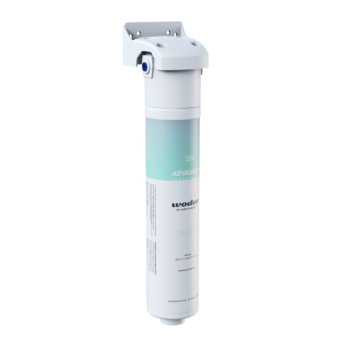
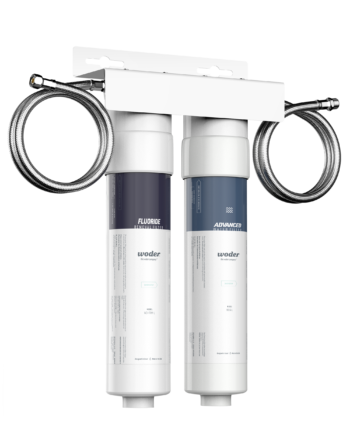
That's the thinking behind Woder Filters. Woder's Advanced Selective Filtration technology uses nanoparticles to attract and remove contaminants — lead, PFAS, chlorine, chromium 6, mercury, VOCs — while leaving calcium, magnesium, and other beneficial minerals right where they belong. Remove the bad. Keep the good.
That's a meaningful difference from both softeners (which swap minerals rather than remove contaminants) and reverse osmosis systems (which remove contaminants but strip out the minerals along with them).
When You Might Need Both
Some households genuinely have both problems. Your water might be hard and contain lead or PFAS. In that case, a softener and a filter aren't competing options — they serve different purposes and can work alongside each other.
A common setup is a whole-home softener to handle scale and appliance protection, paired with an under-sink filter at the kitchen tap for drinking water safety. The softener handles your plumbing. The filter handles what you actually drink and cook with.
For most households, though, the priority is clear: protect your drinking water first, then address hardness if it's causing real problems.
How to Figure Out What You Actually Have
Before spending money on any system, test your water. Guessing is expensive.
A basic water test will tell you:
- Hardness level — measured in grains per gallon (GPG) or milligrams per liter (mg/L)
- Lead concentration
- Chlorine and chloramine levels
- pH and other basic chemistry
For PFAS and more specific contaminants, a more comprehensive test is worth the investment. Woder offers water testing kits on their site, and your local municipality is required to publish an annual Consumer Confidence Report (CCR) listing detected contaminants in your supply. That report is a solid starting point before you commit to anything.
Once you know what's actually in your water, the right fix becomes a lot clearer.
Choosing the Right Filter for Contamination
If your test shows contaminants, a quality inline or under-sink filter is the most practical solution for your drinking water.
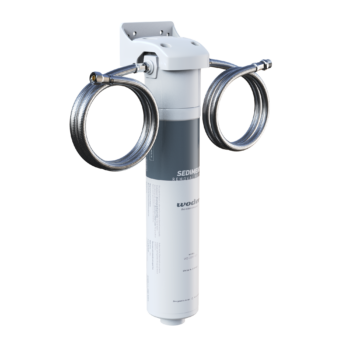
Woder's lineup covers a range of household needs. The WD-D-8K-FRM-ADV-DC handles up to 8 kGPM under the sink. The WD-10K-ADV-PORT is built for higher flow rates. The compact WD-G4-210-JG works well for smaller households or renters who need a low-profile setup. Every model installs directly into your existing water line — no plumber, no tank, no whole-home overhaul.
All Woder filters are manufactured in the United States and run on the same Advanced Selective Filtration technology. Lead, chlorine, PFAS — gone. Calcium, magnesium — still there.
Not sure which model fits your home? The product Wizard at woder.com/wizard walks you through the options based on your flow rate and household size.
A Quick Side-by-Side
| Water Softener | Water Filter (Selective) | Reverse Osmosis | |
|---|---|---|---|
| Removes hardness minerals | Yes | No | Yes |
| Removes lead | No | Yes | Yes |
| Removes PFAS | No | Yes | Yes |
| Preserves beneficial minerals | Yes | Yes | No |
| Produces wastewater | No | No | Yes |
| DIY install | Varies | Yes | Varies |
| Addresses drinking water safety | No | Yes | Yes |
The trade-offs are pretty clear. If your main concern is what you're drinking, selective filtration gives you contaminant removal without sacrificing the minerals that actually belong in your water.
The Bottom Line
Hard water is an inconvenience. Contaminated water is a health concern. They need different thinking and different tools.
A softener won't protect you from lead or PFAS. A filter won't stop scale from building up in your dishwasher. Knowing which problem you have — through testing, not guessing — is the first step to fixing it properly.
If drinking water safety is your priority, start there. Clean, mineral-rich water straight from your tap, without a plumber or a complicated system, is entirely within reach. It's your water. Make sure it's actually working for you.
Head to woder.com to explore the full filter lineup, or use the Wizard to find the right fit for your home.
Frequently Asked Questions
Can a water softener make my drinking water safe?
No. A water softener exchanges hardness minerals for sodium through ion exchange — it doesn't remove contaminants like lead, PFAS, chlorine, or chromium 6. If drinking water safety is your concern, you need a water filter, not a softener.
Do I need both a water softener and a water filter?
It depends on your water. If testing shows both high hardness and health-relevant contaminants, you may benefit from both. A softener handles scale and appliance protection; an under-sink filter handles what you drink and cook with. They serve different purposes and work well together.
Does a water filter make hard water soft?
Most filters aren't designed to reduce hardness. Reverse osmosis systems do remove hardness minerals, but they also strip out beneficial minerals like calcium and magnesium in the process. Selective filtration systems like Woder target harmful contaminants while leaving those beneficial minerals intact.
What contaminants does a water filter actually remove?
A quality selective filtration system removes lead, PFAS, chlorine, chromium 6, mercury, carcinogens, and volatile organic compounds. Woder's Advanced Selective Filtration technology removes 99.9% of these contaminants while preserving naturally occurring minerals.
How do I know if my water is hard or contaminated?
Test it. A basic water test covers hardness, lead, chlorine, and pH. For PFAS and other specific contaminants, a more comprehensive test is worth it. Your municipality's annual Consumer Confidence Report also lists detected contaminants in your local supply — a useful first look before you invest in anything.
Is reverse osmosis better than a selective inline filter?
RO systems are effective at removing contaminants, but they also strip out beneficial minerals and produce wastewater. Selective filtration removes the harmful stuff while keeping minerals like calcium and magnesium intact — no wastewater, no tank, no complicated installation.
Can renters install an under-sink water filter?
Yes. Inline and under-sink filters like those in the Woder lineup connect directly to your existing water line without permanently modifying your plumbing. No drilling, no major installation, no plumber — which makes them a practical option for renters and homeowners alike.