- Why Lead in Tap Water Is Still a Concern in 2026
- What Filter Technologies Actually Remove Lead
- What to Look for When Buying a Lead Water Filter
- How Woder Compares to Other Lead Filter Options
- Do You Actually Have Lead in Your Water?
- Why "Lead-Free" Pipes Don't Mean Lead-Free Water
- The Case Against Bottled Water as a Lead Solution
- Finding the Right Woder Filter for Your Home
- Frequently Asked Questions
Lead in tap water is a real problem — and it gives you no warning. You can't see it, smell it, or taste it. It moves silently from aging pipes or solder joints straight into your glass. If you're shopping for a lead water filter in 2026, this guide will help you cut through the noise, understand what actually works, and choose the right filter for your home.
Why Lead in Tap Water Is Still a Concern in 2026
Most people assume lead contamination is a relic of the past. It isn't. The primary source isn't your municipal water treatment plant — it's the plumbing between the plant and your tap. Older homes with lead service lines, lead solder, or brass fixtures can leach lead into water even when the source water tests clean.
Homes built before 1986 carry the highest risk, but newer construction isn't automatically safe. Brass fittings and fixtures certified as "lead-free" can still legally contain up to 0.25% lead under current standards. If you have a new baby, are pregnant, or simply want to know what's coming out of your tap, testing first is the smart move. Woder offers water testing kits at woder.com that give you a clear starting point.
What Filter Technologies Actually Remove Lead
Not every filter handles lead the same way. Here's an honest breakdown of the main types.
Activated Carbon Filters (Pitcher Filters)
Standard activated carbon — the kind found in most pitcher filters — doesn't reliably remove lead. It handles chlorine and some taste and odor issues well enough, but lead is a heavy metal, and basic carbon isn't designed to capture it. If your pitcher filter doesn't specifically claim lead removal with testing data to back it up, assume it doesn't remove lead.
Reverse Osmosis (RO) Systems
RO systems do remove lead effectively. They push water through a semi-permeable membrane that blocks heavy metals along with nearly everything else — including beneficial minerals like calcium and magnesium. You get very clean water, but you also get wastewater produced during filtration, a storage tank under your sink, a more involved installation, and water that's been stripped of the minerals your body actually uses. For some households, that trade-off makes sense. For many, it doesn't.
Advanced Selective Filtration
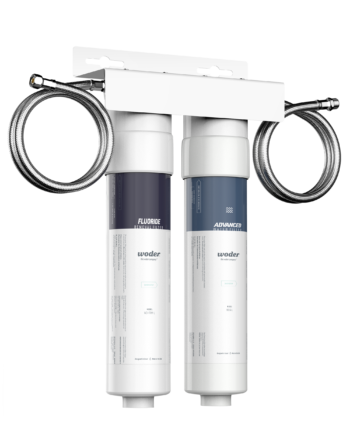
This is where Woder sits. Advanced Selective Filtration uses nanoparticles to attract and remove contaminants — lead, chlorine, PFAS, chromium 6, mercury, VOCs — while leaving naturally occurring minerals intact. You get 99.9% contaminant removal without losing the calcium and magnesium that make water genuinely good for you.
It's the meaningful middle ground: more capable than a pitcher filter, smarter than an RO system.
What to Look for When Buying a Lead Water Filter
Verified Lead Removal Claims
Look for documented contaminant removal rates, not marketing language. A filter should tell you exactly what it removes and at what percentage. Woder's Advanced Selective Filtration removes 99.9% of contaminants including lead — that's the kind of specificity worth trusting.
Mineral Preservation
Most filters that aggressively remove contaminants also strip out minerals. If mineral content matters to you — and it should — confirm that the filter you choose is designed to preserve calcium and magnesium, not just eliminate everything indiscriminately.
Flow Rate and Household Size
A filter that slows your water to a trickle is frustrating to live with. Woder's product line covers a range of household needs:
- WD-G4-210-JG — compact residential unit, ideal for smaller households
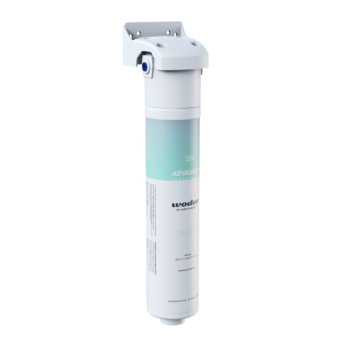
- WD-D-8K-FRM-ADV-DC — 8 kGPM under-sink model, suited for standard family use
- WD-10K-ADV-PORT — 10 kGPM high-flow model for higher-demand homes
- WD-S-5K-REP — 5 kGPM replacement cartridge for ongoing filtration
Matching filter capacity to your household's actual flow rate keeps performance consistent over time.
Installation Requirements
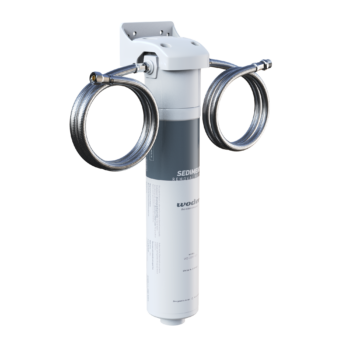
Some filters require a plumber. Some require drilling new faucet holes. Some need a dedicated storage tank. Woder filters install directly inline into your existing water line — no whole-home overhaul, no tank, no professional required. That matters whether you're a renter, someone who wants to avoid a major project, or just someone who wants clean water without a complicated setup.
Replacement Cartridge Availability
A filter is only as good as its maintenance. Make sure replacement cartridges are easy to find and reasonably priced. Woder sells replacement cartridges separately, so you replace only what needs replacing — not the entire unit.
How Woder Compares to Other Lead Filter Options
| Filter Type | Removes Lead | Preserves Minerals | No Wastewater | DIY Install | No Plumber Needed |
|---|---|---|---|---|---|
| Pitcher filter (basic carbon) | No | Yes | Yes | Yes | Yes |
| Reverse osmosis | Yes | No | No | Moderate | Sometimes |
| Woder (Advanced Selective) | Yes | Yes | Yes | Yes | Yes |
| Whole-home system (e.g., Culligan) | Yes | Varies | Varies | No | No |
Aquasana is Woder's closest competitor in the selective filtration space, using its Claryum technology with strong NSF certifications. It performs well — but it prices 20 to 30 percent higher than comparable Woder models. For buyers who want professional-grade lead removal without the premium, that gap matters.
Culligan and similar whole-home systems handle lead but typically cost between $500 and $5,000 and require professional installation. That's a significant commitment for most households.
Do You Actually Have Lead in Your Water?
You might. You might not. The honest answer is that you can't know without testing.
Your municipal water utility publishes an annual Consumer Confidence Report covering source water quality. But that report measures water leaving the treatment plant — not water arriving at your tap. Lead typically enters between the plant and your faucet, which means the report alone doesn't tell the full story.
A home water test gives you actual data for your specific tap. Once you know what you're dealing with, choosing the right filter becomes straightforward.
Why “Lead-Free” Pipes Don’t Mean Lead-Free Water
This is a common point of confusion. Even pipes and fixtures labeled "lead-free" can contain trace amounts of lead under current regulations. Older homes with original plumbing carry more risk, but the age of your home isn't the only variable. Service lines, solder from past repairs, and brass components throughout your plumbing system all contribute.
The safest approach is to filter at the point of use — at the tap where you drink and cook — rather than assuming your pipes are clean.
The Case Against Bottled Water as a Lead Solution
Reaching for bottled water to avoid tap contamination is understandable as a short-term fix. As a long-term strategy, it's expensive, wasteful, and not necessarily cleaner. Bottled water isn't held to stricter standards than municipal tap water, and single-use plastic creates ongoing environmental waste that adds up fast.
An inline filter at your tap removes lead and other contaminants continuously — without the plastic, without the recurring cost of buying cases every week, and without hauling anything home.
Finding the Right Woder Filter for Your Home
Woder's product line covers compact single-person households up to high-flow family homes. If you're not sure which model fits your setup, the interactive Wizard tool at woder.com/wizard walks you through it based on your household size and flow rate.
All Woder filters are manufactured in the United States. Built here. Installed in minutes. Trusted for years.
Frequently Asked Questions
Does a standard pitcher filter remove lead from water?
Most pitcher filters using basic activated carbon don't reliably remove lead. Lead is a heavy metal that requires a specifically designed filtration medium. Always check whether a filter explicitly claims and documents lead removal before relying on it.
What is the most effective type of filter for lead removal?
Both reverse osmosis systems and Advanced Selective Filtration filters remove lead effectively. The key difference is that RO strips out beneficial minerals and produces wastewater, while Advanced Selective Filtration removes contaminants while preserving calcium and magnesium.
How do I know if my tap water contains lead?
Test your water directly at the tap. Your utility's annual water quality report covers source water but doesn't account for lead that enters through your home's plumbing. A home water test kit gives you specific data for your tap.
Do I need a plumber to install a lead water filter?
It depends on the filter type. Whole-home systems and some under-sink setups require professional installation. Woder filters install directly into your existing water line — no plumber, no whole-home overhaul.
Will a lead water filter remove other contaminants too?
Yes, if you choose the right one. Woder's Advanced Selective Filtration removes 99.9% of contaminants including lead, chlorine, PFAS, chromium 6, mercury, and volatile organic compounds — not just lead in isolation.
How often do I need to replace my lead water filter cartridge?
Replacement frequency depends on your filter model and household water usage. Woder sells replacement cartridges separately, so you replace only the cartridge when needed rather than the full unit.
Is filtered tap water better than bottled water for lead removal?
A properly certified tap filter removes lead at the point of use and delivers consistent results. Bottled water isn't regulated more strictly than tap water, generates significant plastic waste, and costs considerably more over time. A quality inline filter is the more practical and sustainable choice.
Lead in your water is a solvable problem. You don't need a whole-home overhaul or a complicated system to fix it. You need a filter that actually works, installs easily, and keeps the good stuff in your water while removing the bad.
Remove the bad. Keep the good. Find the right filter for your home at woder.com. It's your water.