- What Is TDS?
- What Is PPM?
- How Does a TDS Meter Actually Work?
- What's a Normal TDS Range for Drinking Water?
- High TDS Doesn't Always Mean Dangerous Water
- Low TDS Doesn't Always Mean Better Water
- What TDS Testing Is Actually Useful For
- When to Go Beyond a TDS Meter
- How Filtration Affects Your TDS Reading
- The Bottom Line on PPM and TDS
- Frequently Asked Questions
You dip a small pen-shaped tester into a glass of tap water. A number flashes on the screen. Is that good? Bad? Should you be worried?
If you've ever stared at a water test result and felt more confused than informed, you're not alone. PPM and TDS get used interchangeably all the time, but they're not quite the same thing — and understanding the difference helps you make smarter decisions about your water.
Here's what those numbers actually mean, what they can tell you, and — just as importantly — what they can't.
What Is TDS?
TDS stands for Total Dissolved Solids. It measures everything dissolved in your water that isn't water itself — minerals like calcium and magnesium, salts, metals like lead or copper, chlorine byproducts, and other compounds.
The word "total" is doing a lot of work here. TDS doesn't tell you what is dissolved in your water. It just tells you how much of something is there.
What Is PPM?
PPM stands for parts per million. It's a unit of measurement, not a separate test. When your water tester gives you a TDS reading, it almost always expresses that reading in PPM.
So when someone says "my TDS is 250 PPM," they mean: for every million parts of water, 250 parts are dissolved solids.
Think of it this way — TDS is the category, PPM is the unit you use to express it. Asking "PPM vs TDS" is a bit like asking "miles vs distance." One describes what you're measuring, the other describes how.
How Does a TDS Meter Actually Work?
Most handheld TDS meters don't directly measure dissolved solids. They measure electrical conductivity. Dissolved minerals and salts conduct electricity, so the meter uses conductivity as a proxy for total dissolved solids and converts that into a PPM reading.
This works reasonably well for minerals and salts. It works less well for everything else.
Contaminants like PFAS, volatile organic compounds (VOCs), certain pesticides, and even lead don't conduct electricity well. A TDS meter won't reliably detect them. Your water could test at a perfectly normal 150 PPM and still contain contaminants you'd want removed.
That's the most important limitation to understand before you put too much weight on a single number.
What’s a Normal TDS Range for Drinking Water?
Here's a general reference for interpreting TDS readings in PPM:
| TDS Reading (PPM) | What It Suggests |
|---|---|
| 0–50 | Very low — may indicate distilled or RO-treated water; low in minerals |
| 50–150 | Generally considered ideal for drinking water |
| 150–300 | Acceptable; typical for many municipal water supplies |
| 300–500 | Higher mineral content; still within safe limits for most people |
| 500+ | Above the EPA's recommended secondary standard; worth investigating |
| 1000+ | Not recommended for regular drinking without treatment |
The EPA sets a secondary standard of 500 PPM for TDS in drinking water. Secondary standards are non-enforceable guidelines related to taste, odor, and appearance — not health-based limits. That distinction matters.
High TDS Doesn’t Always Mean Dangerous Water
This is where a lot of people get tripped up. A high TDS reading can simply mean your water has a lot of calcium and magnesium — minerals that are actually good for you. Hard water from a natural aquifer might read 400 PPM and be perfectly safe to drink.
On the other hand, water with a TDS of 100 PPM could still contain trace amounts of lead, PFAS, or chlorine disinfection byproducts — none of which a standard TDS meter will flag.
The number tells you about concentration. It doesn't tell you about composition.
Low TDS Doesn’t Always Mean Better Water
Reverse osmosis systems are famous for producing very low TDS readings — sometimes under 20 PPM. That sounds impressive, but it means the system has stripped out nearly everything, including calcium and magnesium.
Those minerals aren't just neutral. They contribute to taste and play a role in your overall mineral intake. Water with very low TDS can taste flat or slightly acidic, and you lose the benefit of naturally occurring minerals in every glass.
This is why filtration that removes contaminants while preserving minerals offers something meaningfully different from RO. The goal isn't the lowest possible TDS reading. The goal is water that's free of harmful contaminants and still contains what's naturally good for you.
What TDS Testing Is Actually Useful For
Even with its limitations, a TDS meter is a useful tool in the right context:
- Tracking filter performance over time. If your filter is working well, TDS readings should stay relatively consistent. A sudden spike can indicate your cartridge needs replacing.
- Comparing tap water to filtered water. A meaningful drop in TDS after filtration suggests your filter is removing dissolved material.
- Getting a quick baseline. If you've just moved into a new home and want a starting point before investing in more detailed testing, a TDS reading gives you a rough picture.
For anything more specific — lead levels, PFAS concentration, chlorine byproducts — you need a more targeted water test.
When to Go Beyond a TDS Meter
If your tap water comes from a municipal supply, your utility publishes an annual water quality report (sometimes called a Consumer Confidence Report). That report lists specific contaminants and their measured concentrations — a far better starting point than a TDS reading for understanding what's actually in your water.
If you're on well water, or if you have specific concerns about lead or PFAS, a lab-based water test will give you far more actionable information than a handheld meter.
Woder offers water testing kits alongside its filter line, so you can get a clearer picture of what you're dealing with before deciding on a filter.
How Filtration Affects Your TDS Reading
Different filter types affect TDS in very different ways.
A standard carbon block filter removes chlorine, some VOCs, and certain other contaminants — but it doesn't dramatically reduce TDS because it leaves most dissolved minerals intact. Your reading might not change much, but your water quality improves in ways the meter simply doesn't show.
A reverse osmosis system will drop your TDS significantly, often by 90% or more. But as covered above, that includes the minerals you'd want to keep.
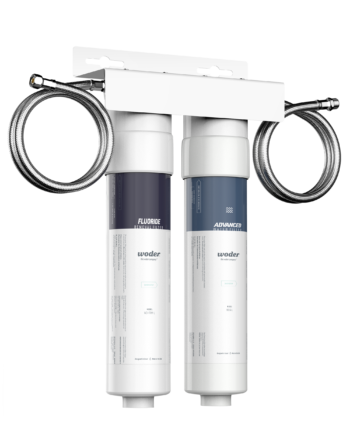
Woder's Advanced Selective Filtration technology takes a different approach. It uses nanoparticles to attract and remove contaminants — lead, chlorine, PFAS, chromium 6, mercury, VOCs — while leaving calcium, magnesium, and other beneficial minerals in place. Your TDS reading after filtering with Woder won't drop to near zero, and that's the point. The minerals stay. The contaminants go.
Remove the bad. Keep the good. That's the Woder difference.
The Bottom Line on PPM and TDS
PPM is the unit. TDS is what you're measuring. A TDS meter gives you a useful snapshot, but it's not a complete picture of water safety.
High TDS doesn't automatically mean dangerous water. Low TDS doesn't automatically mean safe or healthy water. The number matters most when you understand what it does — and doesn't — capture.
Use your TDS reading as a starting point, not a final answer. Pair it with a proper water test, check your utility's annual report, and choose a filter that targets the specific contaminants you're concerned about.
Your water deserves more than one number.
Frequently Asked Questions
What is the difference between PPM and TDS in water testing?
TDS (Total Dissolved Solids) is the measurement category — it refers to everything dissolved in your water that isn't water. PPM (parts per million) is the unit used to express that measurement. When a water tester displays a TDS reading, it almost always shows the result in PPM. The two terms are closely related but not identical: TDS describes what you're measuring, PPM describes how.
Is a high TDS reading in tap water dangerous?
Not necessarily. A high TDS reading can simply mean your water contains a lot of naturally occurring minerals like calcium and magnesium, which are harmless and even beneficial. TDS becomes a concern when it's driven by harmful dissolved solids such as heavy metals or industrial chemicals — but a standard TDS meter can't tell you which is which. A reading above 500 PPM is worth investigating further with a more detailed water test.
Can a TDS meter detect lead or PFAS?
No. Standard TDS meters measure electrical conductivity as a proxy for dissolved solids. Lead, PFAS, and many volatile organic compounds don't conduct electricity well, so they don't register accurately on a TDS meter. Your water could show a perfectly normal TDS reading and still contain these contaminants. For lead, PFAS, or other specific concerns, you need a targeted lab test or a certified test kit.
What TDS level is ideal for drinking water?
Most water quality guidance suggests a TDS range of 50 to 300 PPM is suitable for drinking water, with the EPA's secondary (non-enforceable) standard set at 500 PPM. That said, the ideal range depends on what's driving the reading. Water rich in calcium and magnesium at 300 PPM is very different from water at 300 PPM due to industrial runoff. The number alone doesn't tell the full story.
Does a water filter lower TDS?
It depends on the type of filter. Reverse osmosis systems reduce TDS dramatically — sometimes by over 90% — because they remove nearly everything, including beneficial minerals. Carbon block filters may not change TDS much because they leave most dissolved minerals intact while targeting specific contaminants. Woder's Advanced Selective Filtration removes harmful contaminants while preserving naturally occurring minerals, so TDS won't drop to near zero — and that's intentional.
Why does my filtered water still show a TDS reading?
Because not all dissolved solids are contaminants. If your filter preserves calcium, magnesium, and other beneficial minerals, those will still show up in a TDS reading. A reading that's lower than your unfiltered tap water but not near zero often means your filter is doing exactly what it should — removing the bad while keeping the good.
How often should I test my water's TDS?
Testing once when you set up a new filter gives you a useful baseline. After that, periodic checks every few months help you track whether your filter is still performing well. A noticeable increase in TDS over time can signal that your cartridge is due for replacement. For a more complete picture of your water quality, pair TDS testing with a broader water quality test at least once a year.