- What Are Microplastics, Exactly?
- What 2026 Research Is Finding
- How Microplastics Get Into Your Tap Water
- What Standard Filters Do and Don't Do
- What to Look for in a Microplastics Water Filter
- Practical Steps You Can Take Now
- FAQs
Microplastics are no longer just an ocean problem. They're showing up in tap water, bottled water, human blood, and lung tissue. If you've been wondering whether your drinking water is actually safe, the latest 2026 research gives you more reason to pay attention — and more reason to do something about it.
Here's what the science currently says, what the health risks look like, and what you can realistically do at home.
What Are Microplastics, Exactly?
Microplastics are plastic particles smaller than 5 millimeters. Nanoplastics are even smaller — often invisible to the naked eye. They come from a wide range of sources: degrading plastic bottles and packaging, synthetic clothing fibers, industrial runoff, and the breakdown of plastic components in aging water infrastructure.
Once these particles enter the water supply, they're extremely difficult to remove. Most municipal treatment systems simply weren't designed with microplastics in mind.
What 2026 Research Is Finding
The evidence has grown considerably over the past few years. Studies published in 2026 continue to confirm what earlier research suggested: microplastics are widespread in drinking water sources globally, including municipal tap water across the United States.
Prevalence in Tap Water
Water samples collected across North America and Europe consistently show microplastic contamination. The particles detected include polyethylene, polypropylene, polystyrene, and PET fragments. Concentrations vary by region and source, but their presence is no longer in question.
What Happens When You Drink Them
The health research is still developing, but the direction is concerning. Current studies are examining several mechanisms of potential harm:
- Inflammation: Microplastic particles can trigger inflammatory responses in gut tissue, with some research pointing to effects on the intestinal lining.
- Chemical leaching: Plastics carry additives including plasticizers, flame retardants, and colorants that can leach into surrounding tissue after ingestion.
- Bioaccumulation: Nanoplastics are small enough to cross biological membranes. Researchers have detected them in human blood, placenta tissue, and organs.
- Microbiome disruption: Emerging evidence suggests chronic exposure may alter gut microbiome composition, though the long-term implications aren't yet fully understood.
As of 2026, no regulatory agency has established a safe exposure threshold for microplastics in drinking water. The science is moving faster than the policy.
Children and Vulnerable Populations
Researchers are paying particular attention to children, pregnant women, and people with compromised immune systems. Smaller body mass and developing organ systems may make these groups more susceptible to the effects of chronic low-level exposure.
How Microplastics Get Into Your Tap Water
Understanding the source helps explain why this problem is so persistent.
Aging infrastructure: Older pipes — especially those with plastic components or plastic-lined joints — shed particles directly into the water moving through them.
Source water contamination: Rivers, lakes, and reservoirs used for municipal supply already contain microplastics from agricultural runoff, urban stormwater, and industrial discharge.
Treatment gaps: Standard treatment relies on filtration, sedimentation, and disinfection. These steps can reduce microplastic load, but they don't eliminate it. Nanoplastics in particular pass through most conventional filters.
Home plumbing: Even after water leaves the treatment plant, it can pick up particles from plastic fittings, tubing, and fixtures inside your home.
What Standard Filters Do and Don’t Do
Not all filtration is equal when it comes to microplastics.
Activated carbon filters — like pitcher filters and most faucet attachments — can reduce some larger microplastic particles, but their pore sizes are often too large to catch nanoplastics or fine fragments.
Reverse osmosis (RO) systems are currently among the most effective options for microplastic reduction. The semi-permeable membrane blocks particles at a very small scale. The tradeoff: RO systems also strip out beneficial minerals like calcium and magnesium, waste a significant amount of water in the process, and require more involved installation.
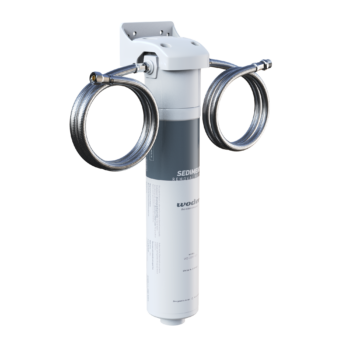
Under-sink inline filters with advanced media can offer meaningful reduction depending on the technology used. The key variable is whether the filter can attract and capture particles at the nano scale — not just block them by size.
What to Look for in a Microplastics Water Filter
If you're evaluating your options, here are the factors that actually matter:
Filtration mechanism: Size-exclusion alone is less effective against nanoplastics than filters that also use electrostatic or adsorptive attraction to capture particles.
Mineral retention: Some filtration methods remove contaminants but also strip calcium, magnesium, and other minerals your body needs. If that matters to you, check whether the filter is designed to preserve them.
Flow rate and household fit: A filter that slows your water to a trickle isn't practical for daily use. Match the filter's rated flow rate to your household's actual demand.
Replacement schedule: Filter media has a finite capacity. A filter past its service life may actually release captured particles back into the water.
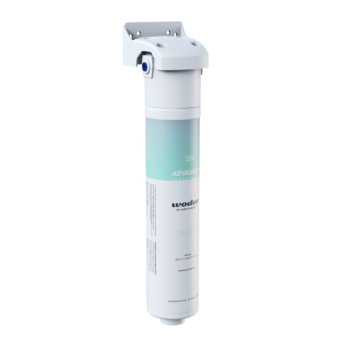
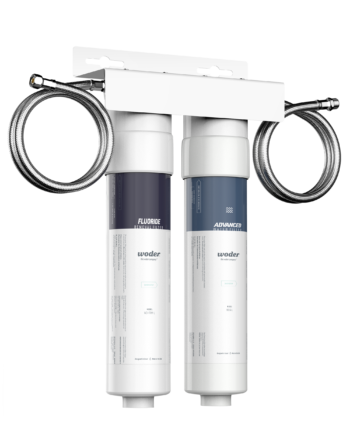
Woder Filters uses Advanced Selective Filtration technology, which relies on nanoparticles to attract and remove contaminants while leaving beneficial minerals intact. This approach is designed to address the limitations of both basic carbon filters and full RO systems — offering meaningful filtration without the mineral stripping or water waste that RO requires.
Practical Steps You Can Take Now
You don't need to wait for regulatory guidance to reduce your exposure.
-
Test your water: A certified lab test gives you a baseline. Some services now test specifically for microplastics, though this is still an emerging category in consumer testing.
-
Upgrade your filtration: If you're relying on a basic pitcher filter or an aging faucet attachment, an under-sink or inline filter with more advanced media is worth considering.
-
Reduce plastic contact in your kitchen: Avoid heating food or water in plastic containers. Use glass or stainless steel where possible.
-
Replace old plastic fixtures: If your home has older plastic plumbing components, switching to metal alternatives removes one source of particle introduction.
-
Stay informed: The research on microplastics is moving quickly. What we know in mid-2026 will likely be updated before the year is out.
FAQs
What are microplastics and why are they in tap water?
Microplastics are plastic particles under 5 millimeters that enter water supplies through aging infrastructure, environmental contamination, and the breakdown of plastic materials. Standard municipal treatment doesn't fully remove them.
Are microplastics in tap water dangerous to your health?
Research in 2026 links microplastic exposure to inflammation, chemical leaching, and potential bioaccumulation in human tissue. No safe exposure threshold has been established, and scientists consider chronic low-level ingestion a legitimate concern.
Can a water filter remove microplastics?
Some filters can significantly reduce microplastic levels. Reverse osmosis membranes and filters that use adsorptive or electrostatic mechanisms tend to outperform basic activated carbon pitchers, which often can't capture nanoplastics.
Does reverse osmosis remove microplastics?
Yes, RO systems are effective at removing microplastics, including smaller particles. The downsides are that they also remove beneficial minerals, waste water during filtration, and require more involved installation than inline alternatives.
Will a Brita or pitcher filter remove microplastics?
Standard pitcher filters use activated carbon and may reduce larger microplastic particles, but they're not designed to capture nanoplastics or fine fragments. Their pore sizes are generally too large for comprehensive removal.
How do I know if my tap water contains microplastics?
You can request a water quality report from your utility, but most municipal reports don't yet include microplastic data. Specialized lab testing services can analyze your tap water for microplastic content, though this type of testing is still becoming more widely available.
What is the best type of filter for microplastics in 2026?
Filters that combine fine physical filtration with adsorptive media tend to perform best. Under-sink inline filters using advanced selective filtration technology — like those from Woder — offer a practical middle ground between basic carbon filters and full RO systems, removing contaminants while retaining the minerals your body actually uses.
The science on microplastics isn't finished, but it's consistent enough to act on. You don't need to overhaul your entire home. A well-chosen filter installed directly at your water line is one of the most straightforward steps you can take to reduce what ends up in your glass.