- What Are Nitrates?
- Where Do Nitrates Come From?
- What Are the Health Risks?
- How to Know If Your Water Has Nitrates
- How to Remove Nitrates from Drinking Water
- Where Woder Fits In
- Practical Steps If You're Concerned About Nitrates
- Frequently Asked Questions
Nitrates don't smell. They don't taste like anything. You won't see them in your glass. That's what makes them one of the more unsettling contaminants in tap water — they can be present at harmful levels without giving you any warning at all.
If you've recently checked your municipal water quality report or tested a private well and nitrates showed up, you're not alone. Here's what you need to know: where nitrates come from, what the health risks actually look like, and what works for removing them from your drinking water.
What Are Nitrates?
Nitrates are nitrogen-based compounds that occur naturally in soil, but the concentrations that end up in drinking water are almost always the result of human activity. They're water-soluble, which means they move easily through soil and into groundwater or surface water supplies.
The EPA sets the maximum contaminant level (MCL) for nitrates in public drinking water at 10 milligrams per liter (mg/L), measured as nitrogen. That standard exists because nitrate exposure above that threshold carries real health consequences — particularly for infants and pregnant women.
Where Do Nitrates Come From?
Agricultural Runoff
This is the single biggest source. Fertilizers — both synthetic and organic, including manure — are high in nitrogen. When it rains, water carries nitrates from fields into streams, rivers, and groundwater. Communities near farming areas, especially across the Midwest, consistently show elevated nitrate levels.
Septic Systems
Older or failing septic systems can leach nitrates into surrounding soil and eventually into groundwater. If your home uses a private well and there's a septic system nearby, regular nitrate testing is worth doing.
Industrial Discharge
Certain manufacturing processes and wastewater treatment facilities release nitrogen compounds that can reach local water supplies. Urban areas aren't immune, though agricultural runoff tends to be the dominant driver nationally.
Natural Sources
Some nitrate presence in water is natural — soil decomposition and lightning-driven nitrogen fixation both contribute small amounts. But naturally occurring nitrates rarely reach concentrations that raise health concerns. When levels get high, land use is almost always the reason.
What Are the Health Risks?
The most documented risk is methemoglobinemia, sometimes called "blue baby syndrome." In infants under six months, high nitrate intake interferes with the blood's ability to carry oxygen. The EPA's 10 mg/L standard was originally set with this in mind.
For adults, the picture is more complex. Short-term exposure at elevated levels can cause similar oxygen-transport problems. Research over the past decade has also linked chronic high-nitrate exposure to increased risk of certain cancers, thyroid disruption, and adverse pregnancy outcomes — though the science on long-term adult exposure is still developing.
The practical takeaway: if your water tests above 10 mg/L, act on it. If you have an infant, are pregnant, or are immunocompromised, that threshold matters even more.
How to Know If Your Water Has Nitrates
Check Your Annual Water Quality Report
If you're on a municipal supply, your utility is required to send you a Consumer Confidence Report (CCR) each year. It lists detected contaminants and whether they fall within legal limits. Nitrates will appear if they were detected.
Test Your Well
Private wells aren't regulated by the EPA. If you use well water, testing is your responsibility. The EPA recommends testing at least once a year for nitrates — especially if you live near farmland or have a septic system close by. Home test kits exist, but a certified lab gives you more reliable results.
You can also explore testing options at Woder Filters, which carries water testing products to help you understand what's actually in your tap water before choosing a filter.
How to Remove Nitrates from Drinking Water
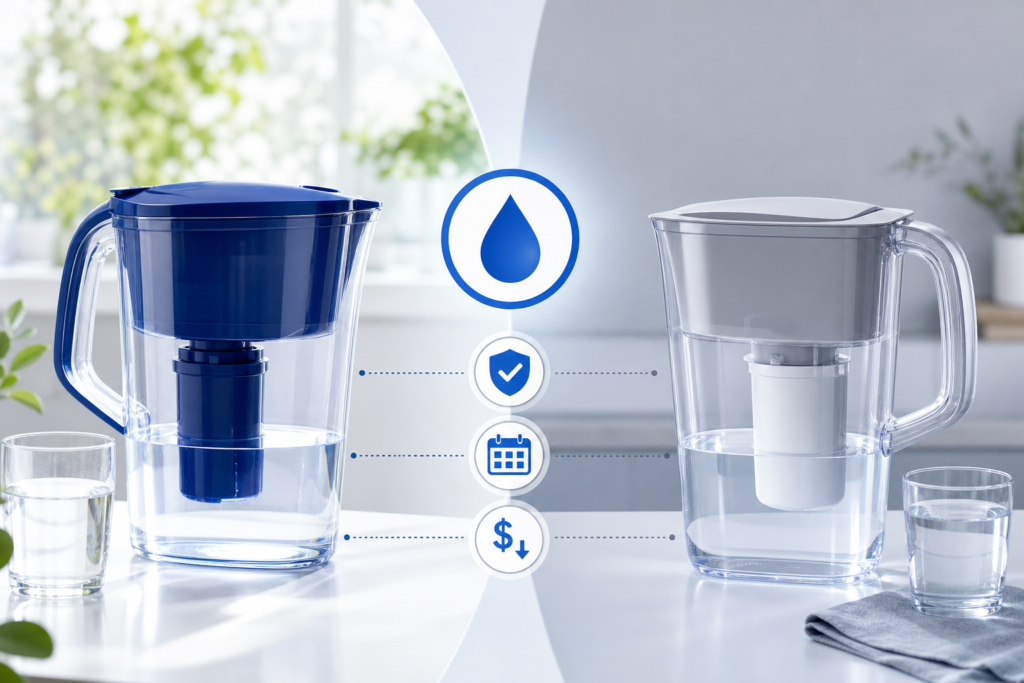
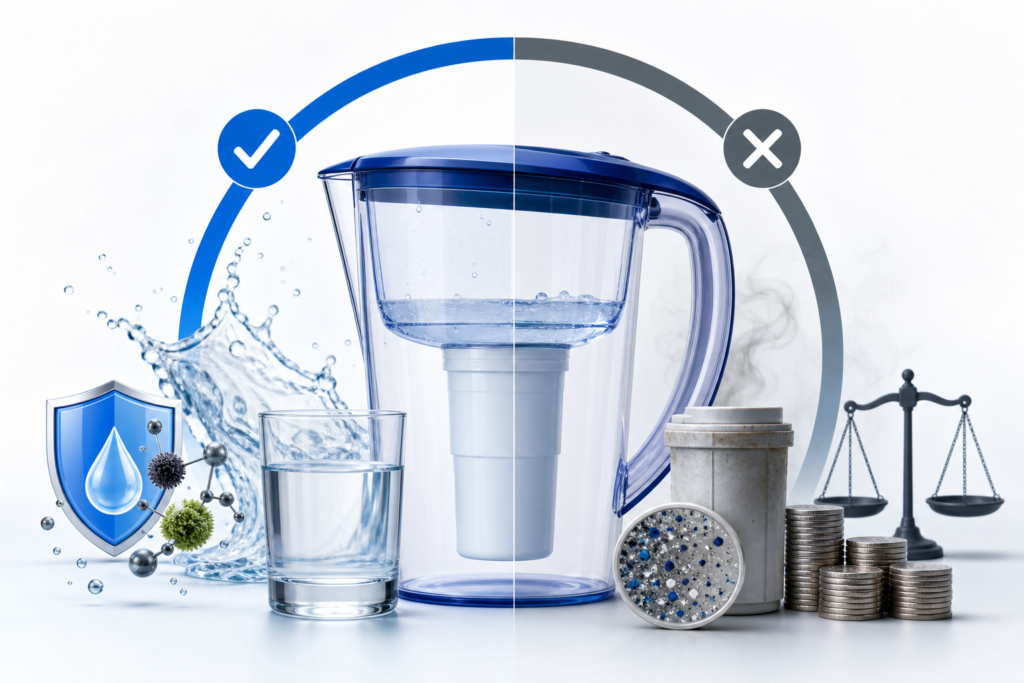
Not every filter removes nitrates — and this is one of the most important things to understand when shopping for a water filter for nitrates. Standard carbon block filters and basic pitcher filters do a solid job with chlorine, some VOCs, and taste and odor issues, but they don't reliably remove nitrates.
Here are the methods that do work:
Reverse Osmosis (RO)
Reverse osmosis is one of the most effective options for nitrate removal. It forces water through a semipermeable membrane that blocks nitrates along with a wide range of other contaminants, typically reducing nitrate levels by 83 to 92 percent or more depending on the system and water chemistry.
The tradeoffs are real, though. RO strips out beneficial minerals alongside contaminants — calcium and magnesium both get removed. It also wastes water (typically 3 to 4 gallons for every gallon produced), requires a storage tank, and usually needs professional installation. For some households, that's the right call. For many, it's more than necessary.
Ion Exchange (Anion Exchange)
Ion exchange resins designed specifically for nitrate removal work by swapping nitrate ions for chloride ions. These systems are highly effective and widely used in municipal treatment. Point-of-use anion exchange units exist for home use, though they require periodic regeneration with salt and can be more involved to maintain than standard filters.
Distillation
Distillation removes nitrates by boiling water and collecting the steam, leaving contaminants behind. It works, but it's slow, energy-intensive, and strips out minerals in the process — similar to RO in that respect.
What About Standard Carbon Filters?
Carbon filters — activated carbon block or granular activated carbon — are excellent for chlorine, chloramines, VOCs, PFAS, lead, and many other contaminants. Nitrates aren't on that list. If nitrate removal is your primary goal, a carbon-only filter won't be enough on its own.
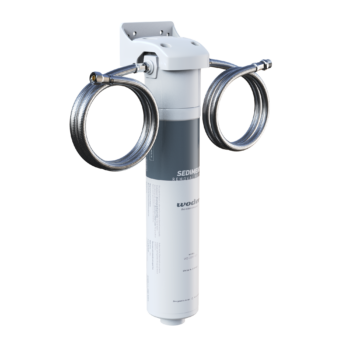
Where Woder Fits In
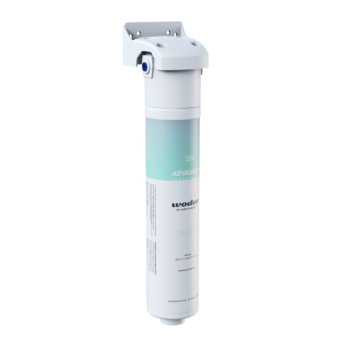
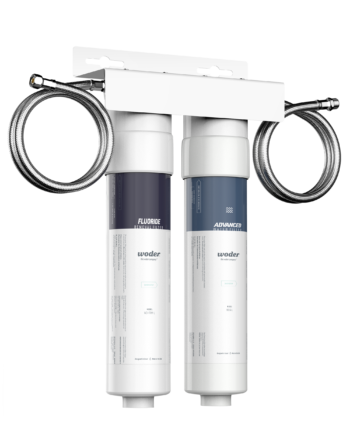
Woder's Advanced Selective Filtration technology removes 99.9% of lead, chlorine, chromium 6, mercury, PFAS, carcinogens, and volatile organic compounds — while keeping beneficial minerals like calcium and magnesium intact. That's a meaningful range of contaminants addressed without the mineral stripping that comes with reverse osmosis.
Nitrates, however, require a different filtration mechanism — typically ion exchange or RO membrane technology. Woder filters are built to handle the contaminants their technology targets well, and being straightforward about that matters more than overpromising.
If your water test shows nitrates above the EPA limit, you'll want a filter specifically rated for nitrate removal, whether that's an RO system or an anion exchange unit. If your water also contains lead, PFAS, chlorine, or other contaminants alongside nitrates, a layered approach may make sense — and that's where Woder can be part of the solution.
Not sure what's in your water? Testing first is the smartest move. Once you know what you're dealing with, you can match the right filter to the actual problem. The product finder at woder.com/wizard can help you identify the right Woder model for the contaminants their filters are built to address.
Practical Steps If You’re Concerned About Nitrates
- Test your water. Don't guess. A certified lab test gives you actual numbers to act on.
- Check your CCR. If you're on city water, your annual report tells you what was detected and at what levels.
- Match your filter to your problem. If nitrates are confirmed above 10 mg/L, look specifically for a filter rated for nitrate removal — ion exchange or RO.
- Consider the full picture. Most water quality issues aren't single-contaminant problems. Lead, PFAS, and chlorine are common alongside nitrates, especially in older homes or agricultural areas.
- Replace cartridges on schedule. Whatever filter you use, an expired cartridge doesn't protect you. Stay on top of replacement intervals.
Frequently Asked Questions
What is the safe level of nitrates in drinking water?
The EPA's maximum contaminant level for nitrates in public water supplies is 10 mg/L (measured as nitrogen). Levels above this are considered unsafe, particularly for infants under six months, pregnant women, and people with certain health conditions.
Can you taste or smell nitrates in water?
No. Nitrates are colorless, odorless, and tasteless at the concentrations typically found in drinking water. The only way to know if your water contains elevated nitrates is to test it.
Do standard water filters remove nitrates?
Most standard carbon filters do not. Effective nitrate removal requires reverse osmosis, anion exchange resin specifically rated for nitrates, or distillation. Always check a filter's performance data before assuming it handles nitrates.
Is well water more likely to have nitrates than city water?
Private wells aren't subject to federal regulation or routine testing, which makes contamination easier to miss. Municipal supplies are tested regularly and must meet EPA standards. That said, city water can still contain nitrates — it just has to stay below the legal limit to be distributed.
How often should I test my well water for nitrates?
The EPA recommends testing private wells at least once a year. More frequent testing makes sense if you live near active farmland, have a nearby septic system, or have had elevated results before.
Are nitrates and nitrites the same thing?
They're closely related but not identical. Nitrites are a converted form of nitrates and are actually more immediately toxic. The EPA sets a separate MCL for nitrites at 1 mg/L. Both can be present in water, and both are worth testing for if you're concerned about contamination.
What's the best water filter for nitrates in a home setting?
For point-of-use nitrate removal, reverse osmosis and anion exchange systems are the most reliable options. RO is widely available and effective, though it removes minerals along with contaminants and produces wastewater. If your concern is a broader mix of contaminants, testing first helps you choose a filter matched to your actual water quality.
Your water is worth knowing. Start with a test, read your results, and pick a filter built for what's actually in your water. Find your Woder at woder.com.