- How Reverse Osmosis Works
- How Carbon Filters Work
- The Core Trade-Off: Removal Breadth vs Mineral Retention
- A Third Option: Selective Filtration
- Side-by-Side Comparison
- Which Households Benefit Most from Reverse Osmosis
- Which Households Benefit Most from Selective Filtration
- Which Households Benefit Most from Standard Carbon Filters
- What to Check Before You Decide
- Installation: What Each System Actually Involves
- The Mineral Question Deserves More Attention
- Making the Decision
- Frequently Asked Questions
- The Bottom Line
Choosing between a reverse osmosis system and a carbon filter is one of the most common decisions homeowners face when researching water filtration. It matters because these two technologies work in fundamentally different ways — and the wrong choice can mean paying for complexity you don't need, or ending up with protection that doesn't match what's actually in your water.
This guide breaks down how each technology works, what each removes, where each falls short, and how to figure out which one fits your household.
How Reverse Osmosis Works
Reverse osmosis forces water through a semipermeable membrane under pressure. The pores are small enough to block dissolved solids, heavy metals, salts, and most contaminants. The result is very pure water — but the process comes with real trade-offs.
For every gallon of filtered water, a traditional RO system sends two to four gallons down the drain. That ratio varies by model, but wastewater is built into the process.
RO also removes beneficial minerals along with the harmful ones. Calcium, magnesium, and other naturally occurring minerals pass through the membrane just as readily as lead or arsenic. Many households notice the difference immediately — the water tastes flat and slightly acidic. Some RO systems add a remineralization stage to compensate, which adds cost and another component to maintain.
Most under-sink RO systems also require a storage tank. Because the membrane filters slowly, the tank holds a reserve for when you open the tap. That takes up cabinet space, and water sitting in the tank can stagnate if the system isn't maintained properly.
Installation is more involved than a basic filter swap. You typically need to connect a drain line, mount the storage tank, and run a dedicated faucet line through your countertop. Many households end up hiring a plumber.
What RO Removes Well
Reverse osmosis handles a broad range of dissolved contaminants:
- Heavy metals including lead, arsenic, and chromium
- Nitrates and nitrites
- Fluoride
- Dissolved salts and total dissolved solids
- Many PFAS compounds, though performance varies by membrane quality
- Bacteria and some viruses
That breadth of removal is RO's main argument. If your water has high total dissolved solids, nitrates from agricultural runoff, or confirmed arsenic contamination, RO is a strong option.
How Carbon Filters Work
Carbon filtration uses activated carbon — usually derived from coconut shell or coal — to adsorb contaminants as water passes through. Adsorption means contaminants bind to the carbon's surface rather than being physically blocked. The more surface area the carbon has, the more it can capture.
Standard carbon filters are excellent at removing chlorine, chloramines, volatile organic compounds, and the compounds responsible for bad taste and odor. They're simple, affordable, and widely available.
The limitation is that basic carbon filters don't address heavy metals like lead, chromium 6, or PFAS at meaningful levels. If your concern is taste and chlorine smell, carbon handles that well. If your concern is lead from old pipes or PFAS from nearby industrial contamination, a standard carbon filter isn't enough.
What Carbon Filters Remove Well
- Chlorine and chloramines
- Volatile organic compounds (VOCs)
- Some pesticides and herbicides
- Sediment and turbidity
- Taste and odor compounds
What Carbon Filters Miss
- Lead and heavy metals (standard carbon only)
- PFAS
- Nitrates
- Fluoride
- Dissolved salts
That gap is why many households find themselves looking for something between a basic carbon filter and a full RO system.
The Core Trade-Off: Removal Breadth vs Mineral Retention
The real decision isn't just what each system removes — it's what each system removes that you actually need filtered, versus what you'd prefer to keep.
RO removes nearly everything, which sounds ideal until you realize that includes the calcium and magnesium your body uses. Some people find the water feels less satisfying to drink. Adding a remineralization cartridge solves this, but it adds cost and maintenance.
Standard carbon filters preserve everything, including the good minerals, but they leave too many serious contaminants unaddressed for households dealing with lead pipes, PFAS exposure, or chromium 6 concerns.
That gap has led to a third category: selective filtration systems designed to target specific contaminants while leaving beneficial minerals intact.
A Third Option: Selective Filtration
Selective filtration sits between basic carbon and full RO in both complexity and contaminant coverage. Instead of blocking everything or adsorbing broadly, it uses targeted media — often including nanoparticles — to attract and remove specific harmful contaminants without affecting mineral content.
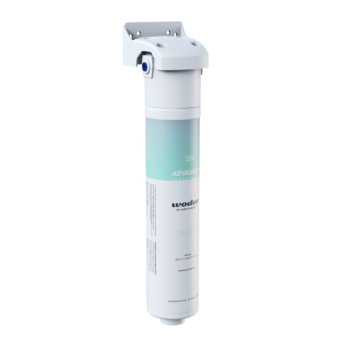
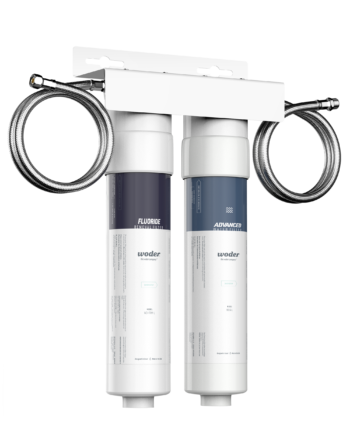
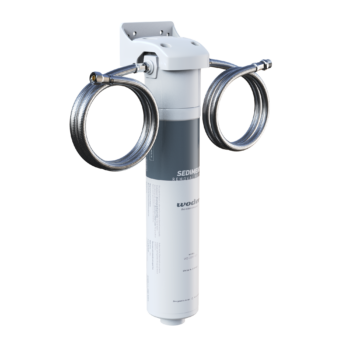
Woder builds its under-sink and inline filters around proprietary Advanced Selective Filtration technology that works exactly this way. The filters remove 99.9% of targeted contaminants including lead, chlorine, chromium 6, mercury, carcinogens, volatile organic compounds, and PFAS, while leaving calcium, magnesium, and other naturally occurring minerals in the water.
The practical differences from RO are significant:
- No storage tank required
- No wastewater produced
- No plumber needed for installation
- Connects directly to your existing water line
- No remineralization cartridge needed because minerals were never removed
That matters for renters, for households with limited under-sink space, and for anyone who doesn't want to pay for or maintain a multi-stage system.
Side-by-Side Comparison
| Feature | Reverse Osmosis | Standard Carbon | Selective Filtration |
|---|---|---|---|
| Removes lead | Yes | No (standard) | Yes |
| Removes PFAS | Yes (varies by membrane) | No | Yes |
| Removes chlorine | Yes | Yes | Yes |
| Removes chromium 6 | Yes | No | Yes |
| Retains beneficial minerals | No | Yes | Yes |
| Produces wastewater | Yes | No | No |
| Requires storage tank | Usually | No | No |
| Requires plumber | Often | No | No |
| Installation complexity | High | Low | Low |
| Ongoing maintenance | Multiple stages | Single cartridge | Single cartridge |
No single column is perfect for every household. The right choice depends on your water source, your contamination concerns, and how much complexity you're willing to manage.
Which Households Benefit Most from Reverse Osmosis
RO makes the most sense when:
Your water has high total dissolved solids or confirmed nitrate contamination. RO is one of the few residential technologies that effectively reduces nitrates, which are common in areas with heavy agricultural activity. If your well water tests high for TDS or nitrates, RO's broad removal profile is a real advantage.
You're dealing with arsenic. Arsenic is a serious concern in certain regions, particularly the Southwest and parts of the Midwest. RO handles it well, and selective filtration systems generally aren't marketed for arsenic removal.
You want the widest possible safety margin and don't mind the trade-offs. Some households simply want maximum removal breadth and are comfortable adding a remineralization stage, managing the tank, and paying higher upfront costs. RO delivers that.
Which Households Benefit Most from Selective Filtration
Selective filtration is the better fit when:
You want lead, PFAS, and chlorine removed without losing minerals. This is the most common profile among households switching away from RO — serious contaminant coverage, but without flat, demineralized water.
You're renting or have limited under-sink space. No storage tank, no drain line, no countertop faucet to drill. Woder's inline models connect directly to your water line and work without permanent plumbing modifications.
You're replacing bottled water. If your household buys bottled water because you don't trust the tap, a selective filtration system addresses the actual contaminants driving that decision — without the ongoing cost and plastic waste.
You want straightforward maintenance. Replacing a single cartridge is simpler than managing a multi-stage RO system with pre-filters, membranes, post-filters, and a remineralization stage.
Which Households Benefit Most from Standard Carbon Filters
A basic carbon filter is sufficient when:
Your only concern is taste and chlorine. If your municipal water is otherwise clean and you just want to remove the chlorine smell and improve taste, carbon handles that effectively and at low cost.
You need a pre-filter for a larger system. Carbon is commonly used as a first stage in whole-home setups for sediment and chlorine reduction.
For most households actively researching water quality today, basic carbon alone isn't enough. PFAS contamination is now documented in water systems across the country, and lead from aging pipes remains a concern in cities that haven't finished infrastructure replacement. If either of those is on your radar, you need more than carbon.
What to Check Before You Decide
Before choosing any filtration system, it helps to know what's actually in your water. Your municipality is required to publish an annual water quality report — sometimes called a Consumer Confidence Report — which lists detected contaminants and their levels.
If you're on well water, or if you want more detail than the municipal report provides, Woder's site includes a water testing kit category that can give you a clearer picture of your specific situation before you invest in a system.
Once you know your contamination profile, matching it to the right technology becomes straightforward.
Installation: What Each System Actually Involves
Reverse osmosis: Typically involves connecting a cold water supply line, a drain line for wastewater, mounting a pressurized storage tank under the sink, and running a dedicated line to a separate faucet. Many households hire a plumber, especially for the drain connection and countertop drilling.
Standard carbon: Usually a simple inline connection or faucet mount. Some models require no tools at all.
Selective filtration (under-sink): Connects directly to the cold water supply line. No drain connection, no tank, no dedicated faucet required in most configurations. Woder's models are designed for DIY installation without professional help.
That installation gap matters if you're renting, if you're not comfortable with basic plumbing, or if you simply want to avoid a service call.
The Mineral Question Deserves More Attention
As more households have moved away from RO, the conversation around minerals in filtered water has grown. The concern isn't just taste. Calcium and magnesium in drinking water contribute to daily mineral intake, and some research suggests that consistently drinking demineralized water over long periods may have nutritional implications worth considering.
RO manufacturers have responded by adding remineralization stages — which add cost and create another component to replace. Selective filtration sidesteps the issue entirely by not removing minerals in the first place.
If mineral retention matters to you, that's a meaningful differentiator when comparing systems.
Making the Decision
The reverse osmosis vs carbon filter question doesn't have a universal answer, but most households can narrow it down quickly:
- If your water has nitrates, arsenic, or very high TDS, RO is worth the complexity.
- If your concern is lead, PFAS, chlorine, or chromium 6 — and you want to keep your minerals — selective filtration covers those contaminants without the trade-offs.
- If taste and chlorine are your only concerns, a quality carbon filter is sufficient.
For most households on standard municipal water, selective filtration hits the right balance: serious contaminant removal, mineral retention, simple installation, and no wastewater.
If you're not sure which model fits your home's setup, Woder's product finder walks you through the selection based on your water line and household needs.
Frequently Asked Questions
Does a carbon filter remove lead?
Standard activated carbon filters do not reliably remove lead. Some specialty carbon block filters are certified for lead reduction, but basic carbon is not designed for heavy metal removal. If lead is a concern, you need a system specifically rated for it — such as a reverse osmosis unit or a selective filtration filter like those from Woder.
Does reverse osmosis remove PFAS?
RO membranes can reduce PFAS levels, but performance varies by membrane quality and the specific compounds present. Not all RO systems are certified for PFAS removal. If PFAS is your primary concern, verify the system's certification claims before purchasing.
Why does RO water taste flat?
Reverse osmosis removes dissolved minerals including calcium and magnesium, which contribute to water's taste and mouthfeel. Without them, the water can taste noticeably different. Some RO systems include a remineralization stage to restore mineral content after filtration.
Can I install an under-sink filter without a plumber?
Selective filtration systems like Woder's under-sink models are designed for DIY installation and connect directly to your existing cold water supply line. Reverse osmosis systems typically require a drain connection and sometimes countertop drilling, which many households prefer to have done professionally.
Is reverse osmosis water safe to drink long-term?
RO water is safe to drink. The concern some people raise is that consistently drinking demineralized water may reduce dietary mineral intake from water. This is generally considered a minor factor for people with a balanced diet, but it's a real consideration for households that rely heavily on water as a mineral source.
What's the difference between selective filtration and a carbon filter?
A standard carbon filter adsorbs chlorine, VOCs, and taste compounds but doesn't address lead, PFAS, or heavy metals. Selective filtration uses targeted media — including nanoparticles in Woder's case — to remove specific serious contaminants like lead, chromium 6, mercury, and PFAS, while leaving beneficial minerals in the water. The result is broader contaminant coverage without the trade-offs of reverse osmosis.
How often do I need to replace a water filter cartridge?
Replacement frequency depends on the model and your household's water usage. Woder sells replacement cartridges separately, and the right interval varies by filter model. Check the documentation for your specific unit, or use Woder's product finder at woder.com to identify the correct replacement schedule for your setup.
The Bottom Line
Reverse osmosis offers the broadest removal profile but comes with real costs: wastewater, mineral loss, storage tanks, and installation complexity. Standard carbon filters are simple and affordable but leave serious contaminants like lead and PFAS unaddressed. Selective filtration covers the contaminants that matter most to the majority of households — without the trade-offs of either extreme.
The right system is the one that matches your actual water quality concerns. Start with a water test if you're unsure, then match the technology to what you find.