- What Causes Water to Smell Like Rotten Eggs?
- How to Narrow Down the Source
- How to Fix Water That Smells Like Rotten Eggs
- When to Call a Professional
- A Note on Filters and What They Actually Do
- Frequently Asked Questions
You turn on the tap, fill a glass, and get hit with a smell that belongs in a chemistry lab — not your kitchen. That sulfur odor, the one that makes you think of rotten eggs, is one of the most common water quality complaints homeowners deal with. And while it's genuinely unpleasant, it's usually fixable once you understand what's behind it.
Here's how to identify the source, narrow it down to your specific situation, and actually do something about it.
What Causes Water to Smell Like Rotten Eggs?
Almost always, the culprit is hydrogen sulfide gas. It forms naturally under certain conditions and produces that sharp, sulfur-like odor even at extremely low concentrations — your nose can pick it up at levels as low as 0.5 parts per billion, which is why the smell often feels more intense than any test result would suggest.
Here are the most common reasons it ends up in your water.
Sulfur Bacteria in Your Supply or Pipes
Sulfur bacteria are naturally occurring microorganisms that feed on sulfur compounds and release hydrogen sulfide as a byproduct. They're the most frequent cause in private well systems, but they can also colonize municipal supply lines, particularly in older infrastructure.
A useful clue: if the smell is stronger from hot water than cold, or if it comes and goes depending on how long water has sat in the pipes, bacteria are likely involved.
A Corroding Water Heater Anode Rod
Your water heater has a magnesium or aluminum anode rod inside it — its job is to protect the tank from corrosion. When that rod reacts with sulfate-rich water, hydrogen sulfide is a common result. This is why many homeowners only notice the smell from the hot tap.
If your water heater is a few years old and the anode rod has never been replaced, that's a strong place to start.
Naturally Occurring Sulfur in Groundwater
In certain regions, groundwater moves through geological formations — limestone, shale — that are naturally rich in sulfur compounds. If your home draws from a private well and the smell is consistent year-round regardless of water temperature, the source water itself is likely the issue.
Municipal Treatment Residuals
Some water systems use sulfur-based compounds during treatment. In rare cases, these interact with organic matter inside your pipes and produce trace hydrogen sulfide. If you're on city water and the smell is mild and inconsistent, this is worth considering.
How to Narrow Down the Source
Before spending money on a fix, spend five minutes on a diagnosis.
Step 1: Hot vs. cold. Run the cold tap alone for 30 seconds, then the hot tap alone. If the smell is noticeably stronger from hot water, the anode rod is the most likely culprit.
Step 2: One faucet or all of them? A smell isolated to a single faucet points to something localized — a drain, aerator, or that specific pipe run. If every faucet smells, the problem is upstream.
Step 3: Run the tap and wait. If the smell fades after 30 to 60 seconds of running water, it's been sitting in your pipes — likely localized bacterial growth. If it stays strong no matter how long you run it, the issue is coming from the source.
Step 4: Test your water. A water test confirms whether hydrogen sulfide, sulfate, or bacteria are present and at what levels. Woder offers water testing kits at woder.com so you can get a clear picture of what's actually coming out of your tap.
How to Fix Water That Smells Like Rotten Eggs
The right fix depends on what your diagnosis turns up.
Replace the Water Heater Anode Rod
If the smell is coming only from hot water, swapping the magnesium anode rod for an aluminum or zinc alloy version often solves the problem entirely. It's a DIY-friendly repair on most water heaters — and if you'd rather not tackle it yourself, a plumber can handle it in under an hour.
Shock Chlorinate Your Well
If you have a private well and sulfur bacteria are the cause, shock chlorination is the standard fix. It flushes the system with a high concentration of chlorine to kill off the bacteria and can keep the problem at bay for months or longer. Your local cooperative extension office or a well water specialist can walk you through the process.
Install a Filter Built for Odor and Chemical Residuals
For ongoing protection — especially if your source water naturally contains sulfur compounds or your municipal supply carries residual treatment chemicals — a quality inline or under-sink filter makes a real difference.
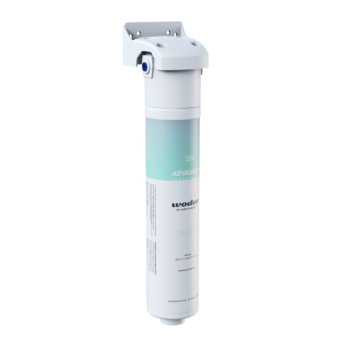
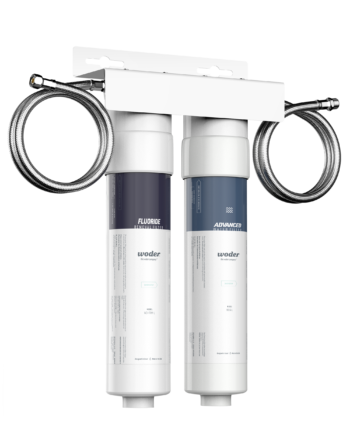
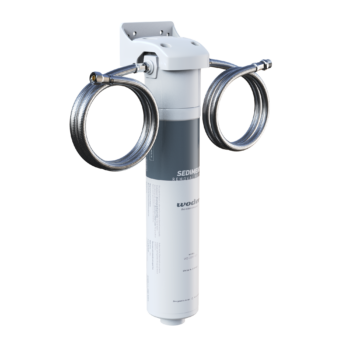
Woder's Advanced Selective Filtration technology removes 99.9% of contaminants, including volatile organic compounds, chlorine, and other chemical residuals that cause odor and taste problems. It installs directly into your existing water line with no plumber required. And unlike reverse osmosis systems, it doesn't strip out everything in the process — calcium, magnesium, and other naturally occurring minerals stay right where they belong.
That distinction matters. Most odor-removal filters take a blunt approach. Woder removes what doesn't belong while keeping what does.
Flush and Clean Your Pipes
If the smell is limited to one faucet or only shows up after water sits overnight, bacterial buildup inside a specific pipe section or aerator may be the cause. Remove and clean the aerator, then flush the affected line thoroughly. In older homes with iron or steel pipes, more extensive flushing may be needed.
Check Ventilation Around Your Water Heater
Sometimes hydrogen sulfide accumulates around the water heater rather than in the water itself. Make sure the area is properly ventilated and look for any visible corrosion on the tank or connections.
When to Call a Professional
Most rotten egg smell issues don't require a plumber. But reach out to one if:
- The smell is strong and persistent from every tap, hot and cold
- You're on a private well and shock chlorination hasn't resolved it
- The smell comes alongside discolored water or reduced pressure
- Your water test shows elevated hydrogen sulfide or bacterial contamination
These combinations can point to something more serious — a well issue, a compromised water main connection, or deteriorating pipe integrity.
A Note on Filters and What They Actually Do
Reaching for a filter when your water smells off is a reasonable instinct. But the filter has to be the right kind.
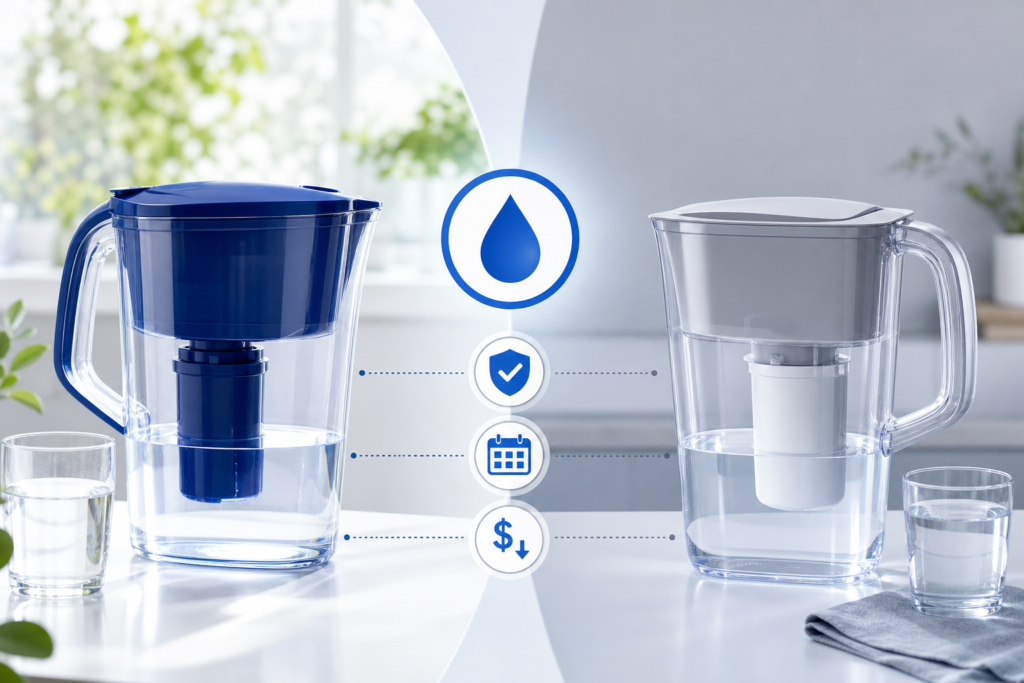
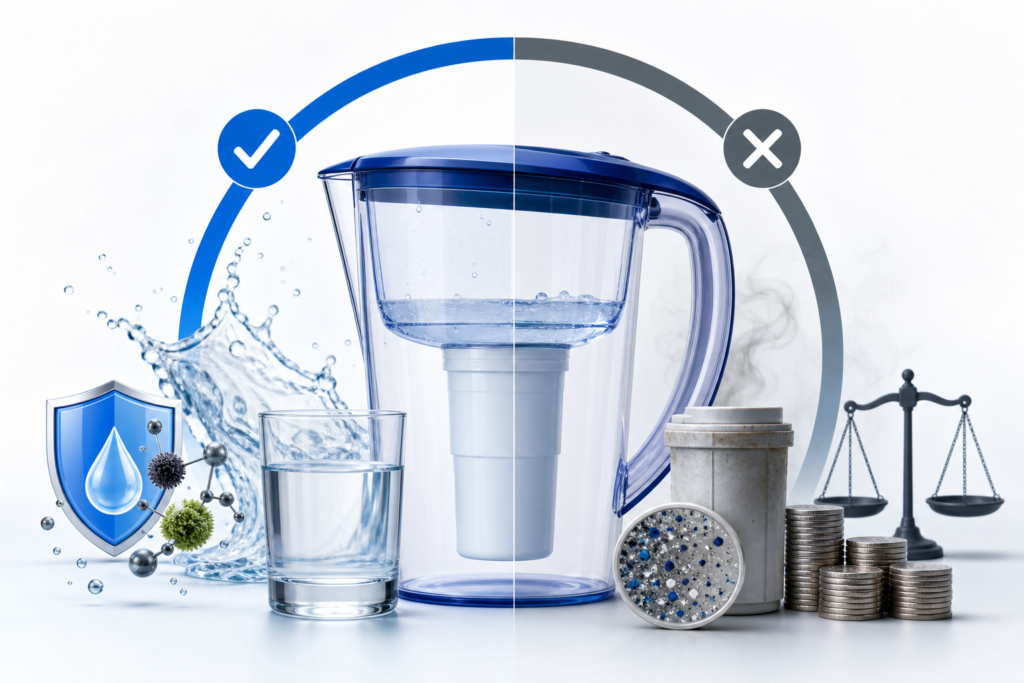
Pitcher filters use basic activated carbon, which can reduce some odors but won't touch sulfur bacteria or serious chemical contamination. Reverse osmosis systems are more thorough but come with real trade-offs: they're expensive, they produce significant wastewater, and they strip out the minerals your body actually benefits from.
Woder sits in a smarter middle ground. Advanced Selective Filtration uses nanoparticles to target contaminants specifically — removing VOCs, chlorine, and chemical residuals that cause odor and taste issues, while leaving beneficial minerals intact. It installs inline under your sink, works with your existing water line, and requires no whole-home overhaul. Built in the United States.
If you're ready to stop second-guessing your tap water, find your Woder at woder.com.
Frequently Asked Questions
Is water that smells like rotten eggs safe to drink?
It depends on the cause. Low levels of hydrogen sulfide aren't generally considered a health hazard, but sulfur bacteria in your supply can be a different story. If the smell is strong, test your water before drinking it regularly — a water test will tell you whether bacteria, sulfate, or other contaminants are present.
Why does only my hot water smell like rotten eggs?
This almost always points to the water heater. The magnesium anode rod inside the tank reacts with sulfate in the water and produces hydrogen sulfide. Replacing it with an aluminum or zinc alloy rod typically takes care of the problem.
Can a water filter remove the rotten egg smell?
Yes — if it's the right kind. Filters that target volatile organic compounds and chemical residuals can significantly reduce sulfur-related odors. Basic pitcher filters usually aren't up to the job. An inline or under-sink filter with advanced filtration media is a more effective long-term solution.
Why does my water only smell like rotten eggs sometimes?
Intermittent odor often points to bacterial growth in your pipes or water heater. Bacteria produce hydrogen sulfide as they metabolize, and the smell is strongest when water has been sitting still. Running the tap for 30 to 60 seconds before use can help confirm whether that's the pattern.
Does the smell mean something is seriously wrong with my plumbing?
Not necessarily. The smell is unpleasant, but it often has a straightforward cause — an aging anode rod, sulfur-containing groundwater, or localized bacterial growth. That said, if the smell is strong, persistent, and coming from every tap, a water test and a professional consultation are worth it to rule out a well or pipe issue.
Will the smell go away on its own?
Unlikely. Hydrogen sulfide odors tied to bacteria or a corroding anode rod tend to persist — or get worse — without intervention. Diagnosing the source and addressing it directly is the only reliable path to clean, odor-free water.
How do I know if I need a whole-house filter or just an under-sink filter?
Start with a water test to understand what you're actually dealing with. If the issue is localized to your drinking water and the cause is chemical or mineral-related, an under-sink filter at the point of use is usually the most practical and cost-effective fix. Whole-home systems make more sense when the problem affects bathing, laundry, or appliances too.
That sulfur smell is annoying — but it's also a signal worth paying attention to. Once you know the source, the fix is usually straightforward. And once clean, filtered water is flowing reliably from your tap, you stop thinking about it entirely. That's exactly where you want to be.