- First, Figure Out Where the Smell Is Coming From
- When the Smell Is Coming From Your Drain
- When the Smell Is Coming From Your Water
- What a Water Filter Can and Cannot Do Here
- A Simple Diagnostic Checklist
- When to Call a Plumber
- FAQs
You turn on the tap and something smells wrong. Not just stale or slightly off — actually foul, like rotten eggs or a backed-up drain. It's unpleasant, and it's understandably alarming.
Here's the thing: sink water that smells like sewage usually has a fixable cause. The tricky part is that there are several possible sources, and the right fix depends entirely on which one you're dealing with. Work through each cause below, figure out what's actually going on, and go from there.
First, Figure Out Where the Smell Is Coming From
Before you blame your water, do a quick test. Fill a clean glass from your tap, walk to another room, and smell it there.
- If the glass smells fine away from the sink, the odor is coming from your drain — not your water.
- If the glass still smells, the issue is in your water supply or your pipes.
That one step eliminates a lot of guesswork.
When the Smell Is Coming From Your Drain
Most of the time, a sewage smell at the kitchen or bathroom sink traces back to the drain itself. A few common culprits:
Dry P-Trap
The P-trap is the curved pipe section under your sink. It holds a small amount of water that acts as a seal, blocking sewer gases from rising up through the drain. If a sink sits unused for a while, that water evaporates and the seal breaks.
Fix: Run the water for 30 to 60 seconds to refill the trap and restore the barrier. If the smell returns quickly, you may have a slow drain leak that keeps emptying it.
Buildup Inside the Drain
Food particles, grease, soap scum, and organic matter collect inside your drain over time. Bacteria feed on that buildup and produce hydrogen sulfide gas — which smells exactly like rotten eggs or sewage.
Fix: Pour boiling water down the drain, follow it with a baking soda and white vinegar mixture, let it sit for 15 to 20 minutes, then flush with hot water. For stubborn buildup, a drain brush or enzyme-based cleaner works better than harsh chemical products.
Blocked or Slow Vent Pipe
Your plumbing system has vent pipes that release sewer gases safely outside your home. If a vent gets blocked by debris, a bird nest, or ice in cold climates, those gases get pushed back down into your drains instead.
Fix: This one usually needs a plumber. You can check your roof vent for visible blockages, but clearing a clogged vent stack isn't a typical DIY job.
Wax Ring or Toilet Seal (Bathroom Sinks)
If the sewage smell is near a bathroom toilet, a failing wax ring on the toilet base can let sewer gas escape into the room and drift toward the sink drain. Check whether the toilet rocks slightly when you sit on it — that's a sign the seal has failed.
When the Smell Is Coming From Your Water
If your filled glass still smells in another room, the problem is in the water itself. Less common, but worth taking seriously.
Hydrogen Sulfide in Well Water
If your home uses a private well, naturally occurring hydrogen sulfide in the groundwater is a frequent cause of that rotten egg smell. Sulfur-reducing bacteria in the well or water heater can also produce it.
Fix: Have your well water tested. Treatment options range from aeration systems to activated carbon filtration, depending on concentration levels.
Municipal Water Issues
City water can occasionally carry an odor after heavy rain events, seasonal algae blooms in source reservoirs, or temporary shifts in treatment chemistry. These events are usually short-lived, and your water utility should notify you when they occur.
Fix: Run your cold tap for a few minutes to flush standing water from your pipes. If the smell lingers beyond a day or two, contact your utility and request a water quality report.
Old or Corroding Pipes
In older homes, deteriorating pipes — especially galvanized steel — can introduce metallic or sulfur-like odors as water passes through. The smell is often strongest first thing in the morning, when water has been sitting in the pipes overnight.
Fix: Let the tap run for a minute before using it. If the smell is consistent and strong, pipe replacement is the long-term answer. A quality inline filter can reduce odor and contaminants in the meantime.
What a Water Filter Can and Cannot Do Here
A good under-sink filter handles a specific set of problems well. If your water carries chlorine odors, certain VOCs, or low-level hydrogen sulfide, filtration can make a real difference in taste and smell.
What filtration won't fix: a dry P-trap, drain buildup, a blocked vent pipe, or a failing toilet seal. Those are plumbing issues, not water quality issues.
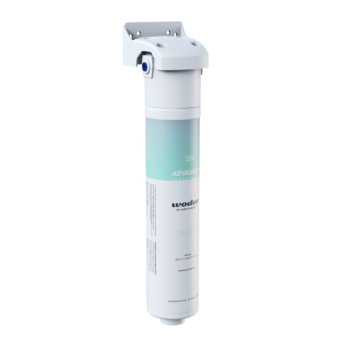
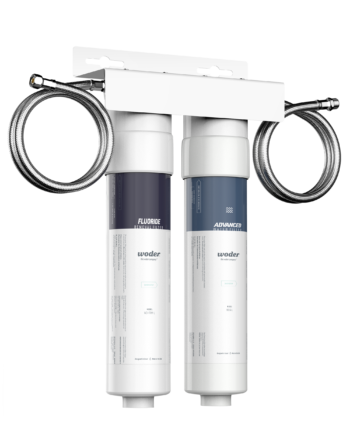
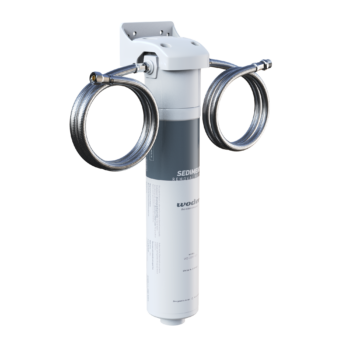
If the water itself is the source of the smell, that's where a filter earns its place. Woder's Advanced Selective Filtration technology removes 99.9% of contaminants — including chlorine, VOCs, and other compounds that affect taste and odor — while keeping naturally occurring minerals like calcium and magnesium intact. It installs directly into your existing water line, no plumber needed.
That matters because some odor issues are really contaminant issues in disguise. Chlorine treatment byproducts, for example, can produce off smells that a pitcher filter won't fully address. An inline filter targeting a broader range of compounds does a more complete job.
A Simple Diagnostic Checklist
Work through this in order before calling anyone:
- Fill a glass, walk away from the sink, and smell it
- If the glass smells fine, clean the drain and check the P-trap
- If the glass smells, run the tap for a minute and test again
- If the smell persists in the water, check whether you're on well water or city supply
- For well water, get it tested
- For city water, check your utility's recent water quality reports
- If the smell is intermittent and tied to specific times of day, suspect pipe corrosion or water heater bacteria
When to Call a Plumber
Some situations go beyond DIY:
- The smell is strong, constant, and coming from multiple drains
- You notice it throughout the house, not just at one sink
- Your toilet rocks or you see moisture around its base
- You suspect a blocked vent pipe
- Your pipes are old and the smell is getting worse over time
Persistent sewer gas isn't just unpleasant — hydrogen sulfide at high concentrations is a genuine health concern. If you can't identify and fix the source yourself, get a professional involved.
FAQs
Why does my sink water smell like sewage only in the morning?
Water sitting in your pipes overnight picks up more minerals and compounds from the pipe walls. A morning smell that clears after running the tap for a minute usually points to pipe corrosion or water heater bacteria, not a problem with your main supply.
Can a water filter fix a sewage smell in my water?
It depends on the cause. If the smell comes from chlorine byproducts, VOCs, or certain dissolved compounds, a quality inline or under-sink filter can significantly reduce or eliminate it. If it's from a dry P-trap or drain buildup, a filter won't help — that's a plumbing issue, not a water quality issue.
Is it safe to drink water that smells like sewage?
Not without knowing the cause first. A faint, temporary odor after a municipal treatment event is usually low-risk. A persistent sulfur or sewage smell warrants testing before you drink it, especially on well water.
What causes the rotten egg smell specifically?
Hydrogen sulfide gas. It forms when sulfur-reducing bacteria break down organic matter in your drain, water heater, or well. It's the same compound that gives rotten eggs their smell — and even at low concentrations, the odor is hard to miss.
How do I clean a smelly drain without harsh chemicals?
Start with boiling water, then add half a cup of baking soda followed by half a cup of white vinegar. Cover the drain for 15 minutes, then flush with hot water. Repeat weekly for maintenance. Enzyme-based drain cleaners also work well for ongoing buildup.
Could my water heater be causing the smell?
Yes. Sulfur-reducing bacteria can grow inside water heaters, especially when the temperature is set below 140°F. If the smell only shows up in your hot water, the heater is the likely source. Flushing the tank and raising the temperature setting often clears it up.
How do I know if my water quality is the actual problem?
Test it. Woder offers water testing kits, and your local utility publishes annual water quality reports. If you're on well water, an independent lab test gives you the clearest picture of what's actually in your supply.
A sewage smell at your sink is fixable. Start with the drain, rule out the easy causes, and if the water itself is the problem, treat it at the source. For cleaner, better-tasting water as a baseline going forward, the Woder product Wizard at woder.com/wizard can match you with the right filter for your home in just a few steps. It's your water — it should smell like nothing at all.