- What TDS Actually Means
- What TDS Does Not Tell You
- What TDS Does Tell You
- The Ranges You'll See Referenced
- Why RO Systems Score Well on TDS (And Why That's Not the Whole Story)
- What Actually Matters More Than TDS
- How Selective Filtration Handles This Differently
- Should You Care About TDS in 2026?
- Frequently Asked Questions
You buy a TDS meter, dip it in your tap water, and get a reading of 280 ppm. Is that bad? Should you be worried? Should you go buy a filter right now?
Here's the honest answer: TDS tells you something, just not what most people assume. Understanding what that number actually means — and what it can't tell you — can save you from making the wrong call about your water.
What TDS Actually Means
TDS stands for Total Dissolved Solids. It measures the combined concentration of everything dissolved in your water — minerals, salts, metals, and other particles small enough to pass through a standard filter.
The reading comes out in milligrams per liter (mg/L) or parts per million (ppm). For water, those two units mean the same thing. So when you see "TDS vs ppm" debated online, there's no real conflict — ppm is simply the unit you use to express a TDS reading.
A TDS of 200 ppm means 200 milligrams of dissolved material per liter of water. That's the whole definition.
What TDS Does Not Tell You
This is the part that actually matters.
TDS gives you a total count, not a breakdown. It cannot tell you what is dissolved in your water. A glass with 300 ppm from calcium and magnesium is a completely different situation from a glass with 300 ppm that includes lead or PFAS. The meter has no way to distinguish between them.
That's the core limitation. A low TDS reading does not mean your water is safe. A high reading does not mean it's dangerous. Two water samples can show identical numbers while containing entirely different substances.
This matters because some of the most serious drinking water contaminants — lead, PFAS, chromium 6, volatile organic compounds — can be present at harmful concentrations without meaningfully moving your TDS number. You'd never know from the meter alone.
What TDS Does Tell You
That said, TDS is still useful in specific situations.
It gives you a rough sense of your water's mineral content. Higher TDS often points to harder water with more calcium and magnesium, which affects taste and scale buildup on appliances. Very low TDS water can taste flat because those minerals are largely absent.
It also works as a quick consistency check. If your TDS reading jumps significantly without explanation, something in your water supply or plumbing may have changed — and that's worth looking into.
For reverse osmosis systems, TDS is commonly used to track membrane performance. When a membrane starts to fail, TDS climbs back up. In that specific context, it's a practical monitoring tool.
The Ranges You’ll See Referenced
Most guidance puts acceptable drinking water TDS somewhere below 500 ppm, with many municipal supplies falling between 50 and 300 ppm. Water above 1,000 ppm often tastes noticeably salty or heavy with minerals.
But those ranges describe taste and mineral load — not safety from contaminants. Your tap water could sit at a perfectly normal 150 ppm and still contain lead from aging pipes, chlorine byproducts, or PFAS from nearby industrial sources. None of those would push your TDS reading anywhere near alarm territory.
Why RO Systems Score Well on TDS (And Why That’s Not the Whole Story)
Reverse osmosis systems produce very low TDS water, often under 20 ppm. That sounds impressive, and it's a big reason people associate low TDS with clean water.
The problem is that RO strips out beneficial minerals right alongside the contaminants. Calcium and magnesium — things your body actually uses — get removed along with the lead and chlorine. What you're left with is very pure water that's also mineral-depleted. RO systems also produce wastewater, require a storage tank, and typically need professional installation.
A near-zero TDS score from an RO system isn't inaccurate. But it conflates "clean" with "empty."
What Actually Matters More Than TDS
If your goal is genuinely clean, healthy drinking water, the questions worth asking are:
- What specific contaminants are present in my water?
- Does my filter actually remove those contaminants?
- Does it preserve the minerals I want to keep?
Your local water utility publishes an annual Consumer Confidence Report (CCR) listing detected contaminants and their levels. That document tells you far more than any TDS meter will. A home water testing kit can fill in the gaps — especially for contaminants that enter your water through your pipes rather than the source supply.
Once you know what you're dealing with, you can choose filtration that targets the right things.
How Selective Filtration Handles This Differently
This is where Woder's approach becomes relevant.
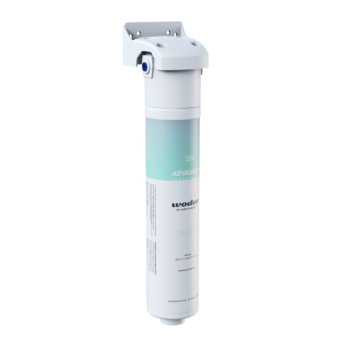
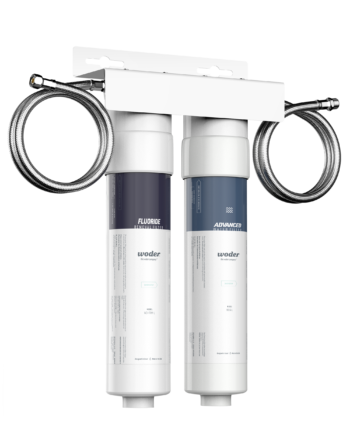
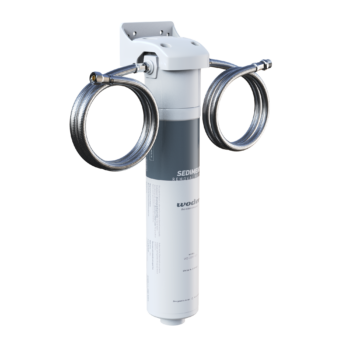
Woder's Advanced Selective Filtration technology uses nanoparticles to attract and remove specific contaminants — lead, chlorine, chromium 6, mercury, PFAS, carcinogens, and volatile organic compounds — while leaving calcium, magnesium, and other naturally occurring minerals intact. It removes 99.9% of those contaminants without stripping your water bare.
The result is water that will likely show a moderate TDS reading, not near-zero like RO output. That's intentional. The minerals that remain are the ones you want. The contaminants are gone.
Woder sits between a basic pitcher filter — which handles taste but not serious contaminants — and a full reverse osmosis system, which removes everything including the good stuff. It's a practical middle ground for homeowners who want real protection without a major installation project or a system that wastes water in the process.
Every Woder filter installs directly into your existing water line. No plumber. No tank. No whole-home overhaul.
Should You Care About TDS in 2026?
Yes — but keep it in context.
TDS is a useful starting point, not a verdict. It can flag changes in your water and give you a rough sense of mineral content. What it cannot do is tell you whether your water is actually safe to drink.
The more important habit is knowing your local water quality, understanding which contaminants are present, and choosing filtration that targets those specifically. A TDS meter is one tool. It's not the complete picture.
If you want to understand what's actually in your water before choosing a filter, Woder's site at woder.com includes a water testing tool and an interactive Wizard that matches you to the right filter for your household and flow rate.
Your water deserves more than a single number.
Frequently Asked Questions
What is TDS in water?
TDS stands for Total Dissolved Solids. It measures the total concentration of all dissolved substances in water, expressed in milligrams per liter (mg/L) or parts per million (ppm) — including minerals, salts, metals, and other dissolved particles.
Is TDS the same as ppm?
For water measurement purposes, yes. Parts per million (ppm) is the unit used to express a TDS reading. A TDS of 150 means 150 ppm of dissolved material per liter of water. The two terms describe the same thing.
What is a safe TDS level for drinking water?
Most guidance considers TDS below 500 ppm acceptable, with many municipal supplies falling between 50 and 300 ppm. That said, TDS level alone doesn't indicate whether water is safe — dangerous contaminants like lead or PFAS can be present at harmful concentrations without significantly affecting the TDS number.
Can water have a low TDS and still be unsafe?
Yes, and this is the most important thing to understand about TDS. A low reading means less total dissolved material, but it says nothing about which specific substances are present. Lead, PFAS, and other serious contaminants can exist at harmful levels without meaningfully raising TDS.
Does a water filter lower TDS?
It depends on the filter type. Reverse osmosis systems dramatically lower TDS by removing nearly everything, including beneficial minerals. Selective filtration systems like Woder target specific contaminants while preserving minerals, so they won't produce near-zero TDS readings — but that's by design. The goal is removing harmful substances, not emptying the water entirely.
How do I find out what's actually in my tap water?
Your water utility publishes an annual Consumer Confidence Report (CCR) listing detected contaminants and their levels. A home water testing kit can give you a more specific picture of your household supply, including contaminants that may enter through your pipes rather than the source water itself.
Is TDS testing enough to decide whether I need a water filter?
No. TDS testing is a useful starting point but not sufficient on its own. Knowing the specific contaminants in your water — through a CCR or a dedicated water test — gives you much better information for choosing the right filtration approach.