Milky water from a hot tap is usually a temporary physical effect caused by dissolved air coming out of solution when heated water is depressurized at the faucet. You can often diagnose it immediately with a simple glass test, watching whether the cloudiness clears upward as the bubbles rise.
You turn on the hot faucet and the stream looks white, almost like diluted milk. The cold water beside it is clear, so the change feels alarming. In most cases, though, the tiny bubbles are scattering light, not signaling contamination. The important question is whether the appearance disappears quickly or remains after the water has rested.
That distinction helps separate harmless aeration from sediment, galvanized plumbing corrosion, or a water-heater problem. The right response starts with observation, not panic.
Table of Contents
- Understanding Why Hot Water Turns Milky
- The Definitive Glass Test for Cloudy Water
- Isolating the Source of the Cloudiness
- When Milky Water Signals Plumbing Issues
- Decision Guide for Homeowners and Repairs
- Maintaining Clear and Safe Water Quality
Understanding Why Hot Water Turns Milky
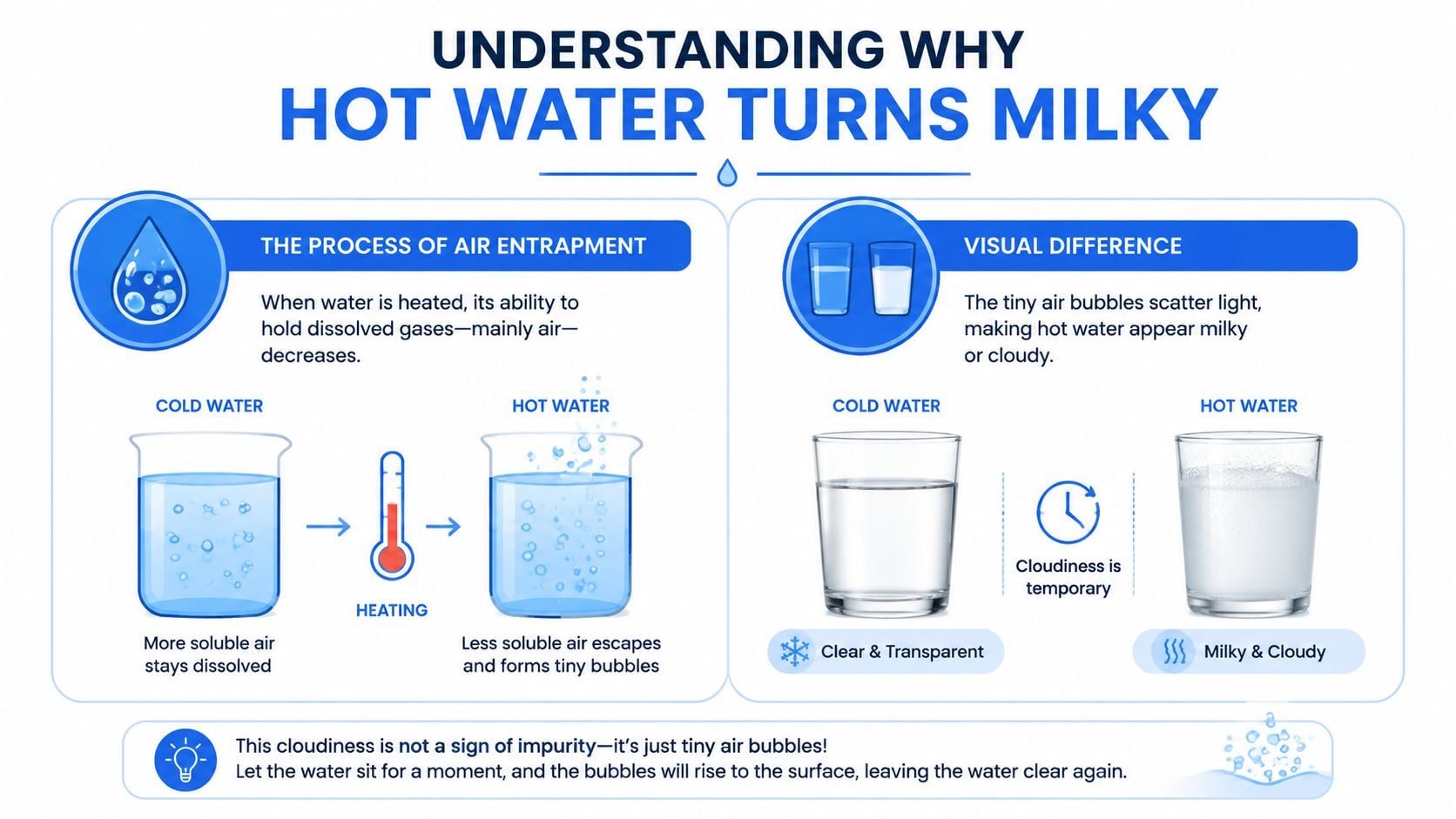
Hot water can look cloudy because heating changes how much dissolved gas the water can hold. As water warms inside a heater or boiler, dissolved air can come out of solution. When the pressurized water reaches the faucet and pressure drops, that air forms countless tiny bubbles that scatter light, creating a white or milky appearance. Guidance from A. O. Smith describes this effect as especially common when only the hot tap is affected.
The visual effect can be confusing. A glass filled from the hot faucet may look opaque at first, then gradually clear as the bubbles move upward and disappear. The water itself hasn’t necessarily changed color. Light is just bouncing off suspended bubbles, much as it does in a glass of carbonated water.
Why the hot tap matters
If the cold tap is clear and the hot tap is milky, the heating system becomes the logical starting point. The heater raises the water temperature, and the faucet creates the pressure change that releases the dissolved air. That pattern points more strongly toward the water heater or boiler than toward a problem affecting the incoming cold supply.
This doesn’t mean every hot-water-only issue is harmless. It means the symptom has a likely physical explanation that you can test without dismantling anything.
Practical rule: Clear water that loses its cloudiness as bubbles rise is behaving differently from water that leaves particles or residue behind.
Long-standing utility guidance continues to use the same basic observation. Fill a glass, let it sit, and watch the direction of clearing. This simple test gives you more useful information than the initial white appearance alone.
The Definitive Glass Test for Cloudy Water
A clear drinking glass is enough to begin. Use the hot faucet that shows the symptom, and avoid stirring or shaking the sample after filling it. Set the glass on a stable surface where you can see both the water and the sides of the glass.
Follow the bubbles
-
Fill the glass from the affected hot tap. Look at the water immediately after filling it. Note whether the cloudiness appears uniform or whether you can already see fine bubbles.
-
Leave the glass undisturbed. Don’t swirl it, pour it into another container, or place it under running water. Movement can make the observation harder to interpret.
-
Watch where clarity returns first. If the water clears from the bottom upward, the bubbles are rising through the glass. That bottom-up clearing pattern supports harmless aeration, as described in utility guidance from SA Hot Water.
-
Look for residue or visible material. Persistent cloudiness, flakes, grit, or a film on the glass suggests that particles or minerals may be involved rather than air alone.
The direction matters because bubbles rise. A sample that becomes clear from the bottom upward is showing the physical movement expected from trapped air. Cloudiness that remains evenly distributed after resting doesn’t fit that simple pattern.
What the result tells you
A bottom-up change points toward dissolved air released by temperature or pressure conditions. A sample that stays cloudy deserves closer attention, especially if the water leaves residue, contains flakes, or has an unusual taste or odor. The Colorado Springs Utilities water discoloration guidance notes that white or milky water that doesn’t settle can involve zinc or other minerals, galvanized plumbing, or a water-heater or service issue.
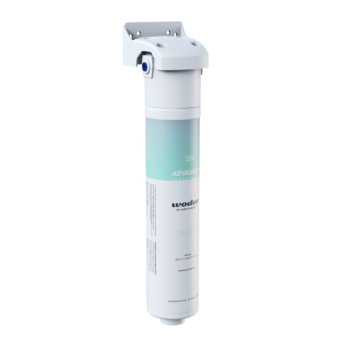
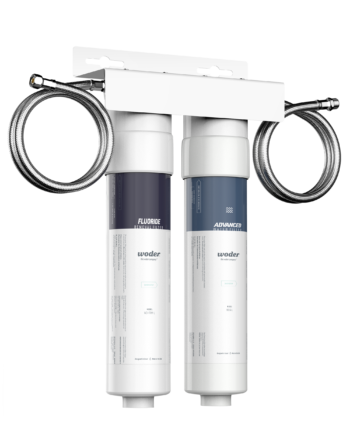
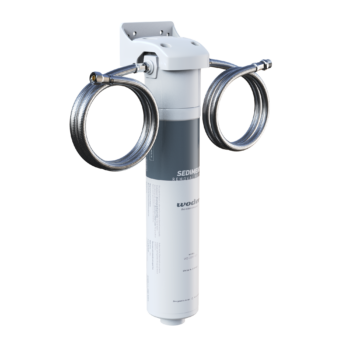
The test doesn’t identify every possible cause, and it isn’t a laboratory analysis. It does give you a practical first division between bubbles and suspended material. If you need separate contaminant treatment after diagnosing the appearance, the Woder WD-G4-DC Lead, Chlorine, HM and PFAS Water Filter uses selective filtration while retaining essential minerals. Its WD-G4-REP filters are certified by WQA to NSF/ANSI 42 for chlorine taste and odor and NSF/ANSI 372 for lead-free compliance, as substantiated by test data.
Isolating the Source of the Cloudiness
The next clue is location. Test the hot water at more than one faucet, then compare it with cold water from those same fixtures. A single affected faucet suggests a local fixture, aerator, or branch-pipe issue. Cloudiness at every hot faucet points farther upstream, toward the water heater or boiler.
Utility guidance from Severn Trent Water makes a useful distinction. Hot-only cloudiness is usually associated with the heating system, while cloudiness in both hot and cold water can reflect trapped air in the supply after a pressure change or main break.
Cloudiness source indicators
| Symptom | Likely source | Action |
|---|---|---|
| Only hot water looks milky, and the glass clears upward | Water heater, boiler, or heat-related air release | Monitor the pattern and inspect the heater if it persists |
| Hot and cold water both look cloudy | Supply-side trapped air after a pressure change or main work | Check utility notices and compare with nearby homes |
| One faucet is affected while other hot taps are clear | Local aerator, fixture, or branch connection | Clean or inspect that fixture |
| Water stays cloudy and leaves flakes or residue | Minerals, galvanized plumbing, or heater-related material | Arrange a plumbing or water-heater inspection |
Timing adds another layer. A new symptom after a pressure change, main repair, fire-hydrant use, or work on clean or newly installed pipework can reflect air entering or moving through the distribution network. If neighbors report the same appearance, the source is more likely outside your home.
For a municipal supply, your utility’s water-quality information can provide context, but it won’t necessarily identify a problem inside your house. Reviewing how to read a water quality report can help you understand what the utility tests and where household plumbing conditions fall outside that report.
If only your hot taps are affected and the glass test shows bottom-up clearing, observation may be reasonable. If the symptom is persistent, localized, or accompanied by material in the water, the pattern calls for inspection rather than repeated guessing.
When Milky Water Signals Plumbing Issues
The phrase “it’s just air” becomes misleading when homeowners use it to dismiss water that never clears. Air bubbles are a common explanation for temporary milky water, but persistent cloudiness can point to material coming from the plumbing or heating system.
Galvanized steel plumbing deserves particular attention in older homes. Corrosion can affect the zinc coating and release zinc or other minerals into the water. The result may look white or milky, but unlike aeration, it can remain cloudy in a glass or leave a deposit after the water sits. That difference is why the glass test should include an inspection for residue, flakes, or sediment, not just a quick glance at the initial color.
Signs that the heater or pipes need attention
A water-heater issue can produce more than a change in appearance. Look for a combination of persistent cloudiness, sediment, flakes, unusual taste, or a visible leak around the tank and connections. A deteriorating anode component may also alter the chemistry inside the tank and contribute to material or sediment, but the visible symptom alone can’t confirm anode failure.
Don’t open a pressurized tank or remove heater components as a first response. A qualified plumber can inspect the tank, connections, anode condition, temperature controls, and discharge piping. If you also see water collecting around the unit, use this water heater leak repair guide to understand why the location and type of leak matter before arranging service.
Mineral deposits can create confusion because they may appear as white scale on fixtures rather than suspended cloudiness in the glass. Cleaning a faucet or showerhead won’t correct a source inside the heater or old pipework, but this guide to cleaning calcium deposits can help distinguish surface scale from a water-quality symptom.
Persistent cloudiness, flakes, or sediment deserves follow-up even when the water is hot-only.
The practical dividing line is behavior. Bubbles rise and the water clears upward. Particles settle, float, cling to the glass, or leave residue. When the sample behaves like the second group, treat it as a plumbing or water-quality question that needs investigation.
Decision Guide for Homeowners and Repairs
Start with the least invasive explanation, then escalate based on what you observe. A short-lived, hot-only appearance that clears from the bottom upward is consistent with aeration. You can monitor it, check whether a recent pressure change or utility work preceded it, and compare several faucets.
A different response fits water that remains cloudy. Persistent cloudiness, flakes, sediment, residue, or an unusual taste or odor warrants contact with a plumber, water heater technician, or water utility, depending on whether the issue affects one fixture, all hot taps, or both hot and cold supplies.
Choose the next step by symptom
- Temporary bubbles: Repeat the glass test at another hot faucet and record whether the same clearing pattern occurs. Avoid treating clear, air-related cloudiness as proof that you need a filter.
- Sediment or residue: Save a clean sample or photograph the material, then request an inspection. The pleated sediment water filter guide can help you understand the role of sediment filtration, but a filter shouldn’t replace finding the source.
- Hot and cold water affected: Contact the utility if the condition appears throughout the home or in the neighborhood, particularly after supply work or pressure changes.
- Leak or heater symptoms: Arrange professional service promptly. Water around the heater, worsening sediment, or repeated changes in taste and appearance point beyond a simple air release.
Renters should document the appearance, location, and glass-test result and notify property management when the issue continues. Homeowners with private wells should involve a qualified water professional when cloudiness suggests a pump, casing, or plumbing problem, because the glass test can’t establish microbiological safety.
The aim is proportional action. Don’t ignore persistent material, but don’t pay for emergency work solely because hot water looks white for a moment and then clears.
Maintaining Clear and Safe Water Quality
Milky water from a hot tap is a useful reminder that appearance and water quality aren’t the same thing. The glass test can identify likely aeration, while persistent residue or sediment calls for plumbing and heater attention. For broader household planning, homeowners comparing point-of-use and whole-home approaches may find this overview of whole house water filtration in Louisville useful.
Woder Filters offers U.S.-made point-of-use systems built around Advanced Selective Filtration®, designed to reduce targeted contaminants while retaining essential minerals. Visit Woder Filters to review filtration options and choose a system based on your household’s water-quality needs, not on cloudiness alone.