- Why Anyone Would Filter Bathroom Sink Water
- When It Makes Sense to Filter the Bathroom Sink
- When It Probably Isn't Worth It
- What to Look for in a Bathroom Sink Filter
- Which Woder Models Work for a Bathroom Sink
- Installation Considerations for the Bathroom Sink
- Bathroom Sink Filter vs. Kitchen Sink Filter: Do You Need Both?
- Frequently Asked Questions
Most people think about water filtration in the kitchen. That makes sense — it's where you fill a glass, cook pasta, and rinse produce. The bathroom sink gets overlooked.
But if you brush your teeth with tap water, rinse your mouth after flossing, or wash your face every morning, you're using that bathroom tap twice a day without thinking much about what's in it. Whether filtering it is worth the effort comes down to a few honest, practical questions.
Why Anyone Would Filter Bathroom Sink Water
Your bathroom tap draws from the same municipal supply line as your kitchen. Same source, same treatment, same potential contaminants. Lead from aging pipes, chlorine added during treatment, PFAS compounds, volatile organic compounds — none of that stops at the kitchen faucet.
The difference is how you use the water. You're probably not filling a glass from the bathroom sink every morning, but you are exposing your mouth and skin to whatever's in that water every single day. Chlorine is a known skin irritant and can dry out hair and skin with repeated exposure. Lead exposure through brushing and rinsing accumulates over time, especially in children.
If your home has older plumbing or your municipal water report flags elevated lead or PFAS levels, the bathroom sink isn't a low-risk tap just because you're not drinking from it directly.
When It Makes Sense to Filter the Bathroom Sink
You don't need a filter on every tap in your home. But the bathroom sink earns one in a few specific situations.
You have young children. Kids brush their teeth multiple times a day and swallow some water every time. Lead and PFAS exposure carries real developmental risk, and the bathroom sink is a daily contact point that's easy to overlook.
Your home has older pipes. Homes built before 1986 often have lead solder in the plumbing. Water that sits in those pipes overnight picks up lead before it reaches the faucet — and the bathroom tap, which typically runs first thing in the morning after hours of sitting, can carry higher concentrations than you'd expect.
Your water report flags contaminants. Your municipality's annual water quality report applies to every tap in your home, not just the kitchen. Elevated lead, chlorine byproducts, or PFAS in that report means the bathroom sink is affected too.
Someone in your household has sensitive skin. Chlorine in tap water can aggravate eczema, dry skin, and scalp conditions. Filtering the bathroom tap reduces that daily exposure in a way that adds up over weeks and months.
When It Probably Isn’t Worth It
If your home has newer plumbing, your local water report is clean, and no one in your household has health conditions that make contaminant exposure a particular concern, a bathroom sink filter is optional. Your kitchen filter already handles the water you're drinking and cooking with, which is the majority of your daily ingestion.
That said, installation is simple enough that the barrier to adding one is genuinely low.
What to Look for in a Bathroom Sink Filter
A few things matter specifically for bathroom installation.
Compact form factor. Bathroom sink cabinets are smaller than kitchen ones. You want an inline filter that fits in a tight space without requiring a pressurized tank or a drain line.
No wastewater output. Reverse osmosis systems produce wastewater that needs a drain connection. Bathroom cabinets typically don't have the same drain access as kitchen setups, which makes RO impractical here.
Contaminant removal that matches your concern. Lead and chlorine are the most relevant for bathroom use. PFAS removal is worth having if your area has documented contamination.
Mineral retention. If you're filtering bathroom water partly for skin and hair reasons, you want to keep calcium and magnesium in the water. Demineralized water has a different pH profile and can actually be more aggressive on skin than mineral-balanced water.
Which Woder Models Work for a Bathroom Sink
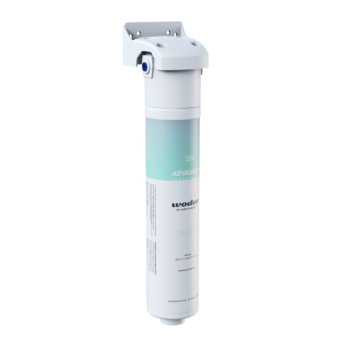
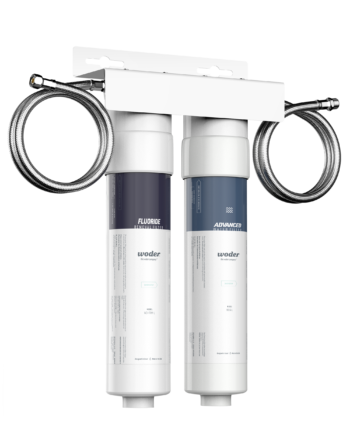
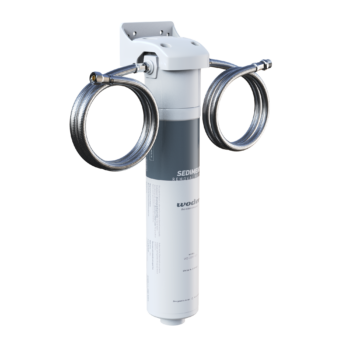
Woder makes inline under-sink filters that connect directly to an existing water line — no tank, no drain line, no wastewater output. That design fits bathroom sink installation well.
The filters use Advanced Selective Filtration technology, which removes 99.9% of lead, chlorine, chromium 6, mercury, PFAS, carcinogens, and volatile organic compounds while keeping calcium and magnesium in the water. That mineral-preserving design matters for bathroom use, where you want clean water without stripping the minerals that support skin and hair health.
WD-10K-ADV-PORT
This portable inline model is a practical choice for bathroom installation. It connects inline to the supply line, requires no dedicated faucet, and fits comfortably in compact under-sink spaces. With a 10,000-gallon capacity, most households replace it once a year or less.
WD-G4-210-JG
This model uses standard John Guest push-fit fittings, which simplifies installation in tight spaces. If your bathroom sink cabinet doesn't leave much room to maneuver, this is a good option.
WD-S-5K-REP
Already have a Woder filter housing installed elsewhere? The replacement cartridge line makes it easy to extend consistent filtration to the bathroom without buying a whole new setup.
All Woder filters are manufactured in the United States. Installation takes under 30 minutes and requires no plumber.
Not sure which model fits your bathroom setup? The Wizard tool on the Woder site walks you through your household's flow rate and space constraints to match you with the right filter.
Installation Considerations for the Bathroom Sink
Bathroom under-sink plumbing is slightly different from kitchen setups. A few things worth checking before you buy:
- Supply line size. Most bathroom sink supply lines use 3/8-inch compression fittings. Confirm your fitting size before ordering.
- Cabinet depth. Measure the depth of your under-sink cabinet. Inline filters are compact, but clearance is worth confirming.
- Hot vs. cold line. Connect the filter to the cold water supply line only. Filtration media is designed for cold water; hot water shortens cartridge life.
- No drain line needed. Woder filters require no drain connection, which removes the biggest installation obstacle in bathroom setups.
Bathroom Sink Filter vs. Kitchen Sink Filter: Do You Need Both?
You don't have to choose between them. A kitchen filter handles your drinking and cooking water. A bathroom filter handles daily oral and skin exposure. The two serve different use cases and can run independently.
If budget is a factor, prioritize the kitchen sink first — that's where your highest-volume water ingestion happens. Add the bathroom filter if you have young children, older plumbing, or documented contaminant concerns in your area.
Replacement cartridges for a Woder filter run roughly $40 to $80 per year, which makes running two filters a manageable expense compared to bottled water or a full reverse osmosis system.
Frequently Asked Questions
Is it safe to brush your teeth with unfiltered tap water?
For most households on municipal water, unfiltered tap water meets safety standards for brushing. But homes with older lead pipes, areas with documented PFAS contamination, or households with young children face higher risk from daily oral exposure. A bathroom sink filter reduces that exposure without changing anything about your routine.
Can I install an under-sink filter on a bathroom sink myself?
Yes. Inline under-sink filters like those from Woder connect directly to your existing cold water supply line using standard compression fittings. Most installations take under 30 minutes and don't require a plumber or special tools.
Does a bathroom sink filter need a drain connection?
Not if you use an inline filter. Reverse osmosis systems require a drain line for wastewater, which makes them difficult to install in bathroom cabinets. Inline filters like Woder's produce no wastewater and need no drain connection.
Will filtering bathroom water help with dry skin or hair?
Chlorine in tap water is a known skin and scalp irritant, and removing it can reduce dryness with repeated exposure. Woder's selective filtration removes chlorine while keeping calcium and magnesium in the water, preserving the mineral balance that supports skin and hair health.
How often do I need to replace the filter cartridge in a bathroom sink filter?
It depends on your household's water usage and the filter's rated capacity. Woder filters are rated for thousands of gallons, which typically works out to one replacement per year for most bathroom sink applications. Replacement cartridges are available directly from Woder.
Does a bathroom sink filter remove PFAS?
Woder filters remove PFAS at a 99.9% rate using Advanced Selective Filtration technology. If your area has documented PFAS contamination, a filter on the bathroom sink provides meaningful protection for daily oral and skin exposure.
Is it worth filtering both the kitchen and bathroom sink?
If you have young children, older plumbing, or a water quality report that flags contaminants, filtering both makes sense. The kitchen sink covers drinking and cooking water. The bathroom sink covers daily brushing, rinsing, and skin exposure. Both are regular contact points, and the annual cost of maintaining two inline filters is far lower than bottled water or a whole-home system.
Filtering the bathroom sink isn't overkill. For households with real contaminant concerns, it's the logical next step after the kitchen. Installation is simple, ongoing cost is low, and the daily exposure reduction is real. If you're ready to find the right model for your setup, Woder's product finder can match you to the right filter in a few minutes.