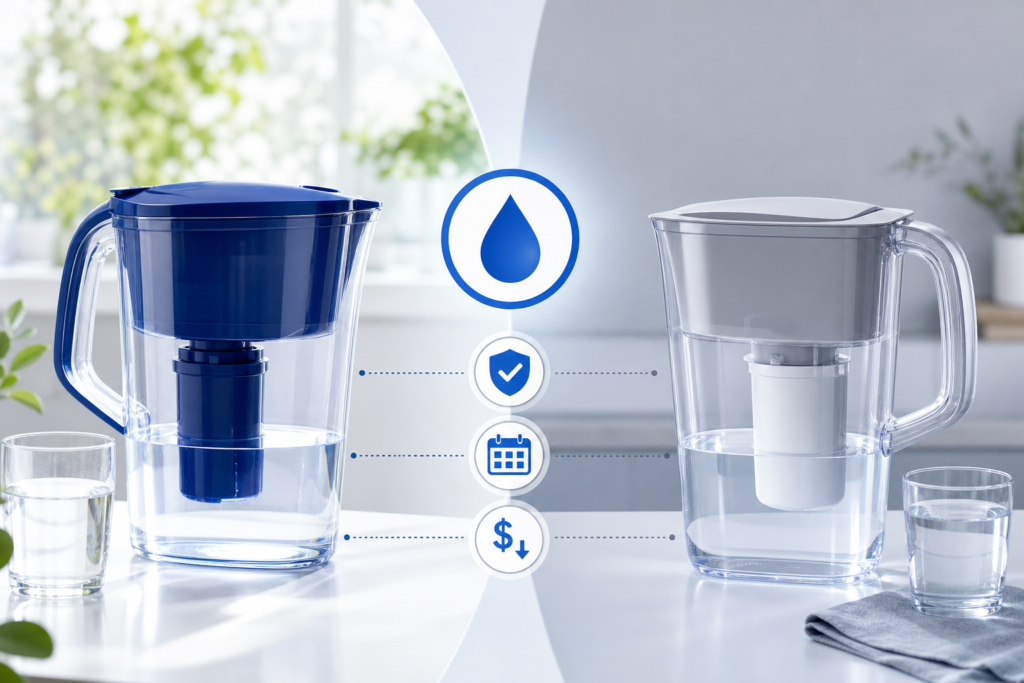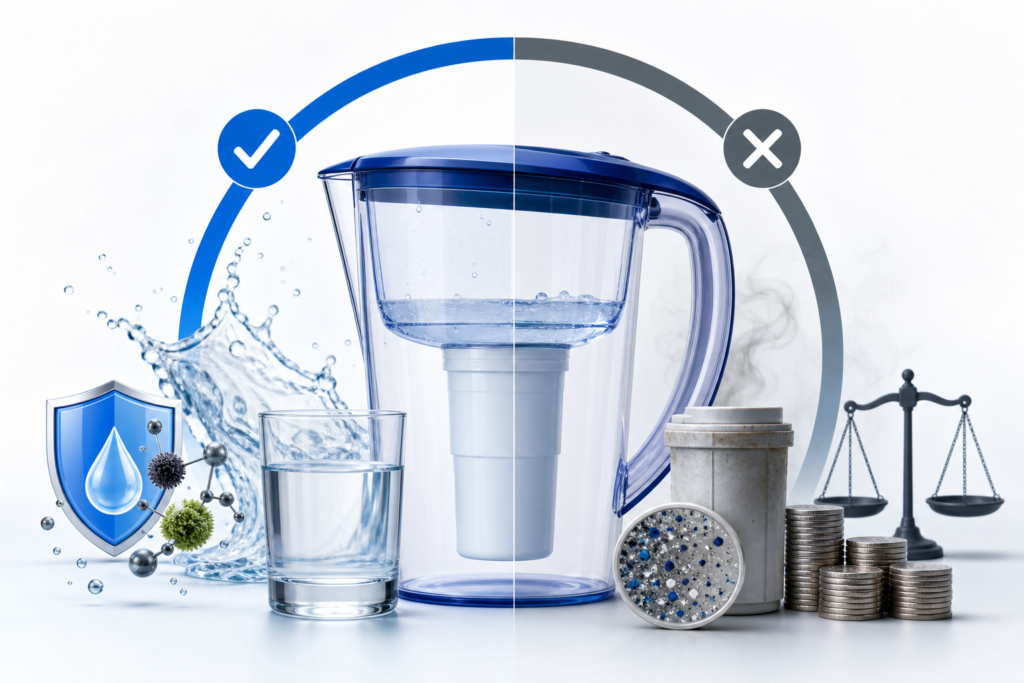
You set a reminder for “six months,” forgot about it, and then noticed the water pressure dropping before the calendar app ever buzzed. That's how you might find yourself facing a water filter replacement schedule. The part that's easy to miss is that the date on the calendar is only one piece of the decision, because the cartridge, the amount of water you use, and the quality of the water coming in all change how long a filter really lasts.
A filter can look fine and still be past its useful life. Carbon media can be saturated before the flow fully stops, sediment can pack into a cartridge until pressure falls, and reverse osmosis stages can age on different timelines even when they live inside the same housing. A good schedule doesn't guess. It gives you a way to decide when a cartridge is still doing its job and when it's just sitting there.
Table of Contents
- Why Replacement Timing Is Not Just a Date on the Calendar
- How Replacement Schedules Actually Work
- Recommended Replacement Windows by Filter Type
- Reverse Osmosis Systems and Their Multi-Stage Schedule
- Factors That Shorten or Lengthen the Schedule
- Signs a Cartridge Needs Replacing Sooner
- When Source-Water Changes Should Reset the Schedule
- The Real Annual Cost of Staying on Schedule
- Building a Replacement Routine You Will Actually Follow
- What Filter Ratings and Certifications Actually Guarantee
- What Happens When You Wait Too Long
- Your Three-Rule Replacement Reference
Why Replacement Timing Is Not Just a Date on the Calendar
A homeowner sets a phone reminder for six months, changes the cartridge right on time, and later realizes the old one still had plenty of life left. Another household does the opposite, lets the reminder slide, and keeps running a filter that's already packed with sediment. Both households are looking at the same problem from the wrong angle, because replacement is never just about the date. It's about filter type, household load, and source-water conditions.
The calendar is only one input
A point-of-use cartridge doesn't age in a straight line. It loads faster when the water carries more particles, when chlorine demand is higher, or when a family uses a lot of water every day. That's why a cartridge can still be inside its nominal service window and yet already be underperforming. In practical terms, the schedule starts with the manufacturer's date, then gets adjusted by how hard the filter is working.
Practical rule: if your water use changed or your water source changed, the old reminder may no longer fit.
That's also why “nothing looks wrong” can be misleading. A filter often loses performance before it stops flowing altogether, and the decline is usually quiet. Flow may thin out, taste may start to creep back, and the cartridge can be doing less work than it did on installation day.
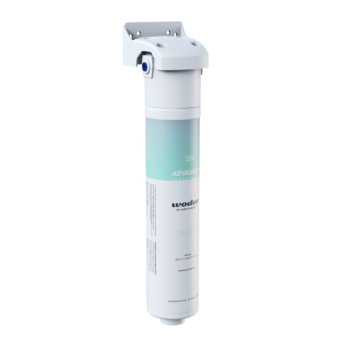
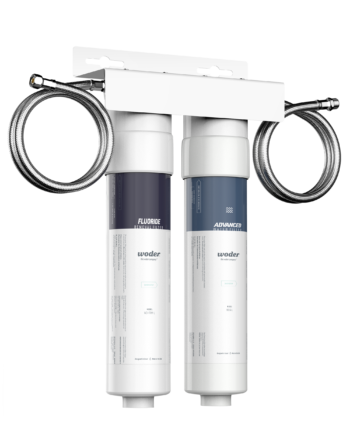
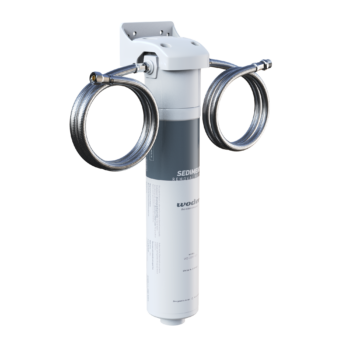
For readers comparing system designs, that's one reason Woder's Woder Sediment Removal and Advanced Dual Filtration System is framed around a sediment stage plus a second-stage cartridge, because each part does different work and won't age the same way. The important part isn't the product name, it's the maintenance logic behind it.
How Replacement Schedules Actually Work
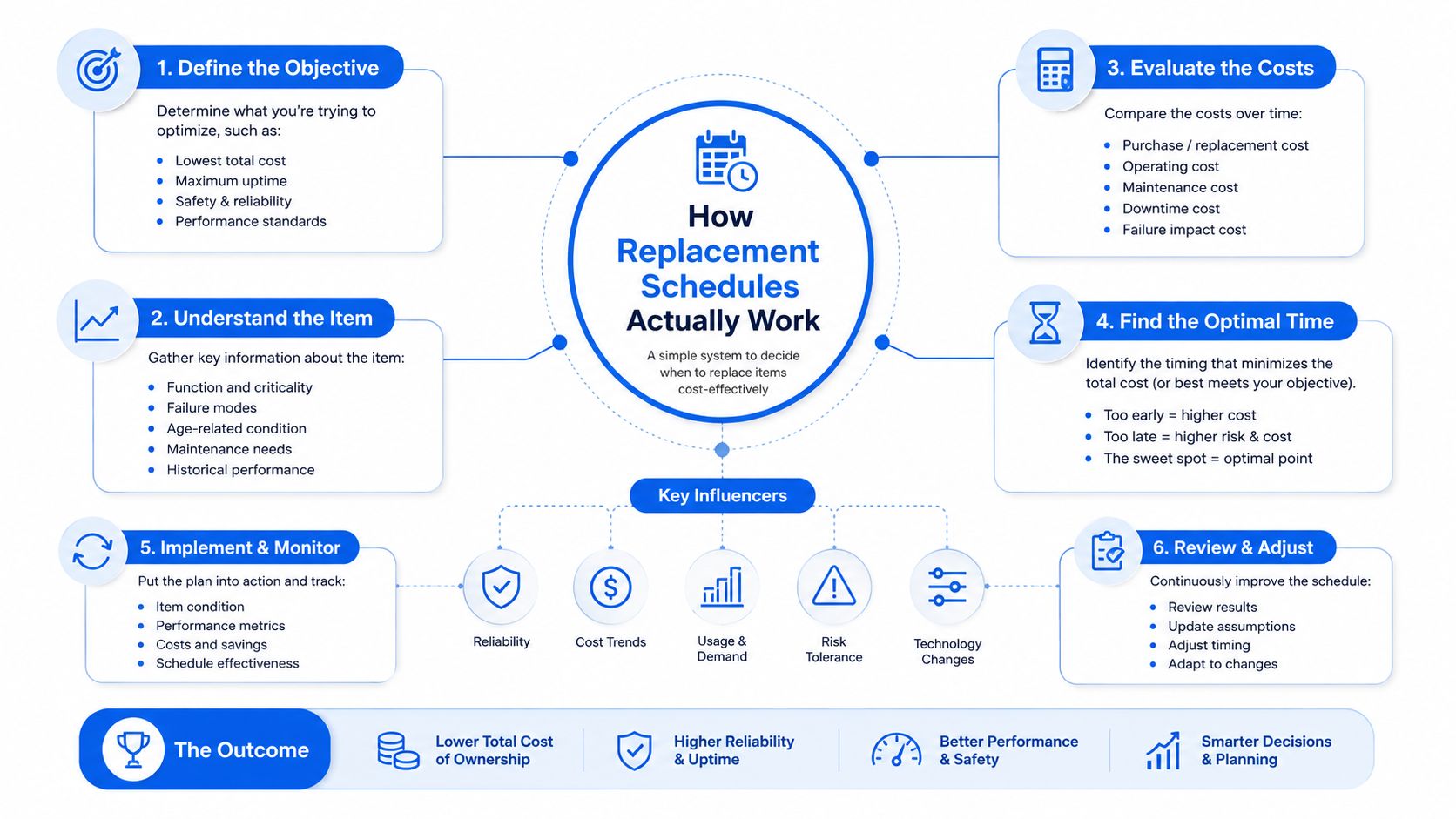
Every sensible water filter replacement schedule uses two clocks at once. One clock is time, because media and membranes lose capacity even when water quality is decent. The other clock is volume, because each cartridge is built to treat a certain amount of water before performance starts to drift. The trick is not choosing one clock, it's respecting both.
Time and capacity work together
If a cartridge is rated for a certain service life, that number is the ceiling, not a suggestion to go past it. If it's also rated for a gallon capacity, that capacity should override the calendar when heavy use gets there first. A low-use household might hit the date limit before it reaches the gallon limit. A busy home can do the reverse and wear through the rated volume early.
The easiest way to think about it is this, a cartridge lasts until the first hard limit shows up. That can be elapsed time, gallons treated, or a condition sign like pressure loss or taste return. When all three agree, the decision is simple. When they don't, the earliest warning wins.
If you want to see how cartridge stages fit into a broader system, Woder's guide on how water filters work is a useful companion. The core idea is simple, the filter's job is finite, so the maintenance plan has to be finite too.
Recommended Replacement Windows by Filter Type
Different filter formats live on different timelines because they're built for different jobs. A tiny cartridge in a pitcher can only hold so much media. A larger under-sink block has more capacity, so it usually lasts longer. Inline filters serving appliances sit somewhere else again, because they're built around a different duty cycle and flow profile.
The quick comparison homeowners actually need
| Filter Type | Typical Interval | Rated Capacity | Trigger to Replace Sooner |
|---|---|---|---|
| Pitcher filter | About 2 months | About 40 gallons | Slow pour rate, taste returns, cartridge looks loaded |
| Faucet-mount filter | 3 to 4 months | About 100 gallons | Flow drop, taste or odor return, visible loading |
| Refrigerator filter | About 6 months | About 200 to 400 gallons | Water slows, ice production changes, taste returns |
| Under-sink carbon filter | 6 to 12 months | About 500 to 1,000 gallons | Pressure loss, odor breakthrough, source water gets dirtier |
| Inline refrigerator or appliance filter | 6 to 12 months | About 1,500 gallons | Dispenser slows, taste changes, water use is heavy |
The big mistake is reading those windows as promises instead of baselines. A pitcher filter handles a very small amount of water and usually fills a convenience role, so it reaches the end of useful life quickly. A refrigerator cartridge lasts longer, but it still depends on how often the dispenser runs and how much debris the incoming water carries.
Under-sink carbon filters are where people often get the most confused. The calendar says one thing, the gallon rating says another, and the right answer is whichever limit comes first. That’s also where the internal maintenance guidance on replacement cartridges is easiest to apply, because the cartridge itself is the limiting factor, not the faucet handle.
If you’re reading your own setup, identify the form factor first, then look at the capacity line, then check whether the flow or taste has already started to drift. That sequence usually gets you to the right answer faster than guessing from the date alone.
Reverse Osmosis Systems and Their Multi-Stage Schedule
Reverse osmosis is different because it isn’t one cartridge, it’s a stack. A typical setup uses a sediment pre-filter, one or more carbon pre-filters, the membrane itself, and sometimes a post-polish stage. Each part ages on its own schedule, and that’s why treating the whole system like a single annual chore usually creates problems.
Each stage wears differently
The pre-filters are the front line. They catch particles and reduce chlorine before water reaches the membrane, and they’re usually the parts that need attention first. The membrane lasts much longer because it’s doing a different job, a physical separation step rather than an adsorption step. That’s why the membrane’s service life runs for years, while the carbon stages around it are usually replaced much sooner.
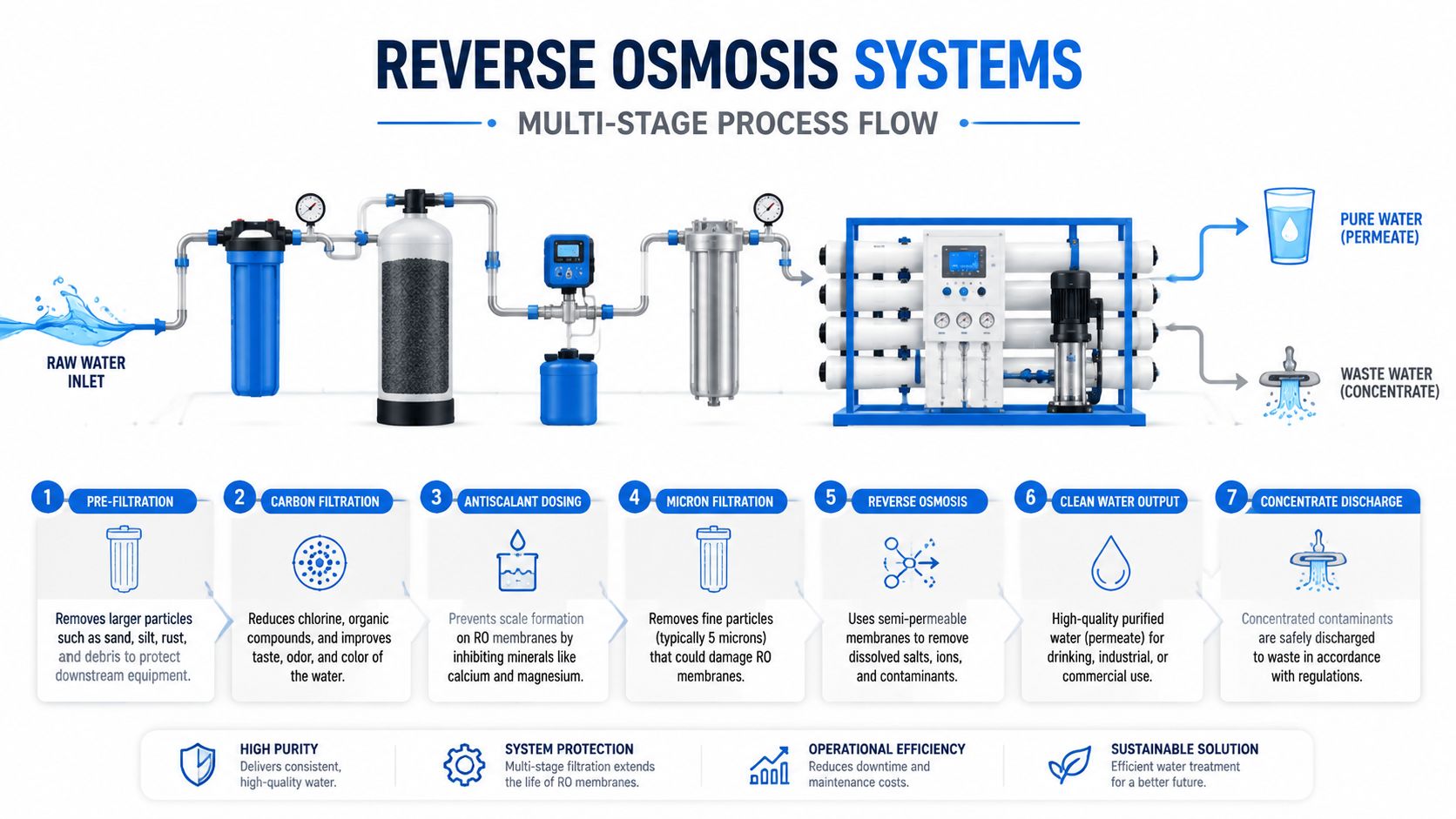
The mistake homeowners make is letting the membrane’s longer life lull them into ignoring the rest of the stack. When pre-filters go stale, they can choke the system ahead of the membrane and shorten the useful life of the whole unit. If you’re comparing system types, Bluepoint Plumbing & Service Inc. has a helpful page to compare water filtration systems and see how multi-stage RO differs from simpler point-of-use designs.
Woder’s own primer on what reverse osmosis water filter is also useful for understanding why the membrane and the pre-filters should never be treated as one maintenance item. The membrane is the long-life part. The surrounding stages are the regular-service parts.
Factors That Shorten or Lengthen the Schedule
A published interval is a starting point, not a verdict. The schedule changes when the household, the water source, or the plumbing conditions change. That’s why two homes with the same cartridge can get very different results.
What pushes replacement earlier
Household size and daily use matter first. More people run more water through the cartridge, so the media loads faster and the gallon rating arrives sooner. Source-water sediment matters too, especially on private wells, because fine particles can crowd the filter media long before the calendar says it should be done. Chlorine demand in municipal water can also shorten the useful life of carbon stages, because the filter is spending more of its capacity on taste and odor control.
Practical rule: the dirtier or busier the water stream, the shorter the safe interval.
Seasonal properties work differently. If a home sits idle for months, the cartridge may not be “used up” in the same way, but it can still be a fresh-start situation when service resumes, because stagnation and long idle periods change how people should think about replacement.
Water pressure matters as well. If pressure drops across the cartridge, the filter is telling you it’s loading up, even if the housing still looks normal. A family of five on a sediment-heavy well may need to move a nominal six-to-twelve-month carbon interval much earlier. A single occupant on clean municipal water in an apartment may be able to stay closer to the full rated window.
The point isn’t to chase perfect precision. It’s to stop treating every home as if it drinks the same water at the same pace.
Signs a Cartridge Needs Replacing Sooner
The fastest way to check a cartridge is to use your senses and a quick look at the system. You don’t need lab equipment to spot the common warning signs. You just need to know what counts.
A one-minute homeowner checklist
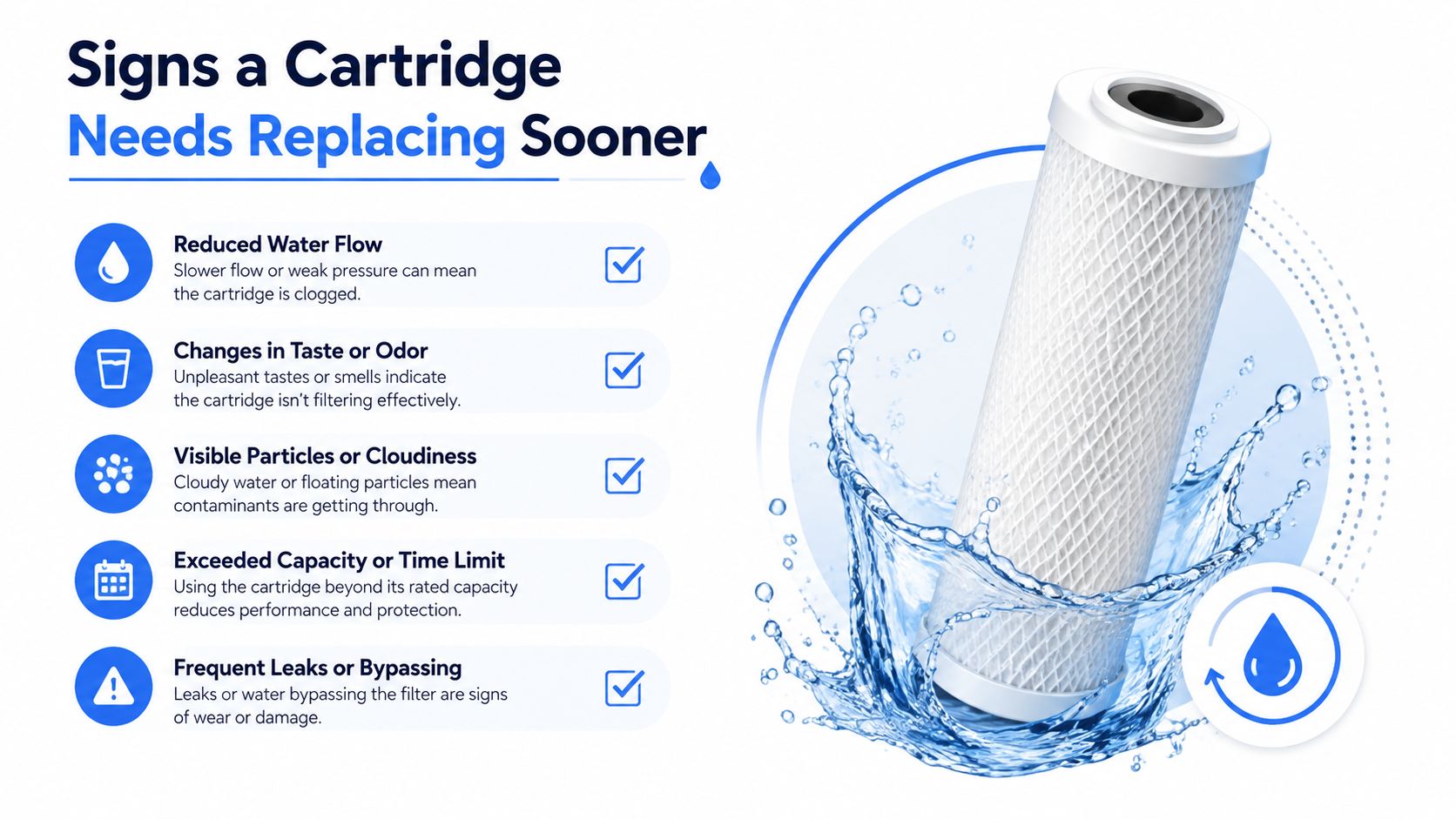
- Flow slows down: If the faucet, dispenser, or appliance is moving water more slowly than usual, the cartridge may be loading with sediment or the membrane may be fouling.
- Taste or odor comes back: If chlorine taste or smell returns, the adsorption media may be exhausted and no longer catching what it was installed to remove.
- Housing looks dirty: A sediment cartridge that’s visibly discolored is usually telling you it’s packed with captured debris.
- Pressure behavior changes: On systems with gauges, a needle moving into the red zone usually means the cartridge is restricting flow more than it should.
- Sound or delivery changes: If a refrigerator or appliance starts sounding strained, or the water seems to pulse oddly, the filter may be past its useful point.
The key is not to wait for all five signs. One strong sign is usually enough to inspect the cartridge and compare it against the calendar or gallon limit. If the flow has already dropped and the taste has already changed, the cartridge is no longer in the “watch and wait” category.
For systems with gauges, the gauge gives you the most objective clue. For systems without one, flow and taste are usually the best field checks. Either way, the sign is telling you the same thing, the cartridge is doing less work than it was on day one.
When Source-Water Changes Should Reset the Schedule
Some changes don’t just shorten the current interval, they should make you rethink the whole cadence. A municipal change, a well event, or a long idle period can reset the maintenance rhythm because the filter is suddenly working against different water than it was before.
When to start the clock over
If a city changes its treatment approach or a new source comes online, the filter may see a different chlorine load or a different mix of particulates. In that case, it usually makes sense to replace on the next planned maintenance window rather than panic-replace on the spot. A boil-water advisory is different from a standard supply shift, but the practical lesson is the same, check the filter early and don’t assume yesterday’s schedule still applies.
Private wells need more judgment. Heavy rain, nearby construction, or a drought cycle can all shift sediment and taste. If that happens, replace the sediment pre-filter first, then watch the carbon stage closely because the front end may have taken the hit.
Seasonal homes are a separate case. A cartridge that sat unused for months should be treated as a fresh maintenance decision when the home comes back into service, not as if it had been running continuously the whole time.
When the water changes, the old schedule may not mean much anymore.
A good homeowner routine beats a flat reminder. The schedule should flex when the source water flexes, because the cartridge’s real workload lives in the water, not in the calendar app.
The Real Annual Cost of Staying on Schedule
Replacement feels like an annoying recurring expense until you compare it with the cost of running past useful life. Then it starts to look like ordinary maintenance. A cartridge that gets replaced on time is part of the operating cost of the home, not an emergency.
Budgeting for upkeep, not surprises
Pitcher and faucet-mount cartridges are usually the cheapest to keep on schedule because they’re small and simple. Refrigerator filters and under-sink carbon filters sit higher because they hold more media and work longer before replacement. RO systems cost more to maintain because they have multiple service stages, not because one part is uniquely fragile.
If you want a broader home-maintenance yardstick, thecalcs has a practical tool to estimate water heater costs, and the same mindset applies here. You budget for systems before they fail, not after.
The hidden cost of waiting is rarely dramatic. People start buying bottled water because the tap tastes off. Ice makers and coffee machines get blamed when the issue is filtered water quality drifting. The old cartridge may still be moving water, but it isn’t earning its keep the way it did before.
Woder’s selective-filtration approach is relevant here because it keeps the maintenance conversation tied to drinking water quality without stripping away the minerals people expect in the glass. That doesn’t make maintenance optional. It just keeps the cost discussion focused on keeping a living filter system working, not replacing a disposable habit.
Building a Replacement Routine You Will Actually Follow
A good routine should be boring. If it takes effort to remember, it won’t last. The easiest systems are the ones that leave a trail at the filter, in your phone, and in a household calendar all at once.
Set it up once
Write the install date on a sticker near the housing, then add a reminder to your phone for the calendar limit and another note for the gallon limit if your usage is high. Keep one spare cartridge on hand if the model is standard enough to stock. That way, a replace-now moment doesn’t become a same-day search for parts.
A quick monthly glance is enough for the rest of the year. Check flow at the tap, look for discoloration in any clear housing, and confirm that nothing about taste or odor has drifted. Once a year, scan your local utility’s water-quality report for any meaningful source change, because that’s the kind of update that can justify changing your plan.
If you like a paper trail, the 2026 equipment maintenance log guide is a good model for keeping replacement records simple. A clean record beats memory every time.
The point is not to turn water care into a hobby. It’s to make sure the filter is always ready when you need it, without turning replacement into a last-minute chore.
What Filter Ratings and Certifications Actually Guarantee
A cartridge rating is only useful if you read it correctly. A “rated for 1,000 gallons” claim means the manufacturer is telling you where performance is expected to begin declining under defined testing conditions, not that the filter should be pushed until the flow dies. The schedule exists because the rating assumes timely replacement.
Rated capacity versus real capacity
Rated capacity is the published number on the box or spec sheet. Real-world capacity depends on what enters the filter, including sediment load, chlorine burden, household demand, and pressure. Real-world capacity can be shorter than the rating, but it won’t be longer in any meaningful maintenance sense, because the filter doesn’t get to ignore what it has already captured.
NSF/ANSI testing and WQA certification help the buyer understand that the product was evaluated under defined conditions, which is exactly why those labels matter when you’re deciding when to replace. They don’t mean “run it forever.” They mean the cartridge has a tested range, and your schedule should stay inside it.
Homeowners sometimes overread the label. A certification can support a performance claim, but it doesn’t remove the need for a maintenance plan. The cartridge still ages with use, and the replacement interval is part of the claim’s logic, not an afterthought.
What Happens When You Wait Too Long
“I forgot, but the water seems fine” is a common line, and it’s understandable. The trouble is that a saturated cartridge usually fails without a dramatic warning. It gives you a smaller stream, a familiar taste returning, and a gradual drop in contaminant reduction that you can’t see by looking at a glass.
Quiet failure is the real risk
That’s why a cartridge can feel normal to the touch and still be underperforming. The filter may still be holding water back, but it’s no longer removing what it was designed to capture with the same consistency. If the water tastes off, you may already be late. If the water still tastes fine, the cartridge still may be past its best work.
The simple takeaway is that looks fine is not the same as still working. Point-of-use filtration only gives you what it was built to give if the maintenance stays current. Once the cartridge is exhausted, the system doesn’t become useless overnight, it just becomes less reliable in ways you might not notice right away.
That’s why replacement is the maintenance task that decides whether the rest of the filtration investment is doing its job.
Your Three-Rule Replacement Reference
Keep the schedule simple. First, respect the calendar limit. Second, respect the gallon rating. Third, watch the condition signals, flow, taste, pressure, and color. Pitcher and faucet-mount filters run short, refrigerator cartridges usually live around the half-year mark, under-sink carbon blocks need more attention than many people expect, and RO systems need each stage tracked on its own.
When in doubt, replace on the earlier trigger, not the later one. That’s the cleanest rule for a water filter replacement schedule that works in a real home.
If you want a point-of-use filter that keeps maintenance straightforward while staying focused on drinking water quality, take a look at Woder Filters. Woder’s under-sink and inline systems are built around selective filtration, so the replacement conversation stays tied to real cartridge work, not guesswork.