- What Causes That Metallic Taste in Tap Water?
- How to Diagnose the Source
- How to Fix Metallic-Tasting Water
- When to Take It More Seriously
- The Bottom Line
- Frequently Asked Questions
You fill a glass from the tap, take a sip, and something's off. Not bad exactly — just wrong. That faint metallic taste is one of the most common water complaints homeowners have, and it almost always traces back to a specific cause.
The good news: most of the time, it's fixable. Some fixes require nothing more than running your tap for a minute. Others point to something worth taking seriously. Here's how to tell the difference.
What Causes That Metallic Taste in Tap Water?
1. Old or Corroding Pipes
This is the most common culprit. Homes with older iron, galvanized steel, or copper pipes can leach small amounts of metal into the water as it sits or moves through them. The older the plumbing, the more likely this is happening.
If the taste is strongest first thing in the morning — when water has been sitting in the pipes overnight — that's a reliable sign the pipes are the source, not your municipal supply.
2. Lead from Plumbing Fixtures or Service Lines
Lead is a more serious concern. Homes built before 1986 may have lead solder at the pipe joints, and some older service lines connecting your home to the street main are made of lead. Lead doesn't always produce a strong taste, but it can contribute to that metallic quality.
Unlike iron or copper, there's no safe level of lead exposure. If your home is older and you haven't tested your water, this one deserves your attention.
3. Chlorine and Chloramine Disinfectants
Municipal water suppliers add chlorine or chloramine to kill bacteria and keep water safe through the distribution system. Both are effective — but both can leave a chemical, slightly metallic aftertaste, especially in areas where treatment levels run higher.
If your water tastes more like a swimming pool than a clean drink, chlorine is likely a factor. It's not a health emergency, but it does affect taste in a real way.
4. Low pH (Acidic Water)
Acidic water is more aggressive at leaching metals from pipes and fixtures. Even if your plumbing is in decent shape, water with a low pH can pick up enough iron, copper, or zinc along the way to produce a noticeable metallic taste.
Private well owners run into this more often than municipal customers, since well water pH isn't regulated the same way.
5. High Iron or Manganese Content
Both iron and manganese occur naturally in groundwater. Iron gives water a slightly rusty, metallic flavor. Manganese tends toward something more bitter and mineral-heavy. Neither is immediately dangerous at low levels, but both affect taste noticeably — and can stain sinks and laundry over time.
6. A Filter That Needs Replacing
If you already use a water filter and the metallic taste has come back or gotten worse, your cartridge may be past its service life. An exhausted filter stops removing contaminants effectively and can even start releasing what it previously captured back into your water.
Replacement schedules exist for a reason. If you've pushed yours past the recommended lifespan, the filter itself may now be part of the problem.
How to Diagnose the Source
Before you fix anything, narrow down where the taste is actually coming from.
Run the cold tap for 30 to 60 seconds first. If the metallic taste fades after flushing the line, your pipes are the likely source. If it stays strong regardless, the issue is probably in your supply water or your filter.
Test your water. A home water testing kit can tell you whether you're dealing with elevated iron, lead, or other metals. Woder sells water testing kits alongside its filter line, so you can get a clear picture of what's actually in your water before deciding on a fix.
Check your filter's age. If you have a filter installed, look up when you last replaced the cartridge. If you can't remember, that's probably your answer.
How to Fix Metallic-Tasting Water
Flush Your Pipes Regularly
If the taste appears after water has sat overnight, running the cold tap for a minute before drinking or cooking is a simple, free habit that helps. It doesn't solve the underlying pipe issue, but it reduces how much metal-laden water you're consuming day to day.
Replace Old Plumbing Fixtures
If your home has aging galvanized or iron pipes, a plumber can assess whether partial or full replacement makes sense. It's a longer-term fix, but it addresses the root cause rather than working around it.
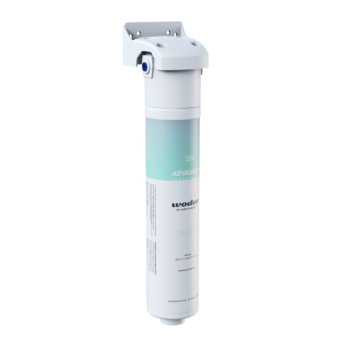
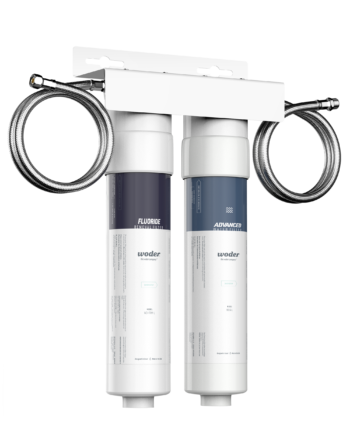
Install a Quality Under-Sink Filter
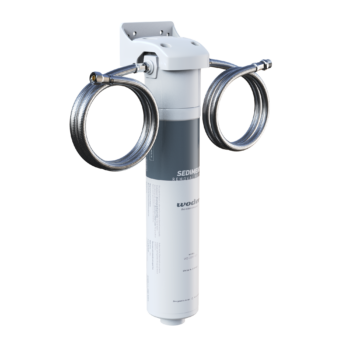
For most households, this is the most practical fix. A good inline or under-sink filter removes the metals and contaminants causing the taste — without overhauling your plumbing or committing to an expensive whole-home system.
Woder's Advanced Selective Filtration technology removes 99.9% of contaminants including lead, chlorine, chromium 6, mercury, and volatile organic compounds. It connects directly to your existing water line under the sink, with no plumber required and no reverse osmosis tank eating up cabinet space.
What sets it apart from most filters is what it keeps. Calcium, magnesium, and other naturally occurring minerals stay in your water. You get clean water that still tastes like water — not flat, not stripped.
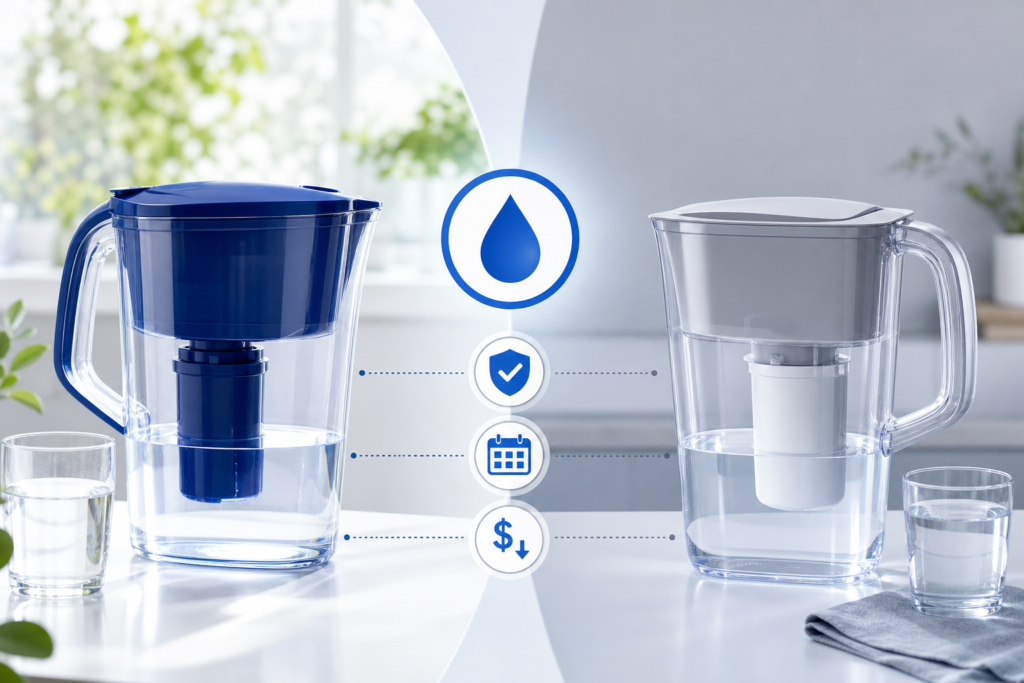
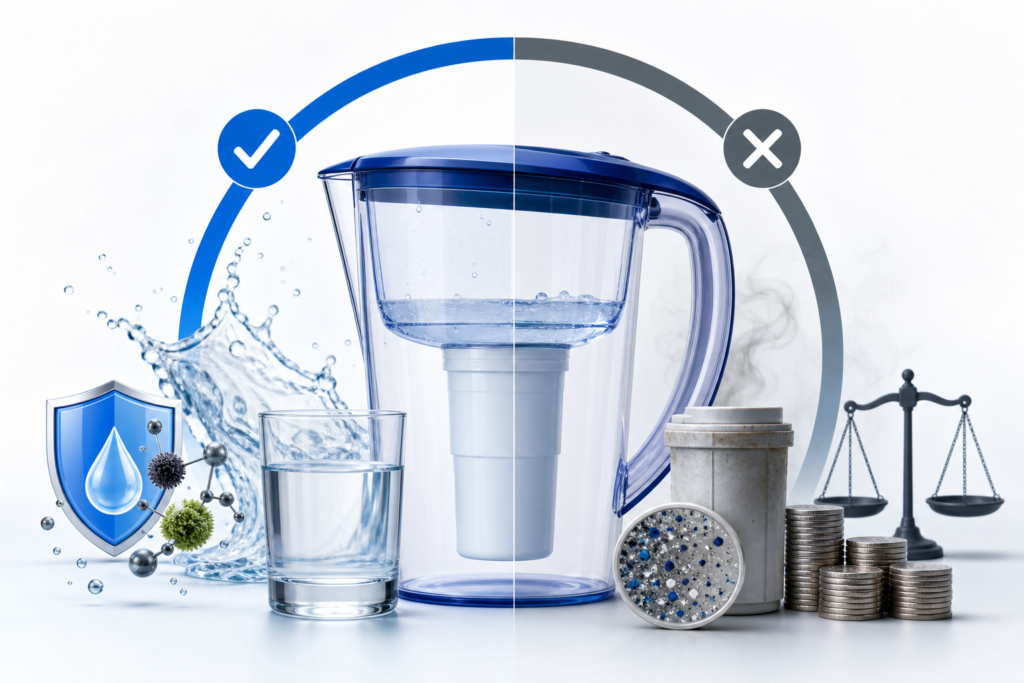
Don’t Rely on a Pitcher Filter for Lead or Heavy Metals
Pitcher filters are convenient, but most aren't built to handle serious contaminants like lead or chromium 6 at meaningful concentrations. If your metallic taste is coming from lead pipes or high iron content, a pitcher filter probably won't cut it. You need something rated for those specific contaminants.
Address pH if You’re on Well Water
If you're on a private well and your water tests acidic, a pH neutralizer or a filter designed for well water can reduce the corrosiveness of your supply — protecting your pipes as well as your taste buds.
When to Take It More Seriously
A metallic taste that comes on suddenly, or shows up alongside discolored water, is worth investigating right away. Sudden changes in taste or color can signal a shift in your water source, a pipe failure, or contamination that goes beyond normal mineral content.
If you're in an older home, pregnant, or have young children, testing specifically for lead is worth doing regardless of taste. Lead doesn't always announce itself clearly, and the health stakes are higher for those groups.
The Bottom Line
Metallic-tasting water is almost always fixable. The cause usually comes down to pipes, minerals, disinfectants, or a filter that's past its prime. Figuring out which one applies takes a few minutes and sometimes a basic water test.
If you want a long-term fix that handles lead, chlorine, iron, and other metals right at the tap, a quality under-sink filter is the most practical option for most homes. Remove the bad. Keep the good. That's the Woder difference.
Find the right filter for your home at woder.com.
Frequently Asked Questions
Why does my water taste like metal all of a sudden?
A sudden metallic taste often points to a change in your water supply, a pipe that has started corroding, or a filter cartridge that has reached the end of its service life. If the taste appeared overnight without an obvious cause, testing your water is the fastest way to find out what changed.
Is metallic-tasting water safe to drink?
It depends on the cause. Slight mineral content from iron or copper is generally not dangerous at low levels. Lead is a different story — there's no safe exposure threshold, and a metallic taste combined with older plumbing is a reason to test your water before continuing to drink it untreated.
Can a water filter remove metallic taste?
Yes. A quality under-sink or inline filter rated for heavy metals, lead, and chlorine will remove the contaminants responsible for most metallic tastes. Just make sure the filter you choose is rated for the specific contaminants in your water, not just general sediment.
Why does my water taste metallic only in the morning?
Water that sits in pipes overnight picks up more metal from the pipe walls. A strong metallic taste first thing in the morning that fades after running the tap is a classic sign that your pipes are leaching iron, copper, or other metals into standing water.
Does boiling water remove metallic taste?
Boiling kills bacteria, but it doesn't remove dissolved metals like lead, iron, or copper. It can actually concentrate minerals by reducing water volume. Filtration is the right approach when metallic taste is caused by metal contaminants.
How often should I replace my water filter to avoid metallic taste?
Follow the manufacturer's replacement schedule for your specific filter model. Most under-sink cartridges have a recommended lifespan measured in gallons or months. Pushing past that limit reduces filtration effectiveness and can allow previously captured contaminants back into your water.
What's the difference between metallic taste from pipes versus from the water supply?
Pipe-sourced metallic taste tends to be strongest after water has sat still — like first thing in the morning — and fades when you run the tap. Supply-sourced metallic taste stays consistent regardless of how long the water runs. Testing your water can confirm which source is responsible.