Colder water or a clean glass can make a drink seem fresher, but they won’t fix persistent chlorine taste, earthy odors, visible sediment, or metallic notes. Those problems can come from the source water, household plumbing, storage conditions, or a filter that removes the wrong things. The aim isn’t a zero-TDS reading. Total dissolved solids include minerals that influence mouthfeel, and removing every dissolved solid is different from reducing unwanted contaminants. The EPA treats TDS as an aesthetic measure rather than a health-based limit, and notes that water below 600 mg/L is generally considered good-tasting, while water becomes increasingly unpalatable above about 1,000 mg/L. EPA taste research
For U.S. tap and well-water households, a practical path is to address sediment, identify the off-flavor, choose point-of-use filtration that matches the concern, retain useful minerals when taste matters, and serve the water under clean, cool conditions. These filtration tips from Pep Tea can help with the broader decision, but the five options below focus on what you can control at the faucet or appliance.
Table of Contents
- 1. Woder Sediment Water Filter for Dirt, Sand and Dust Removal
- 2. Woder Advanced Inline Water Filter WD-G4-JG
- 3. Woder WD-20m-JG Sediment Removal Water Filter
- 4. Woder WD-G4-DC for Lead, Chlorine, Heavy Metals and PFAS
- 5. Woder WD-GEN4-2512-DC Water Filter
- Top 5 Woder Filters for Best-Tasting Water
- Choose Taste Improvements That Match Your Water
1. Woder Sediment Water Filter for Dirt, Sand and Dust Removal
Better-tasting water does not always require removing dissolved minerals. Sometimes the first problem is physical: dirt, sand, dust, rust, or other suspended particles can make water feel gritty, leave residue in a glass, and burden a downstream carbon or selective filter. Private wells, older plumbing, and recently disturbed lines can all make sediment control a sensible starting point.
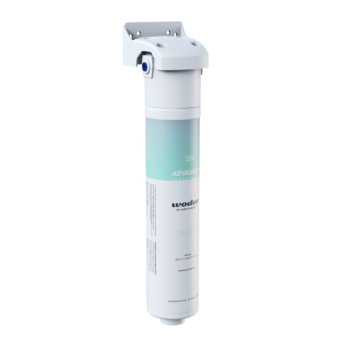
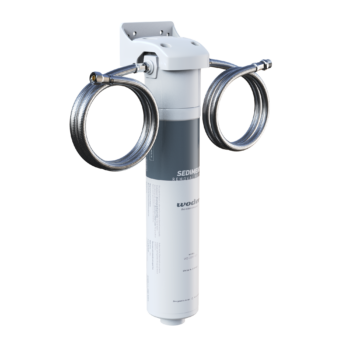
The Woder Sediment Water Filter, Dirt, Sand and Dust Removal is a single-stage under-sink filter with 20µ pre-sedimentation. Its stated function is to reduce dust, dirt, and other suspended material through sediment filtration. Made in the USA, it treats water near the drinking outlet instead of filtering every fixture in the home.
Why sediment affects taste
Sediment filtration addresses particles, not every substance that can affect flavor or odor. A physical barrier of this type is different from treatment designed to reduce dissolved chlorine, PFAS, lead, fluoride, or other compounds that pass through a coarse filter. Its role is narrower: clear suspended material before it reaches the glass and reduce the particle load placed on another cartridge.
The water’s condition should guide the setup. Clear water with a chlorine taste points toward a different treatment need, while grit or cloudiness after plumbing work makes particle reduction more relevant. Storage also matters. A clean filter cannot prevent a dirty pitcher, glass, or faucet aerator from adding residue after treatment, and serving temperature can change how noticeable an off-flavor seems.
Practical rule: Reduce visible particles first, then assess dissolved taste and odor. A clear glass shows that suspended material is lower, not that every taste-causing compound has been addressed.
The Woder guide to pleated sediment water filters explains why particle filtration is a separate step from contaminant-selective treatment. That distinction helps homeowners compare a filter’s documented function with the specific complaint, rather than relying on broad product wording.
Who should consider it
This option suits households that need pre-sedimentation at a kitchen sink or want to shield another point-of-use filter from suspended material. It may also fit well-water users who notice sand, dirt, or rust residue.
Inspect or test the source before treating sediment as the only issue. Metallic, salty, chemical, or persistent odors may require a different filter, while mineral retention can still matter if the goal is a fuller water character rather than the lowest possible dissolved-solids level.
2. Woder Advanced Inline Water Filter WD-G4-JG
The best tasting water usually isn’t the water with the fewest minerals. Sensory research has found that very low-mineral water can seem flat, while moderate mineral content often supports a fresher, more balanced impression. One study found that the preferred waters clustered around 300 to 350 mg/L TDS, where participants described them as tasteless and cooler. Consumer sensory research
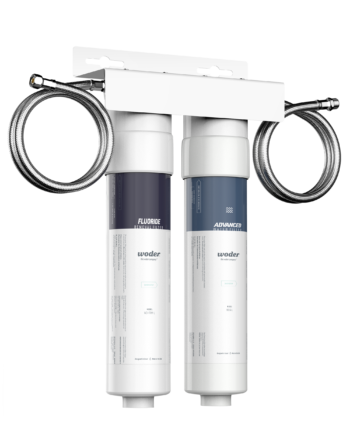
The Woder Advanced Inline Water Filter WD-G4-JG is designed around Advanced Selective Filtration, which targets unwanted contaminants while retaining essential minerals. That approach differs from reverse osmosis, which produces very low-TDS water by reducing dissolved minerals along with contaminants. Very low TDS can be useful for some applications, but it isn’t automatically a guarantee of better flavor or safer drinking water.
A better way to think about mineral retention
Calcium and magnesium contribute to the character of drinking water. The EPA’s taste summary identifies a calcium taste threshold in the approximate range of 100 to 300 mg/L, and notes that sodium and chloride influence taste more strongly than several other common minerals. EPA taste findings Since taste is shaped by the entire mineral profile, removing everything can create a neutral profile rather than a satisfying one.
That doesn’t mean every mineral-rich water tastes good. Excessive dissolved solids, high sodium, or an imbalanced profile can produce a harsh, salty, bitter, or drying impression. The useful goal is selective reduction, not indiscriminate stripping.
Water can taste cleaner without tasting empty. The filter’s treatment method determines whether those two outcomes stay connected.
An inline design can suit a refrigerator, ice maker, coffee machine, or another dedicated beverage line, provided the connection and flow requirements match the installation. It can also be a practical choice for renters or homeowners who want point-of-use treatment without adding a large system to the property.
For a plain-language explanation of the format, see this guide to inline water filter systems. Before buying, check the product documentation for the contaminants addressed, installation location, replacement process, and any performance conditions that apply to your water.
3. Woder WD-20m-JG Sediment Removal Water Filter
A kitchen faucet isn’t the only place where poor-tasting water shows up. Sediment can affect refrigerator water, ice, coffee equipment, and other beverage lines, especially when the incoming supply carries sand, rust, or dirt. A point-of-use inline filter gives you a way to target one line rather than redesigning the household’s entire plumbing system.
The Woder WD-20m-JG Sediment Removal Water Filter is a U.S.-made inline pre-sedimentation filter. Its stated filtration role is 20µ pre-sedimentation for sediment, dirt, sand, rust, and contaminant removal. The product’s relevance is straightforward: it addresses suspended material at the point where you drink or make ice.
When an inline sediment filter fits
Choose this type of approach when the problem is localized. For example, if the kitchen faucet is acceptable but refrigerator water carries particles, filtering the refrigerator line may be more practical than installing a whole-home system. The same logic applies to a coffee machine or beverage line that needs cleaner incoming water without treating every shower and toilet.
Sediment reduction can also help protect equipment. Particles may settle in tubing, valves, or appliance components, although the filter shouldn’t be treated as a complete solution for scale, dissolved metals, PFAS, chlorine, or other chemicals.
- For sand and dirt: Use sediment filtration when particles are the visible or tactile problem.
- For rust residue: Investigate plumbing and source conditions if discoloration continues after filtration.
- For refrigerator lines: Confirm that the inline connection matches the appliance and available space.
- For broader taste issues: Add a filter with documented reduction for the specific dissolved contaminant involved.
A filter that improves clarity may not change a chlorine taste. Chlorine acceptance also varies among people. A PubMed study found that tap-water consumers and non-consumers didn’t differ in chlorine detection threshold or sensitivity, but they did differ in how acceptable and pleasant they found chlorinated solutions. Chlorine preference research Familiarity and exposure can influence whether the same flavor seems normal or unpleasant.
That’s why a sediment filter is a focused tool, not a universal taste remedy. It’s a good match for particulate problems and a poor match for a complaint that is clearly chemical, salty, or medicinal.
4. Woder WD-G4-DC for Lead, Chlorine, Heavy Metals and PFAS
Persistent chlorine taste is often the reason homeowners start comparing filters, but taste can also signal a broader need to understand the water supply. A carbon or selective point-of-use filter may be appropriate when the complaint involves chlorine, odors, or concern about listed contaminants. The right choice depends on the documented performance of the cartridge, not on a vague promise to make water “pure.”
The Woder WD-G4-DC Lead, Chlorine, HM and PFAS Water Filter uses Woder’s Advanced Selective Filtration approach and is described as retaining essential minerals while targeting unwanted contaminants. Its replacement filters are identified in the product information as WQA-certified to NSF/ANSI 42 for chlorine taste and odor, and NSF/ANSI 372 for lead-free compliance, with supporting test data. Those standards address specific aspects of performance and material compliance. They shouldn’t be read as proof that a product reduces every contaminant.
Read certification language carefully
NSF/ANSI 401 applies to point-of-use and point-of-entry systems used on water that is already microbiologically safe and of known quality. ANSI information on NSF/ANSI 401 That makes the standard relevant to household filters targeting specific contaminants in treated drinking water, not to making unsafe source water safe in every circumstance.
Lead deserves separate attention because it can enter water through household plumbing and corrosion. The EPA lists a lead action level of 0.010 mg/L and identifies potential health risks that include developmental or mental delays in children, kidney problems, and high blood pressure in adults. EPA drinking-water regulations
PFAS is another reason to inspect the exact performance documentation. In its April 2024 rule, the EPA set enforceable limits of 4.0 parts per trillion for PFOA and PFOS individually, 10 parts per trillion for PFNA, PFHxS, and HFPO-DA, and a hazard index of 1 for certain mixtures. EPA PFAS drinking-water rule
For taste, this filter is most relevant when chlorine or odor is paired with a need for targeted contaminant reduction. Review the applicable test data, installation instructions, replacement support, and your local water information before deciding whether it matches the household’s actual concern.
5. Woder WD-GEN4-2512-DC Water Filter
Some households need more than a basic sediment barrier but don’t want the mineral stripping and system complexity associated with reverse osmosis. Reverse osmosis can deliver strong contaminant reduction and very low TDS, but it also reduces naturally occurring calcium and magnesium, requires ongoing maintenance, and can waste water during filtration. Those trade-offs may be worthwhile for a particular source, but they aren’t automatically the best route to enjoyable drinking water.
The Woder WD-GEN4-2512-DC Water Filter, New WD-10K-ADV-DC combines Woder’s Advanced filtration formula with additional heavy-metal removal media. It’s made in the USA and is positioned for areas with higher heavy-metal concerns. The product information identifies WQA-certified Woder Advanced filters as certified to NSF/ANSI 42 for chlorine taste and odor and NSF/ANSI 372 for lead-free compliance, with performance supported by test data.
Match the filter to the source
A larger or more advanced cartridge isn’t automatically a better choice. It’s better when its documented contaminant targets match the water entering your home and when its installation fits the sink, faucet, flow, and maintenance routine. If you’re uncertain, a water-quality report or laboratory test can help separate a taste complaint from a contaminant concern.
The mineral-retention design is important for homeowners who dislike the flat profile sometimes associated with very low-mineral water. Research on bottled and tap water found that preferred samples tended to have moderate TDS and relatively higher bicarbonate, sulfate, calcium, magnesium, and pH levels. Peer-reviewed water taste analysis That doesn’t establish one universal flavor, but it supports a practical conclusion: balanced mineral content often matters as much as contaminant reduction.
Look beyond the TDS number: A low reading tells you that dissolved solids were removed. It doesn’t tell you whether the remaining water has the taste, contaminant coverage, or certification details your household needs.
Check component standards as well as filter claims. NSF explains that NSF/ANSI/CAN 372 addresses lead content in drinking-water system components, while NSF/ANSI 61 Annex G covers both lead content and lead leaching requirements. NSF water and wastewater standards Those are different questions, so the wording on a package matters.
Top 5 Woder Filters for Best-Tasting Water
| Product | Implementation complexity | Resource requirements | Expected outcomes | Ideal use cases | Key advantages |
|---|---|---|---|---|---|
| Woder Sediment Water Filter – Dirt, Sand and Dust Removal (WD-20m-DC) | Moderate, under-sink single-stage install, basic plumbing | Low, no power, periodic 20µ cartridge replacement | Removes dirt, sand, dust; 20µ pre-sedimentation | Homes with sediment-heavy supply; pre-filter for appliances | US-made; simple sediment protection; first-party product |
| Woder Advanced Inline Water Filter WD-G4-JG | Low, inline installation, minimal plumbing | Low, no power, regular cartridge replacement | Selective filtration that reduces contaminants while retaining beneficial minerals | Point-of-use for improved taste without full mineral removal; inline appliance use | Mineral retention; inline simplicity; US-made |
| Woder WD-20m-JG Sediment Removal Water Filter | Low, inline POU install, compact setup | Low, no power, periodic 20µ cartridge replacement | 20µ removal of sediment, dirt, sand and rust | Inline pre-sedimentation for faucets, appliances, well water | Compact inline sediment protection; US-made |
| Woder WD-G4-DC Lead, Chlorine, HM and PFAS Water Filter | Moderate, under-sink system, plumbing connections required | Moderate, certified media, scheduled cartridge replacements | Reduces lead, chlorine taste/odor, PFAS and some heavy metals while retaining minerals | Municipal or private water supplies with chemical/metal concerns; under-sink drinking water | WQA-certified (NSF/ANSI 42 & 372); targets PFAS/lead; US-made |
| Woder WD-GEN4-2512-DC (New WD-10K-ADV-DC) | Moderate, one-piece advanced under-sink install | Moderate, heavy-metal media, routine replacement | Advanced heavy-metal removal plus chlorine/taste improvement; higher contaminant capacity | Areas with elevated heavy-metal contamination; robust drinking-water filtration | WQA-certified; enhanced heavy-metal media; successor to WD-10K; US-made |
Choose Taste Improvements That Match Your Water
Start with what you can observe. If water contains visible dirt, sand, rust, or dust, address sediment before expecting a taste-focused cartridge to perform well. A sediment prefilter can make the water feel cleaner and may protect a later-stage filter, but it won’t remove every dissolved compound.
Next, identify the flavor. Chlorine and odor call for a filter with documented taste-and-odor performance. Metallic notes or concerns about old plumbing call for attention to lead and other heavy metals, along with a review of local water-quality information. PFAS, fluoride, chromium, and similar concerns require product documentation that names the contaminant or provides relevant test results. Don’t treat a broad phrase such as “purifies water” as a substitute for performance evidence.
Taste also depends on what you leave behind. Research summarized by the EPA places good-tasting water below 600 mg/L TDS and increasingly unpalatable water above about 1,000 mg/L, while consumer research has repeatedly favored moderate mineral profiles over water with almost no dissolved minerals. EPA mineral and taste background A zero-TDS result isn’t a universal quality score. It indicates that dissolved solids, including desirable minerals, have been removed.
Serving conditions still matter. Use clean storage, avoid leaving water exposed to odors in the refrigerator, wash reusable bottles and pitchers regularly, and serve the water cool if that’s how your household prefers it. Those steps can improve perception, but they shouldn’t be used to hide a persistent source or plumbing problem.
For uncertain well water or changing municipal conditions, review available water-quality information and consider laboratory testing. Then compare the filter’s documented contaminant coverage, certification language, installation fit, replacement support, and warranty terms. Woder provides a one-year cartridge guarantee, replacing a cartridge if it underperforms, and offers U.S.-made point-of-use systems built around Advanced Selective Filtration and mineral retention. That’s one option among several, not a reason to skip testing or product research.
Woder Filters offers U.S.-made under-sink and inline point-of-use systems that target unwanted contaminants while retaining essential minerals, helping homeowners improve taste without automatically stripping the water bare. Visit Woder Filters to compare filter formats, review installation resources, and find an approach that fits your water and the fixture you use most.