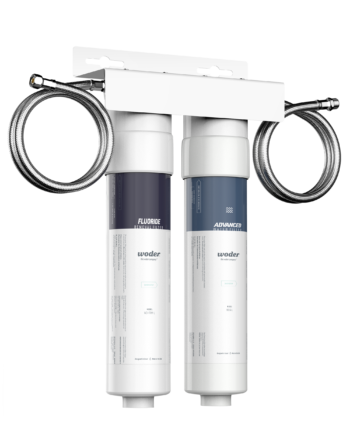
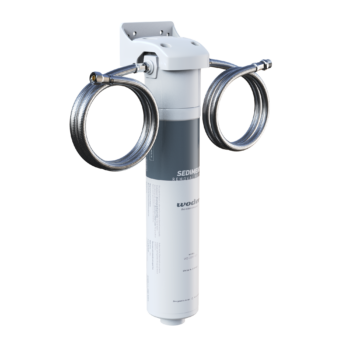
The most popular advice about the best inline water filter for a refrigerator is also the least useful: buy the cartridge made by your refrigerator brand, or choose any generic filter that fits the water line. Fit only tells you that water can pass through. It doesn't tell you whether the cartridge addresses lead, PFAS, fluoride, chromium, chlorine, or other contaminants in your supply.
The better starting point is certification scope, followed by flow, pressure, capacity, and replacement requirements. A filter certified only for taste and odor is a different product from one with documented health-related contaminant claims, even if both use similar-looking housings.
| Filter priority | Standard or evidence to look for | Best fit |
|---|---|---|
| Chlorine taste, odor, and some particles | NSF/ANSI 42 | Municipal water that tastes or smells unpleasant |
| Lead and other listed health-related contaminants | NSF/ANSI 53, with the exact contaminant named | Older plumbing or a documented contaminant concern |
| Certain emerging compounds | NSF/ANSI 401, with the exact substance named | Water reports identifying emerging contaminants |
| PFAS targets | A specific, verified PFAS reduction claim | Homes concerned about PFOA, PFOS, or other named PFAS |
| Fluoride | A technology and test claim specifically covering fluoride | Households whose water profile makes fluoride removal a priority |
Table of Contents
- Why Your Refrigerator Filter Choice Matters More Than the Brand
- What NSF and ANSI Standards Actually Cover in an Inline Filter
- Flow Rate, Micron Rating, and Capacity
- Carbon Block Versus Selective Filtration
- Matching an Inline Filter to Your Home’s Water Situation
- A Practical Buyer Checklist for Refrigerator Inline Filters
- What to Look for Beyond the Marketing Claims
Why Your Refrigerator Filter Choice Matters More Than the Brand
The familiar refrigerator brand on the box is a weak buying criterion. Start with the contaminant claim, then check certification scope, pressure drop, flow behavior, and replacement timing. “Inline” describes the installation location, not the filter’s performance.
An inline cartridge treats the water line feeding the dispenser and ice maker, not every tap in the home. That focused design can improve taste and odor, but filtered ice does not prove that lead, PFAS, fluoride, or another concern has been reduced. A cartridge certified for NSF/ANSI 42 serves a different purpose from one with a documented NSF/ANSI 53 or 401 claim.
Two cartridges can fit the same refrigerator line while differing in filter media, pressure tolerance, rated capacity, and tested reduction claims. One may target chlorine taste and odor. Another may list lead under NSF/ANSI 53. A third may advertise PFAS without naming the compound, standard, or test conditions. Treat that vague claim as incomplete, not as proof of protection.
Market demand explains why brands offer so many similar-looking cartridges, but it does not establish safety or performance. One forecast estimates the global refrigerator water filter market at USD 3,748.9 million in 2024 and USD 5,709.9 million by 2032, with a 5.4% CAGR and North America at 35% of the 2024 market. The refrigerator water filter market forecast provides that projection. These figures describe commercial growth, not the quality of any individual filter.
The label on the box isn’t enough
Begin with your utility’s water quality report. Private-well owners should use a laboratory test. Match the identified concern to the filter’s certification documentation, and check the rated flow and capacity so the cartridge can supply the dispenser and ice maker without excessive pressure loss.
If lead is the concern, NSF/ANSI 42 alone is the wrong specification, regardless of the brand. A product page that says “reduces contaminants” without naming them gives you no reliable comparison. The same problem applies to a broad “NSF certified” statement that omits the standard and specific claim. A certification mark matters only when its scope matches your water problem.
Replace the cartridge according to its rated capacity or the manufacturer’s stated interval, then sooner if flow drops or ice production changes.
Practical rule: Buy for a contaminant claim you can verify, not for a logo you recognize.
What NSF and ANSI Standards Actually Cover in an Inline Filter
A filter is not “certified” in the abstract. NSF/ANSI 42, 53, and 401 cover different test scopes, so the number beside the mark matters more than the word “certified.” NSF identifies these as leading standards for filtration products and systems in its filtration standards overview.
Read the standard in the right order
NSF/ANSI 42 covers aesthetic effects, mainly chlorine taste and odor plus certain particulate claims. Choose this scope when treated water smells like a swimming pool or ice tastes stale. It does not establish reduction of health-related contaminants.
NSF/ANSI 53 covers health-related contaminants, but the specific claim still controls. If lead is the concern, lead must appear in the product listing or documentation. The EPA lists lead’s action level at 0.010 mg/L, so households with older plumbing should look for a verified lead-reduction claim instead of relying on an aesthetic certification. The EPA’s National Primary Drinking Water Regulations provide the regulatory context.
NSF/ANSI 401 applies to certain named emerging compounds. It does not cover every pharmaceutical, pesticide, or PFAS compound. Check the listing for the exact substance and claim.
| Standard | Contaminants covered | Best for |
|---|---|---|
| NSF/ANSI 42 | Chlorine taste, odor, and some particles | Better-tasting water and ice |
| NSF/ANSI 53 | Specific health-related contaminants, such as lead, when listed | Documented lead or other listed health concerns |
| NSF/ANSI 401 | Certain named emerging compounds | A water report that identifies an applicable compound |
For a plain-language explanation of how these labels differ, see this guide to WQA and NSF/ANSI water quality standards. Use a direct rule: 42 for aesthetics, 53 for named health-related contaminants, and 401 for named emerging compounds.
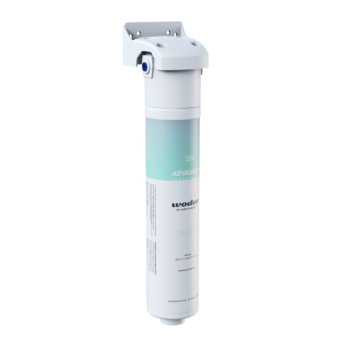
The Woder WD-GEN4-2512-JG Inline Water Filter (New WD-10K-ADV-JG) is a U.S.-made inline filter with an Advanced filtration formula and additional heavy metal removal media. Its catalog documentation says Woder Advanced filters are certified by WQA to NSF/ANSI 42 for chlorine taste and odor and to NSF/ANSI 372 for lead-free compliance, with those claims supported by test data. That profile does not equal NSF/ANSI 53 or 401 coverage. Match the documented claim to your water concern, then judge flow and replacement timing before buying.
Flow Rate, Micron Rating, and Capacity
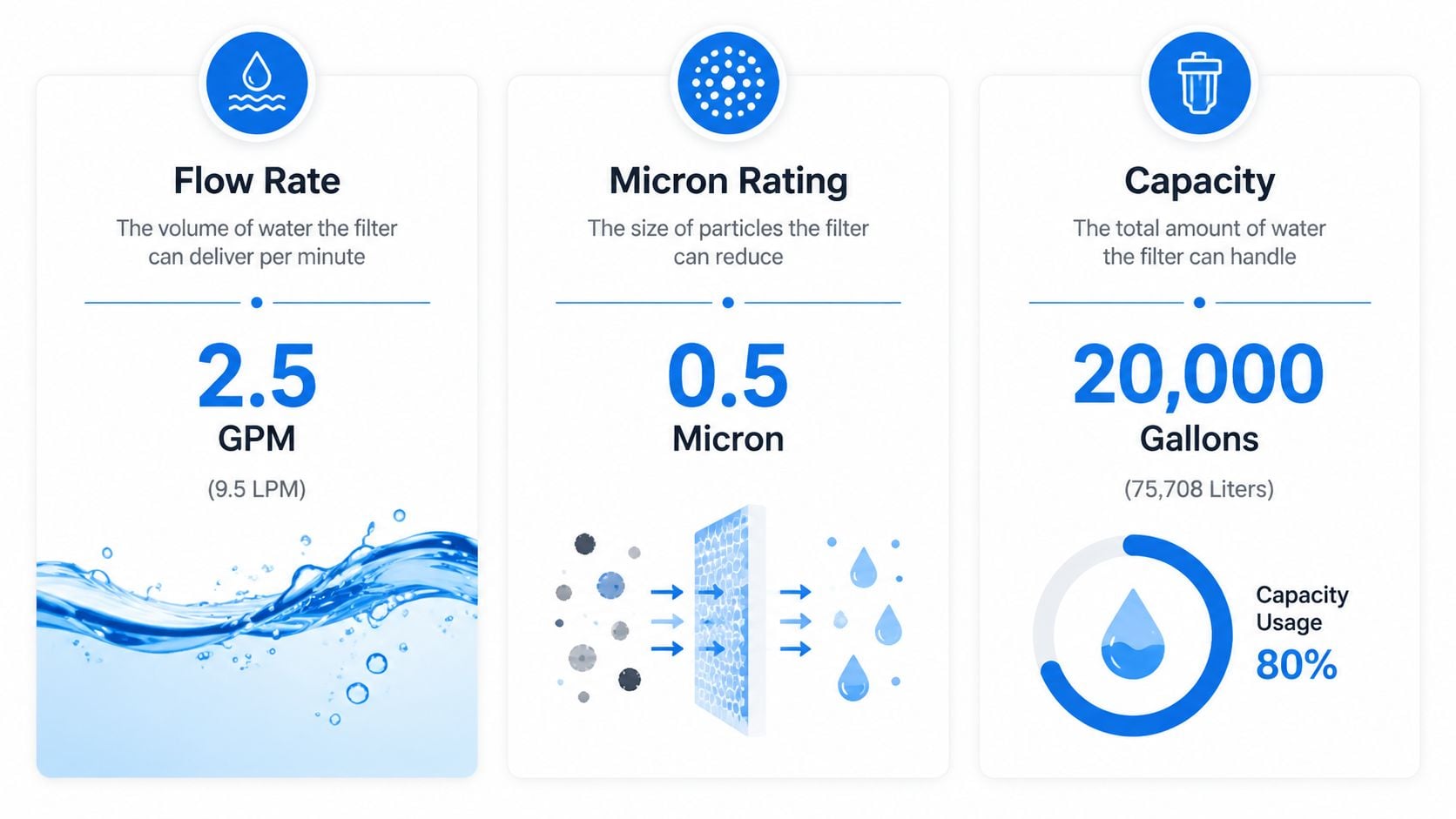
Certification defines the contaminants a filter has been tested to reduce. Flow and capacity determine whether your refrigerator behaves normally after installation. A cartridge may improve taste while slowing the dispenser or leaving the ice maker short of water during its fill cycle. Check these specifications after confirming the relevant NSF/ANSI claim.
A practical refrigerator-inline benchmark is 0.5 gallons per minute, or 1.9 liters per minute, with operating pressure commonly listed at 20 to 100 psi and rated capacity near 300 gallons or 6 months. The inline water filter technical sheet provides those figures. Treat them as a comparison point, not a universal requirement.
Three numbers deserve attention
Flow rate comes first. The refrigerator valve needs enough pressure and volume to dispense water and refill the ice mold. A restrictive cartridge can slow the dispenser and reduce the water delivered during the ice maker’s fill cycle, especially where inlet pressure is already weak. A large gallon rating will not correct poor flow.
Micron rating describes particle size, not the full contaminant claim. A smaller rating may support particulate or cyst reduction, but it does not by itself establish lead, PFAS, fluoride, or chromium reduction. Use this 0.5-micron water filter explanation to understand what the rating can and cannot tell you.
Capacity indicates how long the cartridge is rated to perform under stated test conditions. Hard water, sediment, and frequent refrigerator use can load media sooner than a clean municipal supply. A high-capacity claim matters only when the cartridge also maintains suitable flow and the manufacturer explains the test basis.
Pressure is the hidden variable
A filter can meet its capacity claim and still struggle in a home with low inlet pressure or sediment-heavy water. A fine filter may work well on clean municipal water but clog sooner on a private well system. Check the manufacturer’s pressure range and fitting size. Leave enough tubing for refrigerator movement without kinking the line.
Replace the cartridge at its rated gallon limit or time limit, whichever comes first. Replace it sooner if dispensing slows, ice cubes become undersized, or sediment appears. Those signs point to restricted flow or incoming-water problems, not automatically a refrigerator fault.
Carbon Block Versus Selective Filtration
Carbon block filtration polishes taste and odor, but media composition, block design, and tested claims determine real-world performance. Compressed activated carbon can address additional contaminants when the specific cartridge carries the relevant certification. Review the NSF/ANSI 42, 53, or 401 scope instead of treating “carbon block” as a complete specification.
Selective filtration takes a more targeted approach. Woder’s Selective Filtration explanation describes a system designed to target listed contaminants while retaining essential minerals. Reverse osmosis follows a broader removal strategy for dissolved solids and can produce very low TDS water. That difference affects taste, mineral content, wastewater handling, and the type of installation required.
| Factor | Carbon block | Selective filtration |
|---|---|---|
| Main design goal | Broad polishing of taste, odor, and selected contaminants | Targeted reduction of listed contaminants |
| Lead and heavy metals | Depends on the exact NSF/ANSI 53 claim | Depends on documented product claims and media |
| PFAS | Requires a specific PFAS claim and applicable certification | Requires a specific PFAS claim and applicable certification |
| Minerals | Generally remains in the water | Designed to retain essential minerals |
| Wastewater | Inline operation doesn't require a drain stream | Inline operation doesn't require a drain stream |
| Flow behavior | Can become more restrictive as the media loads | Depends on media design and sediment exposure |
For a refrigerator line, the practical comparison comes down to contaminant scope and hydraulic behavior. A cartridge with a narrow, verified claim may suit a known concern better than a broadly marketed carbon filter. Check whether the claim was tested at a flow rate and capacity that resemble refrigerator dispensing and ice-maker demand.
Choose precision when the water report demands it
For chlorine taste and odor, a properly certified carbon block is often the sensible answer. Lead, PFAS, fluoride, and chromium require a named reduction claim supported by applicable certification or test documentation. NSF/ANSI 42 generally addresses aesthetic effects, while NSF/ANSI 53 and 401 cover different health-effect or emerging-contaminant claims. The standard number alone does not prove reduction of every contaminant in that category.
Selective media can cost more and may require cleaner incoming water. Carbon block is easier to source, but sediment loading can reduce flow and affect dispenser output or ice-maker fill behavior before the cartridge reaches its stated capacity. A filter that slows noticeably can make a technically suitable refrigerator setup frustrating to use.
Choose the architecture whose documented contaminant scope, pressure behavior, and replacement interval fit the refrigerator line. Marketing language matters less than the certification listing, test conditions, and evidence that the cartridge will maintain usable flow until replacement.
Matching an Inline Filter to Your Home’s Water Situation
The same filter can be a reasonable choice for one household and a poor one for another. Start with the water source, then consider how heavily the refrigerator is used.
A municipal household with PFAS concerns
Suppose your utility report identifies PFAS, and you want the refrigerator and ice maker treated rather than only the kitchen faucet. Look for a cartridge with a specific PFAS reduction claim and documentation that identifies the named compound. EPA’s April 2024 rule sets enforceable limits of 4.0 parts per trillion for PFOA and PFOS, and 10 parts per trillion for PFHxS, PFNA, and HFPO-DA, while applying a hazard index limit of 1 to certain mixtures. The EPA PFAS drinking water rule overview explains those benchmarks.
Don’t treat NSF/ANSI 401 as a universal PFAS guarantee. Confirm the exact contaminant listed for the cartridge. If the water profile is broader or the refrigerator filter cannot document the needed compound, an under-sink system may be more appropriate.
A well household with sediment and hardness
A private well with visible sediment can clog a fine cartridge quickly. In that setting, install sediment treatment upstream, then choose a carbon or selective cartridge whose pressure and capacity specifications fit the treated water. Otherwise, the refrigerator may develop weak dispensing even though the filter itself is technically functioning.
Hardness also deserves separate attention. A drinking-water filter shouldn’t automatically be treated as a softener or a scale-control system. Test the well water, address sediment first, and make sure the refrigerator line isn’t carrying more debris than the cartridge was designed to handle.
A renter who wants better-tasting ice
A renter with no documented health-contaminant concern may reasonably prioritize NSF/ANSI 42, correct fittings, and a pressure range compatible with the apartment’s supply. A standard quick-connect inline filter can improve chlorine taste and odor without turning the installation into a cabinet project.
Check the lease before modifying the line, and choose connections that can be removed cleanly. If the refrigerator has a slow dispenser already, don’t install a restrictive cartridge without checking pressure and flow requirements first.
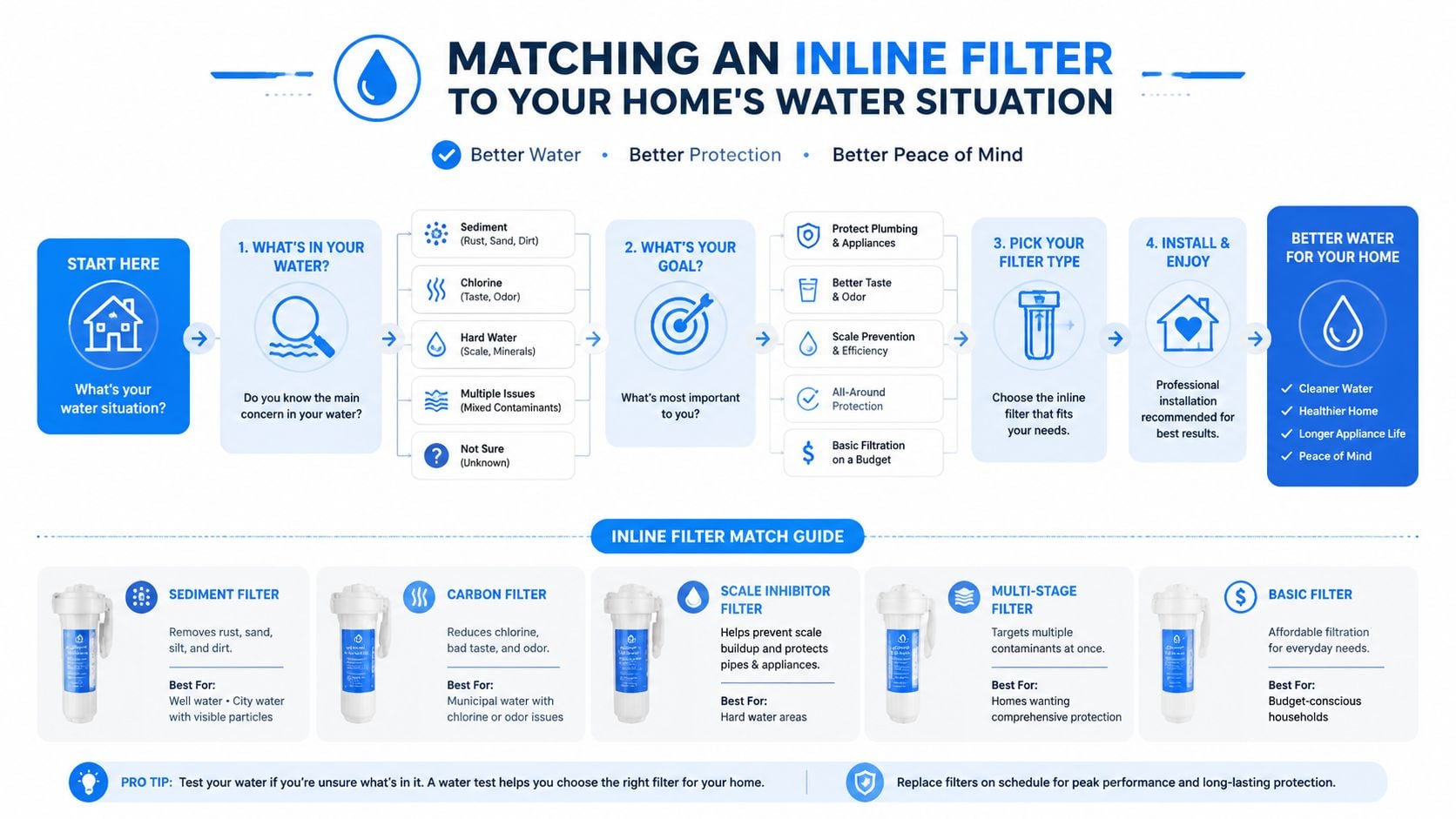
A refrigerator filter is enough when the target is narrow and documented. It isn’t a substitute for well-water treatment, broad under-sink treatment, or whole-home protection.
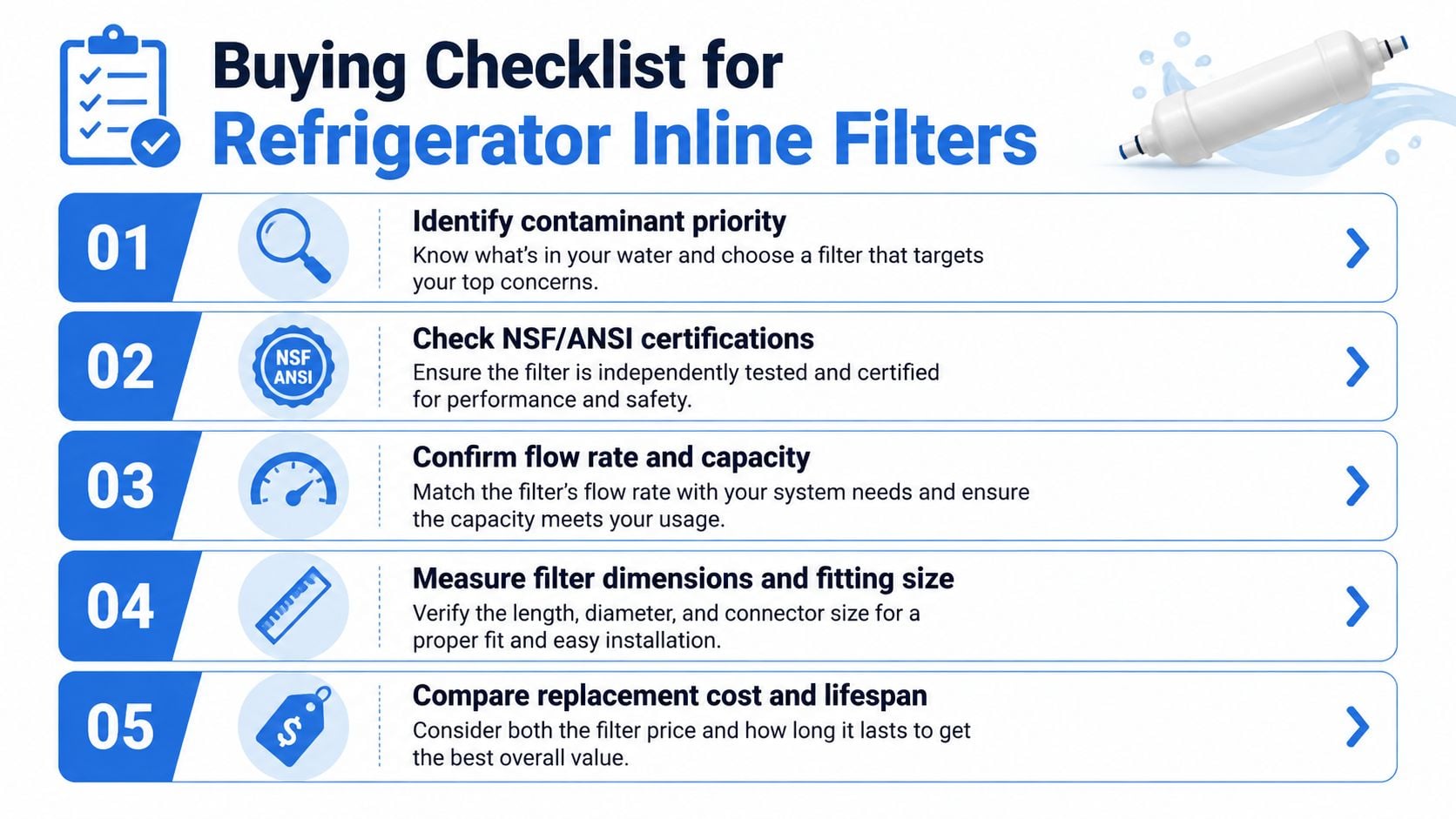
A Practical Buyer Checklist for Refrigerator Inline Filters
Use this checklist before comparing brands or clicking “buy.” It keeps the decision tied to your water and appliance instead of the loudest product page.
-
Name the contaminant priority. Chlorine taste and odor point toward NSF/ANSI 42. Lead and other named health-related contaminants require NSF/ANSI 53 claims. Emerging compounds require NSF/ANSI 401 claims, with the exact substance listed.
-
Read the pressure specification. Retrieved refrigerator filter sheets commonly use a 20 to 100 psi operating range, but your cartridge may differ. Confirm the manufacturer’s stated range and investigate whether a pressure regulator or plumbing repair is needed. The cited benchmark appears in this refrigerator filter specification sheet.
-
Match flow to the appliance. A dispenser and ice maker need adequate water delivery. Favor a cartridge designed for refrigerator service rather than one chosen only for an impressive capacity figure.
-
Check capacity and replacement timing. A cartridge rated around 300 gallons or 6 months is common in retrieved technical sheets, but the actual rating for your model controls. Set a reminder and replace sooner if flow, taste, or ice quality changes.
-
Confirm the connection. Many refrigerator lines use compact quick-connect fittings, but tubing and inlet sizes vary. Confirm the filter’s inlet and outlet, line diameter, directional arrow, and available clearance before installation.
-
Verify the certificate. Search the manufacturer’s documentation or the certifier’s listing. A product photo that says “NSF” without a standard number doesn’t tell you whether the filter covers chlorine, lead, PFAS, or anything else you care about.
One more point matters for health-conscious households: lead-free materials certification is not the same as lead-reduction certification. NSF/ANSI 372 addresses lead-free compliance for materials, while NSF/ANSI 53 addresses health-related reduction claims when lead is specifically listed. Don’t confuse the two.
What to Look for Beyond the Marketing Claims
Marketing language is a poor basis for choosing an inline refrigerator filter. “Reduces contaminants” means little until the manufacturer identifies the contaminant, testing standard, capacity, flow conditions, and test basis. “PFAS protection” also needs a named compound and a defined certification scope.
Certification scope comes first. NSF/ANSI 42 generally addresses aesthetic effects such as chlorine taste and odor, while NSF/ANSI 53 covers listed health-related contaminants. NSF/ANSI 401 addresses certain emerging compounds. A micron rating describes particle filtration. It does not, by itself, prove reduction of dissolved lead, fluoride, chromium, or PFAS. Micron rating, certification, and capacity answer different questions.
A short verification routine
- Check the certificate listing. Match the product model to the exact standard and contaminant claim.
- Compare claims with your water report. If your utility identifies PFOA, PFOS, lead, or another compound, that name should appear in the filter documentation.
- Inspect materials information. Confirm the manufacturer explains lead-free materials and housing construction. Lead-free materials certification is different from lead-reduction certification.
- Check performance under refrigerator conditions. A filter can meet its claim on paper yet restrict pressure enough to slow the dispenser or weaken ice-maker fill. Favor a cartridge rated for refrigerator service, not one selected only for a large capacity figure.
- Question long-life promises. A capacity claim around 1,400 gallons appears in some product listings, but your pressure, sediment load, and usage determine actual service life. Market context is discussed in inline refrigerator filter coverage.
- Plan replacement support. Choose a company that provides replacement timing, fitting information, and technical documentation. Replace the cartridge when flow, taste, or ice quality declines, even if the calendar reminder has not arrived.
Your choice should rest on certification scope, pressure handling, flow, and replacement cadence. Brand familiarity comes afterward. Woder Filters offers inline systems using Woder Advanced Selective Filtration®, with a one-year cartridge guarantee. See Woder Filters for refrigerator-line options.