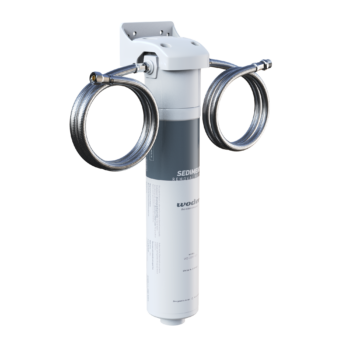
Have you ever seen 0.5 micron on a water filter box and assumed that number told you everything you needed to know? It doesn't. Two filters can share the same rating and still behave very differently once water starts moving through them, which is why the label alone can be misleading for homeowners trying to make a practical choice.
The question is simpler. What does 0.5 micron mean in the kitchen, at the faucet, and in the practical world of sediment, cysts, taste, and flow? A good filter answer should help you understand what the number does, what it doesn't prove, and why the difference between nominal and absolute ratings matters more than most packaging makes clear.
Table of Contents
- Why Micron Rating Alone Doesn't Tell the Whole Story
- Understanding What 0.5 Micron Means
- What Contaminants a 0.5 Micron Filter Removes
- The Flow Rate Trade-Off You Need to Consider
- When 0.5 Micron Filtration Makes Sense for Your Home
- Looking Beyond Micron Rating for Complete Water Protection
Why Micron Rating Alone Doesn't Tell the Whole Story
A micron rating measures the size of particles a filter is meant to capture, but that number does not tell you how consistently the filter performs. In actual household use with sediment, cysts, taste, and flow, the media inside the cartridge, the housing design, the water pressure, and the amount of sediment in your water all shape what happens at the tap. That is why one water filter 0.5 micron can work like a solid polishing stage, while another only looks precise on paper.
The number on the box is only the starting point
The industry also uses different kinds of ratings. A nominal micron rating can capture around 85% of particles at the stated size, while an absolute rating is much more consistent. That difference matters because a nominal filter may still let some particles through even though the label sounds precise. One technical source notes that some nominal 1-micron filters can still allow 20–30% of 1-micron particles such as Cryptosporidium to pass, which is a good example of why the size printed on the package is not the whole story (All Filters micron flow guide).
That is also why buyers get frustrated when they compare products only by the micron number. A filter can be tight enough to sound impressive and still be the wrong match for a home with sediment-heavy water or a high-flow kitchen tap. The better question is whether the rating is paired with the right media and the right use case.
Practical rule: If two filters share the same micron rating, compare the rating type, cartridge construction, and intended application before you compare the price.
For homeowners who want a clear example of how selective filtration is framed differently from simple straining, Woder's explanation of Advanced Selective Filtration® gives useful context. It shows why the filtration conversation should not stop at pore size.
Why labels can be misleading
Marketing often makes a fine rating sound like a universal solution. Real filtration does not work that way. A 0.5-micron cartridge built for drinking water can be excellent at polishing taste and reducing fine particles, while a different product with the same number might be tuned more for sediment capture or slower flow.
The short version is this. Micron rating tells you the rough size of what a filter is designed to catch. It does not tell you whether the filter is absolute or nominal, how quickly it will clog, or whether it is built for a faucet, a refrigerator line, or a whole-house system. That is the gap that trips people up.
Understanding What 0.5 Micron Means
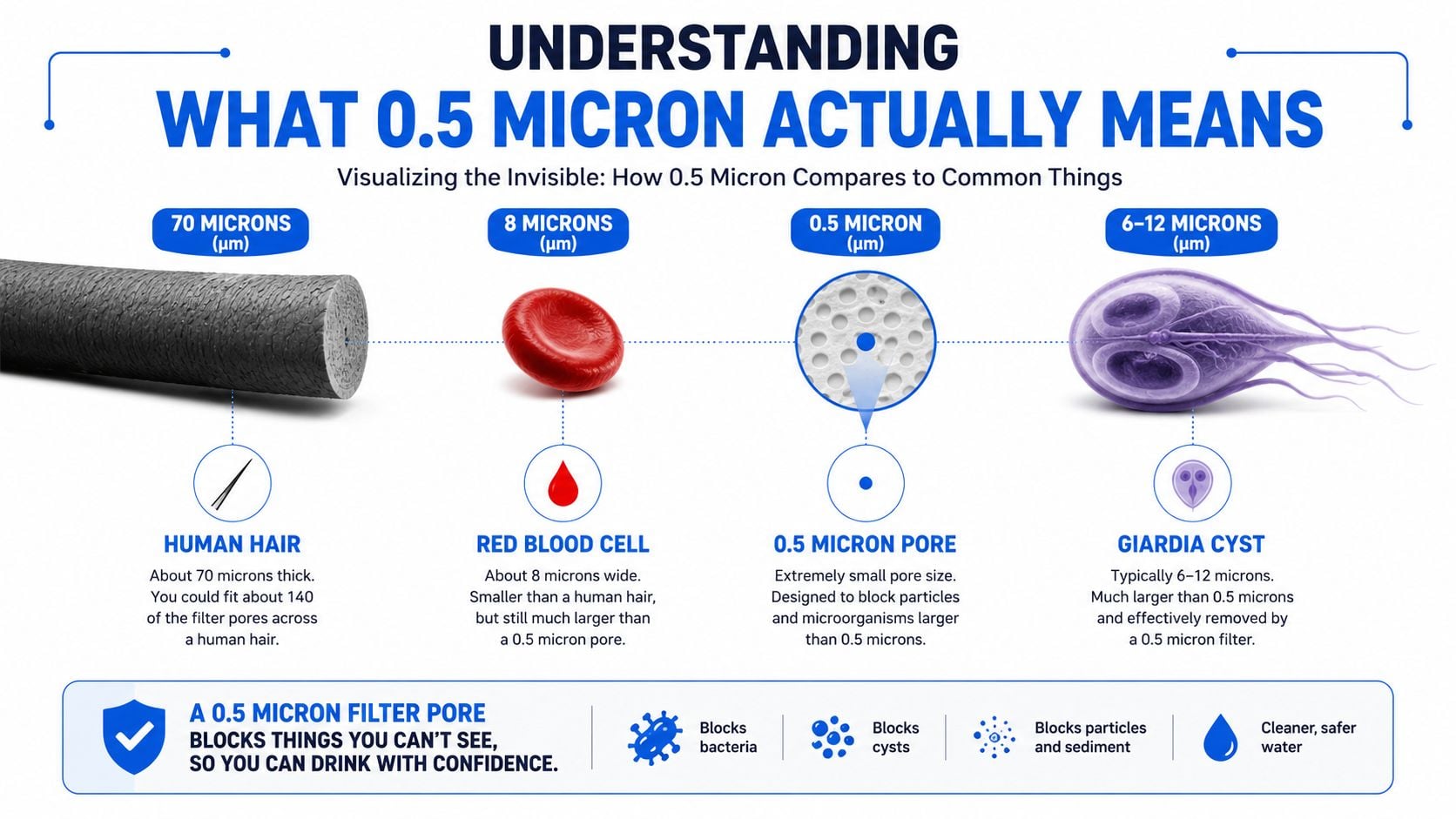
A 0.5-micron opening is small enough to sit in the fine filtration range used for drinking water and food-and-beverage applications. It matters in a practical way because many contaminants people worry about are much larger than that. Giardia cysts are typically about 4–7 microns and Cryptosporidium oocysts about 4–6 microns, so a 0.5-micron filter sits well below their size and is commonly used for cyst reduction in drinking-water systems (FilterTested micron rating guide).
What a micron looks like in practice
A micron is one-millionth of a meter, which makes the number hard to picture until you compare it with real particles. A 0.5-micron pore is meant for tiny contaminants that sit far below what your eye can track, while a 5-micron filter is more suited to sediment, rust, sand, and fine silt. In the source comparison table, 0.5 µm is explicitly associated with cysts such as Cryptosporidium and Giardia and with fine bacteria.
The gap between 1 micron and 0.5 micron is larger than it sounds. One source notes that the pore cross-sectional area drops from 0.785 square microns to 0.196 square microns, which means the 1-micron pore is 4 times larger (Brother Filtration micron guide). That tighter geometry is part of why finer filters can catch more small particles, and it also helps explain why they usually restrict flow more.
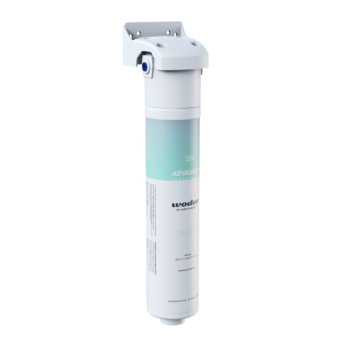
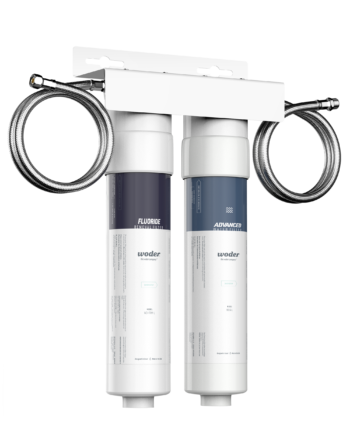
You can also see why 0.5 micron became relevant in point-of-use drinking-water systems. It is small enough to address protozoan risks and visible taste issues, while still being practical for under-sink and faucet-mounted formats. For a product example in that category, the Woder Fluoride Removal and Advanced Dual Filtration System combines fluoride-focused filtration with a second-stage advanced cartridge. The product snapshot states that the system is a U.S.-made inline filter with up to 95% fluoride removal, while the second-stage cartridge is WQA Gold Seal certified for NSF/ANSI 42 chlorine taste and odor, and NSF/ANSI 372 lead-free compliance. For a closer look at how fine media is built for sediment capture, see this explanation of a pleated sediment water filter.
Nominal and absolute ratings aren't the same
A nominal rating means the filter captures most particles around that size, not all of them. An absolute rating is much stricter and gives you a more consistent barrier. That distinction matters most when you are trying to understand what the number promises versus what it implies.
A smaller micron number is not a guarantee of broad microbiological protection. It is only one part of the picture.
The clearest takeaway is to read the rating as a starting point, not a verdict. A well-made 0.5-micron filter can be a strong drinking-water stage, but the label only makes sense when you know whether the rating is nominal or absolute and what the cartridge is built to do.
What Contaminants a 0.5 Micron Filter Removes
A 0.5-micron filter is most useful when the concern is fine particulate, cyst reduction, and taste or odor issues at the tap. It is not meant to replace whole-house treatment. It works as a point-of-use stage, so the water you drink and cook with gets a finer finish than a coarse sediment filter can provide.
Protozoan cysts and fine particles
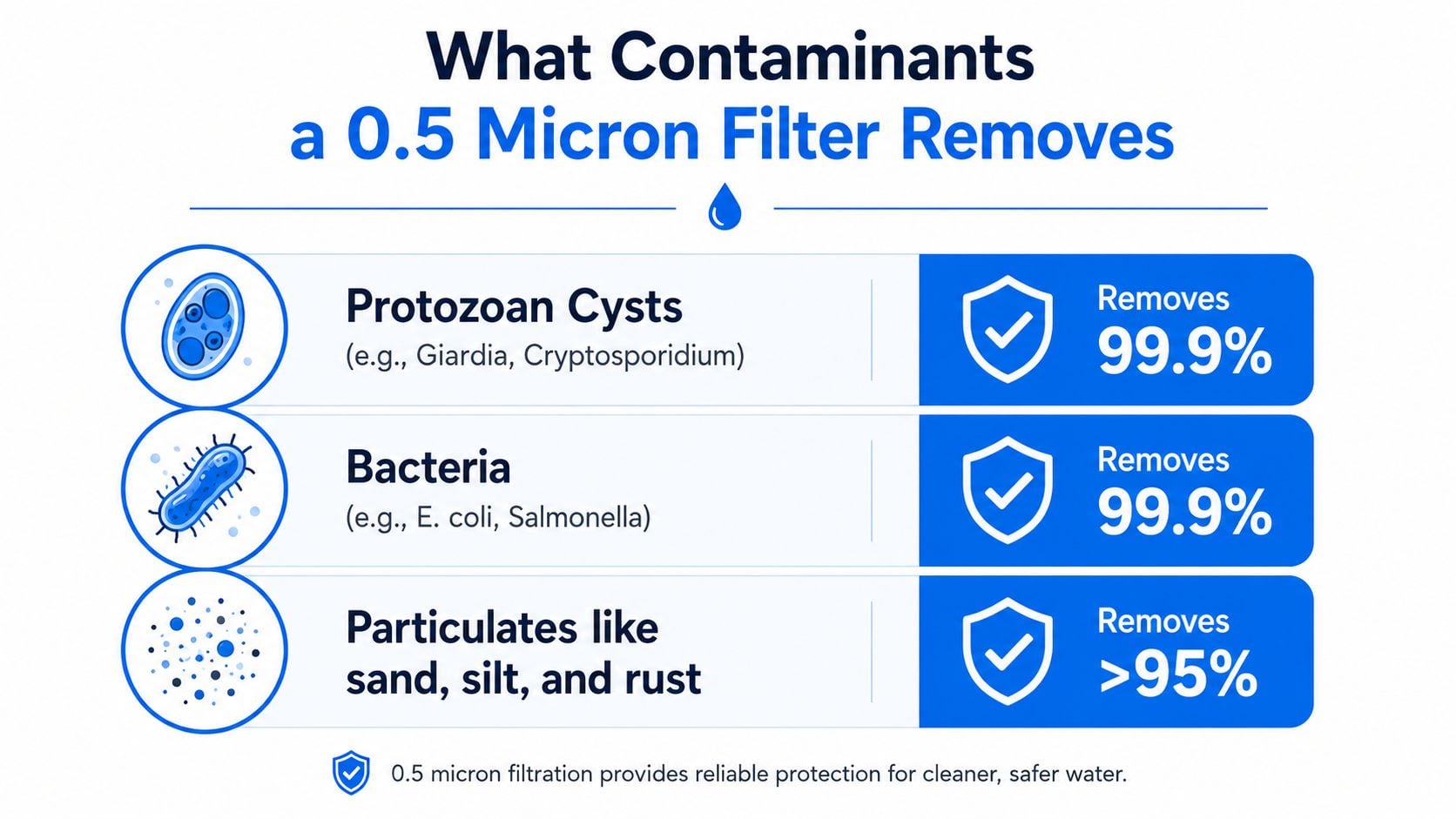
Protozoan cysts are one of the main reasons people look at this rating. Giardia and Cryptosporidium are much larger than 0.5 micron, so a properly built 0.5-micron system is aimed at that class of contamination. That is why this rating matters in drinking-water treatment, especially in setups that focus on tap-side protection rather than whole-house throughput.
It also handles the kind of material homeowners can see and feel. The verified comparison table links 0.5 µm to fine bacteria and cysts, while 5 µm is tied more to sediment, rust, sand, and fine silt. In plain terms, 0.5 micron sits on the polishing end of the filter range, not the coarse debris end.
A tighter rating helps with very small contaminants, but it does not solve every water issue. Filter choice starts with the contaminant, then the cartridge rating, then the build quality behind that rating.
- Protozoan cysts: A fine rating is useful because Giardia and Cryptosporidium are much larger than 0.5 micron, so the pore size is well below the target.
- Fine bacteria: The verified data links 0.5 µm with fine bacteria in source comparisons, which is one reason these filters are used as drinking-water polishers.
- Sediment and visible particles: A 0.5-micron carbon block can still catch fine particulate matter, but if the water is heavily loaded, it can clog early and lose flow.
For readers trying to separate particulate concerns from newer chemical concerns, Woder's page on microplastics in tap water research and health is a useful companion read. It helps frame what a fine filter can trap at the faucet and what still needs a different treatment approach.
Carbon block filters and everyday taste issues
A 0.5-micron carbon block does more than strain particles. Product specifications show these filters being used for chlorine, taste and odor, sediment, dirt and particles, organic matter, Giardia cyst, Cryptosporidium, and lead at the faucet or under the sink (BWT specification sheet). Another product spec lists reduction targets including chlorine taste and odour, cysts, lead, sediment, dissolved organic matter, microplastics, pathogenic bacteria, pesticides and herbicides, PFAs, turbidity, and VOCs (Finer Filters product spec).
That is why 0.5-micron carbon block cartridges are popular at the sink. They are small enough to polish drinking water, yet still practical for daily use. They are not trying to do every job at once.
The Flow Rate Trade-Off You Need to Consider
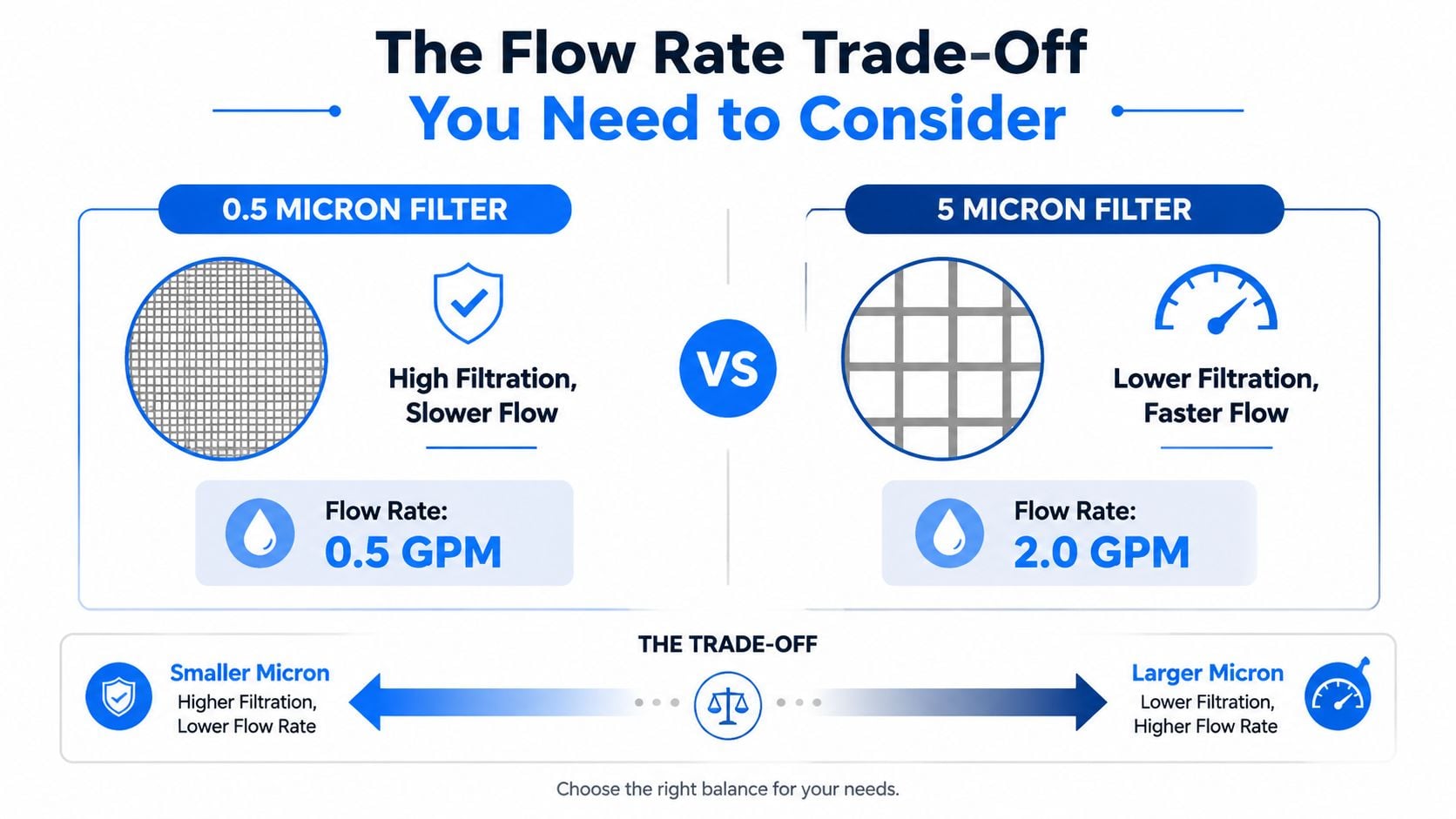
Finer filtration almost always brings a trade-off. As the pores get tighter, water meets more resistance on the way through, so a 0.5-micron filter usually flows more slowly than a 1-micron filter, and both are generally slower than coarser sediment cartridges.
The numbers behind the slowdown
One flow-rate guide notes that clean 1-micron gravity filters typically process about 1 to 1.5 liters per minute, while comparable 0.5-micron units flow at about 0.5 to 0.75 liters per minute. That is roughly half the flow rate in exchange for finer particle capture. The point is simple. More protection can mean less speed at the tap. If you want a closer look at the wider home-maintenance trade-offs around filtration and upkeep, the home maintenance priorities guide is a useful companion read.
This is also why a filter can feel fine on day one and slower a few months later. As the carbon block loads with sediment or organics, flow can drop before the cartridge reaches its full rated life. The filter is still doing its job, but the buildup changes how easily water moves through it.
The hardware matters as much as the micron rating. A 0.5-micron point-of-use carbon block can be rated at 1.7 gpm with a 14,000-gallon / 6-month service life, operating at 25–125 psi and 40°F+ (Grainger 3M Aqua-Pure quick-connect filter). Another 0.5-micron inline filter is rated at 3.8 L/min (1.0 gpm) with a 7,600 L maximum capacity, which shows how cartridge geometry and intended use shape the flow you get (Reece BWT spec sheet).
Practical rule: If your household needs faster delivery than about 1 to 1.7 gpm, expect either a noticeable pressure drop or a larger-capacity housing.
What that means at the tap
A slower flow is often acceptable at a dedicated drinking faucet. At a refrigerator line or a kitchen sink where several people draw water back to back, it can become annoying if the system is undersized. Micron rating and cartridge design need to be considered together, because the same 0.5-micron label does not guarantee the same day-to-day experience.
A 5-micron filter is still better for simple sediment jobs, while 0.5 micron is the finer choice for point-of-use polishing. The right pick depends on whether you care more about speed or fine capture, and in many homes you have to choose the balance that fits the way the faucet is used.
When 0.5 Micron Filtration Makes Sense for Your Home
A 0.5-micron filter makes the most sense when you want cleaner water at one tap, not filtered water for the whole house. It is a good fit for a kitchen sink, a drinking faucet, or a refrigerator line where the goal is finer polishing, better taste, and stronger reduction of small particles. The important detail is that two filters with the same micron label do not always perform the same way. A nominal 0.5-micron cartridge is more of a general size claim, while an absolute 0.5-micron filter is built to hold back particles at that size more consistently.
Good fits and poor fits
Homes that rely on well water, or that live with a higher concern for protozoan cysts, are common candidates for a finer drinking-water cartridge. The same applies when the water tastes flat, smells off, or carries fine visible specks that you notice at the glass or faucet. In those cases, a 0.5-micron filter is usually better placed at a point of use than in a whole-house setup.
Product details help show how that plays out in real use. A 0.5-micron point-of-use carbon block filter is rated at 1.7 gpm with a 14,000-gallon / 6-month service life, operating at 25–125 psi and 40°F+, which makes it suitable for under-sink drinking taps and refrigerator lines (Grainger 3M Aqua-Pure quick-connect filter). Another product snapshot shows a 0.5-micron system designed for under-sink use at up to 7.5 L/min with a 6 to 12 month cartridge life.
That contrast matters because the micron number alone does not tell you how the filter behaves at the tap. A finer cartridge can do a better job on small particles, but if it is paired with a limited housing or a high-demand fixture, you may feel the trade-off in flow. That is why homeowners should compare the rating with the intended use, not just read the label and assume all 0.5-micron products work the same way.
If you are trying to set home upkeep priorities and fit filtration into the rest of your maintenance plan, the home maintenance priorities guide is a useful way to keep the decision in context.
Where coarser filtration still wins
A coarser filter is the better choice when the incoming water carries a lot of visible sediment. In that situation, a 0.5-micron cartridge can load up faster than expected and lose flow before it has delivered much useful service. The finer rating helps with polishing, but it is not the best first step when grit is the main issue.
Simple filter logic: If the main complaint is grit, start coarser. If the main complaint is drinking-water polish, move finer.
For many homes, a 0.5-micron stage belongs near the sink, not at the service entrance. That keeps the system practical, avoids pushing a fine cartridge into a job it was not meant to do, and helps you choose a setup that matches how the house uses water.
Looking Beyond Micron Rating for Complete Water Protection
A micron rating tells you one thing. It does not tell you whether the filter is independently verified, whether the claim is tested, or whether the system is built for the contaminant you're worried about. That's why homeowners get better results when they think in terms of certification, media type, and treatment stages, not just pore size.
What to check before you buy
Reputable guidance points buyers toward certification-backed claims such as NSF/ANSI testing for cyst reduction rather than relying on micron size alone. That matters because lower micron ratings don't automatically mean broader microbiological protection. It's also the reason a product can be highly effective for chlorine, taste, and fine particles while still not being a universal solution for every contaminant class.
A useful example is Woder's U.S.-made point-of-use approach, which is built around Advanced Selective Filtration®. In the brand's own materials, that technology is positioned to remove contaminants like PFAS, lead, heavy metals, fluoride, chromium, and chlorine while leaving essential minerals in the water. That's a very different promise from a simple mechanical filter, and it helps explain why some homeowners prefer selective filtration to approaches that strip out everything dissolved.
For readers comparing filtration methods, a technical overview like how chlorine dioxide works can be helpful context for understanding how disinfection chemistry differs from physical filtration. It's a reminder that not every water treatment method solves the same problem.
The smarter way to think about the number
The best filter choice starts with your water, not with the label. Testing, source awareness, and the right certification matter more than a clean-looking specification sheet. A 0.5-micron cartridge is a useful tool, but it works best as part of a strategy, not as a stand-alone guarantee.
For homeowners who want a point-of-use system that focuses on targeted reduction rather than stripping water down to zero TDS, Woder Filters offers U.S.-made under-sink and inline options built around selective filtration. If you want to compare how that approach fits your tap, visit Woder Filters and look at the cartridge type, certification, and application that match your water.