- How Woder Filters Are Priced
- The Woder Model Lineup: What Each One Does
- Which Model Is Worth It for Your Situation
- What You're Actually Paying For
- Annual Cost Comparison: Woder vs. Alternatives
- How to Choose Without Guessing
- FAQs
- The Bottom Line
If you're trying to figure out which Woder filter fits your home and whether the price is actually justified, this guide answers that directly.
Woder makes under-sink and inline water filters built around proprietary Advanced Selective Filtration technology — a nanoparticle-based system that removes 99.9% of lead, chlorine, chromium 6, mercury, PFAS, carcinogens, and volatile organic compounds while leaving calcium and magnesium in the water. No reverse osmosis, no wastewater, no plumber. The product line spans several models, and picking the right one comes down to household size, flow rate, and whether you want a permanent under-sink setup or something more flexible.
Here's how to think through each option.
How Woder Filters Are Priced
Woder sells direct at woder.com, with current pricing listed on each product page. Filter units generally run $80 to $200, and annual replacement cartridges typically fall between $40 and $80. That's a significant gap from a full reverse osmosis system, which often costs several hundred dollars before professional installation is factored in.
The cost structure has two parts worth keeping in mind:
- Initial unit cost: the filter housing and first cartridge
- Ongoing cartridge cost: annual replacement to maintain performance
Over two years, most Woder setups cost less than a year's worth of bottled water for a family of four. If you're currently spending $30 to $50 a month on single-use bottles, that math isn't complicated.
The Woder Model Lineup: What Each One Does
Each Woder model is built around the same core filtration technology, but they differ in capacity, form factor, and installation type.
WD-D-8K-FRM-ADV-DC
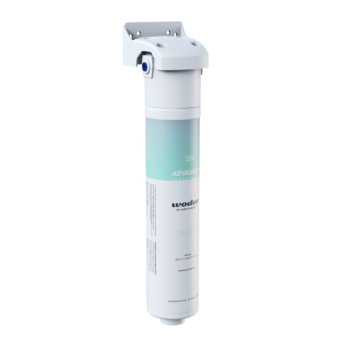
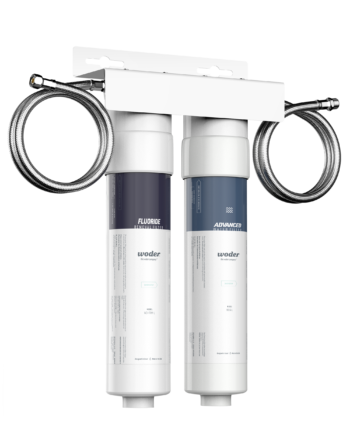
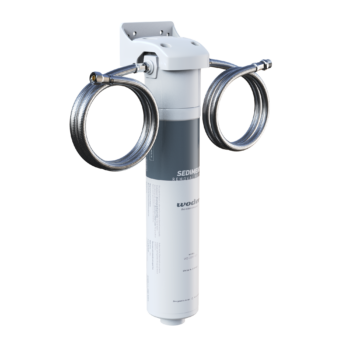
This is Woder's flagship under-sink model. The 8K rating means it's good for 8,000 gallons before the cartridge needs replacing. It connects directly inline with your existing cold water line — no dedicated faucet, no drain line, no pressurized tank. For a household of two to four people using filtered water for drinking and cooking, this is typically the right fit.
The Advanced Selective Filtration in this model uses nanoparticles to pull out contaminants without stripping the minerals that affect taste and health. If your concern is PFAS, lead, or chlorine taste, this is the model most buyers are looking at.
WD-S-5K-REP
The 5K model is a cartridge-compatible unit rated at 5,000 gallons, suited for smaller households or lower-volume use. If you're a renter who wants filtration without a major installation commitment — or if filtered water is mainly for drinking rather than cooking — the 5K capacity is usually enough for a full year before replacement. It also works well as a secondary filter at a second sink or in a smaller apartment.
WD-10K-ADV-PORT
At 10,000 gallons of rated capacity, this is Woder's highest-volume option. It's built for families of four or more, or households where filtered water runs through cooking, coffee, and drinking throughout the day. The "portable" designation refers to its flexible inline installation, not that it's handheld — it still installs under the sink but can be repositioned more easily than fixed configurations.
WD-G4-210-JG
This model is designed for refrigerator and icemaker line connections. If your main concern is the water going into your fridge's dispenser or ice maker, it installs inline with the refrigerator supply line and uses the same Advanced Selective Filtration mechanism. It's also a natural pairing with an under-sink model if you want both your tap and fridge covered.
Which Model Is Worth It for Your Situation
Single person or couple, apartment or renter: The WD-S-5K-REP covers your volume, installs without permanent modifications, and keeps annual costs low. One cartridge replacement per year is typically all you need.
Family of three or four, homeowner: The WD-D-8K-FRM-ADV-DC is the most common choice here. The 8K capacity handles daily drinking and cooking use for a full year, and the inline installation takes under an hour with basic tools — no ongoing plumber dependency.
Larger household or high daily volume: The WD-10K-ADV-PORT gives you more time between cartridge replacements and handles heavier use without flow rate drop-off. If you're running filtered water to a coffee maker, a cooking pot, and a drinking glass at the same time, the higher capacity matters.
Refrigerator or icemaker line: The WD-G4-210-JG handles this specific use case cleanly. Pair it with an under-sink model if you want full coverage.
What You’re Actually Paying For
Contaminant removal without mineral stripping. Reverse osmosis removes minerals along with contaminants, which affects both taste and the nutritional profile of your water. Woder's Advanced Selective Filtration removes the contaminants while keeping calcium and magnesium intact. That's the core reason buyers in the $80 to $200 range choose Woder over an RO system. It's worth noting that Aquasana makes a similar mineral-preserving claim under its Claryum technology, but Aquasana units typically price higher than comparable Woder models.
No installation overhead. Professional RO installation can add $150 to $300 to your total cost before the filter does anything. Woder's inline design eliminates that entirely — connect it to your existing cold water line, and you're done.
US manufacturing. All Woder filters are made in the United States. For buyers who factor origin into purchasing decisions, that's a concrete differentiator from most competitors in this price range.
Annual Cost Comparison: Woder vs. Alternatives
| Option | Estimated First-Year Cost | Ongoing Annual Cost |
|---|---|---|
| Woder under-sink filter | $80–$200 (unit + first cartridge) | $40–$80 (replacement cartridge) |
| Bottled water (family of 4) | $360–$600+ | Same or more |
| Reverse osmosis system | $200–$500+ (unit) | $50–$150 (filters + membrane) |
| Pitcher filter (basic carbon) | $30–$60 | $60–$120 (frequent replacement) |
The RO comparison is worth unpacking. Systems in the $200 to $500 range often require a plumber, produce wastewater, and strip minerals. Woder sits below that cost ceiling with no installation fees and no mineral trade-off.
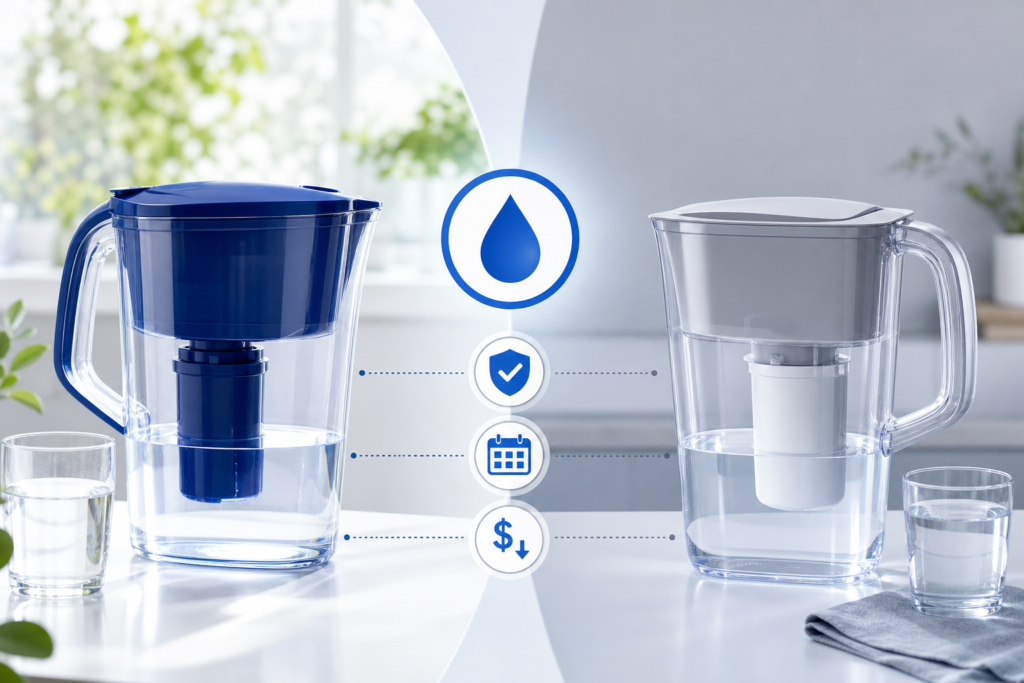
Pitcher filters cost less upfront, but replacement frequency is higher, flow rate is slower, and most don't remove PFAS or heavy metals at the same claimed removal rate.
How to Choose Without Guessing
Woder's site includes a product finder wizard that walks you through household size, installation type, and primary concerns to point you toward the right model. If you're unsure whether the 5K or 8K capacity fits your usage, it's the fastest way to get a specific answer without digging through spec sheets.
The full model lineup, current pricing, and replacement cartridges are all at woder.com.
FAQs
How often do Woder filter cartridges need to be replaced?
It depends on the model's rated capacity and your household's daily consumption. The 5K model is typically sufficient for one year in a one to two person household. The 8K covers a family of three to four for roughly a year. The 10K extends that timeline for larger households. Woder's product pages and the model finder can give you a more specific estimate based on your usage.
Does Woder pricing include the replacement cartridge?
Initial unit purchases typically include the first cartridge. Replacement cartridges are sold separately and available for all models at woder.com. Annual cartridge cost generally falls between $40 and $80 depending on the model.
Is a Woder filter hard to install?
No. Woder filters connect directly inline with your existing cold water line under the sink. There's no tank, no drain line, and no dedicated faucet required. Most installations take under an hour with basic tools and no plumbing experience.
Does Woder remove PFAS?
Woder claims 99.9% removal of PFAS through its Advanced Selective Filtration technology. If PFAS is your primary concern, Woder also offers water testing kits to establish a baseline before and after installation.
Will a Woder filter remove the minerals from my water?
No. Unlike reverse osmosis, Woder's selective filtration is designed to remove contaminants while leaving naturally occurring calcium and magnesium in the water. That's the core distinction between Woder and RO-based systems.
Which Woder model is best for a family of four?
The WD-D-8K-FRM-ADV-DC is the most commonly suited model for a household of three to four people. Its 8,000-gallon capacity covers typical drinking and cooking use for a full year before cartridge replacement. Use the product finder at woder.com to confirm based on your specific usage patterns.
Can I use a Woder filter for my refrigerator water line?
Yes. The WD-G4-210-JG is designed specifically for refrigerator and icemaker line connections. It installs inline with the refrigerator supply line and uses the same filtration technology as the under-sink models.
The Bottom Line
Woder filters occupy a specific, practical position: more effective than a pitcher filter, less expensive and less disruptive than reverse osmosis, and built to remove the contaminants that matter most in 2026 without sacrificing the minerals you actually want in your water.
The right model depends on your household size and how you use filtered water day to day. For most families, the 8K under-sink model covers the full range of needs at a cost that holds up over a two-year horizon. For smaller households or renters, the 5K keeps costs lower without giving anything up on filtration quality.
See current pricing and find your model at woder.com.