- What Brita Actually Filters (And What It Doesn't)
- Why Pitcher Filters Have Structural Limits
- What Under-Sink Filters Do Differently
- The Minerals Question
- Installation: Simpler Than You Think
- Pitcher Filter vs. Under-Sink Filter: A Direct Comparison
- When a Pitcher Filter Is Enough
- Finding the Right Under-Sink Filter
- Frequently Asked Questions
You bought a Brita because you wanted cleaner water. That makes sense — pitcher filters are cheap, easy to find, and require zero installation. But if lead is your main concern, the answer to "does Brita remove lead?" is more complicated than the packaging suggests. The gap between what a pitcher filter actually does and what an under-sink filter does is worth understanding before you assume you're protected.
What Brita Actually Filters (And What It Doesn’t)
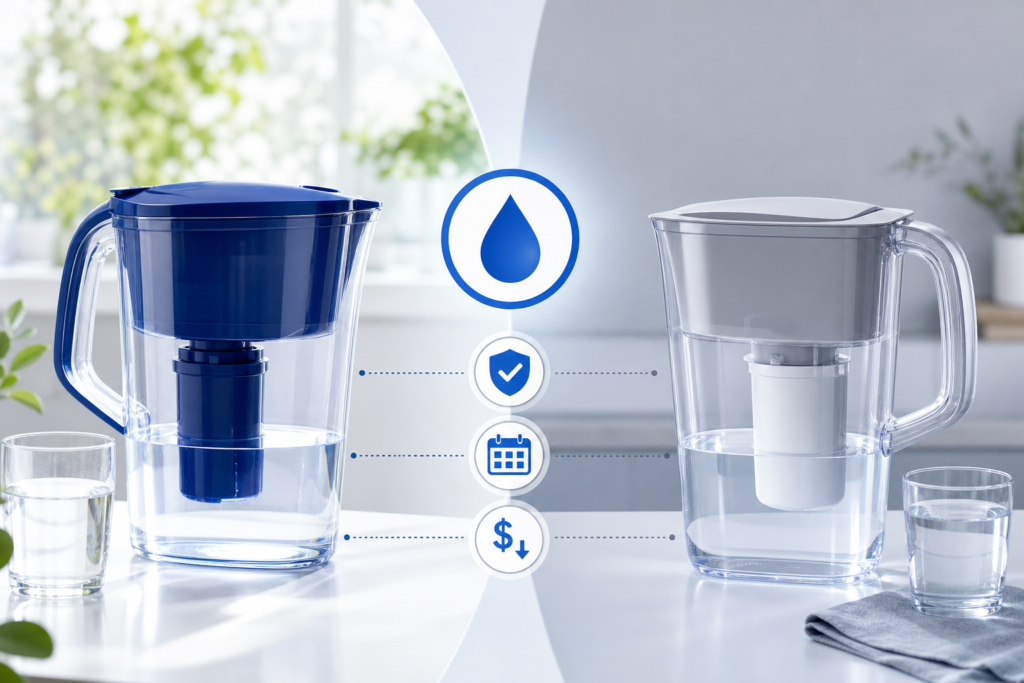
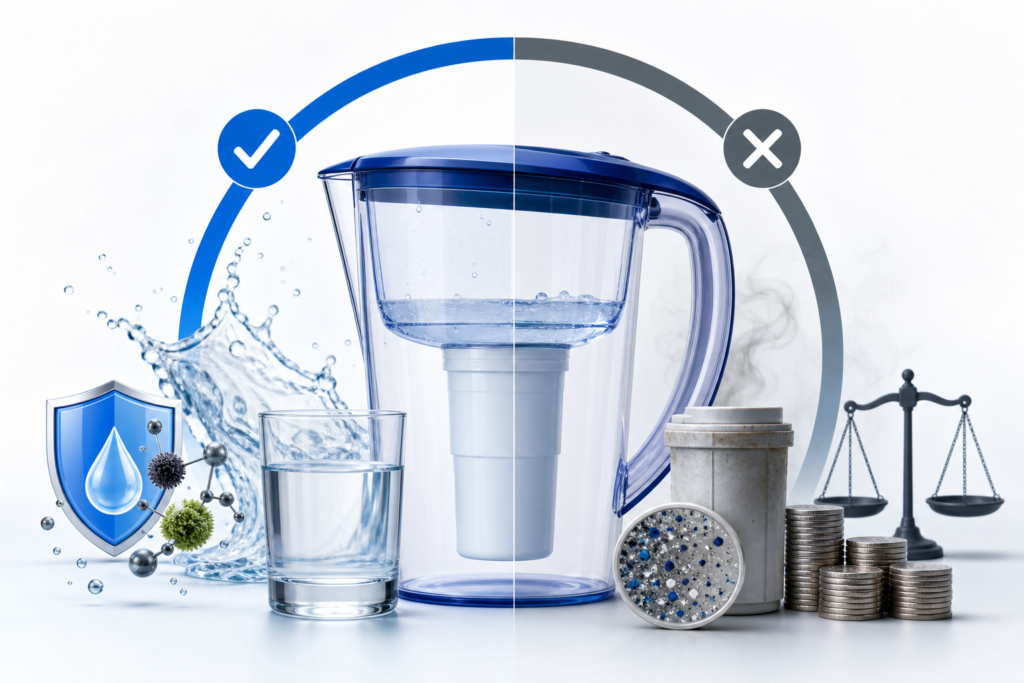
Brita makes several filter types, and they don't perform the same way. The standard Brita pitcher filter — the one most people buy — is certified to reduce chlorine taste and odor, zinc, and some particulates. It is not certified to reduce lead.
Brita does make a separate product called the Longlast filter, which carries NSF/ANSI Standard 53 certification for lead reduction. So the honest answer to "does Brita remove lead?" is: some Brita filters do, most don't, and the one that does requires you to buy the right cartridge and confirm you're actually using it.
That distinction matters more than most people realize. A lot of households running a standard Brita pitcher believe they're filtering lead. They're not.
Why Pitcher Filters Have Structural Limits
Even when a pitcher filter is certified for lead reduction, the format itself creates problems that have nothing to do with the filter media.
Contact time and flow rate
Pitcher filters work by gravity. Water drips slowly through activated carbon or ion exchange media — and that slow drip is actually necessary for the filter to work. Contaminants need enough contact time with the media to be captured. If you fill the reservoir and pour immediately, you may be drinking water that moved through too quickly to be properly filtered.
Under-sink filters connect directly to your water line at a controlled flow rate. The filter does its job every time, without you managing anything.
Capacity and replacement tracking
A standard Brita filter handles roughly 40 gallons before it needs replacing. The Longlast handles around 120 gallons. That sounds like a lot, but a household of two or three people can burn through 40 gallons in a few weeks. Most people don't track this carefully. When a filter is overdue, it stops reducing contaminants effectively — and in some cases can release previously captured contaminants back into the water.
Under-sink filters typically handle 8,000 to 10,000 gallons per cartridge, which works out to roughly one to two years for most households. Less frequent replacement means less room for error.
What pitcher filters don’t target at all
Standard pitcher filters — even good ones — aren't designed to remove PFAS, chromium 6, mercury, or volatile organic compounds. These are the contaminants showing up in municipal water quality reports and local news stories with increasing frequency. If your concern goes beyond taste and basic chlorine, a pitcher filter isn't the right tool.
What Under-Sink Filters Do Differently
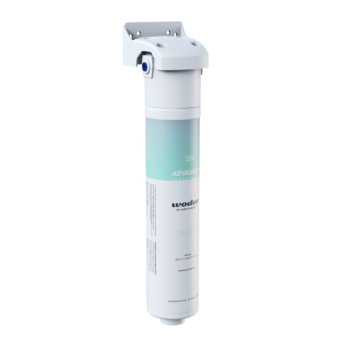
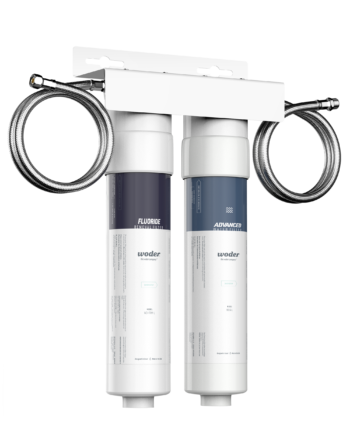
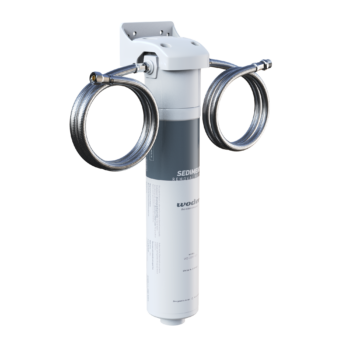
An under-sink filter connects inline to your cold water line, usually beneath the kitchen sink. Water passes through the filter every time you turn on the tap — no reservoir to fill, no waiting, no gravity drip.
Better under-sink filters use more sophisticated filtration media than activated carbon alone. Woder's filters use Advanced Selective Filtration technology, which targets specific contaminants — lead, chlorine, chromium 6, mercury, PFAS, carcinogens, and volatile organic compounds — at a 99.9% reduction rate. The design is selective by intent: it removes those contaminants while leaving calcium, magnesium, and other naturally occurring minerals in the water.
That last point is worth pausing on. Reverse osmosis strips nearly everything, including minerals. Pitcher filters don't remove enough. Woder's approach sits in between: targeted removal of harmful contaminants, intentional retention of beneficial minerals. Your water tastes like water — not like stripped-down nothing.
The Minerals Question
Calcium and magnesium aren't just nice to have. They affect how water tastes and contribute to your daily mineral intake. People who switch from tap water to heavily filtered or RO water sometimes notice it tastes flat or slightly off. That's the minerals missing.
A pitcher filter doesn't strip minerals, but it also doesn't remove much else. An under-sink filter with selective filtration removes the harmful stuff and keeps the minerals — a meaningfully different outcome than either a pitcher or an RO system delivers.
Installation: Simpler Than You Think
One reason people stick with pitcher filters is that under-sink filters sound complicated. They're not. Woder's inline filters connect directly to your existing water line with no tank, no drain line, and no wastewater output. Setup takes under 30 minutes and doesn't require a plumber. Renters can install one without making permanent plumbing changes.
Compare that to a reverse osmosis system, which typically costs $300 to $600 installed, requires a dedicated faucet, produces wastewater, and usually needs professional setup. An under-sink inline filter is a straightforward DIY project.
Pitcher Filter vs. Under-Sink Filter: A Direct Comparison
| Feature | Pitcher Filter (standard) | Pitcher Filter (Longlast) | Under-Sink Inline Filter |
|---|---|---|---|
| Lead reduction | No | Yes (NSF 53) | Yes |
| PFAS removal | No | No | Yes (Woder) |
| Chromium 6 removal | No | No | Yes (Woder) |
| Mineral retention | Yes | Yes | Yes (Woder) |
| Capacity per cartridge | ~40 gallons | ~120 gallons | 8,000–10,000 gallons |
| Installation required | None | None | 30-minute DIY inline |
| Wastewater produced | No | No | No |
When a Pitcher Filter Is Enough
Pitcher filters aren't useless. If your only concern is chlorine taste and you're on a municipal supply with no lead pipe risk, a standard Brita handles that job at minimal cost. For renters who genuinely can't touch plumbing, a pitcher is better than nothing.
But if you've seen a water quality report flagging lead, PFAS, or chromium 6 in your area — or if you live in a home built before 1986 with original plumbing — a pitcher filter isn't adequate protection. The contaminants that matter most require a filter actually designed to target them.
Finding the Right Under-Sink Filter
Not all under-sink filters are the same. The right model depends on your household's water flow rate and setup. Woder's product finder at woder.com/wizard walks you through the options and matches you to the right model. Replacement cartridges run roughly $40 to $80 per year — a fraction of what most households spend on bottled water.
If you want to know what's actually in your water before buying anything, Woder also sells water testing kits. That's a smart first step if you're not sure what you're dealing with.
Frequently Asked Questions
Does Brita remove lead from tap water?
The standard Brita pitcher filter is not certified to reduce lead. Brita's Longlast filter carries NSF/ANSI Standard 53 certification for lead reduction. If lead is your concern, you need to confirm which filter you're using — and know that even the Longlast doesn't address PFAS, chromium 6, or mercury.
What contaminants does a standard Brita filter actually remove?
Standard Brita filters are certified to reduce chlorine taste and odor, zinc, and some particulates. They are not designed to remove lead, PFAS, chromium 6, mercury, or volatile organic compounds.
What's the difference between a pitcher filter and an under-sink filter?
Pitcher filters rely on gravity flow and have limited capacity — typically 40 to 120 gallons per cartridge. Under-sink filters connect inline to your water line, filter every drop at a controlled rate, and handle 8,000 to 10,000 gallons per cartridge. They also target a much broader range of contaminants.
Do under-sink filters remove beneficial minerals?
It depends on the filter type. Reverse osmosis systems strip nearly all minerals. Woder's under-sink filters use selective filtration that removes harmful contaminants while retaining calcium, magnesium, and other naturally occurring minerals.
How hard is it to install an under-sink inline filter?
Most inline under-sink filters connect directly to your existing cold water line without a plumber, a dedicated faucet, or permanent plumbing changes. Woder's filters typically install in under 30 minutes and produce no wastewater.
How do I know if my home has a lead risk?
Homes built before 1986 are more likely to have lead pipes or lead solder in the plumbing. Your municipal water quality report — available from your water utility — will note whether lead has been detected. A home water test kit gives you a direct reading from your tap.
Is an under-sink filter worth it compared to bottled water?
For most households, yes. Replacement cartridges for a Woder filter run roughly $40 to $80 per year. A household that regularly buys bottled water typically spends several times that annually, with no filtration transparency and a lot of plastic waste.
A pitcher filter is a reasonable starting point, but if lead, PFAS, or other serious contaminants are on your radar, it's not enough. An under-sink filter with selective filtration gives you real protection without stripping out the minerals that make water taste good and support your health. Find the right model for your home at woder.com.