- What Is Hard Water, Exactly?
- What Hard Water Does to Your Hair
- Does Hard Water Cause Hair Loss? The Dermatologist View
- Hard Water vs. Water Contaminants: Two Different Problems
- What You Can Actually Do
- The Mineral Question: Should You Keep Calcium and Magnesium?
- When to See a Dermatologist
- FAQs
You move to a new city and suddenly notice more hair in the drain. Your scalp feels dry and itchy. Your hair looks dull no matter what conditioner you reach for. Hard water gets the blame constantly — but does it actually cause hair loss, or is that a myth that's taken on a life of its own?
Here's what the research and dermatologists actually say, and what you can realistically do about it.
What Is Hard Water, Exactly?
Hard water contains elevated levels of dissolved minerals — primarily calcium and magnesium — picked up as groundwater moves through limestone and chalk deposits. The US Geological Survey estimates that roughly 85 percent of American homes receive hard water, so white deposits on your faucets and that slippery-soap feeling are pretty common experiences.
Hardness is measured in grains per gallon (GPG) or milligrams per liter (mg/L). Above 7 GPG is generally considered hard. Parts of the Midwest, Southwest, and South regularly see levels above 15 GPG.
What Hard Water Does to Your Hair
Hard water doesn't rinse cleanly off your hair the way soft water does. Calcium and magnesium ions bind to the proteins in your hair and to the surfactants in your shampoo, leaving behind a mineral film. Over time, that buildup makes hair feel rough, look dull, and tangle more easily.
The physical effects are real and well-documented:
- Texture changes. Hair feels coarser and harder to manage.
- Color fading. Hard water can strip artificial color faster than soft water.
- Scalp irritation. Mineral deposits disrupt the scalp's natural moisture balance, causing dryness and flaking.
- Reduced lather. Shampoo doesn't foam as well, which often leads to over-washing.
These are legitimate complaints. The question is whether any of this crosses into actual hair loss.
Does Hard Water Cause Hair Loss? The Dermatologist View
The short answer, as of 2026, is no — hard water does not directly cause hair loss. It can, however, create conditions that make existing hair problems worse.
A frequently cited study in the International Journal of Trichology found no statistically significant difference in tensile strength or elasticity between hair washed in hard water versus distilled water over 30 days. The hair looked and felt different, but the follicles themselves were not damaged.
Dermatologists draw a clear line here. Clinical hair loss stems from follicle damage, hormonal shifts, nutritional deficiencies, autoimmune conditions like alopecia areata, or genetic factors like androgenetic alopecia. Hard water doesn't attack the follicle — it affects the hair shaft and the scalp surface.
There is an indirect pathway worth acknowledging, though. When hard water causes chronic scalp irritation or dermatitis and you scratch repeatedly, that mechanical friction can increase shedding. If you're already predisposed to thinning, a compromised scalp environment doesn't help. But the mineral buildup itself isn't the root cause.
What About Chlorine and Other Contaminants?
This is where the conversation gets more nuanced — and where hard water and contaminated water often get conflated, even though they're different problems.
Chlorine, used as a disinfectant in most municipal water supplies, is a known scalp and hair irritant. It strips natural oils from both the scalp and the hair shaft. Heavy chlorine exposure — like daily pool swimming — has been linked to increased hair fragility, and the same logic applies, to a lesser degree, to tap water with high chlorine levels.
Lead and heavy metals are a separate concern. Chronic lead exposure through drinking water has been associated with systemic health effects, and some research suggests heavy metal accumulation may interfere with normal hair growth cycles. That's a different mechanism from hard water mineral buildup, but it's a reason to pay attention to what's actually in your tap water — not just how hard it is.
Hard Water vs. Water Contaminants: Two Different Problems
These are worth separating clearly, because the solutions aren't the same.
| Issue | What It Does to Hair | Primary Solution |
|---|---|---|
| Hard water (calcium, magnesium) | Buildup, dullness, texture changes | Chelating shampoo, shower filter, water softener |
| Chlorine | Strips oils, increases brittleness | Carbon filtration, shower filter |
| Lead / heavy metals | Potential systemic effects on hair growth cycle | Contaminant-removing water filter |
| PFAS / VOCs | Emerging research; systemic health concern | Advanced filtration |
Calcium and magnesium — the minerals that make water hard — are actually beneficial when you drink them. They support bone density, cardiovascular health, and hundreds of enzymatic processes. The problem with hard water is topical, not systemic. Drinking water with calcium and magnesium isn't hurting your hair from the inside.
This distinction matters when you're choosing a water filter. Reverse osmosis systems remove virtually everything, including the calcium and magnesium your body genuinely needs. That might address shower buildup in a whole-home setup, but it strips out minerals that have real health value.
What You Can Actually Do
For Shower and Scalp Issues
If hard water is affecting your hair texture and scalp comfort, the most targeted fix is a showerhead filter that reduces chlorine and some mineral content. Chelating shampoos — those containing EDTA or citric acid — break down mineral deposits on the hair shaft and are widely available.
A clarifying wash once or twice a month also helps reset buildup. Look for ingredients like phytic acid or apple cider vinegar, which dissolve calcium deposits without aggressively stripping your hair.
For Drinking Water Quality
If your concern extends beyond hair to your overall health, what you're drinking matters more than what you're showering in. Tap water can carry lead, PFAS, chlorine, chromium 6, mercury, and volatile organic compounds — none of which belong in your body, regardless of what they do to your hair.
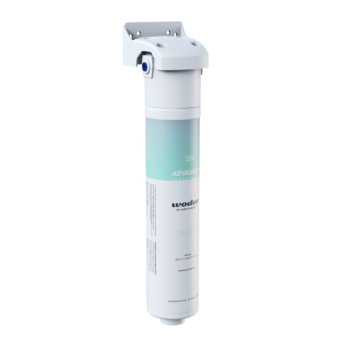
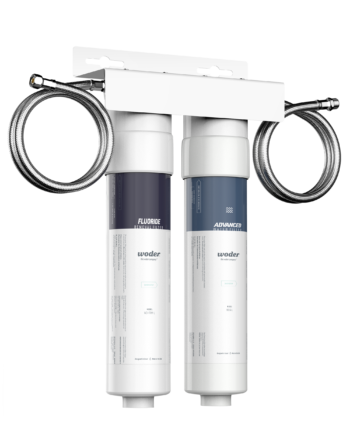
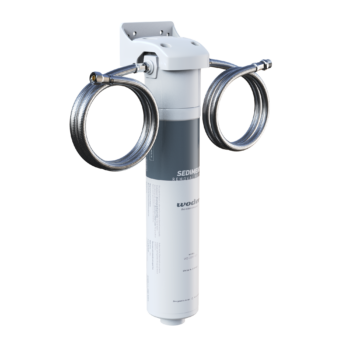
Woder Filters takes a different approach from reverse osmosis. Woder's Advanced Selective Filtration removes 99.9% of lead, chlorine, PFAS, chromium 6, mercury, and VOCs while leaving calcium and magnesium intact. You get genuinely clean water without losing the minerals that support your health. Installation connects directly to your existing water line in under 30 minutes — no tank, no drain line, no wastewater.
Not sure which model fits your home? The Woder product finder matches your household to the right filter.
The Mineral Question: Should You Keep Calcium and Magnesium?
Calcium and magnesium are not contaminants. They're naturally occurring minerals your body uses constantly. The reason hard water causes hair problems is topical chemistry — not because the minerals themselves are harmful.
When you drink water that contains calcium and magnesium, you're getting a small but meaningful contribution to your daily mineral intake. Naturally occurring calcium and magnesium in groundwater have been part of human diets for thousands of years. Stripping them out of your drinking water in the name of "purity" trades a real nutritional benefit for a perceived one.
That's why a selective filtration approach makes more sense for drinking water than a system that removes everything indiscriminately.
When to See a Dermatologist
If you're experiencing significant shedding, patchy loss, or a receding hairline, hard water is almost certainly not the cause. See a dermatologist. The real culprits — hormonal imbalances, thyroid dysfunction, iron deficiency, androgenetic alopecia, alopecia areata — require proper diagnosis and treatment. No water filter addresses those conditions.
Hard water can make your hair look and feel worse. It can irritate your scalp. But it doesn't destroy follicles, and it doesn't cause the kind of hair loss that ends up in a dermatologist's office.
FAQs
Does hard water cause permanent hair loss?
No. Dermatologists consistently find that hard water affects the hair shaft and scalp surface but does not damage hair follicles. Permanent hair loss requires follicle damage, which hard water does not cause.
Can switching to filtered water improve my hair?
Filtering out chlorine and other chemical irritants from your shower water can improve scalp comfort and reduce brittleness over time. Drinking cleaner water removes contaminants that may have broader health effects, but it won't reverse genetic or hormonal hair loss.
Is calcium and magnesium in water bad for your hair?
Topically, mineral buildup from calcium and magnesium can make hair feel rough and look dull. But those same minerals are beneficial when you drink them. The problem is on the surface of your hair, not inside your body.
What type of water filter is best for hair health concerns?
For drinking water, a filter that removes chlorine, lead, and PFAS while preserving calcium and magnesium is the most balanced choice. For shower use, a dedicated showerhead filter targeting chlorine is the most direct fix for scalp and texture issues.
Should I get a water softener if I have hard water?
Water softeners replace calcium and magnesium with sodium ions, which solves the buildup problem but adds sodium to your water. Many people prefer a targeted filtration approach for drinking water — one that keeps beneficial minerals while removing actual contaminants.
Can PFAS in tap water affect hair growth?
Research on PFAS and hair growth is still emerging, but PFAS are classified as persistent environmental contaminants with documented systemic health effects. Removing them from your drinking water is a sound precaution regardless of any specific hair-related concern.
How do I know if my water is hard?
Your municipality's annual water quality report will list hardness levels. You can also pick up an inexpensive water hardness test kit, or check the US Geological Survey's national hardness map for a general sense of your region's typical range.
Hard water is a genuine nuisance for your hair — but it's not the hair loss culprit it's so often made out to be. The more useful question isn't how hard your water is. It's what your water actually contains. Clean water that keeps its minerals is better for your body than stripped water that's technically "pure." It's your water. Make sure it's working for you.