- Why Heavy Metals in Drinking Water Are Worth Taking Seriously
- What Certifications Actually Mean for Heavy Metal Filters
- Which Filter Technologies Remove Heavy Metals
- How to Evaluate a Heavy Metal Filter Before You Buy
- Systems That Qualify for Heavy Metal Removal
- Where Woder Fits
- FAQs
- The Bottom Line
You found a water quality report in your mailbox, or maybe a headline about lead in local tap water sent you searching. Either way, you want a filter that actually handles heavy metals — not one that just looks credible on a product page.
This guide covers what heavy metal contamination looks like in drinking water, which certifications tell you a filter genuinely works, and what to look for when comparing systems. No filler, no fear-mongering — just what you need to make a confident decision.
Why Heavy Metals in Drinking Water Are Worth Taking Seriously
Heavy metals enter drinking water through a handful of common routes: aging lead service lines and household plumbing, industrial runoff, agricultural chemicals, and naturally occurring minerals in groundwater. The most frequent offenders in US tap water are lead, mercury, chromium 6, and arsenic.
Lead gets the most attention, and for good reason. There is no safe level of lead exposure for children. The EPA's action level of 15 parts per billion is a trigger for remediation — not a safety guarantee. Homes built before 1986 carry higher risk because lead solder and lead pipes were standard construction materials at the time.
Chromium 6 occurs naturally in some regions but also shows up near industrial sites. Mercury appears in groundwater around certain mining and manufacturing areas.
None of this is meant to alarm you. Most municipal water meets federal standards. But "meets standards" and "contains no heavy metals" are not the same statement.
What Certifications Actually Mean for Heavy Metal Filters
Certifications are the most reliable signal that a filter does what it claims. Here is what each one means and why it matters.
NSF/ANSI 53 — The Heavy Metal Standard
NSF/ANSI 53 is the benchmark certification for health-effects reduction. A filter carrying this certification has been independently tested and verified to reduce specific contaminants — including lead, chromium, and mercury — to below health-based limits.
This is the certification to prioritize when shopping for a heavy metal water filter. If a product does not carry NSF/ANSI 53, any manufacturer claims about heavy metal removal are unverified.
NSF/ANSI 42 — Aesthetic Reduction
NSF/ANSI 42 covers taste, odor, and chlorine reduction. It is not a heavy metal certification on its own. Many quality filters carry both 42 and 53, but seeing 42 alone tells you nothing about lead or chromium removal.
NSF/ANSI 58 — Reverse Osmosis Systems
NSF/ANSI 58 applies specifically to reverse osmosis systems and covers contaminant reduction across the full RO process. If you are evaluating an RO unit for heavy metal removal, look for this alongside NSF/ANSI 53.
NSF/ANSI 401 — Emerging Contaminants
This certification covers a broader contaminant list including pharmaceuticals, herbicides, and some PFAS compounds. It is a newer standard and not all filters carry it, but it signals a manufacturer willing to test beyond the minimum requirements.
WQA Gold Seal
The Water Quality Association runs an independent certification program that mirrors NSF standards. A WQA Gold Seal is a credible alternative or complement to NSF certification and indicates genuine third-party performance verification.
What to Watch Out For
Some filters are marketed as "tested to NSF standards" rather than "certified by NSF." These are not the same thing. Tested-to means the manufacturer ran internal tests using NSF protocols. Certified means an independent body verified the results. Look for the certified designation — not just the tested-to language.
Which Filter Technologies Remove Heavy Metals
Not every filtration technology handles heavy metals equally. Understanding how each one works helps you match the right system to your actual water quality concern.
Activated Carbon
Standard activated carbon filters are excellent at reducing chlorine, VOCs, and taste issues. On their own, they have limited effectiveness against heavy metals like lead and chromium 6. Some carbon block filters with tight pore structures do reduce lead — but verify this with NSF/ANSI 53 certification specific to that product, not just the category.
Selective Filtration
Selective filtration uses targeted media — often nanoparticle-based materials — to attract and bind specific contaminants while leaving beneficial minerals like calcium and magnesium in the water. It is a more precise approach than broad-spectrum removal. A well-designed selective filtration system can achieve 99.9% removal of lead, mercury, and chromium 6 without stripping the minerals that affect both taste and health.
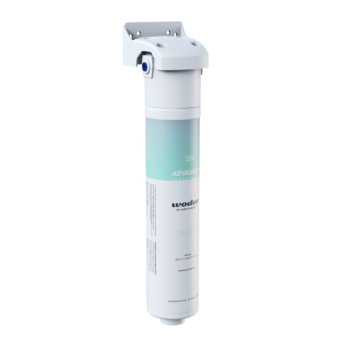
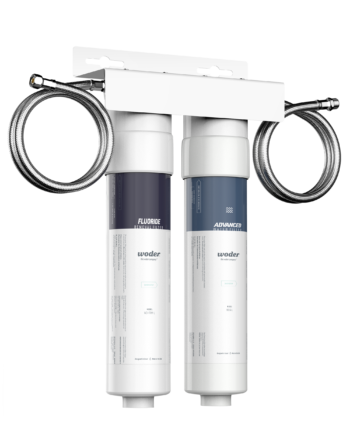
This is the approach Woder Filters takes. Their Advanced Selective Filtration technology removes lead, PFAS, chlorine, chromium 6, mercury, carcinogens, and VOCs while keeping calcium and magnesium intact. That mineral retention is a deliberate design choice — not a side effect.
Reverse Osmosis
RO systems are highly effective at heavy metal removal and carry NSF/ANSI 58 certification. The trade-off is that RO removes virtually everything, including the minerals your body benefits from. Installation typically runs $300 to $600, requires a pressurized tank and a drain line, and produces wastewater. For heavy metal removal specifically, it is not the only option — and for many homeowners, it is more than the situation calls for.
Ion Exchange
Ion exchange resins are commonly used for water softening and can remove certain heavy metals, particularly lead. They work by swapping harmful ions for sodium or potassium ions. They are often used as one stage in a multi-stage system rather than as standalone heavy metal filters.
KDF Media
Kinetic Degradation Fluxion media uses a copper-zinc alloy to reduce heavy metals, chlorine, and scale through an electrochemical process. KDF is frequently combined with carbon filtration in multi-stage systems to extend filter life and improve overall contaminant reduction.
How to Evaluate a Heavy Metal Filter Before You Buy
Once you understand certifications and technologies, the buying decision comes down to a few practical questions.
What does your water actually contain? Your municipality's annual Consumer Confidence Report lists detected contaminants and their measured levels. If you are on well water, a professional test is the only reliable way to know what you are dealing with. Some homeowners on private wells benefit from working with a water treatment specialist before choosing a filter.
What is the filter's verified removal rate for the specific metals in your water? A filter certified under NSF/ANSI 53 for lead reduction may not be certified for chromium 6 or mercury. Check the specific contaminant list in the certification documentation — not just the headline claim on the packaging.
Does the filter preserve minerals? If you are removing heavy metals because you care about your family's health, stripping out calcium and magnesium works against that goal. Selective filtration systems that retain beneficial minerals give you clean water without the mineral deficit that comes with RO.
What is the installation footprint? Under-sink inline filters that connect directly to your existing water line require no tank, no drain line, and no plumber. Installation typically takes under 30 minutes — a very different commitment than a full RO system.
What is the long-term cost? A filter unit in the $80 to $200 range with annual replacement cartridges at $40 to $80 is significantly less expensive than bottled water over time, and far less than the installed cost of a typical RO system.
Systems That Qualify for Heavy Metal Removal
Here is a quick framework for evaluating whether a specific system qualifies as a genuine heavy metal filter:
| Criteria | What to Look For |
|---|---|
| Certification | NSF/ANSI 53 certified for lead, chromium, and/or mercury specifically |
| Technology | Selective filtration, certified carbon block, KDF, or RO (NSF/ANSI 58) |
| Mineral retention | Calcium and magnesium preserved (not applicable to RO) |
| Installation | Inline or under-sink; no plumber required for point-of-use |
| Replacement cycle | Clear cartridge replacement schedule with available replacement parts |
| Manufacturer transparency | Contaminant-specific test data available, not just headline claims |
A system that checks all of these boxes is a genuine heavy metal filter. One that only checks two or three may still be useful for other purposes, but it is not a complete answer to heavy metal contamination.
Where Woder Fits
Woder's filters are built for homeowners who want verified heavy metal removal without the cost and complexity of a full RO installation. The Advanced Selective Filtration technology removes 99.9% of lead, chromium 6, and mercury alongside chlorine, PFAS, and VOCs — while keeping calcium and magnesium in the water by design.
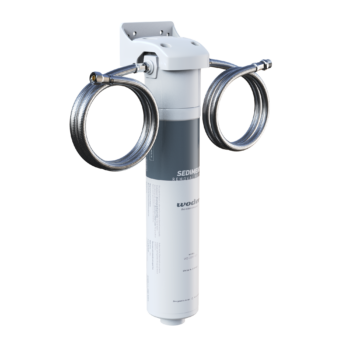
Filters install inline into your existing water line. No tank. No drain line. No wastewater. No plumber. Replacement cartridges run $40 to $80 per year.
Not sure which model fits your household's flow rate and water source? The product finder wizard at woder.com/wizard walks you through it in a few steps.
FAQs
What certifications should a heavy metal water filter have?
Look for NSF/ANSI 53 certification, which independently verifies that a filter reduces health-affecting contaminants — including lead, chromium, and mercury — to below safe limits. It is the most important certification for heavy metal removal specifically. WQA Gold Seal certification is also credible and uses comparable testing standards.
Does NSF/ANSI 42 certification mean a filter removes heavy metals?
No. NSF/ANSI 42 covers aesthetic reduction — chlorine, taste, and odor. It does not verify heavy metal removal. A filter needs NSF/ANSI 53 certification to make verified claims about lead, chromium, or mercury reduction.
Will a heavy metal filter remove beneficial minerals like calcium and magnesium?
It depends on the technology. Reverse osmosis systems remove virtually all minerals along with contaminants. Selective filtration systems are designed to target specific contaminants while leaving beneficial minerals intact. If mineral retention matters to you, look for a selective filtration system with documented mineral preservation.
How do I know which heavy metals are actually in my tap water?
Start with your municipality's annual Consumer Confidence Report, which lists detected contaminants and their measured levels. If you are on well water or want more detail, a certified water testing lab can provide a full analysis of your specific supply.
Is a heavy metal filter the same as a water softener?
No. Water softeners use ion exchange to reduce hardness minerals like calcium and magnesium, which cause scale buildup. They are not designed to remove heavy metals like lead or chromium 6. If you have both hard water and heavy metal concerns, you need a dedicated heavy metal filter — not a softener.
How often do I need to replace a heavy metal filter cartridge?
Replacement schedules vary by filter capacity and household water usage. Most quality inline and under-sink filters specify a replacement interval in gallons or months. Following the manufacturer's schedule matters — a saturated filter can stop removing contaminants effectively even when water flow still seems normal.
Can a heavy metal filter handle PFAS and chlorine at the same time?
Many selective filtration and multi-stage systems are designed to address multiple contaminant categories simultaneously. Check the specific certification documentation for each contaminant you want removed. A filter certified under NSF/ANSI 53 for lead does not automatically cover PFAS unless that is specifically listed in its certification scope.
The Bottom Line
Certifications are not marketing language. NSF/ANSI 53 is the line between a filter that has been independently verified for heavy metal removal and one that has not. Start there, then look at the technology, the mineral retention approach, and the real cost of ownership.
Clean water that still tastes like water is the goal. You do not need to overspend or over-engineer to get there. Visit woder.com to find the right filter for your home.