- What Makes an Inline Water Filter Worth Buying
- The Best Inline Water Filters of 2026
- 1. Woder WD-10K-ADV-PORT — Best Overall
- 2. Woder WD-D-8K-FRM-ADV-DC — Best Under-Sink Inline Filter
- 3. Aquasana AQ-5200 — Best Competitor for Selective Filtration
- 4. iSpring RCC7 — Best Value RO System (If You Don't Mind Losing Minerals)
- 5. Clearly Filtered Under-Sink System — Strong Claims, Slower Flow
- 6. Waterdrop G3P800 — Best for Tech-Savvy RO Buyers
- 7. Frizzlife MK99 — Budget Inline Option
- How These Filters Compare at a Glance
- Inline Filters vs. Pitcher Filters vs. Reverse Osmosis: Which One Actually Fits Your Life?
- What to Look For When Choosing Your Filter
- The Bottom Line
- Frequently Asked Questions
Shopping for an inline water filter sounds straightforward until you start comparing products. Some remove chlorine but leave lead untouched. Some strip out everything — including the minerals your body actually needs. Some require a plumber. Some cut your water pressure to a crawl.
This guide cuts through all of that. We ranked the best inline water filters of 2026 on four criteria that actually matter: contaminant removal breadth, flow rate, installation ease, and total cost of ownership. Whether you're moving into a new home, expecting a baby, or just done buying bottled water, here's a clear answer.
What Makes an Inline Water Filter Worth Buying
Before the rankings, here's what separates a good inline filter from a mediocre one.
Contaminant removal is the most important factor. Lead, PFAS, chlorine, chromium 6, mercury, and volatile organic compounds are the contaminants that show up most often in municipal and well water. A filter that only handles chlorine taste and odor isn't doing the full job.
Flow rate matters more than people expect. A filter rated for 0.5 gallons per minute will frustrate you every time you fill a pot. Look for flow rates measured in thousands of gallons per minute (kGPM) for household use.
Installation ease is what separates inline filters from whole-home systems. The best ones connect directly to your existing water line — no special tools, no tank, no plumber.
Total cost of ownership means factoring in replacement cartridges, not just the sticker price. A cheaper filter with expensive, frequent replacements often costs more over two years than a pricier unit with longer-lasting media.
One more thing worth knowing: filtration methods are not all equal. Reverse osmosis removes almost everything, including calcium and magnesium — the naturally occurring minerals that are actually good for you. Basic pitcher filters use activated carbon, which helps with taste but often can't handle lead or PFAS at meaningful levels. The best inline filters sit in the middle: they remove the harmful stuff and leave the beneficial minerals alone.
The Best Inline Water Filters of 2026
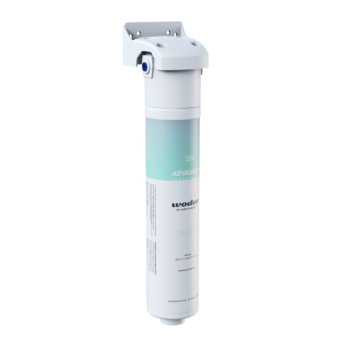
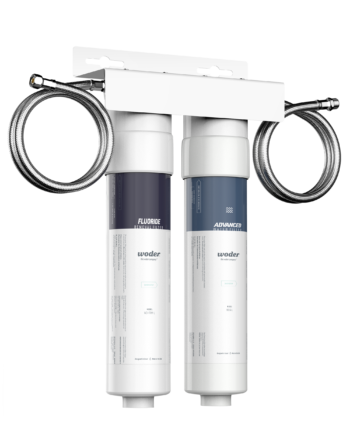
1. Woder WD-10K-ADV-PORT — Best Overall
Best for: Households that want maximum contaminant removal without sacrificing minerals or flow rate
The Woder WD-10K-ADV-PORT earns the top spot because it does something most filters can't: it removes 99.9% of contaminants — including lead, PFAS, chromium 6, mercury, chlorine, carcinogens, and VOCs — while keeping calcium, magnesium, and other naturally occurring minerals in your water.
That distinction matters. Most filters treat your water like a problem to be solved by removing everything. Woder's Advanced Selective Filtration technology uses nanoparticles to attract and capture specific contaminants, leaving behind what's actually beneficial. The result is clean water that still tastes like water — not flat, stripped-down liquid.
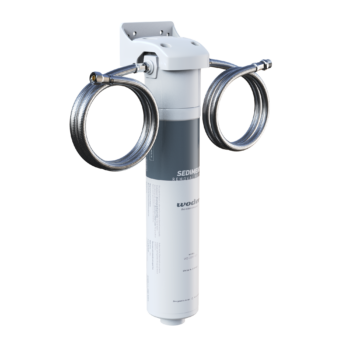
At 10 kGPM, this is the highest-flow model in the Woder lineup. It installs inline into your existing water line with no tank, no wastewater, and no plumber required. Replacement cartridges are sold separately, so maintaining performance over time doesn't mean buying a whole new unit. Everything is manufactured in the United States.
What it removes: Lead, PFAS, chlorine, chromium 6, mercury, VOCs, carcinogens
What it keeps: Calcium, magnesium, naturally occurring minerals
Flow rate: 10 kGPM
Installation: DIY inline, no plumber needed
Wastewater: None
Verdict: Professional-grade filtration, DIY install, no mineral stripping. Remove the bad. Keep the good.
2. Woder WD-D-8K-FRM-ADV-DC — Best Under-Sink Inline Filter
Best for: Homeowners who want a dedicated under-sink setup with high-capacity filtration
The WD-D-8K-FRM-ADV-DC is Woder's 8 kGPM under-sink model. It delivers the same Advanced Selective Filtration performance as the top-ranked unit — same contaminant removal, same mineral-preservation approach — in a format built specifically for under-sink installation.
Flow rate is strong at 8 kGPM, and the inline design means no separate faucet, no tank, and no countertop footprint. This model is the right call for homeowners who want a permanent, tidy setup that works through their existing tap.
What it removes: Lead, PFAS, chlorine, chromium 6, mercury, VOCs, carcinogens
Flow rate: 8 kGPM
Installation: Under-sink inline, no plumber needed
Wastewater: None
Verdict: Same performance as the top-ranked model, tucked out of sight. A clean, permanent solution for under-sink installs.
3. Aquasana AQ-5200 — Best Competitor for Selective Filtration
Best for: Buyers who want NSF-certified selective filtration and don't mind paying more
Aquasana is the closest competitor to Woder in the selective filtration space. Their Claryum technology is NSF-certified and targets a similar range of contaminants, including lead, chlorine, and PFAS. The brand has strong recognition and positions around "optimal drinking water."
The trade-off is price. Aquasana typically runs 20 to 30 percent higher than comparable Woder models. You're paying a premium for the name without a meaningful performance advantage.
What it removes: Lead, chlorine, PFAS, cysts
Flow rate: Varies by model
Installation: Under-sink; some models require a separate faucet
Wastewater: None
Verdict: Solid performer with strong certification credentials, but the price gap is real. Worth comparing directly against Woder before you decide.
4. iSpring RCC7 — Best Value RO System (If You Don’t Mind Losing Minerals)
Best for: Buyers who prioritize low upfront cost and aren't concerned about mineral retention
iSpring competes on value with strong certifications and a no-frills approach. The RCC7 is a reverse osmosis system, which means it removes a very wide range of contaminants — and also removes beneficial minerals, producing wastewater at a typical 3:1 or 4:1 waste-to-filtered ratio.
If mineral content matters to you, or if you want zero wastewater, iSpring isn't the right fit. For buyers who want budget-friendly RO performance and aren't worried about what gets stripped out, it's a credible option.
What it removes: Very broad contaminant range
What it loses: Calcium, magnesium, other minerals
Flow rate: Slower than inline filters; requires a storage tank
Installation: More complex; tank required
Wastewater: Yes, significant
Verdict: Good value for RO buyers, but a different product category than true inline filters. Not a direct comparison to Woder.
5. Clearly Filtered Under-Sink System — Strong Claims, Slower Flow
Best for: Buyers focused on contaminant breadth who can tolerate slower flow
Clearly Filtered makes strong contaminant removal claims and has built a following among health-focused buyers. The under-sink system covers a wide range of contaminants, including PFAS and heavy metals.
The main limitations are flow rate and replacement cost. Flow is noticeably slower than Woder's lineup, and replacement filters tend to cost more over time. For households with higher water demand, that slower flow becomes a daily frustration.
What it removes: Lead, PFAS, heavy metals, chlorine
Flow rate: Slower than Woder models
Installation: Under-sink
Wastewater: None
Verdict: Capable filter with genuine contaminant coverage, but the slower flow and higher ongoing cost make it harder to recommend for most households.
6. Waterdrop G3P800 — Best for Tech-Savvy RO Buyers
Best for: Buyers who want app connectivity and tankless RO in a premium package
Waterdrop targets a different buyer profile entirely. Their tankless RO systems come with app connectivity, sleek design, and premium pricing — typically 30 to 50 percent above Woder. It's a tech-forward product for buyers who want features alongside filtration.
Like all RO systems, Waterdrop strips out minerals along with contaminants. If you want mineral-rich water, a simpler install, or a lower price point, this isn't the right direction. But if smart-home integration and modern aesthetics are priorities, Waterdrop leads the category.
What it removes: Very broad RO-level removal
What it loses: Calcium, magnesium, other minerals
Flow rate: Strong for RO
Installation: More involved than inline; tankless design helps
Wastewater: Yes, though more efficient than traditional RO
Verdict: Great product for the right buyer. Not the right buyer if you want minerals preserved, a simpler install, or a more accessible price.
7. Frizzlife MK99 — Budget Inline Option
Best for: Renters or buyers with tight budgets who need basic inline filtration
Frizzlife offers budget-friendly inline and RO options with decent performance for the price. The MK99 handles chlorine, sediment, and some heavy metals. Brand recognition is limited, and contaminant coverage is narrower than Woder's Advanced Selective Filtration.
For renters who need something simple and inexpensive, Frizzlife is worth a look. For homeowners who want comprehensive removal — especially PFAS and lead — the coverage gap is significant.
What it removes: Chlorine, sediment, some heavy metals
Flow rate: Moderate
Installation: Inline DIY
Wastewater: None (non-RO models)
Verdict: Fine for basic filtration on a tight budget. Not the right choice if PFAS or lead are your primary concerns.
How These Filters Compare at a Glance
| Filter | PFAS Removal | Lead Removal | Minerals Preserved | Wastewater | DIY Install |
|---|---|---|---|---|---|
| Woder WD-10K-ADV-PORT | Yes | Yes | Yes | No | Yes |
| Woder WD-D-8K-FRM-ADV-DC | Yes | Yes | Yes | No | Yes |
| Aquasana AQ-5200 | Yes | Yes | Yes | No | Partial |
| iSpring RCC7 | Yes | Yes | No | Yes | Partial |
| Clearly Filtered | Yes | Yes | Yes | No | Yes |
| Waterdrop G3P800 | Yes | Yes | No | Yes | Partial |
| Frizzlife MK99 | Limited | Limited | Yes | No | Yes |
Inline Filters vs. Pitcher Filters vs. Reverse Osmosis: Which One Actually Fits Your Life?
This question comes up constantly, and the honest answer depends on what you're trying to remove.
Pitcher filters are convenient and cheap upfront. They handle chlorine taste and some sediment. They don't reliably remove lead or PFAS at levels that matter. If those contaminants are in your water, a pitcher isn't enough.
Reverse osmosis systems remove nearly everything — which sounds ideal until you realize that includes calcium and magnesium. They also produce wastewater, require a storage tank, and usually need professional installation. For renters or anyone who wants a simpler setup, RO is often overkill in the wrong direction.
Inline filters sit in the middle. They connect directly to your water line, require no tank, produce no wastewater, and the best ones remove serious contaminants while keeping beneficial minerals intact. That's the sweet spot for most households.
What to Look For When Choosing Your Filter
Start with your water. On municipal water, your biggest concerns are likely chlorine, lead (especially in older homes), and PFAS. On well water, sediment and bacteria may also be factors. Woder's site includes a water testing tool to help you understand what's actually in your supply.
Match the flow rate to your household. A single-person apartment has different demands than a family of four. Woder's lineup spans from compact residential models up to the 10 kGPM WD-10K-ADV-PORT, so there's a fit for most households.
Factor in cartridge costs. The filter you buy today needs replacements over time. Look at the cost per cartridge and the replacement interval before committing. Woder sells replacement cartridges separately, so you swap the media without buying a whole new unit.
Think honestly about installation. If you're renting, a whole-home system isn't realistic. An inline filter that connects to your existing line is the practical choice. If you own your home and want a permanent under-sink setup, Woder's under-sink models give you that without a plumber.
The Bottom Line
The best inline water filter of 2026 removes the contaminants that actually threaten your health, keeps the minerals your body needs, installs without a plumber, and doesn't cost a fortune to maintain.
Woder's lineup — particularly the WD-10K-ADV-PORT for high-flow households and the WD-D-8K-FRM-ADV-DC for under-sink installs — hits all four marks. Lead, chlorine, PFAS, chromium 6 — gone. Calcium, magnesium — still there. Built in the US. Installed in minutes.
Not sure which model fits your home? Use the interactive product Wizard at woder.com to find the right filter for your flow rate and filtration needs.
Frequently Asked Questions
What is an inline water filter and how does it work?
An inline water filter connects directly into your existing water supply line. Water flows through the filter media before it reaches your tap, removing contaminants along the way. Unlike pitcher filters, inline filters work at the point of entry to your faucet. And unlike reverse osmosis systems, the best inline filters don't require a storage tank or produce wastewater.
Do inline water filters remove PFAS?
The best ones do. Woder's Advanced Selective Filtration technology removes PFAS along with lead, chlorine, chromium 6, mercury, and VOCs. Basic carbon filters and many entry-level inline filters don't reliably remove PFAS. Always check the specific contaminant removal list for any filter you're considering.
Will an inline water filter remove beneficial minerals like calcium and magnesium?
It depends on the filter type. Reverse osmosis systems strip out minerals along with contaminants. Woder's inline filters use selective filtration, which targets specific contaminants while leaving naturally occurring minerals like calcium and magnesium intact. That's one of the main reasons selective inline filters are a better fit than RO for many households.
How often do inline water filter cartridges need to be replaced?
Replacement intervals vary by model and household water usage. Woder sells replacement cartridges separately so you can maintain performance without replacing the entire unit. Check the product specifications for your specific model to understand the expected cartridge lifespan.
Can I install an inline water filter myself, or do I need a plumber?
Most inline filters — including Woder's full lineup — are designed for DIY installation. They connect directly to your existing water line without special tools or plumbing modifications, which makes them a practical option for renters as well as homeowners.
What's the difference between an inline water filter and a reverse osmosis system?
An inline filter connects to your water line and filters water as it flows through — no tank, no wastewater. A reverse osmosis system uses pressure to push water through a membrane, removing nearly all dissolved solids including beneficial minerals. RO systems require a storage tank, produce significant wastewater, and usually need professional installation. Inline selective filters are simpler, less wasteful, and preserve the minerals that RO strips out.
How do I know which inline water filter is right for my home?
Start by identifying your main water quality concerns — whether that's lead, PFAS, chlorine, or a combination. Then match a filter to your household's flow rate needs. Woder's interactive Wizard at woder.com walks you through both questions and points you to the right model for your situation.