- Key Statistics at a Glance
- Introduction
- PFAS (Per- and Polyfluoroalkyl Substances)
- Lead
- Chlorine and Disinfection Byproducts
- Microplastics
- Arsenic and Other Heavy Metals
- Emerging and Unregulated Contaminants
- Global Context
- How to Check Your Own Water
- What the Data Means for Filtration Choices
- Sources
- Frequently Asked Questions
Last updated: August 2026. This page compiles publicly available data from federal agencies, academic institutions, and third-party surveys for reference and citation purposes.
Key Statistics at a Glance
| Stat | Figure | Source |
|---|---|---|
| Americans with PFAS-contaminated drinking water | ~165 million | EWG / EPA UCMR data, 2025 |
| US tap water estimated to contain PFAS | At least 45% | USGS national study |
| US population served by regulated community water systems | ~90% | CDC |
| Americans concerned about unfiltered tap water quality | 82% | Aquasana 8th Annual Water Quality Survey, 2026 |
| Unregulated contaminants under EPA review (CCL 6) | 75 chemicals, 4 chemical groups, 9 microbes | EPA CCL 6 draft, April 2026 |
| People globally using feces-contaminated drinking water sources | At least 1.7 billion | WHO (global figure, not US-specific) |
Introduction
Most Americans assume their tap water is safe. For many, it is — but "safe by regulatory standards" and "free of all contaminants" are not the same thing.
Federal drinking water standards cover a defined list of regulated substances. Hundreds of chemicals in active use today remain unregulated. Detection methods have also improved significantly over the past decade, and that progress has surfaced contamination that older testing simply missed.
This page compiles the most current US drinking water quality statistics available, organized by contaminant type, with every figure attributed to its source. Researchers, journalists, and anyone trying to understand what is actually in American tap water can use this as a starting reference.
PFAS (Per- and Polyfluoroalkyl Substances)
PFAS are a class of thousands of synthetic chemicals used in nonstick cookware, food packaging, firefighting foam, and industrial manufacturing. They don't break down naturally — in the environment or in the human body — which is why they've earned the name "forever chemicals."
Key statistics:
- A USGS national study estimated that at least 45% of US tap water contains one or more types of PFAS. Because the study tested only a subset of known PFAS compounds, the actual share could be higher.
- According to EWG analysis of EPA Unregulated Contaminant Monitoring Rule (UCMR) data updated in June 2025, approximately 165 million Americans have PFAS-contaminated drinking water — an increase of roughly 6.5 million people (about 4%) compared to earlier estimates.
- The EPA's April 2026 draft Contaminant Candidate List 6 (CCL 6) includes PFAS as one of four chemical groups under formal review for potential future regulation.
- In 2024, the EPA finalized maximum contaminant levels (MCLs) for six PFAS compounds, setting enforceable limits for PFOA and PFOS at 4 parts per trillion — among the strictest drinking water standards ever established.
Epidemiological research has associated PFAS exposure with thyroid disruption, immune suppression, and certain cancers, though establishing direct causation in individuals remains methodologically complex.
Lead
Lead enters drinking water through aging infrastructure: lead service lines, lead solder in plumbing joints, and brass fixtures. Source water leaving a treatment plant may be lead-free; contamination typically happens somewhere between the plant and the tap.
Key statistics:
- The EPA estimates between 6 and 10 million lead service lines remain in use across the United States. The Biden administration set a goal to replace all of them within 10 years, backed by funding from the Infrastructure Investment and Jobs Act.
- There is no established safe level of lead exposure for children. The CDC uses a blood lead reference value of 3.5 micrograms per deciliter to flag elevated exposure, but neurological effects have been documented below even that threshold.
- The EPA's Lead and Copper Rule Improvements (LCRI), finalized in 2024, tightened the action level for lead from 15 parts per billion to 10 parts per billion and strengthened service line inventory requirements.
- Homes built before 1986 — when lead solder was banned in plumbing — are statistically more likely to have lead-containing fixtures or pipes.
Lead contamination tends to be concentrated in specific cities and zip codes with aging infrastructure. National averages significantly understate local risk in many communities.
Chlorine and Disinfection Byproducts
Chlorine is added to municipal water as a disinfectant, and it works. The issue is what happens when chlorine reacts with naturally occurring organic matter in source water.
Those reactions produce disinfection byproducts (DBPs) — primarily trihalomethanes (THMs) and haloacetic acids (HAAs). Both groups are regulated by the EPA because long-term exposure at elevated concentrations has been associated with increased cancer risk and adverse reproductive outcomes in some studies.
Key statistics:
- The EPA's Stage 2 Disinfectants and Disinfection Byproducts Rule limits total trihalomethanes to 80 micrograms per liter and total haloacetic acids to 60 micrograms per liter in community water systems.
- Approximately 90% of the US population is served by a community water system regulated under EPA rules (CDC), meaning DBP standards apply to the vast majority of Americans' tap water.
- Chloramine, used as an alternative disinfectant in some systems, produces different byproducts — including iodoacids — that are less well studied and not currently regulated under the same framework.
Water that meets current DBP standards is not necessarily unsafe, but regulated compliance levels are not the same as zero exposure to compounds with documented health associations.
Microplastics
Microplastics in drinking water are an emerging area of concern. Research is still developing, and as of 2026, no federal maximum contaminant level exists for microplastics in drinking water.
Key statistics:
- The EPA's April 2026 draft CCL 6 includes microplastics as one of four chemical groups under active review, signaling that federal regulation is being seriously considered.
- Multiple peer-reviewed studies have detected microplastics in treated tap water, bottled water, and source water across the US, though varying detection methods and particle size definitions make direct comparisons between studies difficult.
- The health effects of ingested microplastics remain under active investigation. Some studies have detected microplastic particles in human blood, lung tissue, and placental tissue, but dose-response relationships are not yet established.
Because no regulatory standard exists, water quality reports don't include microplastic data. Consumers currently have no standardized way to assess their personal exposure from tap water.
Arsenic and Other Heavy Metals
Arsenic occurs naturally in rock and soil and leaches into groundwater across many parts of the US — particularly the Southwest, New England, and parts of the Midwest. It is also a byproduct of certain mining and agricultural activities.
Key statistics:
- The EPA's MCL for arsenic in drinking water is 10 micrograms per liter (10 ppb). The WHO guideline matches that figure, though some health researchers argue the standard isn't protective enough given arsenic's classification as a Group 1 human carcinogen.
- Chromium-6 (hexavalent chromium) is another heavy metal of concern. The EPA proposed a national primary drinking water regulation for chromium-6 in 2023; as of 2026, that regulatory process is ongoing.
- Mercury, cadmium, and barium are regulated under the EPA's National Primary Drinking Water Regulations with established MCLs, though exceedances still occur in some systems — particularly smaller community water systems with limited monitoring capacity.
Emerging and Unregulated Contaminants
The gap between what is regulated and what is actually present in water is significant. The EPA's Contaminant Candidate List process exists specifically to address it.
Key statistics:
- The EPA's CCL 6 draft (April 2026) identifies 75 chemicals, 4 chemical groups (including PFAS and microplastics), and 9 microbes that are not currently subject to national primary drinking water regulations but are known or anticipated to occur in public water systems.
- Pharmaceuticals and personal care products (PPCPs) — including antibiotics, hormones, and antidepressants — have been detected in surface water and some treated drinking water supplies. None are currently regulated under the Safe Drinking Water Act.
- Nitrates from agricultural runoff remain a persistent problem in rural areas. The EPA's MCL for nitrates is 10 mg/L, but exceedances are common in agricultural regions and disproportionately affect private well users, who fall outside federal regulatory coverage.
Global Context
The US drinking water picture, while concerning in specific areas, is considerably better than the global baseline.
The WHO estimates that at least 1.7 billion people globally use a drinking water source contaminated with feces. This is a global statistic and does not describe conditions in the US, where fecal contamination of regulated community water systems is rare and subject to strict monitoring requirements.
How to Check Your Own Water
Two federal resources let you assess your local water quality directly:
-
Consumer Confidence Reports (CCRs): Every community water system is required to publish an annual CCR detailing detected contaminants and how they compare to EPA standards. Most utilities publish these online; you can also search by zip code through the EPA's CCR website.
-
Water Quality Portal (waterqualitydata.us): This interagency platform aggregates water quality data from the USGS, EPA, and state agencies. It's primarily designed for researchers but is publicly accessible and searchable by location.
If you rely on a private well, federal regulations don't apply to you — you're responsible for testing your own water. The EPA recommends annual testing at minimum.
What the Data Means for Filtration Choices
The statistics on this page describe a water supply that is regulated and monitored — but not contaminant-free. PFAS, lead, chlorine byproducts, and emerging chemicals appear across the country at varying concentrations, often in water that fully complies with current standards.
For households that want protection beyond what treatment plants provide, point-of-use filtration is the most practical option.
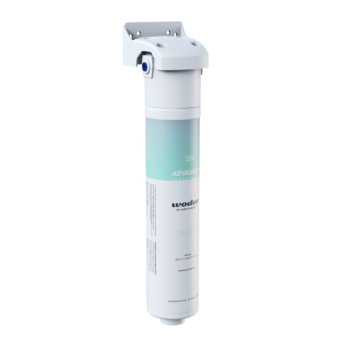
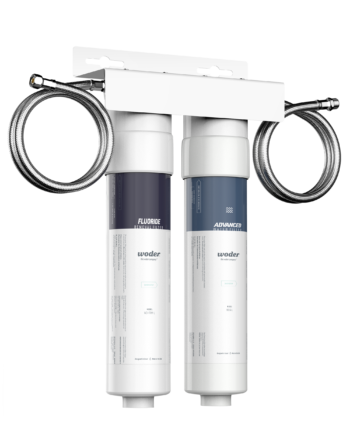
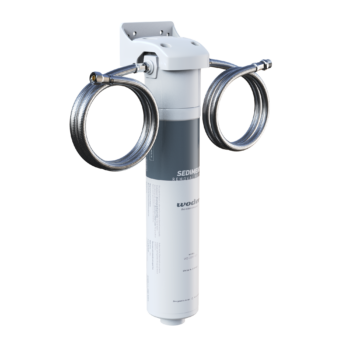
Woder makes under-sink and inline water filters built around Advanced Selective Filtration technology, which uses nanoparticles to attract and remove specific contaminants from the water line. Per manufacturer specifications, Woder filters target lead, chlorine, chromium-6, mercury, PFAS, carcinogens, and VOCs at a 99.9% removal rate. This figure is a manufacturer-stated specification; Woder's filters are not currently NSF-certified, and independent third-party certification would be required to verify these claims against a standardized testing protocol.
One meaningful difference from reverse osmosis: Woder's technology is designed to remove contaminants selectively, leaving beneficial minerals like calcium and magnesium intact. Reverse osmosis strips those out along with everything else. For households concerned about PFAS or lead but not looking to demineralize their water entirely, that distinction is worth considering.
Sources
- USGS — National study estimating PFAS presence in US tap water (at least 45%). U.S. Geological Survey, 2023.
- EWG / EPA UCMR data — Approximately 165 million Americans have PFAS-contaminated drinking water; ~6.5 million increase per updated data. Environmental Working Group analysis of EPA Unregulated Contaminant Monitoring Rule data, June 2025.
- EPA — Contaminant Candidate List 6 (CCL 6) draft: 75 chemicals, 4 chemical groups, 9 microbes. U.S. Environmental Protection Agency, April 2026.
- EPA — Lead and Copper Rule Improvements (LCRI), finalized 2024. U.S. Environmental Protection Agency.
- EPA — Stage 2 Disinfectants and Disinfection Byproducts Rule. U.S. Environmental Protection Agency.
- EPA — National Primary Drinking Water Regulations (arsenic, chromium, mercury, nitrates, etc.). U.S. Environmental Protection Agency.
- CDC — Approximately 90% of the US population is served by a community water system regulated by EPA. Centers for Disease Control and Prevention.
- WHO — At least 1.7 billion people globally use a drinking water source contaminated with feces. World Health Organization (global statistic).
- Aquasana — 82% of Americans express concern about the quality of unfiltered tap water at home. Aquasana 8th Annual Water Quality Survey, 2026. (Third-party consumer survey; not a laboratory test or scientific study.)
Frequently Asked Questions
What percentage of US tap water contains PFAS?
A USGS national study estimated that at least 45% of US tap water contains one or more types of PFAS. Because the study tested for only a subset of known PFAS compounds, the actual share may be higher.
How many Americans are exposed to PFAS-contaminated drinking water?
According to EWG analysis of EPA Unregulated Contaminant Monitoring Rule data updated in June 2025, approximately 165 million Americans have PFAS-contaminated drinking water — an increase of roughly 6.5 million people compared to earlier estimates.
Is my tap water safe to drink?
About 90% of Americans are served by community water systems regulated under EPA standards (CDC). Regulated water meets established contaminant limits, but meeting current standards is not the same as being free of all contaminants — many chemicals, including most PFAS compounds until recently and microplastics currently, are not regulated. Checking your utility's Consumer Confidence Report and using point-of-use filtration are two practical ways to reduce exposure beyond regulatory minimums.
What are the most common contaminants found in US drinking water?
The most widely documented contaminants in US tap water include PFAS (detected in at least 45% of tap water per USGS), lead (primarily from aging service lines and plumbing), chlorine disinfection byproducts such as trihalomethanes, nitrates in agricultural areas, and arsenic in groundwater-dependent regions. The EPA's April 2026 CCL 6 draft identifies 75 additional chemicals and 4 chemical groups currently under review for potential future regulation.
What is the EPA Contaminant Candidate List 6?
The EPA's Contaminant Candidate List 6 (CCL 6), released in draft form in April 2026, identifies 75 chemicals, 4 chemical groups (including PFAS and microplastics), and 9 microbes that are not currently regulated under the Safe Drinking Water Act but are known or anticipated to occur in public water systems. Inclusion on the CCL does not mean a substance is regulated — it means it is under active consideration for future regulation.